Индийские веб3 стартапы привлекли $564 млн, сообщество разработчиков расширяется

cryptonews.ruPublished on 2022-01-13Last updated on 2025-03-13

Индийские стартапы Web3 продемонстрировали значительный рост инвестиционной активности в 2024 году, собрав 564 миллиона долларов, что является значительным увеличением по сравнению с предыдущим годом. В Индии теперь самая быстрорастущая сообщество разработчиков, и к 2028 году она прогнозируется, что обгонит США.

Финансирование все еще ниже пика 2022 года

В 2024 году индийские стартапы Web3 собрали 564 миллиона долларов, по сравнению с 270 миллионами долларов в предыдущем году, при этом инвестиции в инфраструктурный сектор составили непропорциональную долю от общего объема. Однако, как показано в последнем отчете Hashed Emergent о ландшафте Web3 в Индии, собранные стартапами Web3 средства все еще уступают 1,4 миллиарда долларов, собранным в 2022 году.
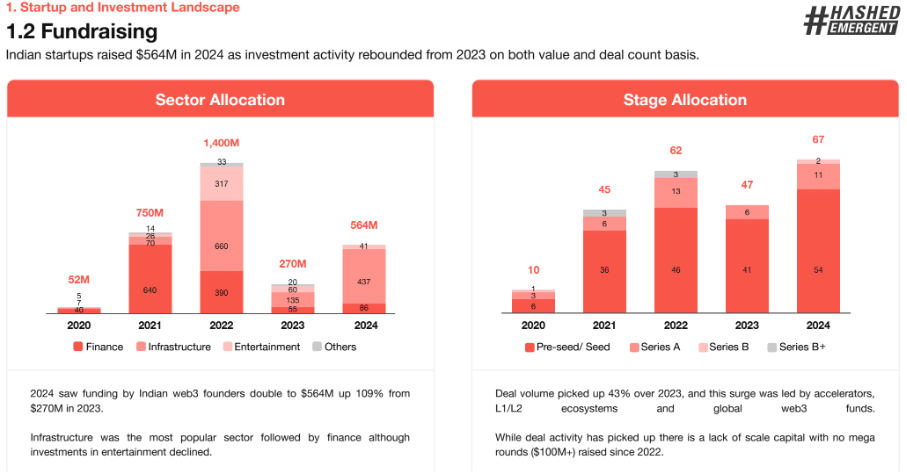
Отчет Hashed Emergent также показал, что количество зарегистрированных сделок с финансированием за последний год было на 43% выше, чем в 2023 году. Ускорители, экосистемы Layer 1 и 2 и глобальные Web3 фонды внесли свой вклад в рост числа завершенных сделок.

Комментируя рост капитала, более чем на 200%, собранного для финансирования в инфраструктурном секторе, в основном для проектов, связанных с искусственным интеллектом (AI), промежуточным программным обеспечением и инструментами обработки данных, в отчете говорится:

“Этот сектор [инфраструктура] стал местом, где основатели из Индии, которые поселились за границей, привлекали финансирование для определяющих категорию компаний на глобальном уровне, таких как EigenLayer, Sentient и Avail. Кроме того, другие развивающиеся области, такие как DePIN и BaaS, также привлекали финансирование, поскольку инвесторы все чаще рассматривают децентрализованное будущее для различных отраслей, особенно в эпоху ИИ, когда затраты на координацию, вероятно, будут снижаться.”

Тем временем, финансовый сектор индийской индустрии Web3 также испытал более чем 50% всплеск инвестиционной активности до 86 миллионов долларов, что является первым увеличением с 2021 года. Данные показывают, что после пика в 640 миллионов долларов капитал, выделенный на финансовый сектор, снижался и, казалось, достиг дна в 2023 году, когда было собрано всего 55 миллионов долларов. В отчете это кажущееся восстановление объясняется толчком к ликвидному ретейкингу, токенизации реальных активов и многоцепочечным финансовым инструментам.
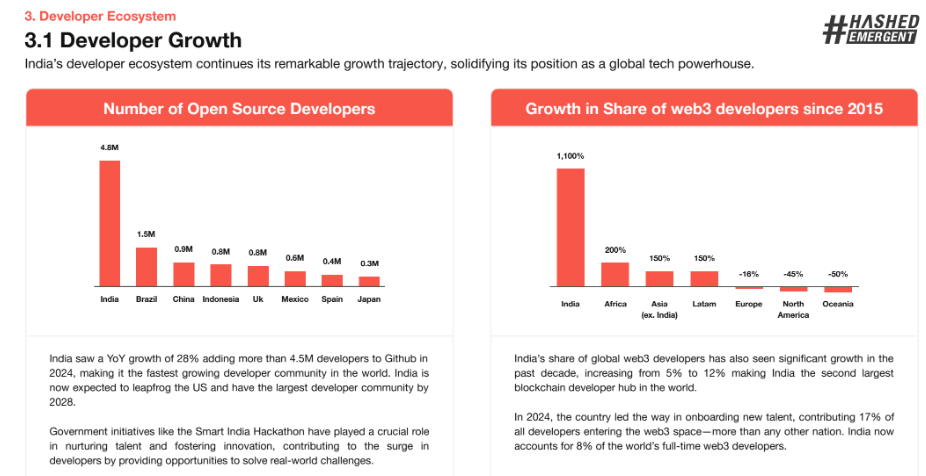
Что касается активности разработчиков, как показывают данные, в Индии самое быстрорастущее сообщество разработчиков, количество которых выросло на 28% в годовом исчислении до 4,5 миллиона. Эта цифра превосходит совокупное количество таких разработчиков в следующих четырех странах с наивысшим рейтингом. Согласно отчету, Индия идет к тому, чтобы обогнать Соединенные Штаты и иметь крупнейшее сообщество разработчиков к 2028 году.


Related Reads

Which Crypto Sectors Have Been "Eaten" by AI Agents?

The article examines which crypto sectors have been increasingly dominated by AI Agents and which remain human-centric. In certain high-speed, efficiency-driven areas, AI Agents have taken clear control. This includes derivatives/perpetuals trading, where bots outperform humans significantly (e.g., a contest showed 0% of AI Agents were liquidated vs. 43% of humans), arbitrage/MEV extraction, and yield optimization (with ~68% of new DeFi protocols in Q1 2026 featuring autonomous AI Agents). Spot trading and portfolio optimization are also seeing heavy Agent adoption. However, the shift is not universal. In "battleground" sectors, both Agents and humans coexist. In prediction markets, Agents dominate short-term arbitrage, but humans still outperform in long-term, nuanced judgment calls. In DeFi lending, while liquidation is automated, core deposit/borrow decisions remain largely human-driven. Sectors still firmly led by human activity include stablecoin payments and card-based spending (driven by real-world economic activity and remittances) and wallets, which serve as the crucial human-verification and approval layer. The rise of Agents increases the need for robust human-Agent verification layers. Projects like World/AgentKit, t54, Self Protocol, and Kite AI are building infrastructure to create trust, security, and accountability by binding Agents to verified human identities. In conclusion, while AI Agents have decisively "eaten" speed and optimization-focused crypto sectors, human judgment, trust, and real-world context remain dominant in areas that create broad economic value, such as payments and identity. The future likely involves a symbiotic relationship where Agents require human verification and oversight to operate effectively.

Foresight News8m ago

Which Crypto Sectors Have Been "Eaten" by AI Agents?

Foresight News8m ago

After Rising 11 Times in a Year, Micron's Earnings Report Becomes a Stress Test for the AI Memory Market

**Micron's Upcoming Earnings: A Crucial Test for the AI Memory Rally** Investors in AI memory stocks face a critical moment on June 24th, when Micron Technology reports quarterly earnings. The stock, having surged approximately 11-fold from $103 to $1,134 over the past year, carries immense market expectations. Wall Street consensus forecasts a staggering ~932% year-over-year jump in EPS to around $19.72 and ~270% revenue growth to ~$345 billion, largely driven by sold-out HBM (High Bandwidth Memory) capacity through 2026. Analysts have aggressively revised estimates upward over the last 90 days, with EPS expectations rising 68%. This creates a high bar: even strong results risk a sell-off if they fail to meet these elevated projections. Notably, price forecasts from institutions like Citi (predicting ~200% DRAM price increases in 2026) are already among the most bullish on Wall Street, not conservative. The key metric to watch is gross margin, guided to a record ~81%. Such peak profitability raises questions about sustainability in the historically cyclical memory sector. While management has signaled continued strength, the stock's direction post-earnings will likely hinge more on forward guidance for the next quarter and details on HBM capacity expansion for 2027, rather than the already-anticipated stellar past results. The report represents a major pressure test for the high-flying AI memory trade.

marsbit13m ago

After Rising 11 Times in a Year, Micron's Earnings Report Becomes a Stress Test for the AI Memory Market

marsbit13m ago

Trading

Spot
Futures
活动图片