Pi Coin Plunges 70%, Then Surges—What’s Behind the Blame Game?

CryptonewsPublished on 2025-02-26Last updated on 2025-02-26

Abstract

Is it the most valuable airdrop in crypto history or a huge Ponzi scam?

Key Takeaways:

Pi Network’s record-breaking airdrop sparked scam accusations over its mining model and trading volumes.

ByBit refused to list PI, with its CEO calling the project a scam, while Pi Network denied the claims.

PI token led Gate.io trading with $508M in volume, surpassing Ethereum and Bitcoin.

The Pi Network (PI) price first dropped 70%, then surged. Trading volume spiked, and scam accusations followed. What’s going on?

Pi Network has ended its mainnet phase, which has been in effect since 2021. The situation is somewhat similar to Berachain (BERA), which has been in this stage for several years. However, the PI airdrop was not as straightforward.

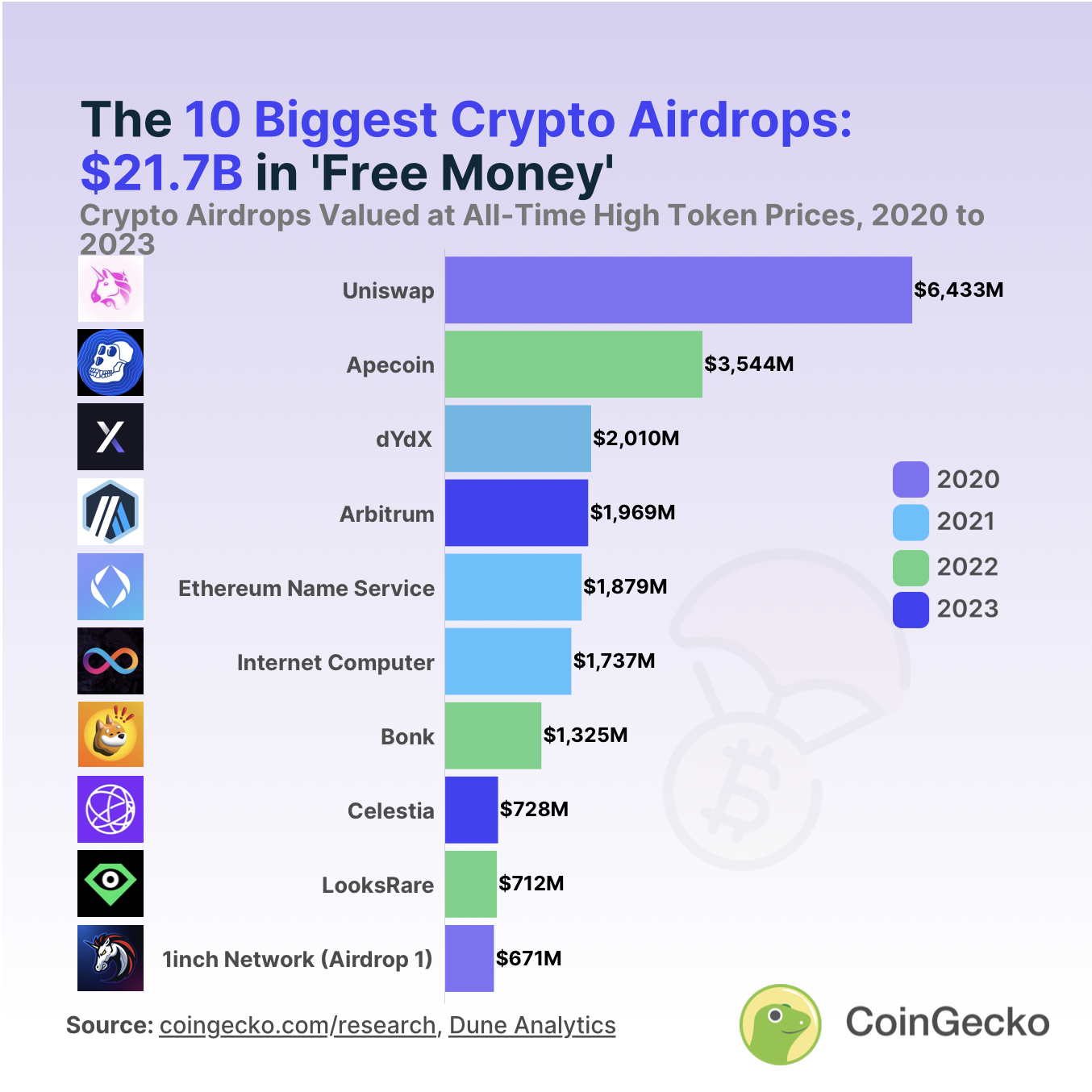
Reports indicate that the PI airdrop turned out to be the largest in crypto market history in value terms. Previously, the leadership had aligned with Uniswap (UNI).

According to CoinGecko, Uniswap’s airdrop in 2020 reached an all-time high token valuation of $6.43 billion. No subsequent airdrop has exceeded that value.
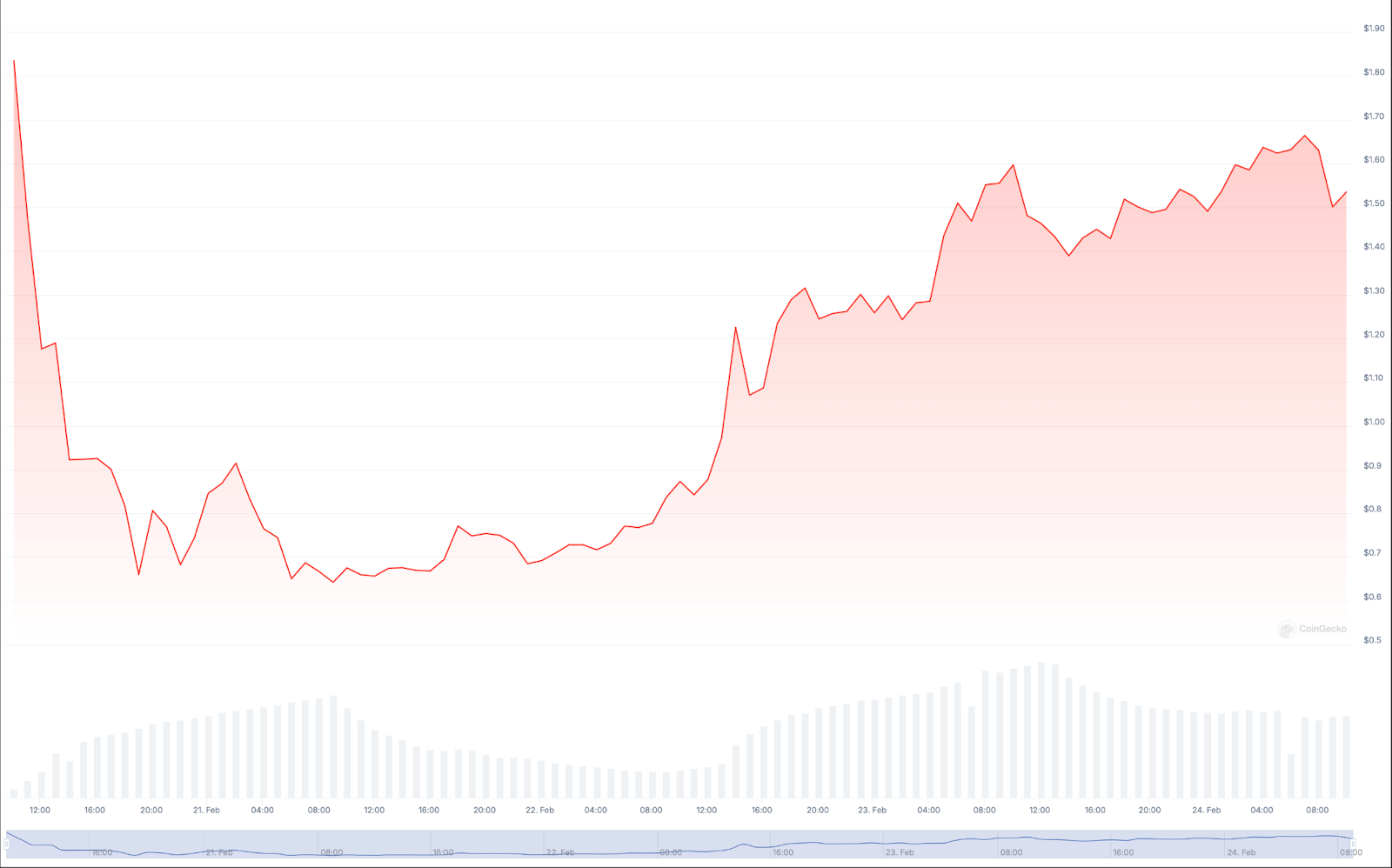
The circulating supply of the PI coin is 6.4 billion. On the first day of trading (Feb. 20), the token reached an all-time high of $1.97.

Currently, the PI coin price has dropped to $1.5, approximately 20% below its all-time high. Some in the crypto community remain skeptical about the project, even though the airdrop occurred without the scandals seen in the case of Berachain.
For example, posts on X often resemble advertisements. It is notable that, over the years, Pi Network has managed to attract a large user base.

One contentious aspect of the Pi Network is its concept. The team simplified the mining process by developing an application that allows users to mine the PI coin without investing additional funds. The process is generally straightforward.

Users must download the Pi Network application and join a session (lasting 24 hours), after which a certain number of PI coins are credited to their account. Mining efficiency depends on the user’s status, participation in the referral program, and other incentives.

Even before the PI token airdrop, some community members viewed the project as a financial pyramid since it appeared to offer money from nothing. This is a red flag that often suggests potential issues with the project.

Suspicion increased further when the ByBit crypto exchange refused to list the PI token.

‘Yes, I still think you are a scam, and no, Bybit will not list a scam’

On Feb. 20, PI coin was launched on the centralized exchange (CEX). Starting at almost $2, the price fell to $0.6 before rising above $1.

According to CoinGecko data, Gate.io has become the largest exchange for PI trading, accounting for nearly 48% of the volume. Bitget follows with 25.3% and OKX with 22%. CoinGecko notes that these three platforms are showing abnormally high trading volumes.

Gate.io data confirms this observation. The trading volume of PI coin on Gate.io reached $508.65 million, compared with $360.26 million for Ethereum (ETH) and $216.72 million for Bitcoin (BTC).

This level of volume is unusual. Among all cryptocurrencies on Gate.io (excluding stablecoin Tether), Pi Network ranks first.

On Feb. 19, before the PI airdrop, one of the pages on X associated with the project posted an accusation claiming that ByBit did not want to list the token. In response, ByBit CEO Ben Zhou recalled Pi Network’s legal issues in China and labeled the project as a scam.

On Feb. 12, Ben Zhou had already expressed his view on Pi Network in response to similar claims, advising people to stay away from the project.

It is worth noting that the X profile criticizing ByBit is not the official Pi Network page. Numerous such pages appear when searching for “Pi Network,” and whether the project supports them is unclear.

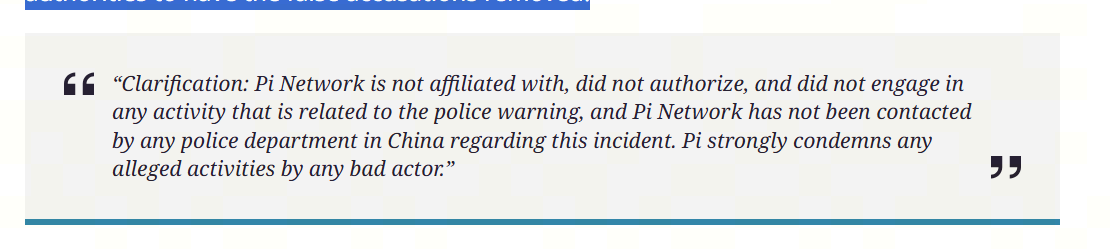
The official Pi Network account later responded to Ben Zhou’s accusations, addressing the situation in China. According to the project, scammers attempted to impersonate Pi Network representatives to deceive users. The project stated that it contacted Chinese authorities to have the false accusations removed:
Is Pi Network Really a Scam?

The concept of the project appears to offer money from thin air. Users simply download the application, launch a session, and wait 24 hours for PI tokens to be credited.

However, it is important to note that Pi Network does not require any asset contributions (crypto or fiat). In contrast, a typical financial pyramid would require users to contribute funds—for example, investing $1,000 in exchange for $100,000 within a month.

At first glance, the project’s white paper and description of its mining process appear serious and include mathematical calculations. The founders, Nicolas Kokkalis and Chengdiao Fan, are Stanford alumni. The project positions itself as “mathematical,” reinforced by its name and its launch on a day that aligns with the number Pi.

Nevertheless, accusations of a scam from influential figures raise concerns. The abnormal trading volume also suggests that many users are trading the token, even though Pi Network was not among the most popular projects before the airdrop.

Some observers see this as a sign of a financial pyramid, where the organizers deliberately build a large user base to inspire confidence.

There might be positive news for those who participated in PI mining through the application and received tokens during the airdrop. In theory, these individuals should not lose their money since they did not invest any funds—only their time.

However, those looking to buy PI tokens now or start participating in mining should exercise caution and watch how Pi Network behaves publicly.

Currently, Pi Network is attempting to address the accusations and demonstrate its legitimacy.

Additionally, Binance may soon add PI coin. The exchange is conducting a survey among users regarding the listing, and the majority have responded in favor. The survey will remain open for another three days.
Related Reads

DeFi Has Reached Its Most Dangerous Moment: The Real Vulnerabilities Are Not in the Code

DeFi in Peril: The Real Vulnerability Isn't in the Code April 2026 marked a paradigm shift in DeFi security, with over $625 million lost across 30 incidents—the worst month in crypto history by event count. Crucially, none of the major exploits (Drift Protocol: $285M, KelpDAO: $292M, Wasabi Protocol: $4.5M) resulted from smart contract vulnerabilities. Instead, failures occurred in the operational "plumbing": social engineering to compromise multi-signature councils, a single-point-of-failure 1-of-1 bridge validator, and stolen admin private keys. These events expose a fundamental misalignment: the industry's security model has long focused on code audits, while the actual attack surface has shifted to privileged access points and off-chain infrastructure. The article introduces the term "OpenFi" to describe this reality: permissionless, on-chain, yet operationally dependent on trusted third parties (admins, validators, oracles) at key junctures. The KelpDAO exploit vividly demonstrated asymmetric "contagion risk." A configuration error in a smaller protocol triggered a panic, causing approximately $13.2 billion in outflows from larger, unaffected protocols like Aave within 48 hours, as users fled uncertain collateral. The core dilemma is the double-edged sword of centralization. Operational levers like emergency councils (e.g., Arbitrum freezing stolen funds post-KelpDAO) enable crisis response but also create catastrophic attack surfaces if compromised (e.g., Drift). The path forward demands radical honesty: protocols must clearly disclose their trust assumptions, operational levers, and failure modes. The industry must treat operational security (key management, configurations, incident response) with the same rigor as code security. Survival depends on building systems whose risks can be understood, priced, and insured, moving beyond the outdated "code is law" mantra to a mature model of disclosed and managed trust.

链捕手29m ago

DeFi Has Reached Its Most Dangerous Moment: The Real Vulnerabilities Are Not in the Code

链捕手29m ago

Vitalik's Article Emphasizes Ethereum Must Be 'Amazing', But Foundation Is Not the Center

Vitalik Buterin has published a lengthy response to recent community criticism directed at the Ethereum Foundation (EF). Acknowledging a sense of "unease," he addresses concerns about the EF's strategic direction, its perceived disconnect from ETH's price performance, and calls for its reduced central role. Vitalik rejects the notion that the EF should be the central governing body of Ethereum, framing it instead as one "node with a clear mandate" among many within the ecosystem. He highlights the EF's limited ETH holdings (≈0.16% of supply) compared to other blockchain foundations and states it will no longer sell significant amounts of ETH. Its future focus will be on long-term, critical projects that align with Ethereum's core values of censorship-resistance and decentralization, which might not otherwise happen. A core argument is that Ethereum must be "amazing," but not by merely chasing higher transaction speeds at the cost of decentralization. He proposes focusing on the "CROPS" dimensions: creating a Cryptographically provable, Reliable, Open, Private, and Secure network. This includes pursuing goals like a formally verifiable, bug-free Ethereum client and minimizing protocol-level reliance on intermediaries. The article concludes by noting that while Vitalik clarifies the EF's refocused role, he does not directly address community suggestions for creating a new organization explicitly aligned with ETH's economic interests. This "alignment gap" is presented as a key challenge for Ethereum's future.

链捕手39m ago

Vitalik's Article Emphasizes Ethereum Must Be 'Amazing', But Foundation Is Not the Center

链捕手39m ago

Galxe: How a Quest Platform Evolved into Web3's Growth Infrastructure

Galxe, once perceived as a simple Web3 quest platform, has evolved into a core growth infrastructure within the Web3 ecosystem. It addresses a fundamental Web3 growth dilemma: the lack of a mature, systematic user acquisition and retention system akin to Web2's advertising and analytics platforms. While users complete quests (social tasks, on-chain interactions) for rewards, Galxe's true innovation lies in transforming these fragmented, one-off actions into lasting, verifiable identity credentials. This process of *behavioral assetization* creates a persistent record of a user's activities across projects and chains. For users, their wallet accumulates a valuable history that can unlock future access and rewards, fostering a "profile-building" mentality. For projects, Galxe provides a pre-screened user pool with rich behavioral data, enabling targeted outreach to users based on their specific on-chain history and community engagement. Galxe employs a gamefied growth path, guiding users from low-friction social tasks into deeper, valuable on-chain interactions through a structured progression of quests. This solves the incentive-behavior mismatch common in Web3, filtering users by their willingness to engage. Beyond quests, products like Passport (identity verification) and Starboard (community analytics) position Galxe as a comprehensive growth operating system. The platform's defensible advantage is its self-reinforcing data and network flywheel: more projects attract more users, enriching behavioral data; richer data enables better user targeting, attracting more projects. Ultimately, Galxe is shifting Web3's growth logic from short-term "reward-driven" traffic towards a long-term "identity-driven" relationship model, where a user's accumulated on-chain履历 becomes a core asset.

marsbit46m ago

Galxe: How a Quest Platform Evolved into Web3's Growth Infrastructure

marsbit46m ago

Trading

Spot
Futures
活动图片