Биткоин не удержался выше отметки в $100 000 на фоне обострения торговой войны между США и Китаем

cryptonews.ruPublished on 2022-06-04Last updated on 2025-02-04

После стремительного роста первая криптовалюта демонстрирует высокую волатильность, но аналитики сохраняют оптимизм относительно перспектив обновления исторического максимума.

По данным скринера криптовалют Cryptovozor, сегодня курс биткоина снизился на 4%. Ранее актив BTC/USD взлетел более чем на $10 000 за одну дневную свечу, отскочив от уровня $91 200.
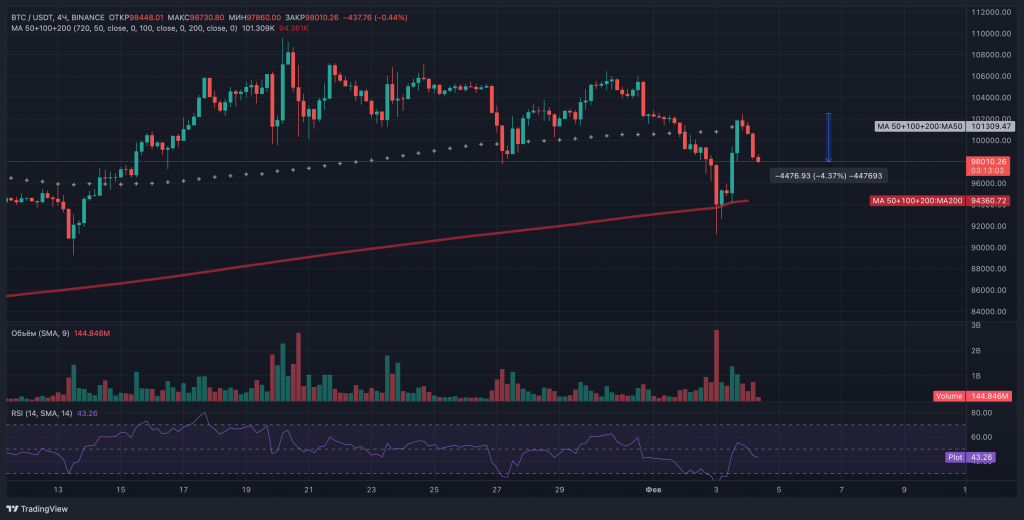
4-часовой график BTC/USDT. Источник: скринер криптовалют Cryptovizor

Политические игры и криптовалюты

Рынок отреагировал ростом на новость об отсрочке введения пошлин США в отношении сначала Мексики, а затем и Канады на один месяц. Дополнительным позитивным фактором стало подписание Дональдом Трампом (Donald Trump) указа о создании первого в своем роде суверенного фонда благосостояния.

Сегодня (22:30 MSK) советник Белого Дома по криптовалютам Дэвид Сакс (David Sacks) проведет пресс-конференцию, чтобы раскрыть детали политики США в отношении цифровых активов. «Администрация Трампа планирует вернуть Америке лидерство в сфере цифровых активов», — прокомментировал популярный трейдер Jelle в своем посте в соцсети X.

Аналитики о перспективах биткоина

Трейдер, аналитик и предприниматель Михаэль ван де Поппе (Michaël van de Poppe) полагает, что волатильность сохранится. «Биткоин быстро восстановился и сейчас торгуется в диапазоне. Я предполагаю, что в феврале мы увидим новые исторические максимумы. Вполне нормально корректироваться после такого сильного отскока. Волатильность зашкаливает, но пока биткоин остается выше $93 000, вероятен новый исторический максимум», — отметил он.
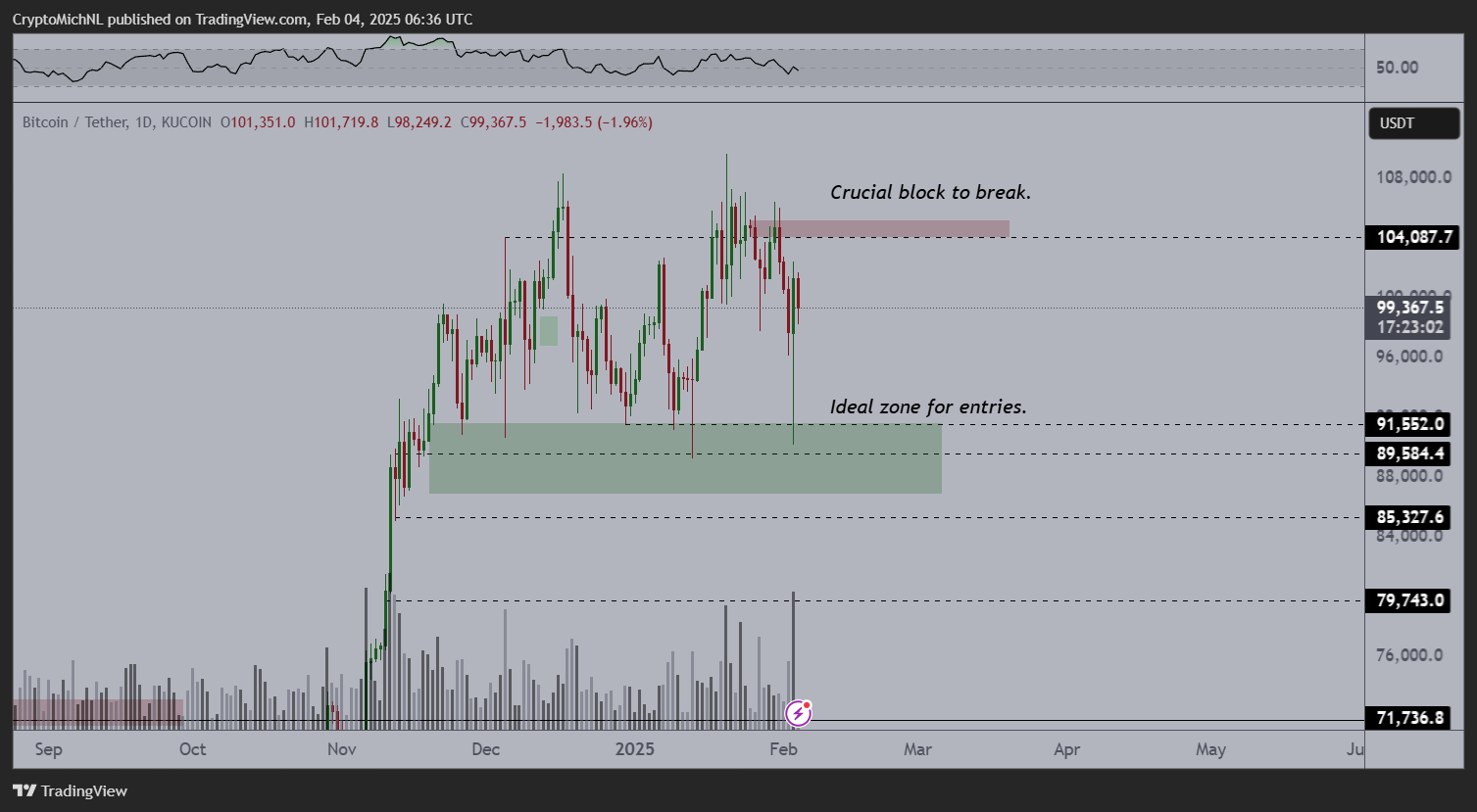
1-дневный график BTC/USD. Аналитика: Михаэль ван де Поппе

Технические индикаторы подают позитивные сигналы

Аксель Адлер-младший (Axel Adler Jr.), аналитик платформы CryptoQuant, обратил внимание на фандинг на рынке деривативов. «В седьмой раз в этом году ставка финансирования биткоина стала отрицательной. Все шесть предыдущих случаев оказались бычьим сигналом», — подчеркнул он.
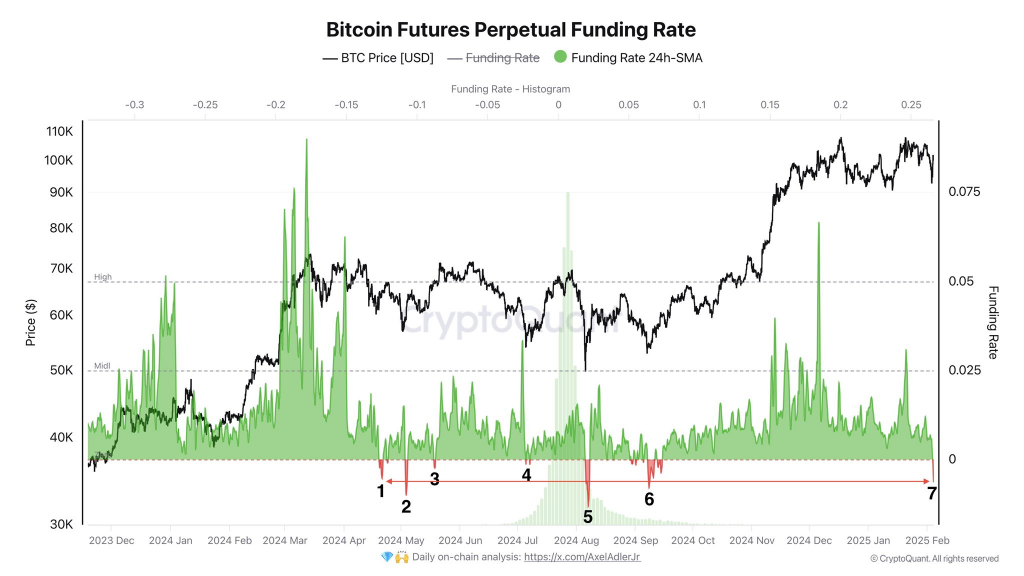

Фандинг фьючерсов на биткоин. Источник: CryptoQuant

Related Reads

'Bear' Doomsday Prophecy: AI 'Reaching Its Peak', U.S. Stocks to Top Out Fastest in Q3, Down 30-50%

"A Short Seller's Dire Prediction: AI Boom Fading, US Stocks to Peak by Q3 with 30-50% Decline" Prominent macro investors Jeffrey Gundlach and Felix Zulauf warn that the AI-driven market rally is nearing its end, forecasting a major US stock market correction of 30-50%, potentially beginning as early as Q3. Their analysis points to alarming parallels with historical market tops, citing extreme concentration in the top AI-related stocks within the S&P 500. Zulauf's bearish thesis hinges on unsustainable capital expenditure trends among major cloud companies, negative free cash flow emergence, and soaring semiconductor prices. Gundlach highlights dangerous parallels to the 1999 tech bubble peak. A key divergence from conventional wisdom is Gundlach's view that long-term Treasury yields will not fall meaningfully even during a recession, due to America's structurally out-of-control fiscal deficits and soaring interest costs. He warns this could force the government into yield curve control or even a sovereign debt restructuring. Both investors express severe concerns about the opaque private credit market, drawing parallels to the pre-2008 financial crisis environment. They allege widespread rating inflation, misrepresented credit quality, liquidity illusions, and fraudulent asset valuations within this sector. The analysis links the AI boom and private credit crisis through financing costs. They argue that as AI companies' cash flows weaken and they seek funding, a high and sticky long-term interest rate environment will severely stress lower-rated corporate borrowers, exposing cracks in credit markets. Finally, they predict a regime shift where the US dollar weakens and US equities underperform global markets, marking the end of their long dominance. The stage is set for a significant market reversal.

marsbit9m ago

'Bear' Doomsday Prophecy: AI 'Reaching Its Peak', U.S. Stocks to Top Out Fastest in Q3, Down 30-50%

marsbit9m ago

Why Does No One Buy DeFi Insurance?

**Title: Why Isn't DeFi Insurance Being Bought?** DeFi insurance, which promised automated, unbiased payouts via smart contracts, has failed to gain traction. The core issue is economic: high premiums severely erode the yields that attract users to DeFi in the first place. For example, insuring a USDC deposit on Aave V3 could cost 1.5–2.5% of the annual yield, leaving a net return barely above a savings account. For riskier platforms like Maple Finance or Ethena, premiums can even turn net yields negative. Consequently, users often forgo insurance, as it nullifies their profit motive. The market also suffers from structural flaws. First, DeFi risks are highly correlated (e.g., an oracle failure can impact multiple protocols simultaneously), unlike the independent risks in traditional insurance. This makes large-scale events potentially catastrophic for insurers. Second, the total capital in DeFi insurance pools (e.g., Nexus Mutual's ~$81.5M) is minuscule compared to the hundreds of billions in total value locked (TVL), creating a massive capacity gap. A single major hack could drain the entire industry's reserves. Furthermore, the governance model where tokenholders vote on claims creates a conflict of interest, incentivizing them to deny payouts to protect their own funds. As a result, the sector is shrinking. While pioneers like Nexus Mutual are pivoting to preventative measures (bug bounties) and seeking external capital via reinsurance, the fundamental problems remain. DeFi insurance represents a public good—its stability benefits the entire ecosystem—but without a mechanism to share costs, a "tragedy of the commons" ensues where no one is willing to pay, leaving the system vulnerable.

marsbit23m ago

Why Does No One Buy DeFi Insurance?

marsbit23m ago

Trading

Spot
Futures
活动图片