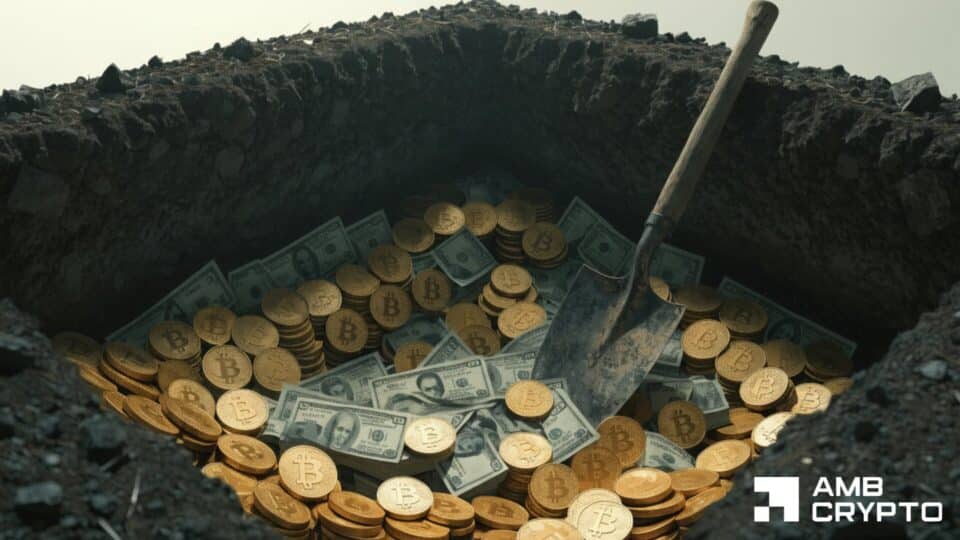
Coinbase запустила обеспеченные биткоином кредиты

investing.ruPublished on 2025-01-17Last updated on 2025-01-17

Представители биржи заявили, что клиенты могут получить кредиты до $100 000 в стейблкоинах USDC, используя свои биткоины на Coinbase (NASDAQ:COIN) в качестве залога. Продукт призван расширить финансовые возможности пользователей площадки в области децентрализованных финансов (DeFi).

Схема кредитования выглядит следующим образом: клиент Coinbase выбирает ончейн-кредит, залоговые средства в первой криптовалюте конвертируются в соотношении 1:1 в обернутый биткоин от биржи (cbBTC) без комиссии. Затем cbBTC передается в протокол Morpho для дальнейшей обработки, после чего клиент получает кредит в USDC на свой счет Coinbase.

По данным биржи, процентные ставки по ончейн-кредитам являются переменными и автоматически определяются Morpho на основе рыночных условий. График погашения кредита гибкий, без минимальных платежей или четко оговоренных сроков. На данный момент такие кредиты могут получить только клиенты из США, за исключением Нью-Йорка, однако в будущем Coinbase планирует выход и на другие рынки.

Ранее Coinbase опубликовала официальный ответ на жалобу компании BiT Global, связанную с основателем Tron Джастином Саном, пояснив причину делистинга «обернутого биткоина» (wBTC) с платформы.

Читайте оригинальную статью на сайте Bits.media

Related Reads

The Largest Upgrade Since The Merge? How Glamsterdam Will Affect Ethereum and Regular Users?

The upcoming Glamsterdam upgrade, scheduled for late 2026, is considered Ethereum's most significant change since The Merge. It focuses on fundamentally restructuring Ethereum's block production, transaction execution, and gas pricing to enable major scalability improvements while preserving decentralization. The upgrade centers on three key innovations: * **Enshrined PBS (ePBS)**: Moves the Proposer-Builder Separation mechanism into the protocol's core, eliminating reliance on external relays. This reorganizes the block pipeline, extending the time window for processing execution payloads, which is crucial for safely increasing block capacity. * **Block-Level Access Lists (BALs)**: Attaches a "map" to each block, declaring in advance which state data its transactions will access. This enables potential parallel transaction processing and faster node synchronization, breaking a key performance bottleneck. * **Gas Repricing**: Introduces a more accurate resource pricing model by separating computation costs from state storage costs. This discourages uncontrolled state growth by making operations that create permanent data (like new accounts) more accurately reflect their long-term network burden. Together, these changes aim to solve the core challenges of increasing Ethereum's throughput (e.g., raising the Gas Limit) without overburdening node hardware or increasing centralization risks. They prepare the infrastructure for higher capacity, targeting a credible post-upgrade capacity of up to 200 million Gas. For users, the impact will be nuanced: * General transaction fees may become lower and more stable as block space increases. * Simple transfers could see cost reductions, while state-intensive operations (like contract deployment) may become relatively more expensive due to the new gas model. * Gas fee estimations by wallets will become more accurate. * L2 networks could benefit long-term from increased data blob capacity. * Standardized logs for all ETH transfers (EIP-7708) will improve tracking for wallets and exchanges. Ultimately, Glamsterdam represents a foundational shift, not a simple block size increase. It seeks to expand Ethereum's capacity by re-engineering its underlying mechanics, maintaining its commitment to decentralization while enabling significant performance gains.

marsbit3h ago

The Largest Upgrade Since The Merge? How Glamsterdam Will Affect Ethereum and Regular Users?

marsbit3h ago

Trading

Spot
活动图片