Приток биткоина на криптобиржи упал до уровней 2016 года

cryptonews.ruPublished on 2020-05-31Last updated on 2024-12-31

В течение нескольких недель до конца 2024 года суточное количество депозитов BTC на биржи снизилось до 30 000. По мнению аналитика CryptoQuant Алекса Адлера-младшего, это может указывать на приближение скорого ралли первой криптовалюты.
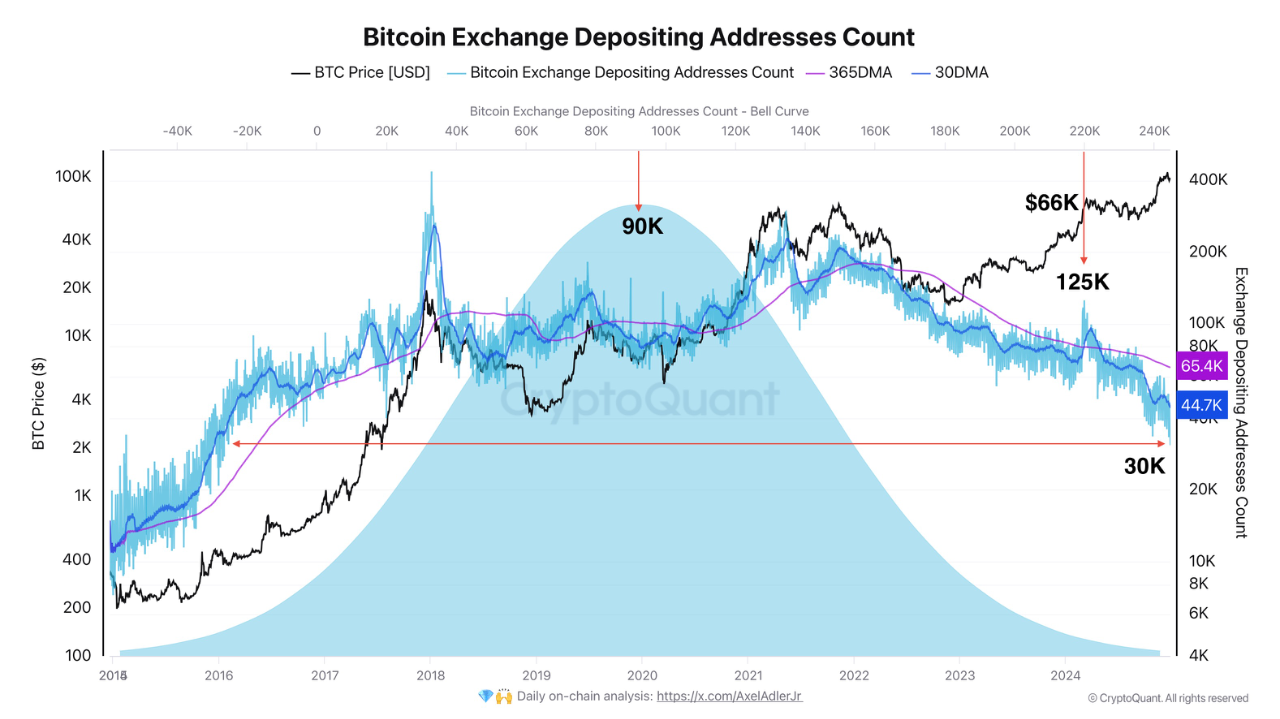
График количества адресов, внесших BTC на биржи. Данные: CryptoQuant.

Текущие показатели в три раза меньше среднего значения за последние 10 лет — 90 000. По словам эксперта, пиком в этом цикле стала отметка в 125 000 депозитов за сутки.

«Когда пользователи отправляют меньше монет на торговые платформы, это обычно говорит о том, что они предпочитают хранить свои BTC в личных кошельках, а не готовятся к их продаже. В последний раз столь низкий уровень депозитов наблюдался в начале крупного ралли биткоина. Хотя это не означает гарантированного роста цены в ближайшее время, такая тенденция указывает на возможный дефицит биткоина на спотовом рынке», — отметил Адлер-младший.

Показатель отношения суммарных притоков к общим резервам бирж — еще один потенциальный индикатор ралли.
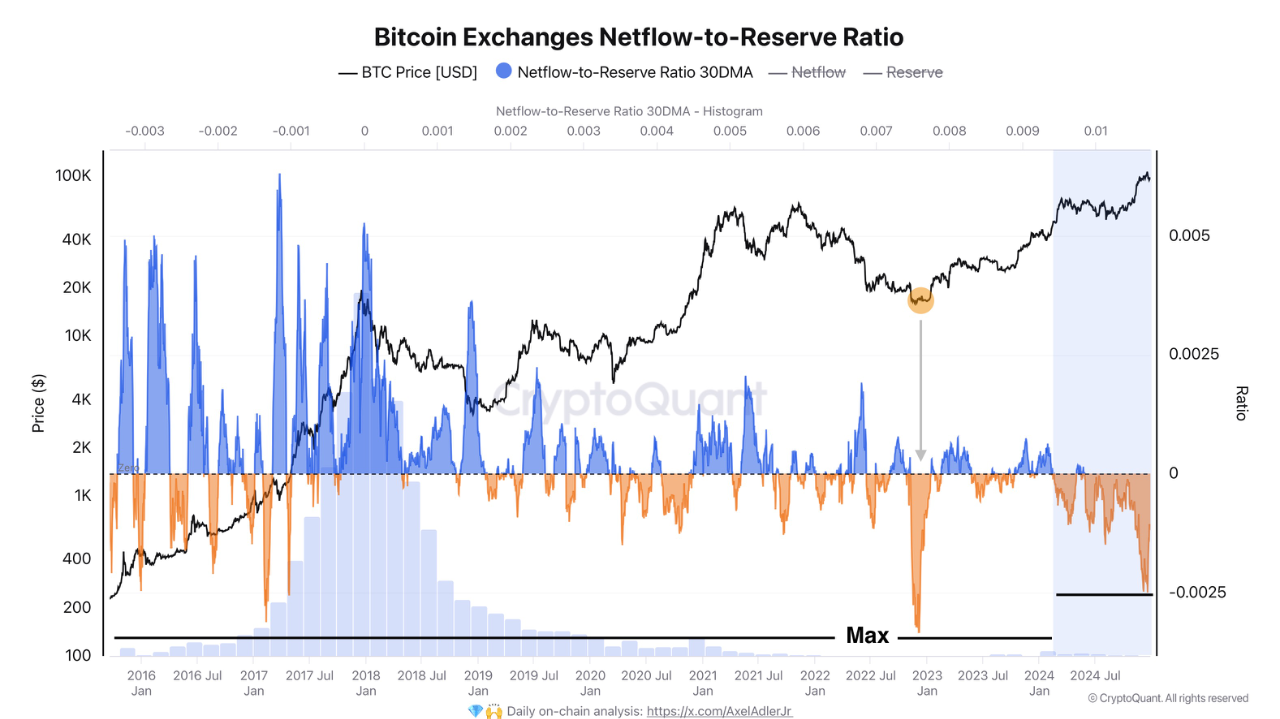
График отношения суммарных притоков к резервам бирж. Данные: CryptoQuant.

«Наиболее ярко выраженные минимальные значения наблюдали под конец медвежьего рынка, когда “продвинутые” игроки активно покупали монеты у вынужденных продавцов по $17 000», — добавил эксперт.

Согласно выводам Адлера-младшего, спад количества депозитов и отношения притоков к резервам бирж сигнализирует о надвигающихся «более значительных» движениях цены.

Напомним, в конце декабря эксперты предупредили о об углублении коррекции цены биткоина перед новым максимумом.


Related Reads

NVIDIA CPU Advances, China's RISC-V Responds: Semiconductor Deep Dive - Part Four

NVIDIA is set to launch its new Vera AI data center CPU in China as early as August, with high pricing. While this move offers a new option, it highlights China's continued dependence on foreign-controlled Arm architecture. In response, the Chinese semiconductor industry is increasingly turning to RISC-V as a strategic alternative for achieving high-performance computing autonomy. The article explores the concept of the "impossible triangle" in CPU development—balancing prosperity, control, and autonomy—and posits that RISC-V's open-source, modular nature offers a unique path to achieving all three. While RISC-V is already dominant in embedded systems, the focus is now shifting to data centers and AI workloads. China has become a global hotspot for RISC-V development, driven by AI-driven compute demand, supply chain concerns from export controls, cost benefits of open-source, and strong policy support. Multiple Chinese companies have reportedly crossed the key performance threshold of 15 SPECint per GHz, a benchmark for entering the high-performance CPU club. Progress extends beyond single-core benchmarks. Companies are developing complete computing subsystems, including commercial-grade coherent network-on-chip (NoC) technology and server processors with up to 40 cores that strictly adhere to the RVA23 standard to ensure software compatibility. Real-world applications are emerging in areas like video transcoding and edge AI. However, significant challenges remain. The RISC-V ecosystem faces fragmentation, immature toolchains and verification processes, and gaps in single-core performance and energy efficiency compared to mature x86 and Arm architectures. The formidable software moat, epitomized by NVIDIA's CUDA, is a long-term hurdle. In conclusion, while RISC-V cannot immediately replace offerings like NVIDIA's Vera, it represents a viable long-term path for China to develop a self-sufficient, high-performance CPU ecosystem. The journey is acknowledged to be long and arduous, requiring sustained effort to overcome technical and ecosystem challenges.

marsbit6h ago

NVIDIA CPU Advances, China's RISC-V Responds: Semiconductor Deep Dive - Part Four

marsbit6h ago

Trading

Spot
Futures
活动图片