Polymarket: громкий успех и скромные доходы Polygon

cryptonews.ruPublished on 2024-01-25Last updated on 2024-10-25

Популярность платформы для предсказаний Polymarket принесла блокчейну Polygon неожиданно скромные финансовые результаты. Несмотря на объем ставок в $2,4 млрд только на президентских выборах США, комиссии составили лишь $27 000 с начала 2024 года.
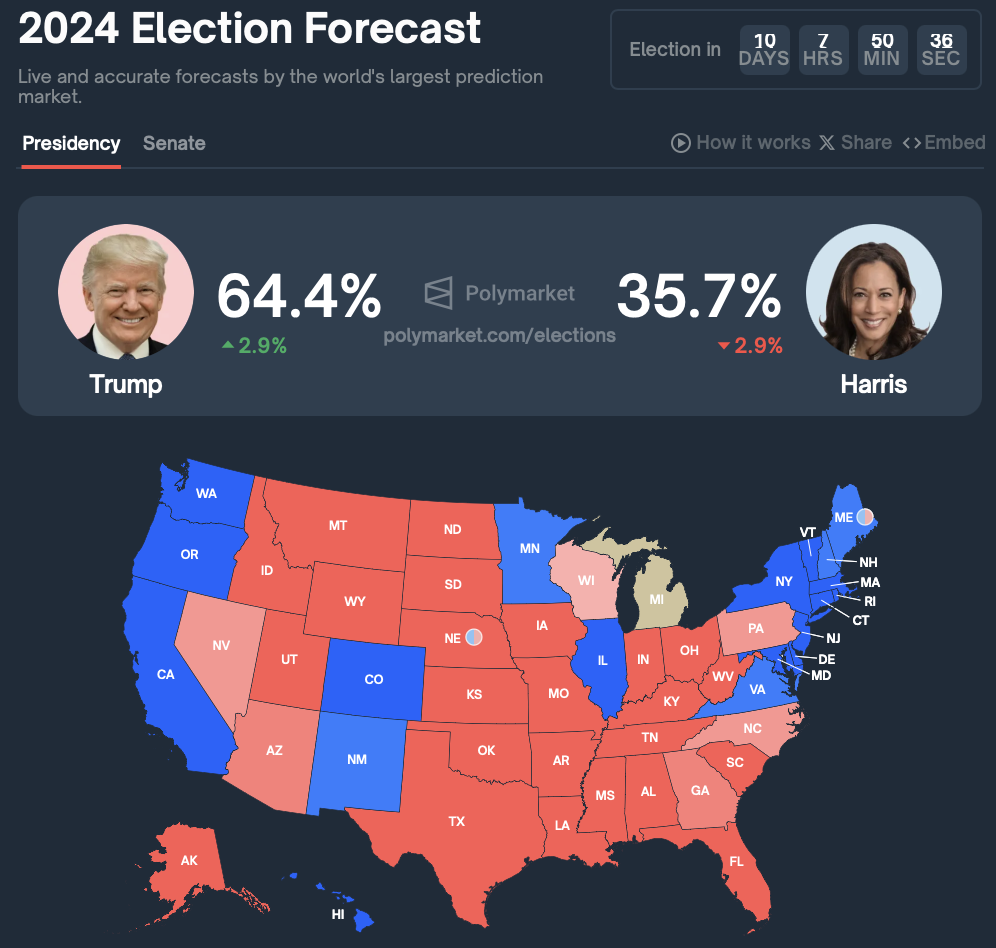
Трейдеры активно делали ставки не только на политические события, включая прогнозы на победу Дональда Трампа или Камалы Харрис, но и на исход документального фильма HBO о биткоине — в частности, на то, кого создатели попытаются идентифицировать как Сатоши Накамото. При этом успех платформы пока не помог токену проекта Polygon (MATIC), который потерял 65% стоимости с начала года.
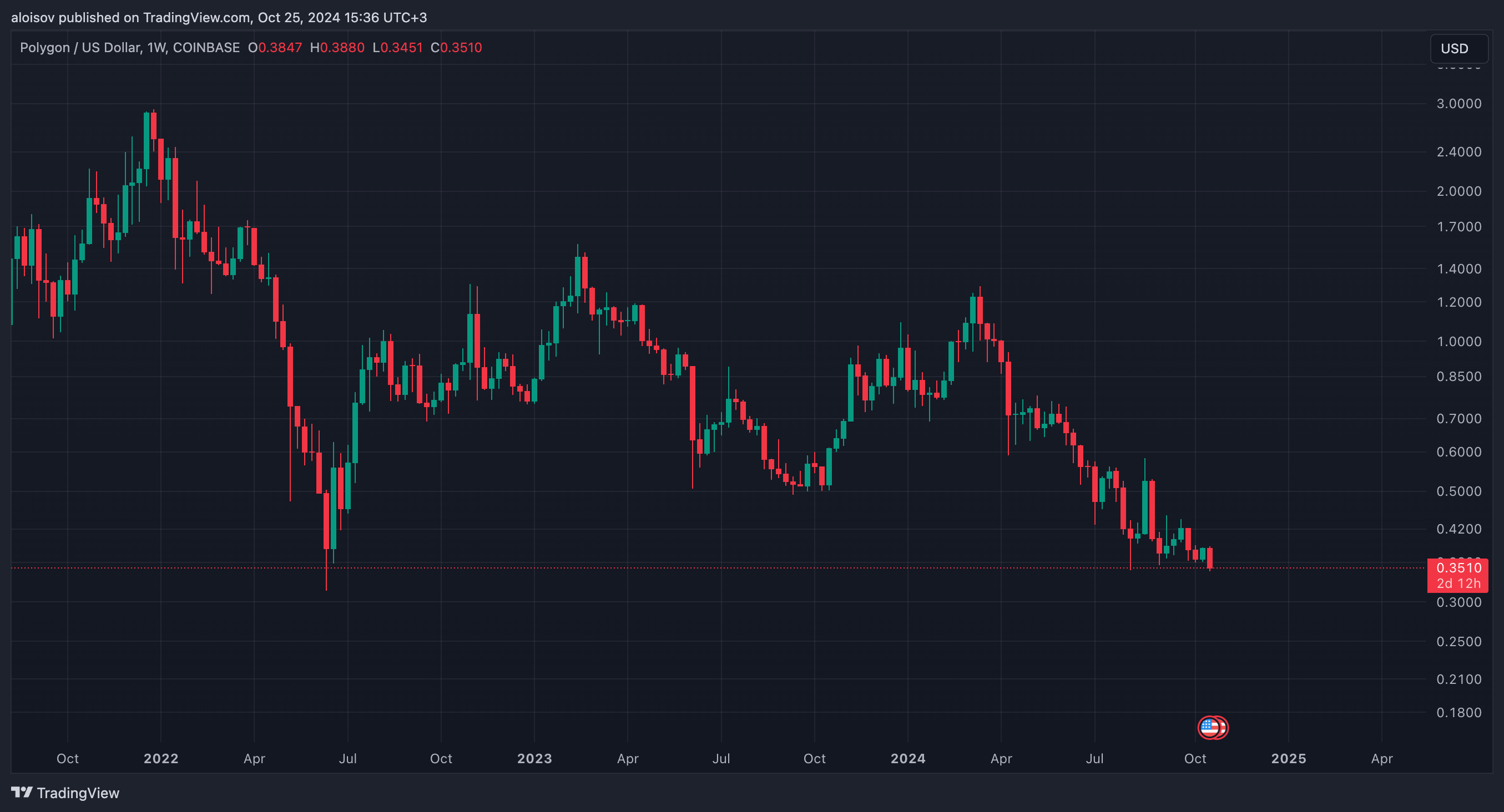
1-недельный график MATIC/USD. Источник: Coinbase/TradingView

Почему такие низкие доходы?

Глава Polygon Labs Марк Бойрон (Marc Boiron) объясняет ситуацию несколькими факторами. Каждая ставка на Polymarket создает транзакцию в сети Polygon, которая включает базовую и приоритетную комиссии. Базовая часть сжигается, отправляясь на нулевой адрес, что теоретически должно приносить пользу держателям токенов за счет сокращения предложения.

«Базовая комиссия регулируется и зависит от загруженности сети. Когда сеть становится более загруженной, базовая комиссия увеличивается», — поясняет Бойрон.

Приоритетная комиссия выплачивается валидаторам. «Вы платите валидатору, чтобы сказать: ’Пожалуйста, включите меня в блок‘. Чем выше комиссия, тем раньше валидатор включит вас в блок при большей загруженности», — добавляет глава Polygon Labs.

Статистика использования

По данным исследовательской команды Polygon, в октябре на Polymarket пришлось 5,2% транзакций в сети Polygon. Для сравнения, доля Chainlink составила 10,38%, а переводы стейблкоина USDT — 4,89%.

23 октября Polymarket использовал около 8% вычислительной мощности (gas) сети Polygon PoS, став крупнейшим отдельным потребителем согласно данным PolygonScan.

Внимание важнее денег

«Я изучил архитектуру платформы и никогда не ожидал больших комиссий от Polymarket, потому что у него нет такой сложной системы взаимодействия компонентов, как у Uniswap. Пользователи просто приходят, выполняют транзакцию и все. По своей природе это не будет генерировать много комиссий, пока количество пользователей существенно не вырастет», — объясняет Бойрон.

Для Polygon это первый органический успех после серии оплаченных партнерств со Starbucks и Meta (экстремистская компания, запрещенная в России), которые не принесли ожидаемых результатов. «Разные приложения выполняют разные роли. Polymarket предоставляет пользователям дешевые транзакции, а нам — внимание. Это и есть главная ценность», — подчеркивает глава Polygon Labs.

«Если бы децентрализованная биржа с книгой ордеров показала такие же комиссии за несколько месяцев, это было бы провалом. Там ожидается огромное количество размещенных, отмененных и исполненных ордеров, что должно генерировать множество транзакций», — отмечает Бойрон.

Успех Polymarket демонстрирует возможность создания популярных приложений на базе Polygon, где пользователи могут даже не догадываться, что работают с блокчейном. А низкие комиссии в $27 000 лишь подчеркивают доступность сети для пользователей.

Related Reads

Will There Be a Next Wave of Web3 Games? Veteran Player's Review: At the Peak of Hype, You Should at Least Sell Half

**Title: Is There Another Wave for Web3 Gaming? A Veteran Player's Review: When Hype Peaks, You Must Exit at Least Half** **Summary:** In an interview, veteran player "Earn Money Chicken" shares his journey and reflections on Web3 gaming. He transitioned from being a traditional in-game trader to a Web3 gamer, having profited from games like Mobox, StepN, and Seraph, but also experiencing significant losses. He defines himself primarily as a player, not an investor, attracted to Web3 games for the blend of earning potential, engaging gameplay, and the satisfaction of researching game mechanics. While he enjoys strategic "gambling" within games, he emphasizes it's not about zero-sum competition with other players. The interview explores the complex, often adversarial relationship between players, projects, and major investors (whales). The player's experience as a traditional game merchant helped develop his analytical mindset for spotting opportunities, but wasn't directly transferable. He identifies the core sources of profit in early Web3 gaming as **"era红利" (era-specific红利)** and strategic foresight, not just simple calculations. He warns that the biggest mistake ordinary players make is calculating their return-on-investment (ROI) period at peak hype, as asset and yield depreciation can trap them. Reflecting on his wins and losses, he now advocates for managing expectations. His most successful exit was from Seraph, where he sold at a relatively good time. The key problem with current Web3 games, he argues, is that most are not mature games first. A successful Web3 game must primarily be a **good, fun game** with a genuine player base willing to spend money for enjoyment, not just participants seeking profit. The blockchain element should solve problems within that context, not be the primary driver. While he believes the sector might see another speculative boom (possibly another strong "Ponzi" model attracting hype), a truly mature and sustainable Web3 game likely needs to come from a traditional major game studio. It would leverage a proven IP, mature content, a functional NFT trading system, and attract both traditional and crypto-native players, offering more normalized returns rather than extreme暴利. His final advice: Newcomers without prior experience should avoid the space now, as it's like searching for a diamond in the rough. For those remaining, the rule is: be brave when assets are low and overlooked, but **when everyone is talking about it (at peak hype), you must sell at least half your holdings.**

marsbit40m ago

Will There Be a Next Wave of Web3 Games? Veteran Player's Review: At the Peak of Hype, You Should at Least Sell Half

marsbit40m ago

The Most Hidden AI Winners

"The Most Under-the-Radar AI Winners" While core AI giants and their direct suppliers have dominated headlines, a group of seemingly unrelated, decades-old manufacturing companies have emerged as major beneficiaries. A key example is Japan's TOTO, famous for bathroom fixtures. Its stock soared 145% in a year, driven not by its mainstay toilet business but by its nearly 40-year-old semiconductor ceramic component unit. Specifically, TOTO manufactures electrostatic chucks—critical, hard-to-replace parts for advanced chip manufacturing processes like etching and EUV lithography. This segment, though only 9% of revenue, contributed over 54% of operating profit in FY2025 with a 43% margin. High barriers to entry, including deep know-how in high-purity ceramic sintering and long supplier certification cycles (5+ years), secure its position. This pattern repeats across industries. Nitto Boseki, a 128-year-old glass fiber maker, saw its stock rise 325% due to near-monopoly supply of T-glass, an essential low-expansion material for AI chip substrates. Similarly, Ajinomoto, the global MSG leader, commands 80-95% of the market for ABF film, a vital insulating layer in chip packaging. These "hidden" segments, often born from deep materials science expertise, are now bottleneck supplies in the AI hardware chain, enjoying pricing power and high margins. In China's A-share market, the theme combines this AI-driven demand with domestic substitution. Companies like Zhongci Electronic (advancing in electrostatic chucks) and Honghe Technology & Feilihua (in high-end electronic glass fabrics) are gaining traction. The investment thesis hinges on whether these domestic players can rapidly scale qualified capacity to capture the supply gap within the critical time window. Ultimately, these cases show that in the AI supply chain, high-profit concentrations exist not only at the cutting-edge tech frontier but also in indispensable, difficult-to-replicate materials and components. Market recognition often lags behind fundamental profit shifts, creating potential for significant re-ratings as traditional industrial firms are re-evaluated as key enablers of advanced semiconductor manufacturing.

marsbit1h ago

The Most Hidden AI Winners

marsbit1h ago

The Most Secretive Winners of the AI Boom

"The Most Hidden AI Winners" An unlikely group of companies are emerging as major beneficiaries of the AI boom, not from designing chips, but from supplying critical materials and components essential for advanced semiconductor manufacturing. These 'hidden winners' are traditional manufacturers whose deep expertise in materials science has become indispensable. Japanese companies are leading this trend. Toto, globally known for bathroom fixtures, has seen its stock surge 145% over the past year, driven by its 40-year-old semiconductor ceramics business, which now contributes over half of its operating profit. Its electrostatic chucks are vital for advanced chip production and require years of expertise to manufacture. Similarly, Nittobo, a 128-year-old textile firm, controls 90% of the market for T-glass, a low-expansion glass fiber essential for AI chip substrates. Ajinomoto, the world's largest MSG producer, dominates the market (80-95% share) for ABF insulating film used in chip packaging. The core insight is that chasing "advanced" chips paradoxically increases reliance on traditional, high-precision material science where supply cannot be quickly replicated. These materials are now critical bottlenecks in the AI supply chain. This trend is mirrored in China's A股 market, framed by the theme of 'import substitution'. Companies like Zhongci Dianzi (electrostatic chucks) and Honghe Technology (ultra-thin electronic cloth) are making progress, but face the test of scaling production and matching Japanese rivals' quality. The key tension lies in the slow change of market perception. While profit structures rapidly shift towards high-margin tech components, these firms retain their traditional industry classifications, creating a valuation gap that is gradually closing as their roles in the AI ecosystem become undeniable.

链捕手1h ago

The Most Secretive Winners of the AI Boom

链捕手1h ago

Trading

Spot
活动图片