Сколько стоит токен World Liberty Financial (WLFI)

cryptonews.ruPublished on 2023-06-16Last updated on 2024-10-16

Насколько успешен лендинговый криптопроект, поддерживаемый семьей Трампа

Вчера, 15 октября, началась публичная продажа токенов криптоплатформы World Liberty Financial, в команде которой состоят три сына бывшего президента США Дональда Трампа. Проект был анонсирован в конце августа. Команда проекта отметила, что продажа криптовалюты WLFI доступна только аккредитованным инвесторам, а сам токен предназначен для участия в управлении и не предполагает экономических стимулов.

16 октября Трамп лично анонсировал продажу токенов проекта World Liberty Financial через социальную сеть X. Число держателей токена превысило 8,5 тыс. при общем количестве токенов WLFI 100 млрд. Более 82% от всех токенов находятся всего на трех адресах и, вероятно, ожидают дальнейшего распределения, согласно Etherscan, по данным на 16 октября (13:00 мск).

rbc.group

Это не первый проект с участием Трампа — он активно поддерживает криптоиндустрию, выпускает NFT и собирает пожертвования на предвыборную кампанию в цифровых монетах. Таким образом ему удалось собрать к середине августа около $35 млн: более $7 млн от продаж NFT и $28 млн в виде донатов.

Также отдельно отмечается, что комитет по политической активности Trump 47 Committee собрал в поддержку Трампа $7,5 млн в криптовалютах: биткоине, Ethereum, XRP и стейблкоине USDC в период с 1 июля по 30 сентября, пишет CNBC.

Комитеты по политической активности (political action committee, PAC) — независимые организации, которые могут учреждаться корпорациями, профсоюзами или политиками, они также централизованно собирают пожертвования для поддержки одного или нескольких кандидатов и для контрпропаганды.

Почему Трамп начал открыто поддерживать криптовалюты. Карточки

К 13:00 мск 16 октября продано около 761 млн токенов WLFI из планируемых 20 млрд при цене одного WLFI $0,015. Это показывает, что проект, поддерживаемый Трампом, привлек почти $11,5 млн, согласно данным на сайте проекта. Доступ к сайту нестабилен, пользователи сталкиваются с ограничениями доступа, а также общими сбоями на сайте.

Также известно, что WLFI является токеном управления и не может быть передан в ближайшие 12 месяцев, хотя его можно использовать для голосования на платформе, пишет The Block.

Согласно «дорожной карте» проекта, продажа токенов WLFI направлена на привлечение $300 млн при полностью разводненной оценке (FDV) проекта в $1,5 млрд.

FDV (fully diluted valuation) — полностью разводненная оценка криптопроекта, рассчитываемая путем умножения цены одного токена на их максимальное количество, как если бы все токены находились в обращении на открытом рынке.

Всего месяц назад соучредитель проекта Зак Фолкман заявил, что для продажи выделят 63% токенов, 17% пойдут на вознаграждения для пользователей и 20% WLFI предназначены команде.

Однако в документах на сайте проекта прописаны иные условия распределения токенов:

  • 35% — для продажи (хотя на сайте анонсировано только 20%). Возможно, что ожидаются еще раунды финансирования посредством продажи токенов.
  • 32,5% — для расширения сообщества, стимулирования разработок и развития протокола.
  • 30% — выделены для первоначальных пользователей.
  • 2,5% — предназначены для команды и консультантов.

О проекте WLFI

Начальным этапом для World Liberty Financial станет запуск кредитной платформы из категории децентрализованных финансовых приложений (DeFi) на базе крупнейшего на рынке лендингового протокола Aave. Изначально платформу запустят на базе сети Scroll, представляющей собой решение второго уровня, предназначенного для масштабирования Ethereum, по сообщению The Block. Это позволит клиентам платформы давать взаймы и брать токены в кредит под залог других активов.

Кредиты без посредников. Как работает Aave, почему платформа популярна

Платформа передаст 7% от всех своих токенов (7 млрд WLFI) в адрес организации Aave DAO (децентрализованная автономная организация) для наделения Aave весомым правом голоса, а также обязуется перечислять 20% комиссий, генерируемых World Liberty Financial.

ДАО (англ. DAO — decentralized autonomous organization) — это децентрализованная автономная организация, которая управляется с помощью голосования владельцев токенов управления (governance tokens) блокчейн-проекта при помощи смарт-контрактов. Любой владелец токенов может самостоятельно выдвинуть предложение по развитию проекта или поучаствовать в голосовании за другие предложения.

На следующем этапе WLFI планирует интегрироваться с централизованными биржами для внедрения сервисов аттестации пользователей с помощью блокчейна, где клиенты смогут авторизоваться в WLFI по данным от централизованных сервисов. World Liberty также намерена создать кредитную карту, ориентированную на стейблкоины, чтобы позволить людям тратить свои токены в физическом мире.

На заключительной стадии развития проект планирует начать внедрять токенизированные активы реального мира (Real world assets, RWA), включающие отели и спортивные клубы.

Лидерство Трампа

Активная фаза подготовки проекта к продаже токена WLFI совпала с увеличением вероятности победы Трампа на выборах, согласно Polymarket, платформе прогнозирования в криптовалютах.

Рынки прогнозов (prediction market) в криптовалютах — это площадки, где люди могут делать ставки на исход будущих событий, используя криптовалюту. Выбирая однозначный ответ «да» или «нет», участники определяют рыночную оценку вероятности наступления события. Polymarket является крупнейшей подобной платформой.

С середины августа по начало октября трейдеры Polymarket оценивали вероятность победы Трампа практически равнозначно вероятности победы вице-президента Камалы Харрис. Однако с начала октября вероятность победы Трампа значительно выросла — почти до 60 против 40% у Харрис.
Related Reads

A Group of Suzhou Engineers Unexpectedly Attain Financial Freedom

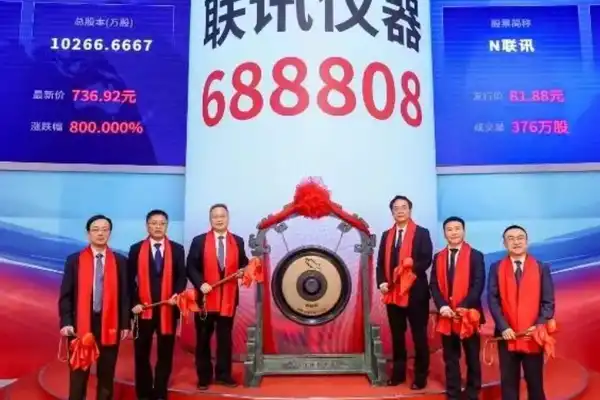
In Suzhou, a group of engineers from Lianxun Instruments, a leader in optical communication testing equipment, have achieved remarkable wealth after the company's IPO. Listed just two months ago on the STAR Market, the company's stock price surged approximately 30 times, making it the only A-share stock priced above 2,000 yuan. This surge created substantial fortunes for nearly 100 technical employees who held a collective 15.91% stake through employee stock ownership platforms, valued at over 36 billion yuan at the current market cap. Among them, nearly 40 became billionaires, while even the smallest holdings exceeded 5 million yuan in value. Founded in 2017 by Hu Haiyang, Yang Jian, and Huang Jianjun, Lianxun Instruments was established to address China's reliance on foreign high-end testing instruments. The company grew rapidly with a strong focus on R&D, where technical staff make up nearly 80% of its workforce. Early implementation of employee stock plans helped retain this core talent. The company's explosive growth is fueled by booming AI computing demand, with clients including major global optical module leaders. Its revenue skyrocketed from 276 million yuan in 2023 to 1.194 billion yuan in 2025, turning a profit in 2024. The IPO has also generated massive returns for early investors, including Suzhou's state-owned capital, which saw a hundredfold return. This story reflects a broader trend in China's markets, where technology firms in AI, semiconductors, and optics are creating new wealth, rewarding engineers and technical teams who are now central to modern capital-driven success stories, marking a shift from previous eras dominated by internet and real estate tycoons.

marsbit7m ago

A Group of Suzhou Engineers Unexpectedly Attain Financial Freedom

marsbit7m ago

NVIDIA's Annual 'Most Dangerous' Paper: AI Self-Replicating Code, Unlimited Leveling and Evolution

NVIDIA's "Red Queen Gödel Machine" (RQGM) paper proposes a potentially groundbreaking AI self-evolution framework. It breaks from the long-stalled concept of the "Gödel Machine," which required mathematically proven beneficial self-modifications, by adopting an evolutionary approach. The core, and most striking, innovation is that the AI does not just evolve its own code in a static environment. Instead, it co-evolves both the "student" (the task-performing agent) and the "examiner" (the evaluation system that judges it). This creates a dynamic, recursive self-improvement loop inspired by the biological "Red Queen Hypothesis"—where continuous adaptation is needed just to maintain relative fitness. The mechanism operates in epochs. Within an epoch, a fixed examiner evaluates all candidate code variants. At epoch boundaries, a new, potentially more rigorous examiner can replace the old one, but only if it proves statistically superior on a held-out "ground truth" dataset. This "controlled utility evolution" aims to ensure progress is measurable and grounded. The paper demonstrates RQGM's effectiveness across three domains: 1. **Code Generation:** It achieved a 71.7% test-set pass rate (improving over a 69.9% SOTA) while using 1.35-1.72x fewer computational tokens. 2. **Paper Writing:** In a subjective task, the co-evolved writer and reviewer achieved a 40.5% acceptance rate by a fixed human panel, up from 21.8%. 3. **Math Proofs:** It evolved more accurate graders (at 3x lower cost) and higher-scoring provers. Notably, RQGM also mitigated a known LLM bias where AI reviewers favor AI-generated content. By specifically rewarding reviewers that correctly rejected AI-written papers from a historical pool, the evolved system achieved impartiality while maintaining 80% accuracy. The research has sparked significant discussion about the acceleration of Recursive Self-Improvement (RSI). Some, like Anthropic's Jack Clark, have predicted a high probability of highly autonomous, self-evolving AI emerging by 2028. The paper suggests that when an AI begins to design its own evaluators and push itself toward ever-higher standards in a recursive loop, it may be taking a fundamental step toward redefining intelligence and autonomy.

marsbit32m ago

NVIDIA's Annual 'Most Dangerous' Paper: AI Self-Replicating Code, Unlimited Leveling and Evolution

marsbit32m ago

Apple and the Power Rebalancing with 'The Microns': Dissecting the Profit Ledger Behind the iPhone

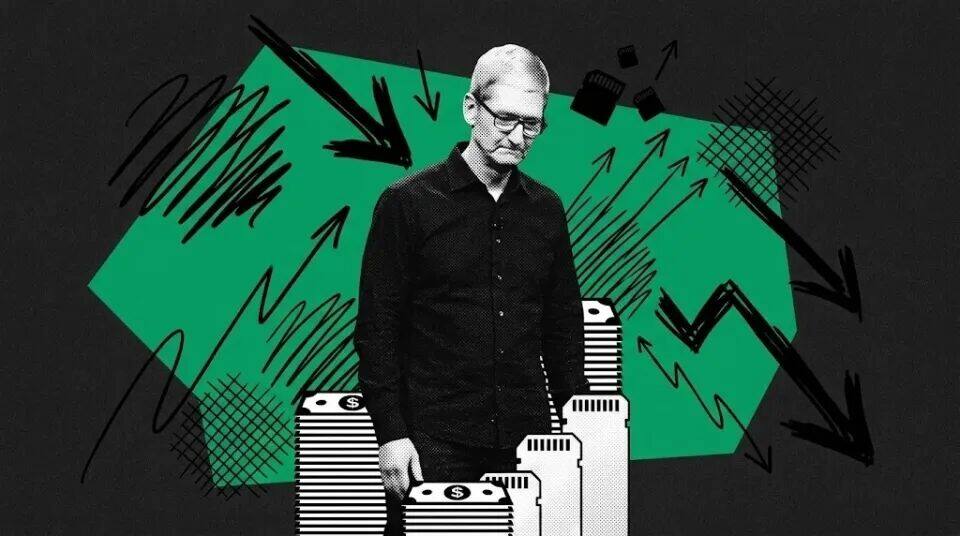
The article analyzes the shifting profit dynamics and power balance between Apple and memory suppliers like Micron within the iPhone supply chain. It highlights a social media post criticizing Apple for raising iPhone prices while blaming memory chip cost increases, despite historically paying suppliers like Micron very little. An estimated iPhone 18 cost breakdown is referenced. Historically, memory was a minor cost component. In 2017's iPhone X, memory accounted for only about 1.6-2.3% of the price, with Apple capturing nearly 50% net profit. Over time, memory's share of the Bill-of-Materials (BOM) cost has grown significantly, reaching an estimated 12-15% for the iPhone 17 series. The core driver of this change is soaring demand for memory from the AI industry, particularly for High Bandwidth Memory (HBM) and AI servers, which is diverting production capacity and squeezing supply for consumer electronics. Memory manufacturers, after enduring periods of low profits, now hold greater pricing power. This is reflected in their recent strong financials, like Micron's 84.6% gross margin. Apple CEO Tim Cook initially described the memory price pressure as unprecedented in his 40-year career, later calling it a "once-in-a-century flood," before Apple announced price hikes across several product lines, causing a significant stock drop. Elon Musk echoed Cook's sentiment about the dramatic cost surge. The article concludes that the era of memory suppliers being at the mercy of Apple's pricing power has temporarily reversed, thanks to AI-driven demand. It notes Apple is reportedly seeking to diversify its supply chain, including exploring chips from China's CXMT.

Odaily星球日报2h ago

Apple and the Power Rebalancing with 'The Microns': Dissecting the Profit Ledger Behind the iPhone

Odaily星球日报2h ago

Conversation with the Founder of 42 Macro: The Fed's 'Boiling the Frog Slowly' and the K-Shaped Economy

In a conversation with Anthony Pompliano, Darius Dale, founder of 42 Macro, discusses the Federal Reserve's monetary policy and the K-shaped U.S. economy. Dale characterizes new Fed Chair Kevin Warsh as a "dove in hawk's clothing," expecting the Fed to signal or enact policy tightening in the coming quarters to create room for later easing. He argues current economic signals, including high deficit spending, debt monetization, and credit growth, strongly indicate inflation is not on a credible path back to 2%, forcing the Fed to act. The discussion highlights the stark "K-shaped" economic reality. While top earners, buoyed by massive cash savings (up ~$8 trillion since pre-pandemic), continue robust spending, those at the bottom face severe financial strain, with delinquency rates on consumer loans reaching crisis-era highs. Dale attributes much of the current social and political anxiety to this divergence, driven by the "Cantillon effects" of monetary expansion, which disproportionately benefits asset owners. He emphasizes that in this environment of "financial repression," individuals must participate in asset markets to avoid being left behind. On equities, Dale notes a rotation from the "Magnificent Seven" tech giants into broader AI-exposed companies, while warning that the tech giants' massive capital expenditure cycles could eventually puncture over-optimistic cash flow projections. Dale concludes by stressing that the core desire across all economic strata is simply the dignity to provide for one's family, a goal currently undermined by systemic policies that act as a "wealth siphon" from the bottom to the top.

marsbit2h ago

Conversation with the Founder of 42 Macro: The Fed's 'Boiling the Frog Slowly' and the K-Shaped Economy

marsbit2h ago

Trading

Spot
活动图片