质押奖励究竟是不是区块链的隐形成本?

Odaily星球日报Published on 2024-10-03Last updated on 2024-10-03

Abstract

质押不会影响网络价值,但会稀释代币的价值

原文作者:Franklin Templeton Digital Assets

原文编译:Alex Liu,Foresight News
质押奖励究竟是不是区块链的隐形成本?

对区块链而言,质押奖励是成本吗?

在加密货币社区中,关于质押奖励是否应被视为网络成本的问题一直存在争议,因为这些代币激励措施增加了代币总供应量(从而稀释了被动持有者)。这一争议进一步复杂化,因为各方对「成本」的定义并不统一,存在对「成本」的不同理解。这篇研究文章的目的是从我们的角度定义质押奖励是否是分布式网络的成本。

什么是质押奖励?

质押奖励是提供给那些选择在权益证明(PoS)网络上质押其代币的代币持有者的。这个过程涉及锁仓数字资产,以帮助验证交易并保护区块链网络。这些质押的代币作为验证者的抵押品,承诺以诚实的方式行事。如果验证了欺诈性交易,将会失去(slashing)这部分抵押品。这些抵押品是以区块链的原生资产计价的(以太坊使用 ETH,Solana 使用 SOL)。

质押奖励导致代币供应量的通货膨胀,因为奖励是通过新铸造的代币分发给诚实的验证者的,验证者质押其资本以此保障网络安全。例如,截至 2024 年 9 月 18 日,ETH 和 SOL 的年化通货膨胀率分别约为 0.8% 和 5.0% ,这完全是由质押奖励产生的。

争议:

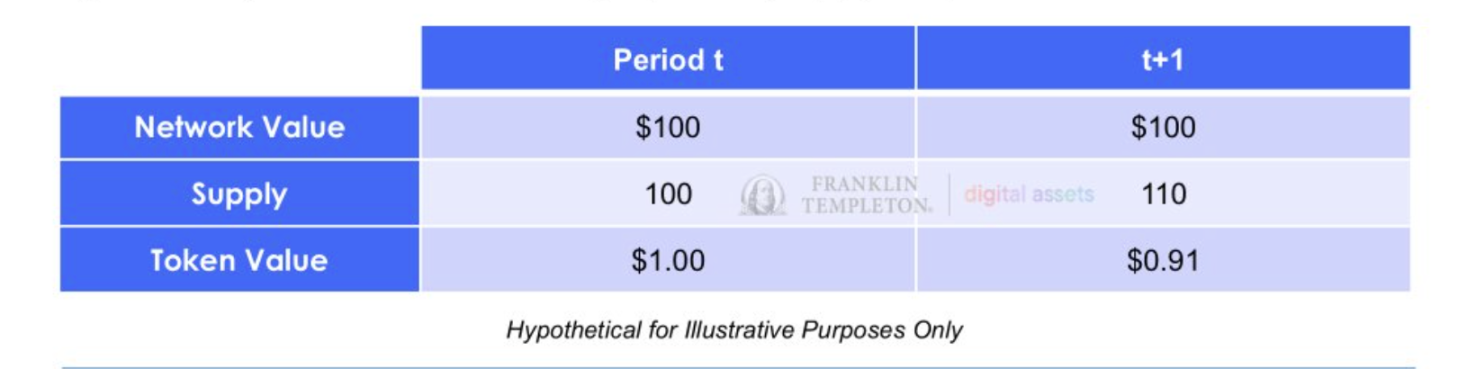
从一个角度看,网络价值受代币数影响,质押奖励引入了新的供应量,将相同的价值分配给更多的代币,从而降低了代币价格。相反,另一种观点认为网络价值是以市值定义的,因此质押奖励并不是网络的成本,因为它们纯粹是非质押者向质押者的价值转移。我们的观点是,这两种看法都是正确的,只是从不同的角度来看待问题。质押奖励对代币价格来说是一种成本,因为供应量在增加;但它并不是网络价值的成本,因为代币供应影响的是代币的总数,而不是总价值。下表说明了从 t 期到 t+ 1 期供应量变化对代币价值的假设动态:
质押奖励究竟是不是区块链的隐形成本?

我们认为,关键点在于,尽管整个网络价值保持不变,但代币供应量的增加导致每个代币的价值下降。我们不认为增加供应会改变网络价值。而如果认为代币价值不会因供应量增加而受到影响,就像是相信钱会从天上掉下来一样。

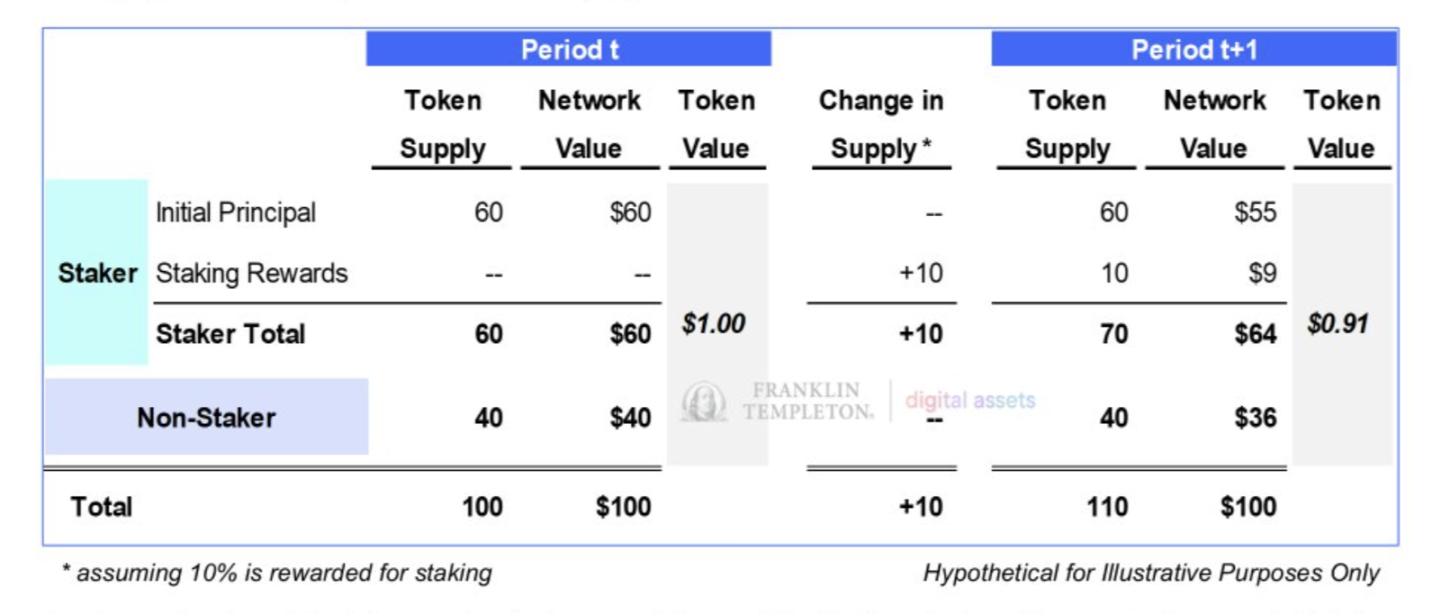
从质押奖励只是非质押者向质押者的价值转移这一角度来看,我们在下图中进一步阐述了这一点。图中展示了 PoS 网络中从 t 期到 t+ 1 期代币价格和价值转移的过程。我们假设 60% 的代币供应被质押,通货膨胀率为 10% (通过质押奖励)。可以看到,网络价值保持不变,因为在这两个时期中唯一重要的变量是代币供应量。
质押奖励究竟是不是区块链的隐形成本?

如表所示,代币价值受到了约 9% 的稀释,进一步证明了我们认为质押不会影响网络价值,但会稀释代币的价值。非质押者的网络价值变化与整体代币价值的变化百分比相同。对于质押者来说,质押的初始本金与非质押者一样被稀释;然而,质押者通过质押奖励获得的收益多于因稀释所造成的损失。投资者可以通过链上数据或第三方质押指数(如 CESR 指数 —— 综合以太坊质押收益率)来监控这些奖励的质押收益率,该指数跟踪以太坊链上的此类收益。

那么,质押奖励是否是网络的成本?我们认为,质押奖励并不是网络整体价值的成本。然而,质押奖励确实代表着在当前时刻代币持有者的的一种支出。

原文链接

Related Reads

The Verdict in Choi Tae-won's Divorce Case: Revealing the Inheritance Undercurrent Behind SK Hynix's Trillion-Won Empire

SK Group Chairman Chey Tae-won's high-profile divorce case, involving a record 1.38 trillion won settlement, has drawn attention to the succession plans for Korea's second-largest conglomerate, especially its crown jewel, SK hynix. Unlike traditional chaebol scripts centered on the eldest son, Chey's three children from his marriage to former President Roh Tae-woo's daughter, Roh Soh-yeong, are carving distinct, non-traditional paths. Eldest daughter Chey Yun-jung (b. 1989) is seen as the most evident successor. With a scientific and consulting background, she holds executive roles at SK bioscience and SK Inc.'s growth support department, focusing on future strategy and biopharma. Her marriage is to an AI infrastructure entrepreneur, not a traditional business alliance. Second daughter Chey Min-jung (b. 1991) took a unique route, voluntarily serving as a South Korean naval officer, including an anti-piracy deployment. She later worked on policy and strategy for SK hynix in Washington D.C. before co-founding an AI-driven healthcare startup. She married a former U.S. Marine Corps officer, connecting her to U.S. defense and policy circles—networks crucial for a global semiconductor giant. The only son, Chey In-geun (b. 1995), who studied physics like his father, worked briefly at SK E&S before joining McKinsey. Despite fitting the traditional "heir" profile as the eldest son, he remains silent and holds no public position or shares in SK, suggesting the old succession playbook is obsolete. As SK hynix's valuation soars, becoming a geopolitical asset in the AI era, the heirs' legitimacy is no longer automatic. They must prove themselves in fields like AI biotech, global policy, and strategic consulting. Their marriages also reflect new elite networks in tech and defense, not old political alliances. Their inheritance is the complex challenge of navigating a globalized, tech-driven world, not just a corporate throne.

marsbit2h ago

The Verdict in Choi Tae-won's Divorce Case: Revealing the Inheritance Undercurrent Behind SK Hynix's Trillion-Won Empire

marsbit2h ago

From OpenSea to OpenRouter: Is Alex Atallah Repeating His 'Exit at the Peak' Playbook?

From OpenSea to OpenRouter: Is Alex Atallah Repeating His "Exit at the Peak" Playbook? According to the Wall Street Journal, payments giant Stripe is in talks to acquire the AI model aggregation platform OpenRouter in a potential deal valuing the company near $100 billion. This would mark founder Alex Atallah's second creation of a company reaching a $100 billion valuation, following his co-founding of NFT marketplace OpenSea. OpenRouter, founded just over three years ago, has grown rapidly by acting as a unified gateway for developers to access over 400 AI models. It currently has about 10 million users and processes over 200 trillion tokens monthly. While the platform's annualized revenue is around $50 million, its valuation has skyrocketed from $1.3 billion in March 2026. The potential acquisition by Stripe, a company OpenRouter's founder once likened it to, represents a major expansion into AI infrastructure for the payments leader. This move echoes Atallah's previous timing with OpenSea, where he departed before the NFT market's significant downturn. For OpenRouter, selling now may be strategic. Despite its scale, its business model—charging a 5-5.5% fee on AI inference calls—faces pressure from competition, open-source models, and potential price wars among model providers, limiting its profitability narrative for an IPO. A key asset for potential acquirers like Stripe is OpenRouter's vast repository of real-world AI usage data, which offers unique insights into model performance and developer preferences that are difficult to replicate. Whether this potential deal signifies a new valuation benchmark for AI infrastructure or another market peak signal remains to be seen.

链捕手3h ago

From OpenSea to OpenRouter: Is Alex Atallah Repeating His 'Exit at the Peak' Playbook?

链捕手3h ago

Trading

Spot
活动图片




