Исследователи Blackrock назвали биткоин ценным инвестактивом

cryptonews.ruPublished on 2023-11-19Last updated on 2024-09-19

Крупнейший управляющий цифровыми активами Blackrock изучает роль биткоина как уникального инвестиционного диверсификатора, а также присущие ему факторы риска и доходности по сравнению с традиционными активами.

Blackrock, имеющий под управлением активы на $10,65 трлн, рассматривает биткоин как новый инвестиционный инструмент. В своём исследовании аналитики Blackrock подчеркнули растущий спрос на биткоины через спотовые биржевые фонды (ETF). Их собственный фонд IBIT в настоящее время содержит 357 550,21 BTC примерно на $21,5 млрд.

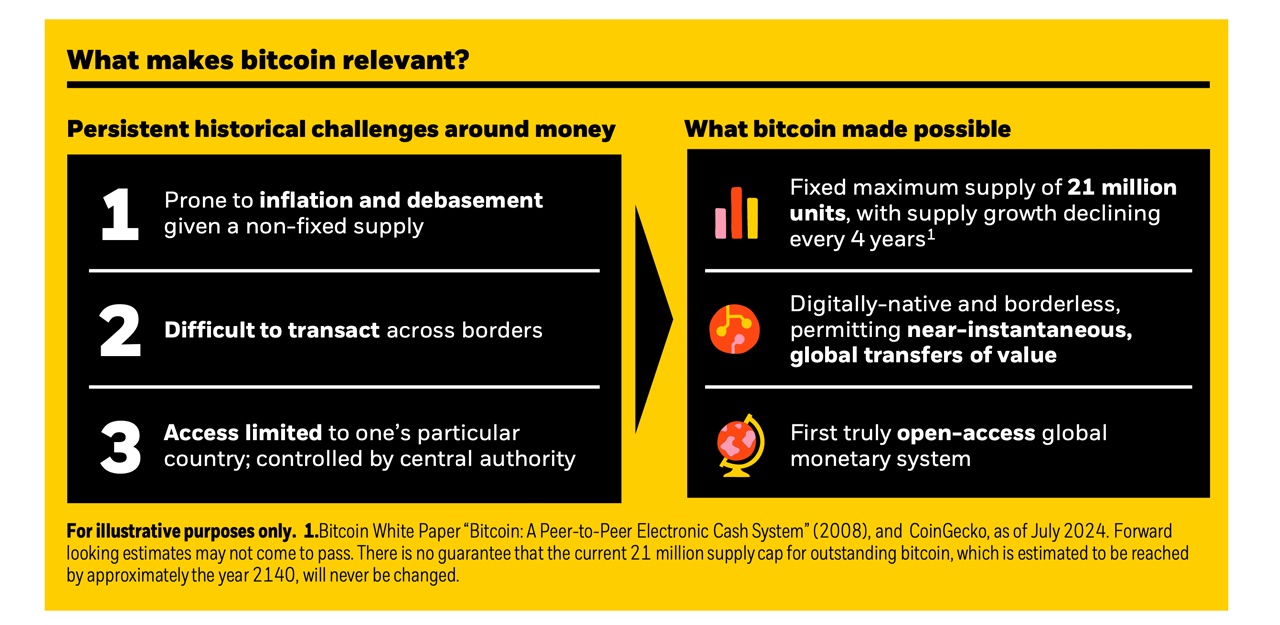
Мы считаем, что биткоин в силу своей природы глобального, децентрализованного, фиксированного, несуверенного актива имеет факторы риска и доходности, которые отличаются от традиционных классов активов и которые принципиально не коррелируют на какой-либо долгосрочной основе, — отметили исследователи Blackrock.
brocksksk334

Источник: отчёт Blackrock о биткоине.

Несмотря на случайные краткосрочные корреляции с фондовыми рынками, аналитики Blackrock подчёркивают, что долгосрочные ценовые показатели биткоина имеют тенденцию отрываться от традиционных активов.

В отчёте приводятся многочисленные примеры, когда биткоин быстро восстанавливался после резких спадов, что подтверждает его устойчивость и способность выступать в качестве хеджа в периоды рыночной волатильности.

Blackrock рассматривает эти краткосрочные ценовые движения как временные реакции на кризисы ликвидности или распродажи на рынке, при этом BTC часто восстанавливается по мере стабилизации рыночных условий.

Как новый класс активов, биткоин по-прежнему подвержен регуляторной неопределённости и незрелости экосистемы, что может повлиять на его более широкое принятие. Однако исследователи Blackrock утверждают, что при хранении в небольших объёмах биткоин может обеспечить ценный эффект диверсификации в традиционных портфелях.

Признавая риски и нормативные препятствия, в отчёте Blackrock сделан вывод о том, что уникальные свойства биткоина — дефицит, децентрализация и независимость от традиционных макроэкономических сил, делают его ценным активом для инвесторов, подыскивающих альтернативы традиционным финансовым инструментам.


Related Reads

Refunds! Claude 4.8 Sees Overnight Major 'Dumb-Down', GPT-5.6's Computational Power Reportedly 'Halved'

The AI community is currently alarmed by widespread reports of significant performance degradation in two leading models. This article details a "mass self-testing frenzy" triggered by a mysterious prompt designed to detect a hidden "Juice" value, representing a model's reasoning compute budget. On OpenAI's side, users suspect a covert, limited test of a "GPT-5.6-sol" model is underway. When using a specific XML prompt on the Codex platform, a normal "gpt-5.5 xhigh" model reportedly returns a Juice value of 768. However, some users routed to the suspected GPT-5.6 test receive a drastically reduced value of 128—a six-fold decrease. This has sparked debate on whether it signifies a major efficiency leap or a "watered-down, low-cost version" achieved by slashing reasoning depth to save computational expenses. Simultaneously, Anthropic's Claude models, particularly the flagship Opus 4.8 Max, are facing intense user backlash for a perceived "physical brain cut." Users on platforms like Reddit report a dramatic decline in the model's once-impressive reasoning, with complaints of it becoming "absurdly" weakened, performing worse than older, lighter models like Haiku. Specific criticisms include: losing long-context memory, refusing to think deeply even in high-reasoning modes, providing instant incorrect answers, and engaging in unhelpful, argumentative, or "gaslighting" behavior where it contradicts users unnecessarily. The article speculates these "stealth downgrades" might be a calculated corporate strategy. Companies could initially release models with temporarily boosted compute to create an illusion of a major breakthrough, then silently scale back parameters later to manage unsustainable inference costs. A proposed underlying cause is a tightened funding environment, potentially exacerbated by SpaceX's massive IPO soaking up market liquidity, which could delay AI company IPOs and force cost-cutting measures like model "nerfing." The core issue highlighted is the asymmetry of information: subscribers pay for a service that can be silently and fundamentally altered without notification or explanation. The viral "Juice test" resonates because it represents users' desire for transparency about what they are actually paying for.

marsbit4m ago

Refunds! Claude 4.8 Sees Overnight Major 'Dumb-Down', GPT-5.6's Computational Power Reportedly 'Halved'

marsbit4m ago

Earning Six Figures and Still Struggling to Rent in San Francisco

A couple in San Francisco with a combined tech income over $360,000 struggled for months to find a one-bedroom apartment under $5,000 per month. Their story highlights how the AI wealth boom, driven by upcoming IPOs from companies like OpenAI and Anthropic, is dramatically escalating the city's cost of living. Even six-figure salaries are becoming insufficient for a comfortable lifestyle. The article details the financial reality for tech workers earning around $180,000 annually. After taxes, retirement contributions, and healthcare, take-home pay is roughly $7,000 per month. With average rents exceeding $3,800 and one-bedrooms often costing $4,500-$5,200, discretionary income shrinks to $1,500-$2,500. This contrasts sharply with reported median total compensations of $640,000 at OpenAI and $420,000 at Anthropic. The AI gold rush is identified as the primary driver. The scale of potential wealth from these IPOs, far surpassing previous tech booms, is flooding the housing market. Data shows San Francisco's average rent is now the highest in the U.S., with vacancy rates in desirable neighborhoods plummeting to around 3%. The overall cost of living is 65.6% above the national average. The piece features multiple professionals, including a 25-year-old with a $250,000 salary, facing housing instability, fierce competition for rentals, and a persistent, low-grade financial anxiety despite high earnings. It concludes that the rapid concentration of AI wealth is redefining what constitutes a "high salary" in San Francisco, pushing out mid-tier tech talent and creating a stark divide between those in the AI sector and everyone else.

marsbit1h ago

Earning Six Figures and Still Struggling to Rent in San Francisco

marsbit1h ago

Trading

Spot
活动图片