За 2 недели 17 млн пользователей получили токены DOGS

cryptonews.ruPublished on 2024-07-10Last updated on 2024-09-10

Проект DOGS на блокчейне TON достиг беспрецедентных уровней вовлеченности пользователей, установив новый рекорд в индустрии криптовалют. За последние 2 недели токены DOGS были распределены среди 17 млн юзеров по всему земному шару, что привело к резкому росту активности в сети TON. Число активных адресов несколько раз достигло 1,1 млн в день, а количество транзакций за сутки поднялось до пиковых значений в размере 14,4 млн.

Специалисты из TON отметили, что DOGS-токены, созданные в качестве мем-эксперимента и вдохновленные известным рисунком собаки Павла Дурова, за короткий срок привлекли 4,5 млн уникальных владельцев. Этот показатель делает DOGS криптоактивом с наибольшим количеством уникальных держателей на любой блокчейн-платформе за всю историю. Только стейблкоины USDT от эмитента Tether в сетях TRON и Ethereum имеют больше холдеров, чем DOGS.

В ходе самого крупного в истории криптовалютного запуска мем-токена и бесплатной раздачи, 53 млн пользователей взаимодействовали с мини-приложением DOGS, из которых 42,2 млн имели право на получение токенов через аирдроп. Эти впечатляющие цифры подчеркивают потенциал блокчейна TON для достижения массового внедрения и создания новой волны пользовательской активности в индустрии Web3.

Многочисленные аналитики отмечают ,что в сентябре планируются еще более масштабные мероприятия по запуску токенов. Речь идет о проектах Catizen и Hamster Kombat, что может привлечь на блокчейн TON десятки и даже сотни миллионов новых пользователей. Это, вероятно, создаст значительные технические нагрузки и вызовет новые вызовы для сети, но команда проекта полна решимости справляться с трудностями и продолжать курс на массовое принятие блокчейн-технологий.

Related Reads

Zhejiang University Research Team Proposes New Approach: Teaching AI How the Human Brain Understands the World

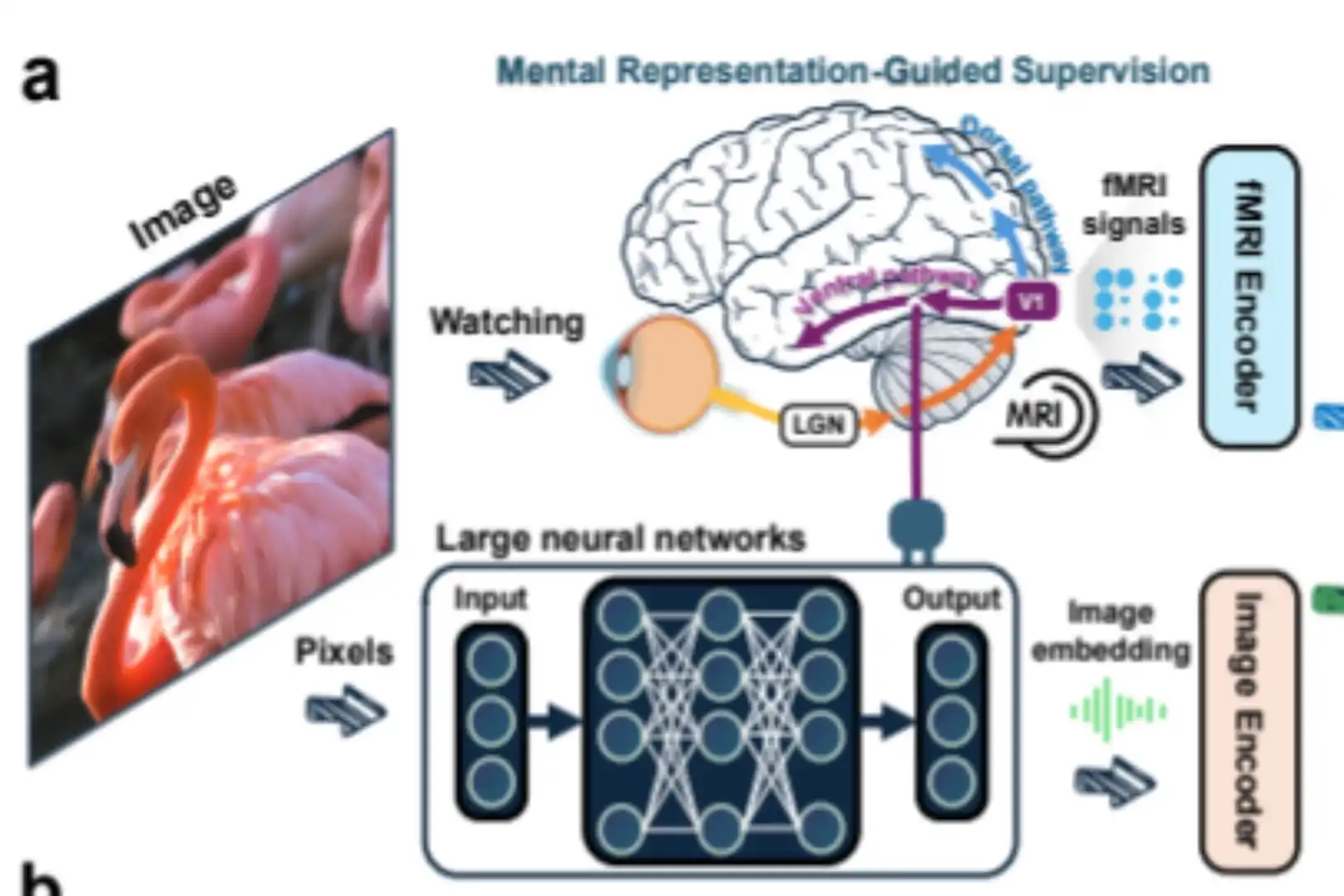
A research team from Zhejiang University published a paper in *Nature Communications* challenging the prevailing notion that larger AI models inherently think more like humans. They found that while model performance on recognizing concrete concepts improved as parameters increased (from 74.94% to 85.87%), performance on abstract concept tasks slightly declined (from 54.37% to 52.82%) in models like SimCLR, CLIP, and DINOv2. The key difference lies in how concepts are organized. Humans naturally form hierarchical categories (e.g., grouping a swan and an owl into "birds"), enabling them to apply past knowledge to new situations. Models, however, rely heavily on statistical patterns in data and struggle to form stable, abstract categories. The team proposed a novel solution: using human brain signals (recorded when viewing images) to supervise and guide the model's internal organization of concepts. This method, termed transferring "human conceptual structures," helped the model learn a brain-like categorical system. In experiments, the model showed improved few-shot learning and generalization, with a 20.5% average improvement on a task requiring abstract categorization like distinguishing living vs. non-living things, even outperforming much larger models. This research shifts the focus from simply scaling model size ("bigger is better") to designing smarter internal structures ("structured is smarter"). It highlights a new pathway for developing AI that possesses more human-like abstract reasoning and adaptive learning capabilities.

marsbit2h ago

Zhejiang University Research Team Proposes New Approach: Teaching AI How the Human Brain Understands the World

marsbit2h ago

Dialogue with Bloomberg ETF Analyst: Why Bitcoin ETF Holders Did Not Sell During the 50% Plunge

In a recent interview on Coin Stories, Bloomberg Intelligence Senior ETF Analyst James Seyffart discussed the resilience of Bitcoin ETF holders, who largely held their positions despite a 50% price drop, contrary to expectations of panic selling. Seyffart noted that while there was a $9 billion outflow from Bitcoin ETFs starting October 10, it was minor compared to the $250-300 billion inflows prior, and outflows have since reversed by $20-25 billion. He attributed this "diamond hands" behavior to educated investors who understand Bitcoin’s volatility and typically allocate only a small portion (e.g., 1-5%) of their portfolios, leading to rebalancing rather than selling during dips. The conversation also covered the entry of major institutions like Morgan Stanley, which is launching its own Bitcoin ETF, leveraging its vast client assets. Seyffart highlighted the growing efficiency of ETFs, with physical redemptions now allowed, potentially enabling direct Bitcoin transfers to holders in the future. However, he expressed concern over the concentration of Bitcoin custody with Coinbase. Additionally, Seyffart discussed the inverse flow trends between Bitcoin and Gold ETFs recently, with Bitcoin acting more like a risk-on growth asset. He remains optimistic about Bitcoin ETFs eventually surpassing Gold ETFs in size due to Bitcoin’s diverse use cases. Finally, he emphasized the importance of diversification in the current volatile market, where traditional hedges have largely failed, and cash.

marsbit3h ago

Dialogue with Bloomberg ETF Analyst: Why Bitcoin ETF Holders Did Not Sell During the 50% Plunge

marsbit3h ago

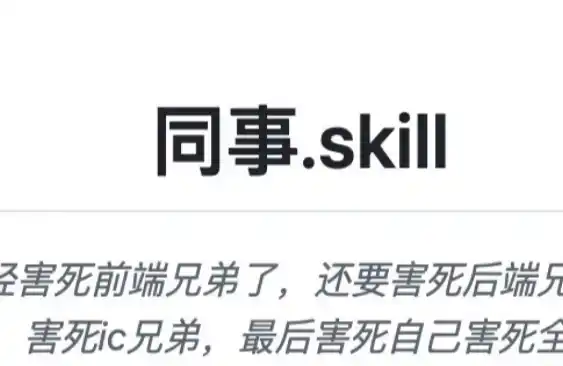
Who Cannot Be Distilled into a Skill?

"This article explores the concerning trend of AI systems distilling human workers into replaceable 'skills,' using the viral 'Colleague.skill' phenomenon as a key example. It argues that the most diligent employees—those who meticulously document their work, write detailed analyses, and transparently share decision-making logic—are paradoxically the most vulnerable to being replaced. Their high-quality 'context' (communication records, documents, and decision trails) becomes the perfect fuel for AI agents, extracted from corporate platforms like Feishu and DingTalk. The piece warns of a deeper ethical crisis: the reduction of human relationships to functional APIs, as seen in derivatives like 'Ex.skill' or 'Boss.skill,' which reduce complex individuals to mere utilities. This reflects a shift from Martin Buber's 'I-Thou' relationship (seeing others as whole beings) to an 'I-It' dynamic (seeing them as tools). While AI can capture explicit knowledge (written documents, replies), it fails to capture tacit knowledge—the intuition, experience, and unspoken insights that define human expertise. However, a greater danger emerges when AI-generated content, based on distilled human data, is used to train future models, leading to 'model collapse' and homogenized, mediocre outputs—a process likened to 'electronic patina' degrading information over time. The article concludes by noting a small but symbolic resistance, such as the 'anti-distill' tool that generates meaningless text to protect valuable knowledge. Ultimately, it suggests that while AI can capture a static snapshot of a person, humans remain 'fluid algorithms' capable of continuous growth and adaptation, leaving their AI shadows behind."

marsbit3h ago

Who Cannot Be Distilled into a Skill?

marsbit3h ago

Trading

Spot
Futures
活动图片