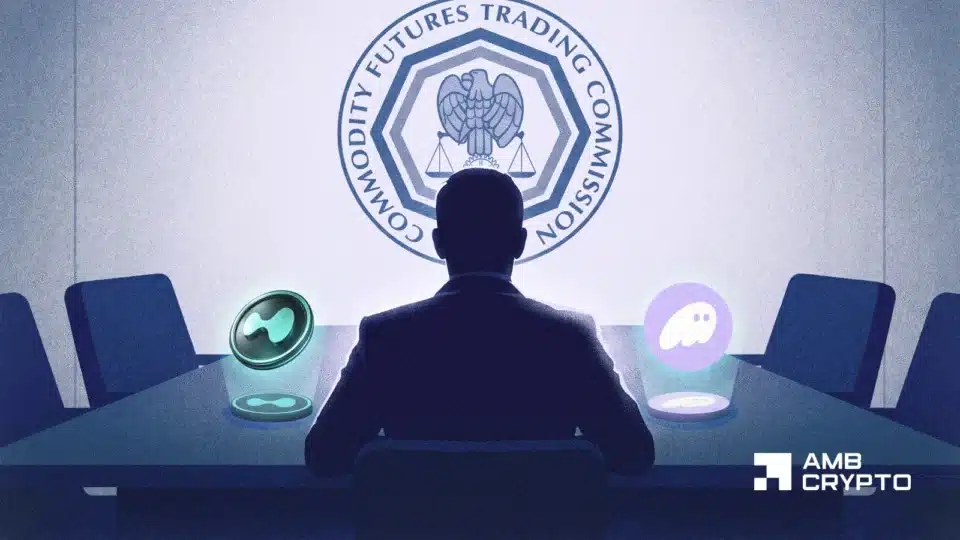
CFTC оштрафовала Uniswap на $175 000 за нарушение Закона о товарных биржах

investing.ruPublished on 2024-09-05Last updated on 2024-09-05

GetBlock Magazine - Что произошло? Комиссия США по торговле товарными фьючерсами (CFTC) обвинила ведущую децентрализованную криптобиржу (DEX) Uniswap в незаконном предложении розничных товарных операций с цифровыми активами с использованием заемных средств. Компанию-разработчика Uniswap Labs обязали выплатить $175 000 штрафа и прекратить деятельность, нарушающую Закон о товарных биржах (CEA).

Пресс-релиз CFTC

Что еще известно? В обвинении утверждается, что основанная в Делавэре и базирующаяся в Нью-Йорке Uniswap Labs разработала и развернула протокол, предлагающий торговлю цифровыми активами на блокчейне Ethereum пользователям и компаниям в США и за рубежом, не входящим категорию Eligible Contract Participant (ECP), а также создала веб-интерфейс для облегчения доступа к протоколу.

Статус ECP, или правомочного участника контракта, присваивается инвесторам при условии соблюдения строгих критериев, установленных Законом о товарных биржах. Он позволяет инвестировать на рынках, недоступных обычному инвестору. Зачастую такой статус имеют корпорации, трасты и брокерские фирмы с многомиллионными активами под управлением.

В апреле Комиссия США по ценным бумагам и биржам (SEC) обнаружила в работе Uniswap нарушения законодательства и сообщила о готовности обратиться в суд.

В августе прошлого года суд Нью-Йорка отклонил коллективный иск к Uniswap, поданный по причине того, что инвесторы потеряли средства на вложениях в скам-токены, запущенные на бирже третьими лицами.


Читайте оригинальную статью на сайте GetBlock Magazine

Related Reads

Is Ethereum Truly a "World Computer"?

Title: Is Ethereum Really a "World Computer"? Ethereum, envisioned as a "world computer" by its founder Vitalik Buterin, aims to be a decentralized platform for global applications. However, a recent analysis by Four Pillars raises questions about whether it is more accurately a "Western computer," based on the geographical distribution of its validators. Currently, the United States dominates with 38.19% of all validators, followed by Germany at 13.04%. Combined, these two countries account for over half of the network. In contrast, Asian representation is minimal, with Singapore holding only 3.15%. The concentration is partly due to affordable cloud hosting services like Hetzner and OVH in Europe and North America, as well as the prevalence of residential validators in the U.S., where individuals run nodes via home internet connections. When examining professionally operated validators, the distribution becomes more balanced. The U.S. share drops to 25.81%, while Asian countries like Singapore (7.28%), Hong Kong (6.44%), Japan (6.38%), and South Korea (4.59%) collectively approach the U.S. level. This shift reflects strategic deployments by institutions to meet regulatory requirements and reduce latency for local users. However, regions like South America, the Middle East, and Africa remain underrepresented. Ethereum's peer-to-peer network mechanisms, such as gossipsub, disadvantage areas with low node density, creating a feedback loop where delayed message propagation reduces validator performance and rewards. This imbalance challenges Ethereum's promises of censorship resistance and global accessibility. Despite these issues, opportunities exist for growth in underrepresented regions. As demand for localized staking infrastructure rises, early entrants in areas like the Middle East could establish dominant positions by offering compliant, low-latency solutions. The evolving validator landscape highlights both the structural challenges and the potential for Ethereum to move closer to its "world computer" ideal.

Foresight News1h ago

Is Ethereum Truly a "World Computer"?

Foresight News1h ago

Trading

Spot
活动图片