На долю Foundry USA и AntPool приходится 56,7% хешрейта биткоина

cryptonews.ruPublished on 2022-08-25Last updated on 2024-08-25

Благодаря наращиванию вычислительной мощности майнинговые пулы Foundry USA и AntPool уже контролируют свыше 51% хешрейта блокчейна биткоина.

По данным компании Archived, 24 августа на долю Foundry USA приходилось 33,1% хешрейта сети BTC, а AntPool управлял 23,6% вычислительной мощности. Таким образом, в совокупности эти платформы контролировали 56,7% хешрейта блокчейна биткоина. По этому показателю пулы значительно опередили конкурентов, потому что ближайший соперник ViaBTC управлял лишь 13,4% хешрейта.
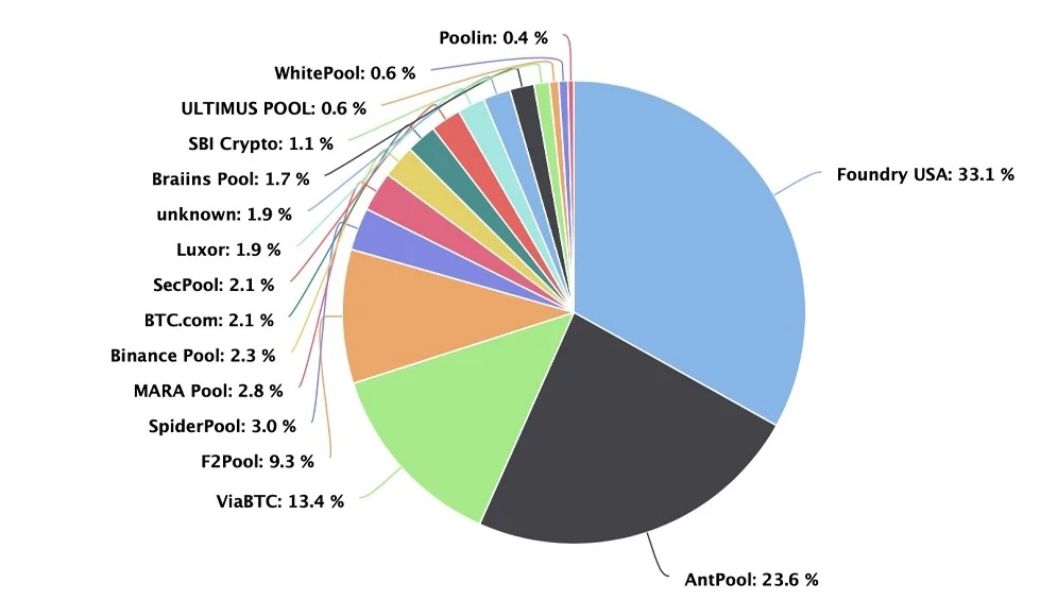
Доля хешрейта сети биткоина, приходящаяся на разные майнинговые пулы

С января 2024 года вычислительная мощность оборудования пользователей Foundry USA повысилась более чем наполовину и в течение последней недели составляла 153,6 экзахеш в секунду. Хешрейт AntPool тоже вырос, но не так существенно. В начале года вычислительная мощность пула оценивалась в 147,4 экзахеш в секунду, а в августе эта цифра достигла 162,6 экзахеш в секунду, увеличившись таким образом на 10,3%.

Теоретически Foundry USA и AntPool могут совершить атаку 51% на блокчейн биткоина, чтобы заработать криптовалюту при помощи двойного расходования монет. В 2018-м подобной атаке подверглась сеть Bitcoin Gold (BTG), когда нападавшие завладели цифровыми активами на сумму $18 млн. Однако совершение атаки 51% на блокчейн BTC крайне маловероятно, потому что это потребует гигантских затрат, достигающих, по данным портала Crypto51, $1,5 млн в час.


Related Reads

Interview with NDV Founder Jason Huang: Piercing the AI Bubble and the MicroStrategy Myth, Seeking the Ultimate Edge in the Crypto Market

In a podcast with WuBlockchain, NDV founder Jason Huang discusses recent market dynamics, expressing a bearish outlook on crypto in the near term. He attributes Bitcoin's recent decline to a combination of cyclical selling pressure, the start of a US stock market correction, and liquidity tightening. A key catalyst is the emerging financial strain on MicroStrategy (MSTR). Huang explains that MSTR's model of borrowing to buy Bitcoin created a positive "flywheel" in a bull market. However, with falling BTC prices turning its stock premium into a discount, the model is now under severe stress. While MSTR only sold 32 BTC recently, the market is "front-running" the fear of its massive 80,000+ BTC holdings potentially being liquidated to meet debt obligations. He believes a true market bottom requires a major, capitulation-level event similar to the FTX collapse. Regarding investments, Huang states his fund is up over 20% this year, outperforming Bitcoin by 50-60%. The strategy involves crypto assets and commodities like oil, gold, and silver, but avoids AI stocks due to a perceived lack of trading edge. He is cautious of crowded trades in semiconductors and sees bubbles in the broader market, citing the hype around a potential SpaceX IPO. Despite short-term pessimism, Huang remains long-term bullish on one crypto innovation: stablecoins. He views them as the clearest example of a "faster, better" financial tool with significant room for global adoption. For the future, he is very bearish on Ethereum. For Bitcoin, he anticipates potential for a significant drop below $48,000 before a eventual rebound, but stresses the need to wait for a true panic-driven bottom marked by widespread despair and disinterest in the market.

marsbit37m ago

Interview with NDV Founder Jason Huang: Piercing the AI Bubble and the MicroStrategy Myth, Seeking the Ultimate Edge in the Crypto Market

marsbit37m ago

Conversation with Jason Huang, Founder of NDV: Puncturing the AI Bubble and the MicroStrategy Myth, Searching for the Ultimate Trump Card in the Crypto Market

In a podcast interview, NDV founder Jason Huang discusses the recent crypto market downturn, attributing the initial phase to typical Bitcoin cycle selling pressure, now compounded by a US stock market correction, tightening liquidity, and MicroStrategy's financial strain. He argues the market hasn't bottomed yet, noting true bear market lows often require a major, despair-inducing event like FTX's collapse. Huang details MicroStrategy's precarious position: its debt-and-equity fueled Bitcoin buying model has reversed into a negative cycle as prices fell. He interprets its sale of just 32 BTC as a signal prioritizing creditors over shareholders, sparking market "front-running" of its larger potential sell-off. A true bottom may arrive only after MicroStrategy resolves its looming debt payments, possibly via a large, private Bitcoin sale. His fund is up ~20% this year, outperforming Bitcoin by 50-60%, by shorting crypto and trading commodities like oil and gold. He avoided AI stocks despite being a heavy user, citing a lack of trading edge in the crowded semiconductor hardware trade, which he views as ripe for a significant correction. Long-term, Huang remains bullish on stablecoins as crypto's clearest, most practical innovation with high growth potential. He is very bearish on Ethereum and skeptical that Bitcoin has found its floor, suggesting $48,000 may not hold. He expects a sharp decline followed by a strong recovery within a year, but only after a major panic event leads to widespread capitulation and despair—the true hallmark of a market bottom.

链捕手43m ago

Conversation with Jason Huang, Founder of NDV: Puncturing the AI Bubble and the MicroStrategy Myth, Searching for the Ultimate Trump Card in the Crypto Market

链捕手43m ago

U.S. Stocks Trend (June 24): Korean Stock Plunge Ripples Global Chip Sector, Micron Tumbles Over 10%, Long-Term Supply Certainty Faces a 'Hard Test'

US Stock Market Trend (June 24): South Korean Market Plunge Disrupts Global Chips, Micron Drops Over 10%, Long-Term Supply Certainty Faces Hard Test On Monday, the South Korean KOSPI index plunged 10%, with SK Hynix and Samsung dropping over 12%, triggered by rumors that SK Hynix might slow its HBM4 production expansion. This shock quickly spread to the U.S. semiconductor sector. Micron plummeted 13.18% to $1,051.77, SanDisk fell 13.64%, and Marvell declined 8%. The Philadelphia Semiconductor Index closed down 7.87%, while the Nasdaq fell 2.21% to 25,587.04 points. The sell-off particularly hit memory chip stocks. Defensive sectors showed relative resilience, with gains in stocks like IBM and Johnson & Johnson. Market volatility spiked, with the VIX index jumping 12.79%. Commodities weakened, with WTI crude oil hitting a near three-month low and gold falling below $4,100. The core issue is not a challenge to AI demand itself, but a market reassessment of overly optimistic capacity expectations for memory chips, especially HBM. The rumor about SK Hynix undermined perceived certainty in the AI infrastructure cycle. Key upcoming events include Thursday's PCE inflation data, which will influence Fed rate expectations, and Micron's earnings report. The market will focus on Micron's HBM gross margins and its long-term capacity guidance. The shift indicates the AI investment cycle is moving from euphoria to rational pricing. Large institutions are questioning the sustainability of AI-related capital expenditure growth. Micron's repricing from an "AI infrastructure staple" to a more cyclical stock highlights this change. Thursday's data and earnings represent a critical juncture for assessing long-term supply certainty, which has now significantly decreased.

marsbit51m ago

U.S. Stocks Trend (June 24): Korean Stock Plunge Ripples Global Chip Sector, Micron Tumbles Over 10%, Long-Term Supply Certainty Faces a 'Hard Test'

marsbit51m ago

Trading

Spot
Futures
活动图片