当前的加密市场存在泡沫吗?投资者的真实需求如何?

币界网Published on 2024-08-21Last updated on 2024-08-21

币界网报道:

作者:Axel Adler Jr,来源:作者博客;编译:陶朱,

今天,我们将讨论以下主题:

1. 市场回顾。

2. 为何说牛市尚未结束?

3. 之前昂贵的代币的真正需求是什么?

4. 整合的结束和支撑位。

5. 结论。
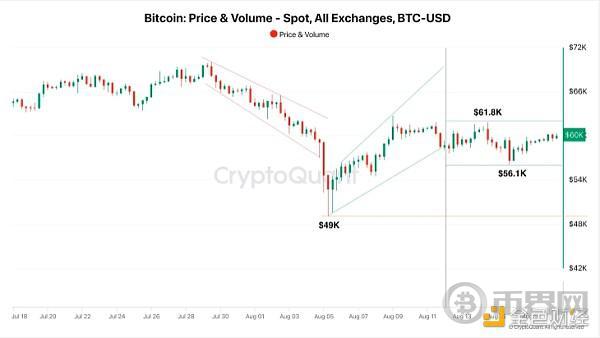
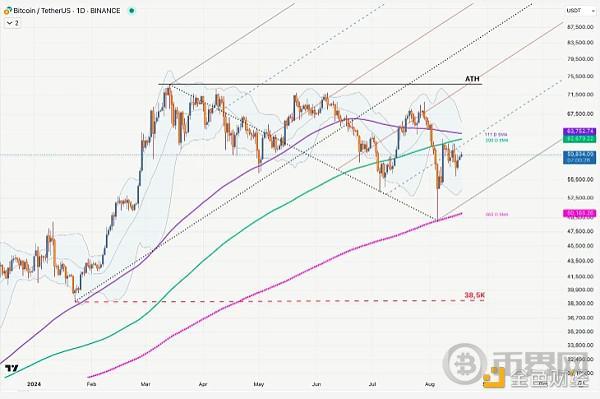
整个一周,比特币交易价格在 61-56K 美元之间,没有形成明显的趋势。这基本上是一个非常平静的交易周。阻力位是 200 日均线 68.2K 美元,价格未能守住该水平。

本周一个有趣的事件是来自迪拜的消息,迪拜承认加密货币是支付工资的可接受方式,这表明数字货币的采用日益增加。

另一个重要事件涉及 ETF:贝莱德的资产管理规模超过了灰度,这得益于灰度的资金流出和贝莱德的资金流入。此外,灰度任命了一位新首席执行官。如果你不知道,前任首席执行官 Michael Sonnenshein 推出了一个比特币信托基金,吸引了总计 653K BTC 的大量投资。问题是客户不知道市场上有聪明的资金玩家,他们很乐意将昂贵的加密货币卖给新手。结果,一些客户不得不等待四年才能实现盈利。事实上,比特币的四年复合年增长率从未低于 24%,但该基金的投资者不得不等待四年的事实却相当惊人。

牛市结束了吗?

当购买昂贵代币的需求小于想要出售代币的供应时,牛市就会结束。让我们看看数据,确定当前的市场情况是否可以被视为牛市周期的结束。

我们需要了解的第一件事是,现在市场是否存在泡沫。
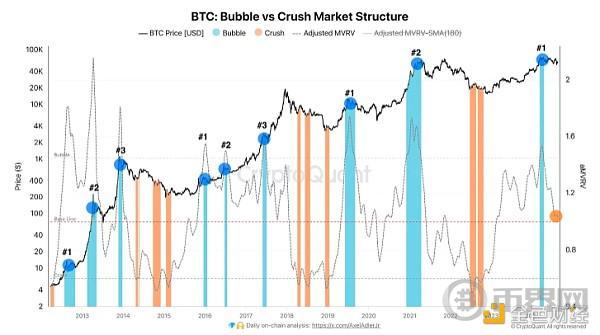
泡沫与崩盘市场结构指标显示,本周期的第一个泡沫形成于 73,000 美元的水平。当前值已降至 1.02,这是基线,表明市场没有泡沫。当比特币的市值增长速度快于其实际市值时,就会形成泡沫,这本质上反映了投机兴趣。换句话说,在这种时候,许多投资者由于 FOMO(害怕错过)而以高昂的市场价格购买比特币。

下一个有助于我们了解牛市是否已经结束的指标是 MV/RV 的标准差,由 30 天和 365 天内的两个移动平均线平滑。
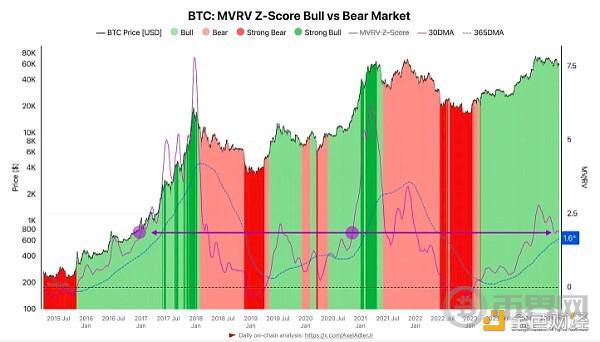
在图中,我们可以看到当前的牛市周期发展相当稳定,没有出现重大异常或急剧上涨。30DMA MVRV Z 分数为 1.8,表明与年平均值 1.6 相比,比特币的估值过高程度最小。我们看到,在之前的周期中,30DMA MVRV Z 分数升至 5 以上,这通常伴随着价格高峰和随后的调整。这证实了当前的牛市周期正处于活跃阶段,只要该指标没有达到可能预示重大调整风险的极端水平,市场就可以被视为看涨。

对加密货币的真实需求是多少?
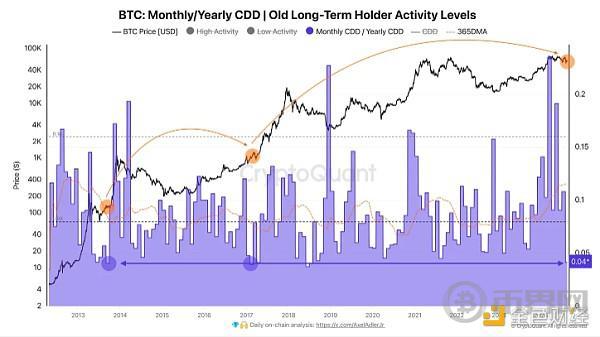
首先,让我们来看看经验丰富的投资者的行为。我们看到,当比特币达到 73,000 美元时,长期持有者的活动达到了顶峰。这意味着在这个水平上,相当一部分经验丰富的投资者决定获利了结,导致该指标上升至 23%。

目前,经验丰富的投资者的活动已降至 4%。这表明,尽管目前的价格水平如此之高,但长期持有者并不急于出售资产。这可能是对进一步增长的信心以及对未来价格上涨的预期的标志。
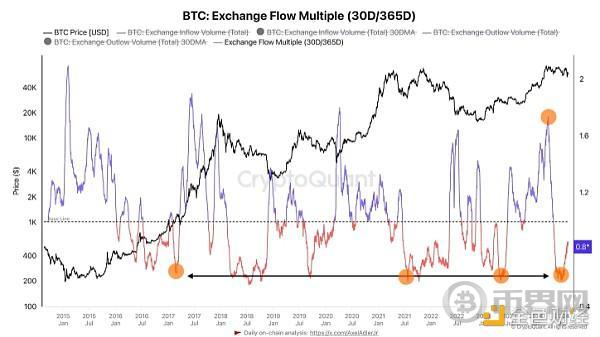
让我们来看看有多少人愿意在交易所出售比特币。交易所流量倍数指标的值从 1.73 下降到 0.8,表明交易所的销售活动显著下降。

所有这些都告诉我们,目前市场面临的看跌压力很小,投资者并不急于在交易所出售资产。
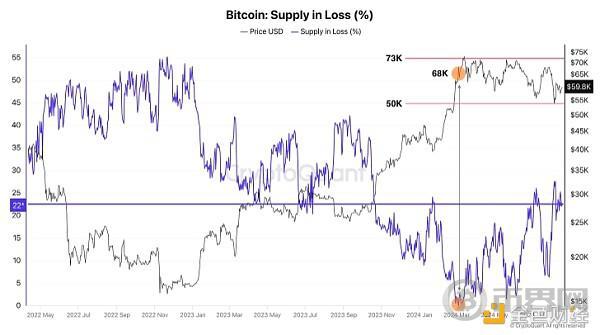
让我们通过查看当前亏损且以高于当前市场价格 59.8 万美元的价格购买的代币数量来评估需求。

亏损供应量指标显示当前亏损的比特币总量(百分比)。当前值为 22%,这意味着所有比特币中有 22% 是以高于 59.8 万美元的价格购买的,约为 430 万 BTC。过去五个月发生了如此数量的代币交易。这可以被视为对以前昂贵的代币的可持续需求吗?显然是的。

最后,让我们来看看已实现利润和亏损的指标。
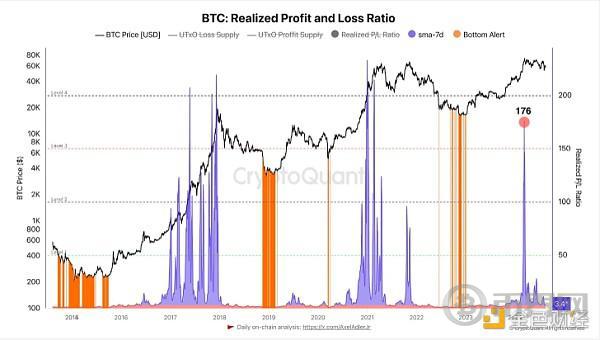
当前值为 3.4 点,这实际上意味着亏本销售。该指标进一步下跌 3.4 点将触发橙色警报,并将其定义为局部底部。因此,当前 BTC 的 365 天 SMA 平均购买价格可被视为持续盘整的强劲支撑位。
结论

我们即将迎来整合的尾声,在我看来,整合进展非常顺利。我们看到,之前昂贵的代币现在有需求,而且是在牛市周期的框架内发生的。我们看到,代币的当前变现处于盈亏平衡或亏损状态,这表明整合即将结束。我们还看到,市场没有泡沫,MV/RV 指标的标准差表明,当前的比特币价格并未超买。我们还了解到,交易所的看跌压力很小,比特币的 365 天 SMA 平均购买价格(50,000 美元)可能在整合结束时充当强劲支撑位。

祝您在即将到来的交易周好运!

Related Reads

Token Uneconomical

"Token Inefficiency" explores the rising economic burden of AI model token usage in enterprises, where escalating costs often fail to match tangible productivity gains. Major companies like Microsoft, Uber, and Meta are facing "token inefficiency"—characterized by budget overruns for tools like Claude Code with unclear returns. This inefficiency stems from supply-side factors like strategic model price hikes by leaders (e.g., Anthropic) and price increases in budget-friendly models, alongside technical waste in Agent systems through context traps, tokenizer inflation, redundant skill calls, and multi-Agent coordination overhead. A deeper demand-side challenge limits token value: their primary utility remains confined to highly digitalized domains like programming, which benefits from automatic, low-cost feedback loops. Extending tokens to physical world tasks or less digitalized industries faces the "Sim-to-Real Gap," where real-world validation is costly and slow, unlike in code compilation. The article warns that this inefficiency concentrates financial risk in mid-tier model developers, potentially fueling circular financing schemes and shadow credit bubbles. It also highlights societal externalities, as data center expansion strains local power grids and inflates utility costs for residents. To achieve a positive net token economy, the path forward requires dual efforts: technical optimizations (context compression, skill reduction, model routing, budget constraints) and business-side discipline (governance, cost attribution, ROI focus). The ultimate goal is shifting from showcasing AI capabilities to maximizing value per token, finding scalable commercial applications that justify the investment and bridge the digital-physical divide.

marsbit19m ago

Token Uneconomical

marsbit19m ago

Stock Price Halved in 45 Days, Is Circle Actually the "DeFi Barometer"?

Over a 45-day period, Circle's stock price plummeted by approximately 50% to around $63, coinciding with a significant $70 billion decline in the circulation of its USDC stablecoin from its peak. In contrast, Tether's USDT saw a much smaller reduction. Analyst Ed Engel posits that Circle acts as a barometer for DeFi activity, as a high correlation exists between USDC supply and ETH price movements. The vast majority of USDC is concentrated within crypto exchanges and DeFi protocols for yield generation, rather than for widespread daily use in payments or commerce, unlike USDT which has stronger real-world adoption in various regions. The recent contraction in DeFi Total Value Locked (TVL), following security incidents like the Kelp DAO attack, appears to mirror Circle's declining stock performance. While Circle is actively promoting USDC's use as a settlement asset on platforms like Hyperliquid and in institutional payment corridors—where its organic transfer volume surpasses USDT's—these efforts have not sufficiently driven growth in USDC's overall supply. The company's revenue remains heavily tied to DeFi's expansion. For Circle's investment narrative to change, it must either significantly reduce its reliance on the volatile DeFi sector or demonstrably prove that real-world adoption can substantially and sustainably increase USDC circulation. In the near term, market confidence hinges on DeFi addressing its inherent risk-reward imbalances.

marsbit52m ago

Stock Price Halved in 45 Days, Is Circle Actually the "DeFi Barometer"?

marsbit52m ago

Trading

Spot
活动图片