区块链跨链技术:打破互操作性限制 推动价值互联网发展

币界网Published on 2024-08-19Last updated on 2024-08-19

币界网报道:

在区块链技术面临的诸多挑战中,区块链之间的互操作性问题极大程度地限制了其应用空间。无论是公有链还是联盟链,跨链技术都是实现价值互联网的关键,是区块链向外拓展和连接的重要桥梁。目前,主流的跨链技术包括公证人机制(Notary Schemes)、侧链/中继链(Sidechains/Relays)、哈希锁定(Hash-locking)以及多方安全计算(MPC)。

主流跨链技术

1、公证人机制(Notary Schemes)

公证人机制引入一方或多方可信实体作为信用背书,技术上可实现且较为简单。在这种机制中,公证人负责监听链上的事件,并对另一条链采取相应操作。公证人机制包括单签名、多签名和分布式签名三种实现方式。

单签名公证人机制:由单一指定的独立节点或机构担任,承担数据收集、交易确认和验证任务。尽管处理速度快,但安全性较为薄弱。

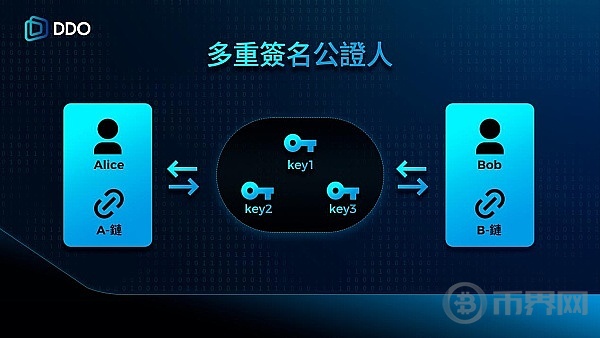
多签名公证人机制:由多位公证人共同签名完成跨链交易,提高了安全性,适用于需要多重签名支持的区块链。
9l6DdTl3OffxtzQc52QNCFT0cmh49z2IHhvohHwY.png 

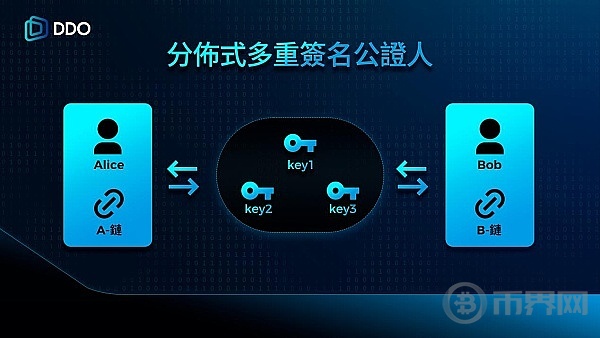
分布式签名公证人机制:采用多方计算(MPC)思想,多个公证人持有密钥碎片,共同签名后拼凑出完整密钥,更加去中心化,安全性也更高。
 u4I6SjlGGklun2dC84p4o4X95ovtYUcHxrt26Jtc.png

2、侧链/中继链(Sidechains/Relays)

侧链技术通过双向锚定,实现主链和侧链之间的资产流通,增强主链的性能。主链上的资产可以通过SPV模式(简单支付验证)等方式在侧链中释放,实现资产的双向流通。BlockStream的Liquid项目和BTCRelay都是典型的侧链应用,侧链技术相对哈希锁定而言,能够提供更多的跨链交互场景。

3、哈希锁定(Hash-locking)

哈希锁定技术用于区块链网络之间的资产交换,确保资产转移要么全部完成,要么全部未完成。其底层技术包括哈希时间锁定合约,通过设置超时机制,确保交易的安全性和完整性。该技术被广泛应用于闪电网络,极大提升了交易速度和安全性。

4、多方安全计算(MPC)

多方安全计算通过分布式节点控制区块链系统中的私钥,将数字资产的使用权和所有权分离,实现不同区块链系统间的资产流通和价值转移。MPC方案保障了跨链交易的安全性和隐私性,推动了区块链技术的进一步发展。

跨链技术推动价值互联网发展

当下的我们进入了一个以人工智能、区块链和大数据等为代表的数字化社会,各种新模式、新业态层出不穷。随着区块链应用深化,支付结算、物流追溯、医疗病历、身份验证等领域的企业或行业,都将建立各自区块链系统。

DDO认为,未来这些众多的区块链系统间的跨链协作与互通是一个必然趋势。可以说,跨链技术是区块链实现价值互联网的关键,互联互通将成为越来越重要的议题。

未来,区块链的标准,将从用户的角度出发、以业务为导向,从智能合约、共识机制、私钥安全、权限管理等维度,规范区块链的技术和治理,增强区块链的可信程度,给区块链的信任增加砝码。DDO也将继续创新研发,助力推动价值互联网的实现。


Related Reads

Just now, DeepSeek V4 updates with DSpark, improving inference speed by 80%

DeepSeek has updated its DeepSeek V4 model with the DSpark speculative decoding framework, achieving a significant 60-85% speedup in generation for Flash models and 57-78% for Pro models while maintaining the same overall throughput. This engineering-focused update, rather than a core architectural change, introduces DSpark to address latency and throughput bottlenecks in high-concurrency production environments. DSpark combines high-throughput parallel generation with adaptive load-aware verification. Its key innovations include a semi-autoregressive generation architecture to model dependencies within token blocks and a hardware-aware confidence-scheduled verification system. This system uses a confidence head to predict token acceptance probabilities, allowing it to dynamically optimize verification length per request and allocate compute only to tokens with the highest expected payoff. The asynchronous scheduler is designed for real-world deployment, ensuring zero-overhead scheduling and continuous CUDA graph replay while preserving the target model's output distribution. In tests across mathematical reasoning, code generation, and daily dialogue, DSpark outperformed state-of-the-art models like Eagle3 and DFlash, increasing average acceptance length by 26.7%-30.9% and 16.3%-18.4% respectively on Qwen3 target models. DeepSeek also open-sourced DeepSpec, a full-stack codebase for training and evaluating speculative decoding draft models, providing a standardized toolkit that includes data preparation tools, model implementations, training code, and evaluation scripts.

marsbit5h ago

Just now, DeepSeek V4 updates with DSpark, improving inference speed by 80%

marsbit5h ago

BIT Research: The 2028 Halving Is Not the End, the Real Shake-Up of the Bitcoin Mining Industry Is Just Beginning

The Bitcoin mining industry is undergoing its most complex structural adjustment since inception. Despite Bitcoin's price holding near $61,000 and the network hash rate approaching a record 1 ZH/s, miner profitability is deteriorating. The industry is operating close to its breakeven point, with the 2028 halving expected to accelerate consolidation. The challenges extend beyond the halving's subsidy reduction; the industry's revenue model has yet to successfully transition towards a fee-driven structure. Increasingly, mining companies are evolving from simple Bitcoin producers into infrastructure and energy operators, including providers of AI/HPC computing power. Competition is shifting from pure hash rate expansion to business model upgrades. Economic pressure is evident. The theoretical daily mining revenue at current prices is around $78 million, yet the actual figure is only about $33 million—a 136% gap. Transaction fees remain low at roughly $220k daily, far below historical implied levels. With a current estimated industry-wide breakeven price near $65,000, mining alone is struggling to generate ideal profits. The 2028 halving is projected to push the fundamental production cost floor to approximately $93,289. This will likely accelerate a shift towards consolidation among larger, well-capitalized miners with diversified revenue streams. Competitive advantage will belong to institutionalized players with access to low-cost energy, AI/HPC hosting operations, and stronger balance sheets. In essence, Bitcoin mining is transitioning from a "mining business" to an "infrastructure business." Future profitability and resilience will depend less on block rewards and more on diversified income sources like energy management and computational infrastructure services. For investors, the key question is not the halving itself, but which miners can successfully navigate this business model transformation.

marsbit7h ago

BIT Research: The 2028 Halving Is Not the End, the Real Shake-Up of the Bitcoin Mining Industry Is Just Beginning

marsbit7h ago

Trading

Spot
活动图片