Михаэль ван де Поппе ожидает разворота криптовалютного рынка осенью

cryptonews.ruPublished on 2022-05-18Last updated on 2024-08-18

Глава и основатель MN Trading Михаэль ван де Поппе (Michaël van de Poppe), популярный в соцсети X трейдер криптовалют, выпустил новый видео-обзор, в котором поделился своим взглядом на текущую ситуацию на рынке и перспективы альткоинов.

Ключевые факторы влияния на рынок

Ван де Поппе отметил несколько важных событий, повлиявших на криптовалютный рынок в последнее время:

  • Крупнейшее с 1987 года падение японского фондового индекса Nikkei
  • Продажа компанией Jump Trading ETH на сумму около $400 млн
  • Перевод правительством США 10 000 биткоинов (около $600 млн) на биржу Coinbase для продажи
  • Публикация данных по инфляции в США, которые оказались ниже ожиданий

Несмотря на эти факторы, вызвавшие краткосрочную коррекцию, эксперт ожидает восстановления рынка в ближайшие месяцы.

Перспективы биткоина и Ethereum

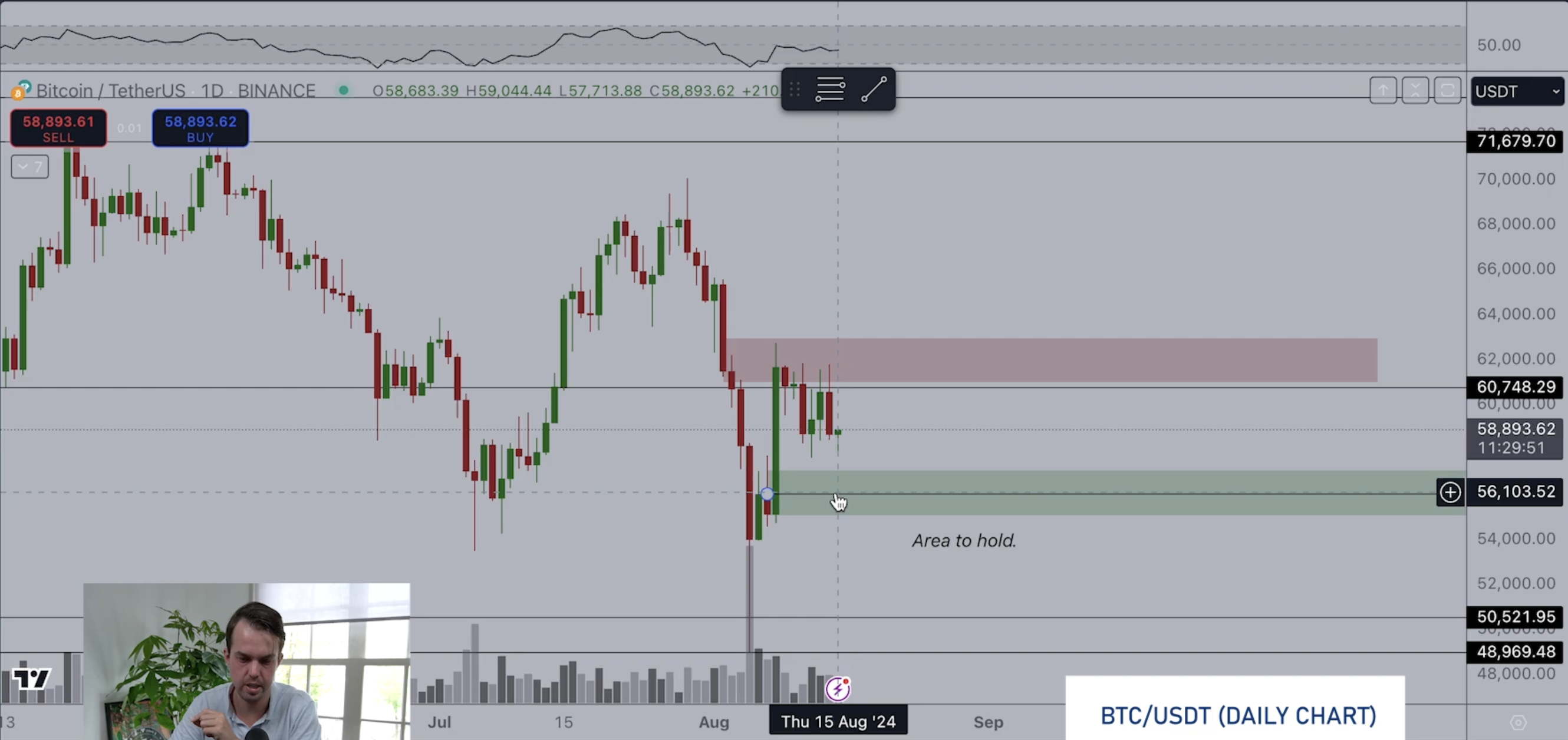
По мнению ван де Поппе, биткоин в настоящее время отстает от других активов, таких как золото и акции Apple, которые уже обновили максимумы. Он выделил два ключевых уровня для первой криптовалюты:

  • $62 000 — пробой этого уровня может спровоцировать рост сильных альткоинов
  • $56 000 — падение ниже этой отметки может привести к ретесту уровня $48 000
Для Ethereum аналитик считает важным преодоление уровня 0,046 BTC, что может стать сигналом к началу нового восходящего тренда на рынке альткоинов.

Состояние рынка альткоинов

Ван де Поппе отметил, что альткоины сильно просели, но это создает возможности для инвестирования. Он привел следующие данные:

  • Общая капитализация рынка альткоинов (без учета биткоина и Ethereum) сейчас на 50% ниже исторического максимума
  • Индекс страха и жадности находится на отметке 29, что указывает на преобладание страха на рынке
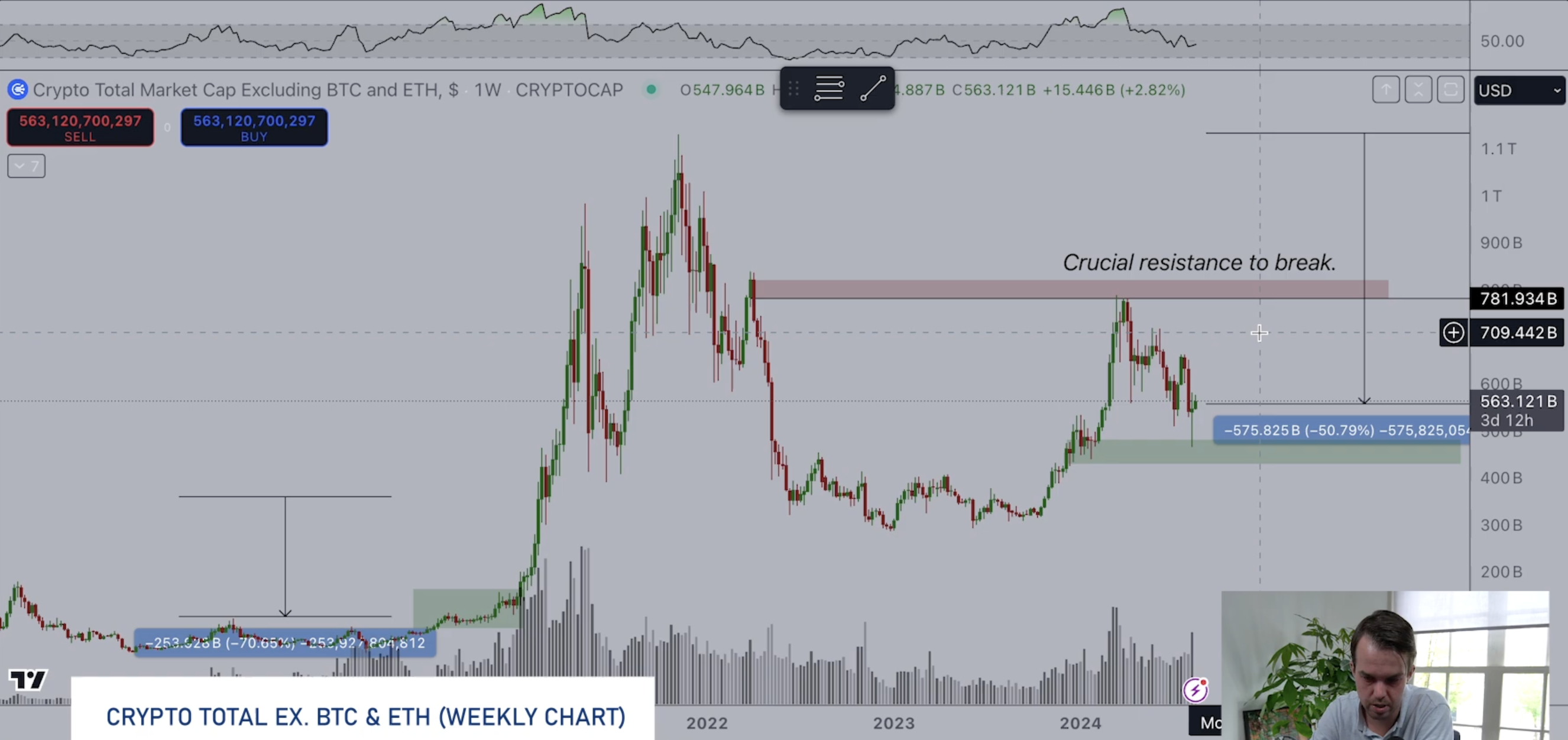
Эксперт подчеркнул, что текущая ситуация напоминает конец 2020 года, когда после длительного падения альткоины начали восстанавливаться и затем показали значительный рост.

Стратегия для инвесторов в альткоины

Ван де Поппе поделился своим подходом к инвестированию в альткоины в текущих условиях:

  • Не поддаваться панике и не продавать активы на фоне негативных новостей
  • Фокусироваться на фундаментальных показателях проектов
  • Рассматривать текущее падение как возможность для входа в рынок
  • Ориентироваться на долгосрочную перспективу, помня о потенциале роста качественных проектов

Аналитик напомнил о своем опыте инвестирования в проект Verasity (VRA) в прошлом цикле, когда после 70-процентного падения актив показал рост на 27 000%.
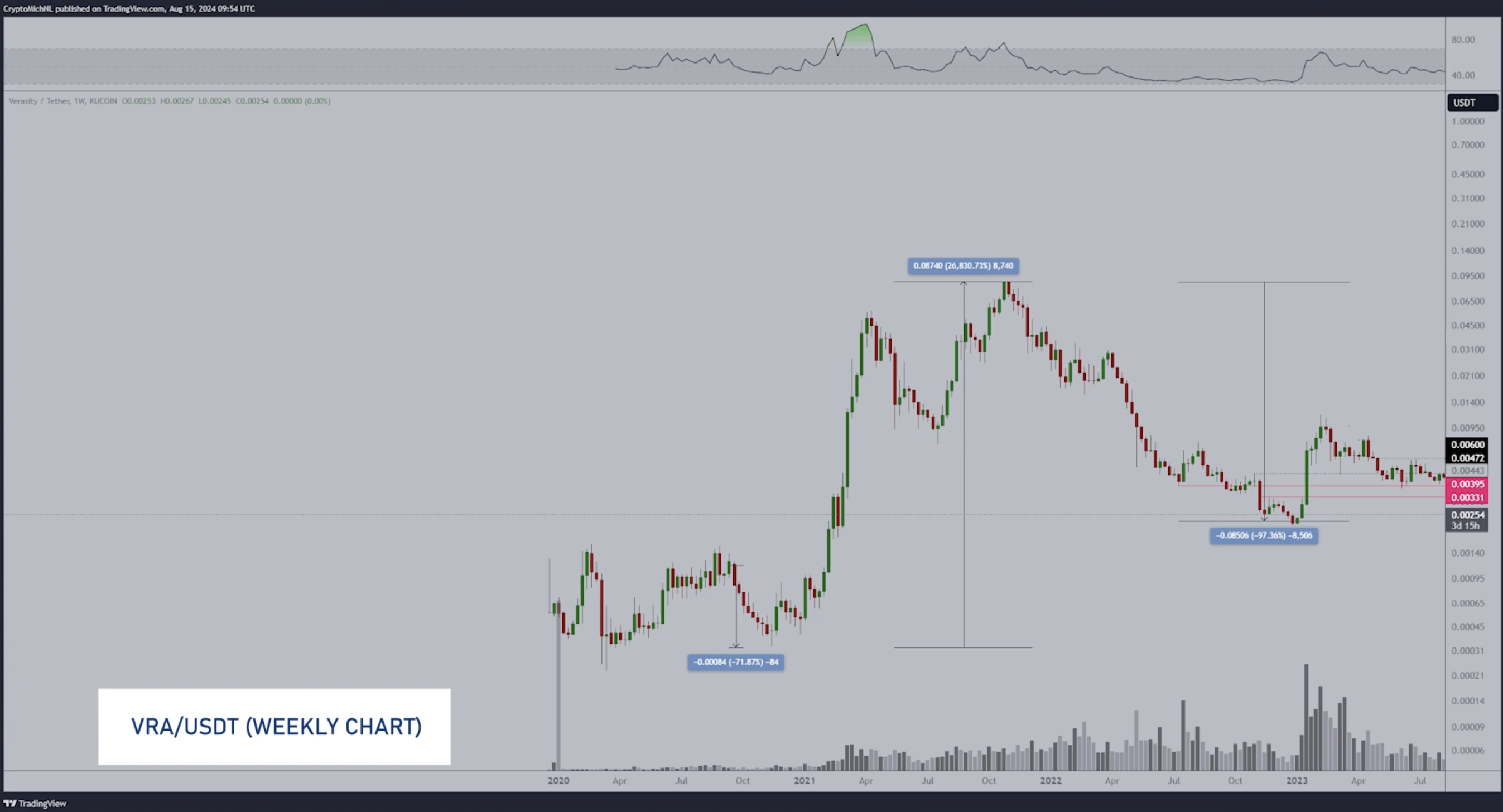
Криптовалютный рынок продолжает демонстрировать высокую волатильность, но опытные инвесторы видят в этом возможности для получения прибыли. Ван де Поппе ожидает, что после завершения текущей фазы коррекции рынок может вступить в новый период роста, особенно учитывая макроэкономические факторы и растущий интерес к криптовалютным ETF.


Related Reads

Mid-Year Review of U.S. Crypto Policy: CLARITY Gains Momentum for a Comeback, Who Will Lead the Second Half?

Mid-Point Review of U.S. Crypto Policy: CLARITY Act Gains Momentum, Who Will Lead the Second Half? The U.S. crypto industry is hopeful for a breakthrough as the Senate advances the CLARITY Act, but securing the necessary 60 votes requires bipartisan compromise. With only about 40 legislative days left, the path is tight. The policy agenda is crowded. Alongside CLARITY, multiple crypto tax proposals spun off from the new PARITY Act seek attachment to larger bills. The Blockchain Regulatory Certainty Act aims to codify developer protections, and key rules under GENUIS remain under negotiation. The CFTC operates with four vacant commissioner seats, creating uncertainty. A major unresolved battle is over which regulator—state authorities, the CFTC, or the SEC—will gain jurisdiction over prediction markets. The sector also faces the impending departure of two key advocates: SEC Commissioner Hester M. Peirce and Senator Cynthia Lummis. Industry leaders provided cautious perspectives. Sara K. Weed doubts CLARITY will pass this Congress, expecting agencies like the SEC to provide guidance instead. Sulolit "Raj" Mukherjee believes targeted crypto tax provisions have a real chance if attached to must-pass year-end legislation. Rashan Colbert highlights the CFTC's recent efforts to build a regulatory framework for the growing prediction markets sector, warning against an overly broad "gambling" classification that could stifle innovation. The second half of the policy year has begun. The window for action is narrow, but opportunities remain. Sustained bipartisan engagement is crucial for achieving substantive results.

Foresight News3m ago

Mid-Year Review of U.S. Crypto Policy: CLARITY Gains Momentum for a Comeback, Who Will Lead the Second Half?

Foresight News3m ago

Will the STRC Issue Price Determined by ChatGPT Lead to a Death Spiral?

A "death spiral" concerns surround the "STRC" preferred shares from MicroStrategy, a financial instrument designed by CEO Michael Saylor with significant AI consultation to trade near a $100 face value. Since its July 2025 launch alongside a ~40% Bitcoin (BTC) decline, STRC has traded at a discount, hitting a low of $82.53 and pushing its effective dividend yield above 12.9%. The debate centers on whether STRC's structure—which relies on MicroStrategy issuing more shares to fund Bitcoin purchases and dividends—is sustainable or a "centralized Ponzi scheme," as economist Peter Schiff claims. Skepticism grew after Saylor revealed the product's design involved extensive AI dialogue to create a legally viable, monthly-dividend, price-stable preferred share—a novel concept. MicroStrategy's recent sale of 32 BTC to cover dividends, coupled with a sharp slowdown in its weekly Bitcoin buys (from billions to ~$100 million in June), has intensified fears. The "at-the-market" equity issuance, a key funding mechanism, is paused while STRC trades below par. This raises the "death spiral" risk: a lower STRC price triggers automatic dividend rate hikes, increasing cash obligations and potentially forcing more share sales or Bitcoin divestments. Bullish analysts like Jesse Myers argue the sell-off stems from leveraged positions unwinding, not fundamental failure, noting the company can cover dividends for decades if BTC appreciates modestly. The shift to semi-monthly dividends and the high yield at discounted prices may attract new buyers. Major AI models (ChatGPT, Grok, Claude) suggest a return to $100 is possible but conditional on restored market confidence, sustainable dividend coverage without asset sales, and a Bitcoin price recovery. The critical test arrives as new dividend rules take effect June 30, likely raising rates again with STRC below $95. The central question remains: Can MicroStrategy fulfill its obligations without selling Bitcoin, or will the mechanism accelerate its own decline?

marsbit10m ago

Will the STRC Issue Price Determined by ChatGPT Lead to a Death Spiral?

marsbit10m ago

Why Did NVIDIA's Bond Issue Go Unnoticed While SpaceX's Caused a Plunge?

The article analyzes the contrasting market reactions to recent bond issuances by SpaceX and NVIDIA. While NVIDIA's $25 billion bond offering was met with strong demand and seen as securing long-term capital for its already profitable AI business, SpaceX's move to raise at least $20 billion in bonds (primarily to refinance bridge loans) triggered a sell-off in its stock (SPCX). The key difference lies in the stage of cash flow validation for their respective core narratives. For NVIDIA, the AI boom is generating substantial, visible revenue and profits, making debt a tool to amplify a proven growth curve. For SpaceX, despite a strong cash position post-IPO and a revenue-generating business in Starlink, its valuation is heavily tied to future, capital-intensive projects like Starship, global satellite networks, and potential AI infrastructure. The bond issuance acted as a trigger, shifting market focus from SpaceX's long-term vision to the pressing question of whether Starlink's profits can fund these ambitious, unproven ventures before they generate their own returns. Thus, the market penalizes not the act of borrowing itself, but the perceived gap between high capital expenditure and the speed of cash flow realization. SpaceX's valuation recovery hinges on demonstrating that Starlink's profitability can outpace the burn rate of its futuristic projects or that those projects (like Starship achieving reliable, low-cost reusability) can soon transition from costly visions to commercial realities.

marsbit15m ago

Why Did NVIDIA's Bond Issue Go Unnoticed While SpaceX's Caused a Plunge?

marsbit15m ago

Will the STRC Issue Price Determined by ChatGPT Really Fall into a Death Spiral?

"Strategy's" (STRC) preferred share, a financial instrument designed by CEO Michael Saylor in consultation with AI to trade steadily at $100, faces mounting pressure. Since its July 2025 launch alongside a ~40% Bitcoin price drop, STRC has traded at a steep discount, hitting a low of $82.53. This discount pushes its effective dividend yield above 12.9%. The core debate revolves around whether STRC's structure is sustainable or a "centralized Ponzi scheme," as economist Peter Schiff claims. The mechanism relies on issuing new shares ("at-the-market" offerings) to fund Bitcoin purchases and dividend payments. However, the deep discount has paused these ATM offerings, slowing Bitcoin accumulation and forcing a minor sale of 32 BTC to cover obligations. Proponents, like The Smarter Web Company's Jesse Myers, argue the sell-off is a leveraged unwinding, not a fundamental failure. They note Strategy has ample resources to cover dividends for years if Bitcoin appreciates modestly. The deep discount also makes STRC attractive for yield-seeking buyers, as dividends are calculated on the $100 face value. The key test is whether Strategy can maintain dividends without sustained Bitcoin sales. A critical watchpoint is June 30th, when STRC switches to semi-monthly dividends. An automatic rule will likely raise the dividend rate further because the price remains below $95$, potentially creating a "death spiral": lower prices trigger higher yields, increasing the cash burden and forcing more dilution or asset sales. The question of whether this AI-designed "flywheel" is a stable instrument or a flawed accelerator will be answered by its price action and Strategy's funding choices in the coming months.

链捕手15m ago

Will the STRC Issue Price Determined by ChatGPT Really Fall into a Death Spiral?

链捕手15m ago

Trading

Spot
Futures
活动图片