市场波动下的 DeFi 众生相:一波万波

foresightnewsPublished on 2024-08-06Last updated on 2024-08-13

Abstract

「一石激起千层浪」的市场,以不变应万变

波涛汹涌的链上,DeFi 正直接迎战。


撰文:Pzai,Foresight News


昨日,随着全球市场经历巨大震荡,加密市场也没能独善其身。而在链上,仅以太坊生态上就创下单日清算超 3.5 亿美元的记录。市场的「一波」正在激发 DeFi 的「万波」,而 DeFi 项目是如何应对的?海啸退去之时又是谁在裸泳?故笔者撰写本文对 DeFi 在市场波动下的表现进行总结。


稳定币


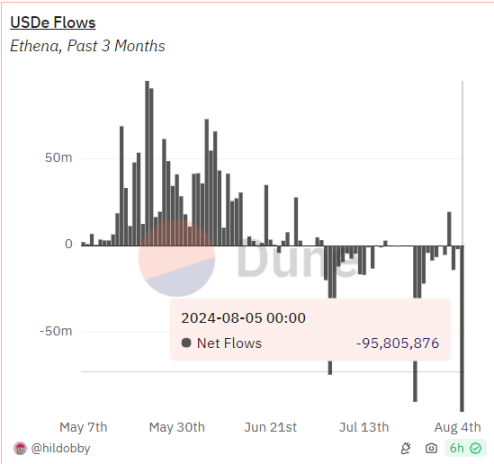
在 Ethena 方面,昨日其稳定币 USDe 创下单日流出 9580 万美元的记录,总供应量也从巅峰时期的 36 亿枚回落至 31 亿枚左右。由于 Ethena 的机制导致多头头寸必须保持在较高水平,随着市场的下跌,抵押物的潜在清算导致用户需要控制风险,继而赎回相关代币。


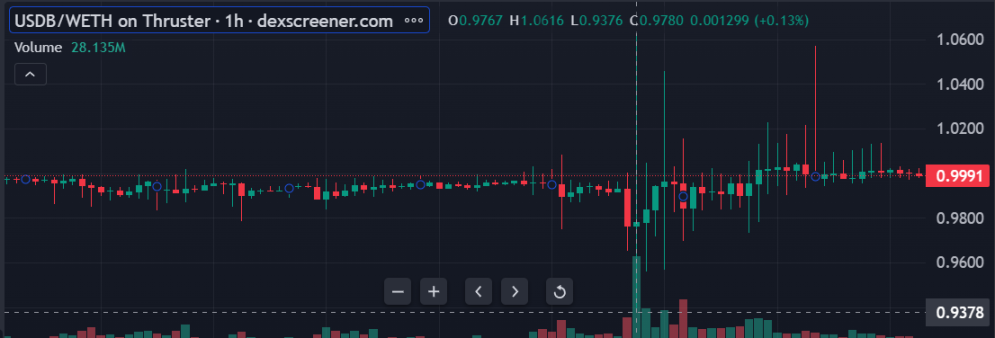
另外 Blast 上稳定币 USDB 在昨日短时脱锚至最低 0.937 美元。由于 Blast 的稳定币生态相对封闭,且 Blast 链启动初期项目方对 USDB 的激励较大,导致市场波动时资金流出的影响较大。现在 USDB 已经基本回锚。


借贷协议


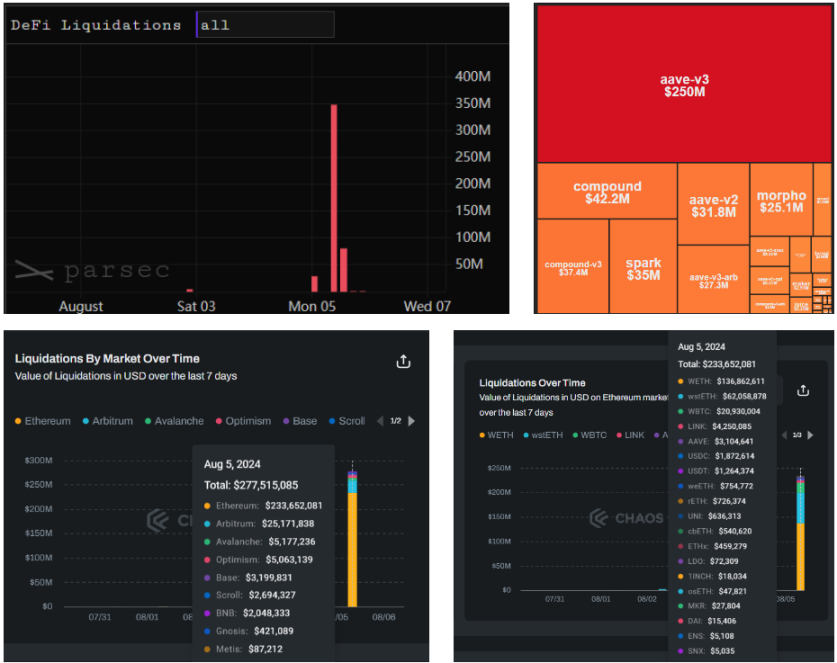
就清算情况而言,8 月 5 日的清算情况最为严重,整体规模超过 3.5 亿美元。按协议分配来看,Aave V3 的清算额最大,达到 2.5 亿美元。其次是 Compound 清算,总清算额达 7960 万美元。在 Aave V3 的清算中,主要集中于以太坊的大类资产清算,前三名分别为 WETH、wstETH 和 WBTC。


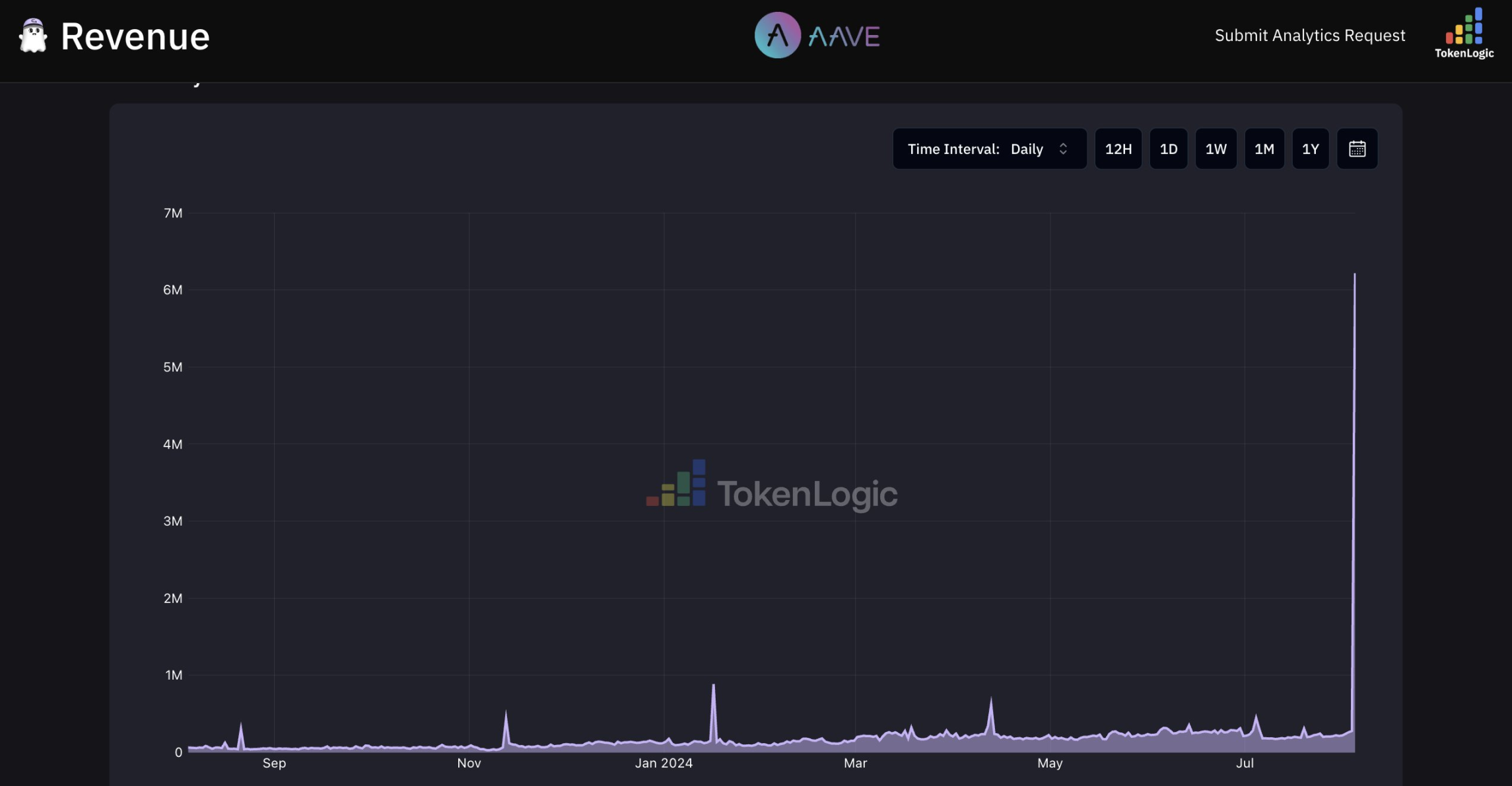
在市场波动中,Aave 也获得了超过 600 万美元的收入。


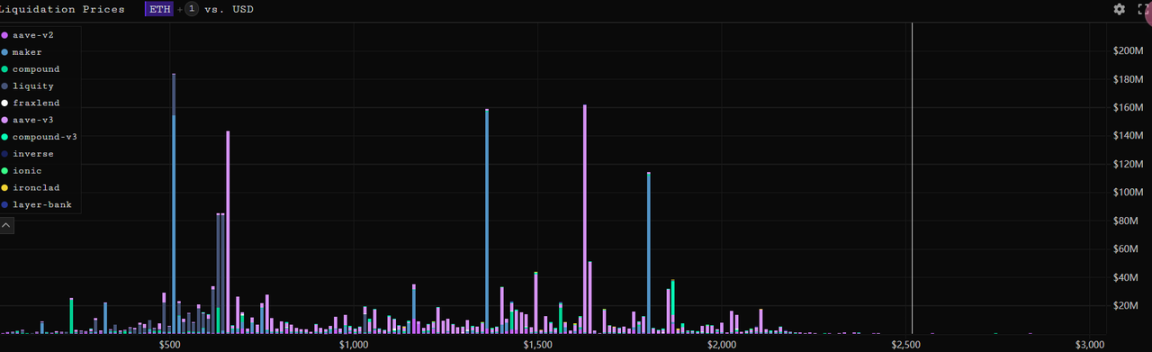
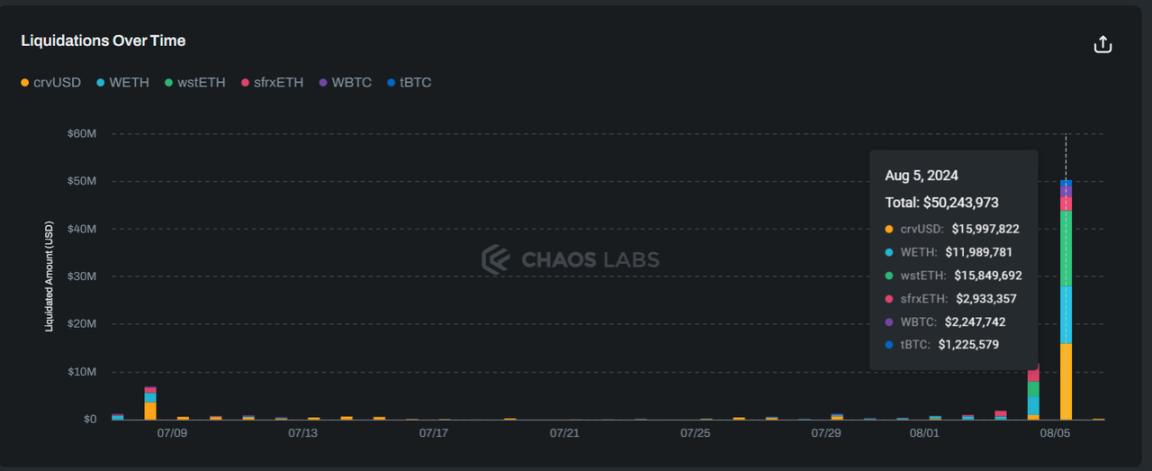
清算完成后,链上整体的清算线已经低于 2000 美元。在清算中,由于机制特性,在市场波动较大时容易出现坏账,如 Aave V3 近七天内共产生了 35 万美元的坏账。相比之下,Curve Llamalend 因为其软清算机制避免了大部分硬清算,其中软清算在 8 月 5 日承担了 5024 万美元的清算份额。

整体而言,借贷协议对本次市场波动的应对还算差强人意。


去中心化交易所(DEX)


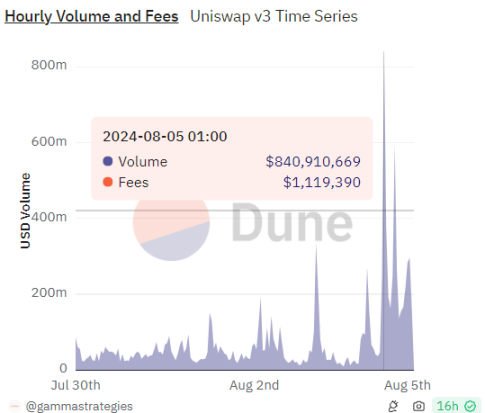
在 Uniswap V3 中,8 月 5 日达到最高峰值 8.4 亿美元,并为 LP 产生了 111.9 万美元的费用。


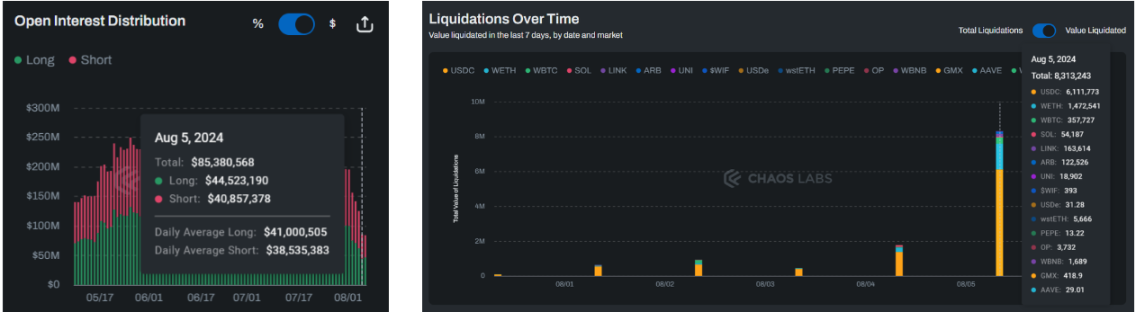
GMX 方面,8 月 5 日当天,持有头寸较前日下降了 30% 左右,并清算了 830 万美元的资产,主要以 USDC 为主。


再质押


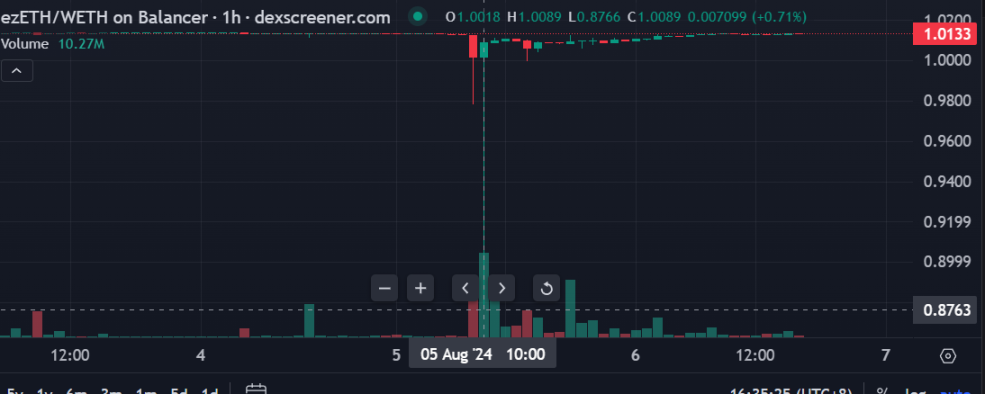
再质押资产作为现今以太坊的核心资产之一,市场波动下的流出也比较显著。例如 Renzo 的质押通证 ezETH 最低脱锚至 0.876 WETH 点位。


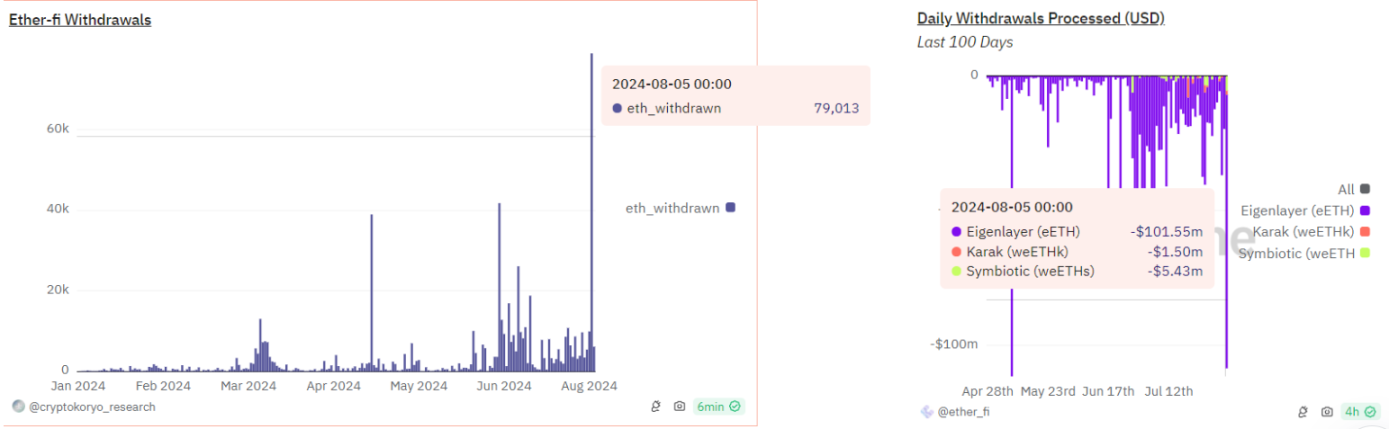
协议流出上,以 ether.fi 为例,8 月 5 日全天就提现了 79013 枚 ETH,总价值超过 1 亿美元,其中大部分是 Eigenlayer 的 eETH 提现。凭借着超过 7.7 万枚 ETH 的流动性和 73% 以上的 DeFi 利用率,协议不存在整体上的挤兑风险。


整体而言,Lido stETH 提现队列没有大幅增长的态势,且链上主要的 LST 一直保持稳定。所以整体上再质押生态没有系统性风险。


References:

https://parsec.fi/layout/cryptoian/_N33MkeM

https://community.chaoslabs.xyz/aave/risk/liquidations

https://dune.com/ether_fi/etherfi

https://dune.com/hildobby/ethena

Related Reads

Borrowed Faith: How Much of the Bitcoin ETF Flows Are Real Money

"Rented Faith: How Much of Bitcoin ETF Flows Are Real Money?" Bitcoin ETF inflows are often seen as a barometer of institutional conviction. However, week-to-week analysis reveals they are primarily driven by a hidden arbitrage trade rather than directional bullishness. This is the cash-and-carry trade: buying the ETF while simultaneously shorting Bitcoin futures on the CME to lock in the price difference (basis). This delta-neutral activity registers as ETF inflows but reflects a rate-seeking, not price-betting, strategy. Data shows weekly ETF flow volatility is closely tied to hedge fund ("leveraged funds") short positions on CME futures, with a correlation of 0.70. About half of weekly flow variation can be explained by this single factor. In contrast, Bitcoin's weekly price changes have no statistically significant power to predict flows. Crucially, while this arbitrage trade dominates weekly *fluctuations*, it is not the main component of the cumulative *stock*. Of the ~$55 billion total net inflow, the estimated net arbitrage position is only about $1 billion. The vast majority is steady, directional buying averaging ~$400 million per week. Thus, ETF flows overstate the *volatility* of belief, not its *level*. The "rented" arbitrage capital churns, while "owned" directional capital forms the bedrock. This arbitrage trade has been unwinding for two years, with hedge fund shorts peaking at ~$14 billion in late 2024 and falling to ~$4.5 billion. Recent outflows align with basis compression, signaling the trade's exit, not a loss of faith. For Ethereum ETFs, the same dynamic is weaker due to negative carry from forgone staking yield. The key takeaway: To interpret ETF flows, watch the basis vs. Treasury yields and CME hedge fund net shorts. They reveal how much of the weekly "demand" headline is driven by rented, rate-seeking capital versus real conviction.

链捕手3m ago

Borrowed Faith: How Much of the Bitcoin ETF Flows Are Real Money

链捕手3m ago

Two Giants' Credit Expansion: Loan Balances of $9.9 Billion vs. $14.6 Billion, Brazil Emerges as the Main Battlefield

Title: Two Giants "Credit" Surge: Loan Balances of 99 Billion vs. 146 Billion USD, Brazil Emerges as Main Battlefield Summary: The article compares the rapid expansion of credit businesses by two major e-commerce and fintech players, Sea (via Monee) and Mercado Libre (via Mercado Pago), in overseas markets like Southeast Asia and Latin America, contrasting with a slowing domestic Chinese credit market. Using Q1 2026 financial data, it highlights their significant growth. Sea's Monee reached a loan balance of $99 billion, up 71% year-over-year (YoY), contributing 17.5% to Sea's total revenue. Mercado Pago's loan balance hit $146 billion, up 87% YoY, contributing 45% to its parent company's revenue. Both maintained stable risk metrics (e.g., Monee's 90+ day NPL at 1.1%) despite rapid scaling. Brazil is identified as a key and accelerating growth market for both. Sea's Brazilian operations saw loan volumes exceed $10 billion, growing 250% YoY, with SPayLater GMV penetration still low (~10%) indicating high potential. Sea also secured a key Brazilian financial credit license (SCFI). Mercado Libre's Brazil segment contributed over half (54%) of total group revenue, with its credit business there generating $11.24 billion in revenue, up 89% YoY and accounting for 12.7% of global revenue. Mercado Pago's credit portfolio, especially credit cards (46% of loans, +105% YoY), is a strategic focus, described as crucial as building logistics was a decade ago. Its net interest margin after loss (NIMAL) remains high at 17.8%. The article concludes that while Brazil presents immense opportunities, the success is largely driven by these integrated "e-commerce + fintech" giants with proprietary transaction data and ecosystems, making it challenging for standalone fintech players to compete effectively.

链捕手25m ago

Two Giants' Credit Expansion: Loan Balances of $9.9 Billion vs. $14.6 Billion, Brazil Emerges as the Main Battlefield

链捕手25m ago

Research Report Analysis: Is Intel Making a Comeback with Apple? Bernstein's Calculations Show the Right Direction, but the Price Is Already Overvalued

Bernstein analyst Stacy A. Rasgon published a report on June 18 regarding Intel, assessing the potential impact of recent political support for a US-based PC chip design and manufacturing collaboration between Apple and Intel. The report views this as a significant signal for the foundry landscape shift but concludes the initial financial contribution would be minimal. Key conclusions: 1) An Apple deal is seen as a small-scale "proof of concept." Even if Intel wins 40% of Apple's premium notebook chip orders (~5 million units/year), Bernstein estimates it would generate only about $500M in annual revenue and ~$0.03 EPS, negligible against Intel's ~$55B revenue. 2) Political encouragement is not equivalent to enforceable mandates. Winning orders ultimately depends on Intel demonstrating competitive technology (like its 18A node), cost, and reliable supply. 3) The path from validation to large-scale production involves significant challenges, capital investment, and time. Due to these uncertainties, Bernstein maintains a Market-Perform (Hold) rating with a $100 price target, implying potential downside from the ~$121.10 price at the report date. The analysis highlights the tension between near-term validation value—serving as a crucial trust signal for Intel's foundry ambitions and US supply chain resilience—and the long-term opportunity to attract larger cloud and AI chip customers. The investment thesis hinges on successful 18A execution and sustained policy support, not on immediate financial gains from Apple.

marsbit49m ago

Research Report Analysis: Is Intel Making a Comeback with Apple? Bernstein's Calculations Show the Right Direction, but the Price Is Already Overvalued

marsbit49m ago

Trading

Spot
Futures
活动图片