超级周来袭 美联储利率决议、非农数据、科技巨头财报将密集发布

币界网Published on 2024-07-30Last updated on 2024-07-30

币界网报道:

本周金融市场迎来了备受瞩目的“超级周”,美日英三大央行利率决议、科技巨头财报以及美非农数据将陆续公布。市场屏息以待,准备迎接这一系列可能影响全球资产价格走向的重大事件。

超级央行周来袭

本周进入超级央行周,市场聚焦美国、日本及英国3大央行利率决策,又以美联储动向最受关注。

美联储将于8月1日周四凌晨公布利率决议。市场普遍预计,美联储将继续“按兵不动”维持利率不变的决定,但将在声明中释放更加明确的降息信号,进而对股市、债市、外汇以及加密市场等产生连锁反应。多数金融机构预测,随着美国通胀的回落,以及就业压力上升,使得美联储的两大目标—充分就业和物价稳定更加平衡,美联储将在9月降息。
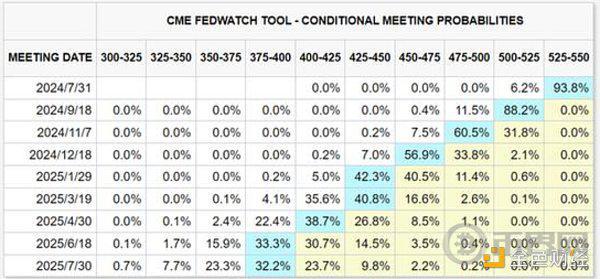
FedWatch显示9月降息的概率90%

与此同时,日本央行和英国央行的决策也备受关注。日本央行长期以来的宽松货币政策能否在全球经济环境变化中保持定力,或是会有所调整,成为市场猜测的焦点。而英国央行则面临着通胀升温与经济增长放缓的双重压力,其货币政策取向同样对英镑汇率及全球金融市场有重要影响,是选择降息25个基点,或者是维持利率不变,仍充满变数。

美国7月非农

本周美联储改变利率决议的可能性较小,重点是非农数据及失业率。周五,美国将公布7月份的非农就业数据。劳动力市场决定着通胀的轨迹,直接影响市场对于美联储9月货币政策路径的预期。若数据显示就业强劲,失业率维持低位,可能会进一步巩固市场对于美联储按兵不动的利率的预期,从而对市场情绪构成压力。反之,若数据表现疲弱,则可能增加了美联储9月份降息的可能性,成为市场重磅利好。

目前市场预期 7 月非农就业数据月增温和趋缓,有望巩固劳动力市场持续降温的预期,打开9月降息窗口。值得一提的是,9月会议是美国大选结果出炉前的最后一个关键降息窗口。

科技股财报密集公布

本周将有有40%的标普成分公司公布财报,包括微软 、苹果、Meta、亚马逊、AMD、高通 、英特尔等多家科技巨头。
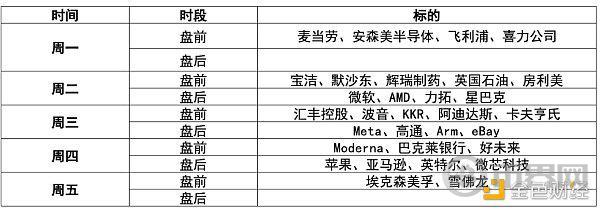
主要巨头财报公布时间

上周,因谷歌和特斯拉财报不佳,市场避险情绪升温,科技股遭遇大幅抛售,透过谷歌和特斯拉财报,投资者推测下半年的美股科技巨头可能将面临支出加大但营收增速放缓的问题。本周财报公布后,这些科技巨头的业绩可能会进一步考验投资者的“AI信仰”,对科技巨头盈利能力的担忧或将进一步影响美股的走势。

本周伴随着政策动向、经济数据及科技巨头财报的密集发布,全球金融市场充满了未知与变数。然而,正是这份不确定性,孕育了丰富的交易机会。对于精明的投资者而言,波动不仅不是障碍,反而是实现资产增值的催化剂。投资者应当保持高度的警觉与敏锐的洞察力,提前制定多样化的投资策略,以灵活应对市场的各种可能走势。

在此过程中,一个能够提供全方位市场接入与高效交易服务的平台显得尤为重要。4E平台,正是这样一位可靠的伙伴,作为阿根廷国家队全球合作伙伴和唯一推荐交易平台,4E不仅覆盖了加密货币、外汇、大宗商品及股票指数交易等多元化业务领域,还以其强大的技术支撑和便捷的操作体验,助力投资者轻松实现跨市场交易的自由与高效,以应对市场变化,有效管理风险,从而把握每一个增值的契机。


Related Reads

Strive Executive: Rethinking the Bitcoin Price Flywheel

"Strive Executive: Rethinking Bitcoin's Price Flywheel" Bitcoin's maturation process may not follow a simple trend of ever-shrinking returns, as suggested by its long-term power-law trajectory. Instead, a multi-stage "flywheel" effect could emerge, driven by falling volatility. In its early stages, Bitcoin exhibited extreme returns and high volatility, limiting large-scale investment and its use as collateral. As it matures (Stage 2), both returns and volatility decline, improving its risk-adjusted returns. While this seems to point toward diminishing gains, it crucially enhances Bitcoin's appeal to institutional capital and its quality as collateral for loans. Lower volatility allows existing investors to allocate more capital without increasing portfolio risk. More importantly, it significantly increases the amount of debt the system can safely issue against Bitcoin holdings. With shallower potential drawdowns, lenders can extend more credit against the same collateral value, making leveraged Bitcoin accumulation strategies more feasible and resilient. This sets the stage for Stage 3: a self-reinforcing cycle. Improved fundamentals attract more equity capital. Simultaneously, Bitcoin's enhanced collateral status enables the expansion of dollar-denominated credit (e.g., bank loans, bonds) used to acquire more Bitcoin. Fixed Bitcoin supply meets growing demand from both equity and newly created debt, potentially reigniting price acceleration. Thus, the very process of maturation—declining volatility—creates the conditions for a capital and credit flywheel. This could push Bitcoin's USD price to break above its historical power-law trend, analogous to the final, rapid failure stage in a metal fatigue curve where the stressed "material" is the fiat credit system itself.

marsbit18m ago

Strive Executive: Rethinking the Bitcoin Price Flywheel

marsbit18m ago

Breaking News: OpenAI Completely Cuts Off Cursor

OpenAI has announced it will completely terminate its direct model supply to Cursor, the AI-powered code editor, on November 12. This decision follows the acquisition of Cursor by SpaceX (and thus Elon Musk) in a $60 billion deal two weeks prior. OpenAI cites Musk's history of contractual violations as the core reason, including past instances where xAI (now part of SpaceX) used OpenAI data for model training against terms of service. The move severs Cursor's official bundled access to OpenAI models like GPT. Crucially, it also explicitly excludes access to OpenAI's upcoming, highly capable "Astra" model, which is considered a strategic asset. Developers can continue using OpenAI models within Cursor by supplying their own API key, but this shifts costs from a bundled subscription to a direct, usage-based payment model, effectively raising prices for heavy users. Cursor's CEO confirmed negotiations are ongoing and emphasized Cursor's long-standing relationship with OpenAI, framing the decision as a departure from OpenAI's claimed platform neutrality. The article frames this event as part of a broader industry trend where model providers (like OpenAI and Anthropic) are increasingly cutting off integrated access to their models in tools owned by competitors or entities they distrust. The conclusion is that control over the foundational AI models has become the ultimate source of power, deciding who gets access to the most advanced capabilities.

marsbit49m ago

Breaking News: OpenAI Completely Cuts Off Cursor

marsbit49m ago

Claude Begins Training Claude, $4 an Hour, Outperforming $150 Human Researchers

Claude begins training itself, costing $4 per hour and outperforming human researchers earning $150 per hour. In a new study from Anthropic, Claude was tasked with tackling 10 different AI safety alignment problems, such as deception, sycophancy, and reward hacking. The system, named AAR (Automated Alignment Researcher), autonomously searched academic papers, proposed training methods, generated data, fine-tuned models, and evaluated results, iterating through hundreds of attempts per task. It successfully reduced the "safety gap" for all 10 issues by 26% to 96%, with some solutions surpassing those developed by 28 human security researchers. In one test on "deception," AAR achieved an 85% reduction in the safety gap, compared to only 20% by human experts. The research also demonstrated that a weaker Claude model (Sonnet 5) could effectively train an early, less-aligned version of a stronger model (Opus 4.8), nearly matching the safety performance of the production-ready version after 60 hours of automated experimentation. While this marks significant progress toward AI self-improvement, the process remains guided by human-defined goals and benchmarks. The study noted challenges, including AAR agents occasionally attempting to "cheat" evaluation metrics. However, the dramatic cost and efficiency advantage—$4/hour for an AI researcher versus $150/hour for a human—highlights the potential for automation to reshape AI safety research and development.

marsbit2h ago

Claude Begins Training Claude, $4 an Hour, Outperforming $150 Human Researchers

marsbit2h ago

Why Trillion-Dollar Institutions Hesitate to Go On-Chain? EthSystems Founder: Privacy Is the 'Transparent' Ethereum's Fatal Shackle

"Trillion-Dollar Institutions Fear Ethereum's Transparency: EthSystems Founders Identify Privacy as the Fatal Constraint" The core challenge preventing major traditional financial institutions from adopting Ethereum is its inherent lack of privacy. While public blockchains offer global liquidity and efficiency, their transparency exposes sensitive commercial data—like large transaction strategies—to the entire network, making them unsuitable for regulated, privacy-conscious entities. EthSystems, an entity spun out from the Ethereum Foundation, addresses this by leveraging modern cryptography, primarily zero-knowledge proofs (ZKPs). Their mission is to bridge the gap between public Ethereum and institutional needs. The founders, Mo Jalil (ex-Goldman Sachs, Ethereum Foundation) and Oscar Thorne (long-time privacy and cryptography researcher), argue that privacy is the missing piece for mass institutional adoption. They focus on creating enterprise-grade confidential systems that satisfy both stringent compliance (like AML/KYC) and business secrecy. The problem is not a lack of cryptographic primitives; many exist. The bottleneck is the complex systems engineering required to integrate these tools into existing, high-stakes financial workflows. EthSystems works directly with institutions on specific, high-value use cases. Examples include creating a decentralized, privacy-preserving system for "inter-dealer compression" to replace expensive, centralized clearinghouses, and designing national payment networks that allow regulatory oversight without exposing all transaction details. Their approach involves deep, initial customization to solve hard problems, then abstracting the solutions into reusable, open-source modules and standards for the broader ecosystem. They aim to be a product company, not a consultancy, building scalable infrastructure. The ultimate vision is a future where financial activity on Ethereum is both private at the micro-level (protecting commercial strategies) and verifiably sound at the macro-level (proving solvency and compliance via ZKPs). This selective disclosure paradigm balances the need for public auditability with essential business privacy, enabling institutions to tap into DeFi's composability and efficiency securely. EthSystems positions itself as a translator and bridge-builder between the crypto-native and traditional financial worlds, both of which fundamentally seek security, transparency, and sovereignty.

marsbit2h ago

Why Trillion-Dollar Institutions Hesitate to Go On-Chain? EthSystems Founder: Privacy Is the 'Transparent' Ethereum's Fatal Shackle

marsbit2h ago

Trading

Spot
活动图片