「Runes Summer」迟迟未至,符文还有救吗?

Odaily星球日报Published on 2024-07-12Last updated on 2024-07-12

Abstract

符文的成长,需要比特币的文艺复兴

Ordinals is dead,这是 Ordinals 流传甚广的梗之一。而自从有了符文以后,这个梗又发展到了 Runes is dead 和著名的「Casey 切腹」。

从上线以来,符文的表现总是让人不太满意。目前,符文的总市值将将维持在 10 亿美元上方,这是著名的「Casey 切腹线」,我们又回到了老地方。过去的 5 天,符文市场的总交易量都只有可怜的 200 万美元左右,甚至更低。由于 ticker 命名方面的限制,自 4 月底上线以来,总共只有约 87500 个符文 Token 被「蚀刻(部署)」。

与之相比,自今年 4 月 1 日以来,在 Solana 上就有超过 64 万个 meme Token 被部署。交易量上就更不用说了,Solana 过去 24 小时交易量排名前 30 的 meme Token 一个都可以单挑整个符文。

夏至已过,老外们呼唤的「Runes Summer」却迟迟不来。

在许多中文 degen 的眼中,符文简直就是典型的「CJB」——不是都说老外共识吗?中外互不接盘吗?老外光打雷不下雨,先拉跨了...

事实上,我觉得这种说法是有认知陷阱的。符文的确是老外在 Ordinals FT 协议层面的共识,但是 Ordinals 的圈子本身就很小,再细分到老外符文玩家这个群体,就更小了。与之相比的是,在去年的铭文热潮中,几乎所有中文圈的玩家都参与了进来,并且中文圈是真正经历过从而有过一个共识——铭文这个赛道是可以赚钱的。

这实际上是一边倒的对抗,大部分的中文 degen VS 少数派的老外 degen。

符文起不来,一方面有当前市场又进入较为平淡甚至低迷的阶段的原因,另一方面则是比特币生态,或者说 Ordinals 生态乃至符文生态,仍然是整个 Crypto 圈里的一个小圈子。
「Runes Summer」迟迟未至,符文还有救吗?

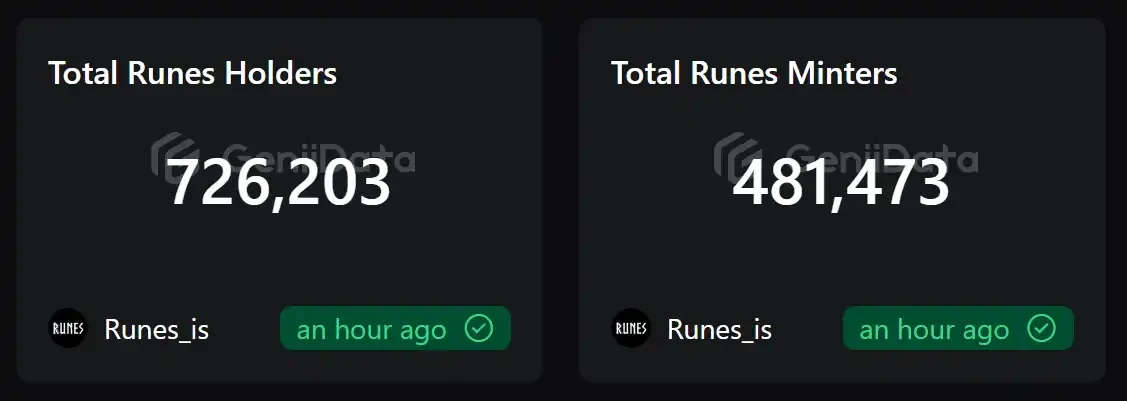
符文总 Holder 数量只有不到 73 万,打过符文的更是只有 48 万出头。排除掉一人控制多个地址的情况,实际的独立玩家数量更是少得有点可怜

符文完全不缺好的、性感的 meme Token。才完成空投不久的 EPIC•EPIC•EPIC•EPIC,堪称比特币版本的 $PEOPLE,以 Blob 团队为首的众多 Ordinals 项目、社区乃至个人众筹了 33.3 比特币拍下了今年减半出产的历史第 4 个「史诗聪」,将这个符文「蚀刻(部署)」于其上之后免费空投给了超 9 万个地址。

这种集生态之力并回馈于生态的故事,够性感了。但是,认知门槛也是客观存在的。比特币在过去这么多年的时间里一直被视为「货币」或是「虚拟黄金」,从 Ordinals 诞生开始,围绕 Ordinals 生态的争议不断存在。同时,许多 Crypto 玩家对于比特币的印象也还依然停留在「货币」——比特币啊?哦,不错,很贵,投资比特币赚不到翻身级别的财富,我不玩。

这种印象的存在,使得一个比特币最小单位「聪」被一群比特币生态信仰者以 33.3 比特币的价格买下来这种故事的传播需要主动破圈才能够被更多人听见。很多人首先并不知道什么是「稀有聪」,其次听说了这个故事可能也是一头雾水,领略不到这个故事的魅力。

我必须要说,没有任何一个加密货币能够拥有这样的文化属性,我们不可能在以太坊上看到某枚 ETH 拥有 33.3 亿倍于其本身的价值。更何况, 33.3 比特币买下一个「稀有聪」在此前并无先例可循,这意味着一帮比特币文化的狂热探索者在用 33.3 比特币去寻求一个答案——如果 33.3 比特币等于 1 聪证明了比特币的文化价值,那么这 33.3 比特币能否创造出更大的价值呢?

此前,$PUPS 的 BRC-20 版本桥接到 Solana 上并引起了暴涨以及轰动,这是一个非常好的开始。在 $PUPS 之后,我观察到 Solana 生态和 Ordinals 生态之间的交流变得密切许多,最直接的感受就是 Bitcoin Puppets 和 OMB 两个 NFT 系列有了不少来自 Solana 的买家。

拉盘,或者价格的暴涨,当然能够在短期内为一个生态带来众多的关注度以及新用户,但要让他们留下来,这个生态必须要有感染力,要有 Vibe,要有属于自己的动人的故事乃至文化。比特币在 Ordinals 诞生后,已经从一个「价值介质」本身逐渐发展出了「文化介质」的一面。或者说,比特币本身就是一种文化,在它屹立不倒如此多年,却从未凭借各类应用型叙事直到今天,就已经证明了它是我们这代人的货币,是一代人信仰的堆积。

符文的成长需要什么?首先,我想我们需要符文到其它链的桥,这样的基建,RuneMine、Beyond 还有 MultiBit 都在做了,我想离我们拥有符文桥的日子已经不远。

流动性在我看来反而是其次,更多的是,要让符文、Ordinals 生态的故事带到其它链的用户那里,让他们看到比特币有优秀的原生 meme,有动人的原生故事,让大家更新对于比特币的印象,正如年轻人鲜少会真的去买黄金而是去炒鞋、炒游戏饰品、炒 NFT 那样,比特币,现在也是年轻的。

我们需要比特币的文艺复兴,我们需要挑战大众对于比特币的旧有印象,让更多人开始欣赏比特币的文化多样性。
Related Reads

Hubei State-Owned Assets Achieve the Largest Return in History

After years of anticipation, Yangtze Memory Holdings Co., Ltd. (YMTC) has filed for an IPO on Shanghai's STAR Market, seeking to raise 33 billion yuan—the largest offering in the board's history. This move follows the recent listing of its peer, ChangXin Memory Technologies (CXMT), which reached a market valuation exceeding 4 trillion yuan. Dubbed the "twin stars of domestic memory," both companies, founded in 2016 in Hefei and Wuhan respectively, symbolize China's push for semiconductor self-sufficiency. YMTC's journey began with its predecessor, Wuhan Xinxin, established in 2006. Backed by substantial state investment from Hubei and Wuhan, it evolved into a national memory base. The company achieved key technological breakthroughs, and now ranks as the world's third-largest and China's top NAND Flash manufacturer by sales. Its recent financials are strong, with Q1 2026 revenue of 47.04 billion yuan and net profit of 33.38 billion yuan. Post-IPO, its market value is widely expected to surpass 1 trillion yuan. The potential windfall highlights the success of long-term, patient capital from Hubei's state-owned entities. Key shareholders like Hubei Changsheng, Xintech, and government-backed funds have supported YMTC through years of development. Their collective stake could be worth hundreds of billions after the listing. This model mirrors other successes in Wuhan, such as Huagong Tech, where local state investment during a low point later yielded massive returns. The story reflects a broader national trend of regional transformation through strategic, high-tech investments. Hefei's bet on CXMT, now worth over 3.7 trillion yuan, propelled the city's A-share market cap to 4th nationally, showcasing how a major firm can reshape an entire local industry ecosystem. Similarly, Wuhan's photoelectronics cluster, now worth over 850 billion yuan, aims to become a world-class hub. The takeaway is clear: in the reshuffling of Chinese cities, patient, courageous state investment in core technologies—from memory chips to advanced manufacturing—is proving to be a decisive factor, turning long-term visions into economic reality.

marsbit19m ago

Hubei State-Owned Assets Achieve the Largest Return in History

marsbit19m ago

The Myth of AI Investment Collapses

"The AI Investment Myth Bursts: The Swift Collapse of a $45 Billion Fund The high-flying hedge fund Situational Awareness (SA), founded by 24-year-old former OpenAI researcher Leopold Aschenbrenner, neared total collapse in late July. Once a Wall Street darling, the fund saw its assets under management rocket from $1.5 billion to $45 billion in under a year, driven by a massively leveraged bet on the AI boom. Its core strategy was a 'Texas hedge'—simultaneously buying stocks seen as AI beneficiaries (like chipmakers) and shorting those deemed AI victims (like certain software firms). In reality, both sides of this trade were dependent on unbroken market confidence in AI. This strategy generated staggering returns, peaking at 439% year-to-date. However, it concealed extreme concentration, high leverage (reportedly 3-to-1), and liquidity risks from illiquid private holdings like Anthropic. When semiconductor stocks corrected sharply in late July, SA's long positions plummeted. Simultaneously, its short bets failed as 'AI victim' stocks rose, causing losses on both sides. The fund faced immediate, massive margin calls. With minutes to spare before a forced liquidation by its prime brokers, SA sold its entire public market portfolio at a discount to Citadel on July 30, narrowly avoiding a market-wide cascade. The fund's value crashed from $45 billion to roughly $10 billion (excluding its remaining Anthropic stake). The episode exposes the systemic risks embedded in the frenzied, highly leveraged chase for AI returns. It serves as a stark reminder of the old Wall Street adage: markets can stay irrational longer than investors can stay solvent. The crisis shifts focus from Aschenbrenner's AI predictions to whether capital markets will continue ignoring such dangerous concentration and leverage in pursuit of the next 'sure thing' narrative."

marsbit20m ago

The Myth of AI Investment Collapses

marsbit20m ago

Trading

Spot
活动图片