众筹版马丁策略Doubler推出空投活动,详解参与策略与协议业务

Odaily星球日报Published on 2024-07-08Last updated on 2024-07-08

Abstract

空投代币总价值约数十万美元,已有260万美元资金参与,进出场磨损2%。

原创 | Odaily星球日报(@OdailyChina

作者|南枳(@Assassin_Malvo

众筹版马丁策略Doubler推出空投活动,详解参与策略与协议业务

7 月 5 日,流动性聚合投资策略协议 Doubler 宣布,主网版本 Doubler Lite 于 7 月 5 日在 Arbitrum 上推出。同时将启动为期 5 天的“流动性空投”活动,共计分发 500, 000 枚 DBR 代币,持有 C 代币的地址即可获得空投。

Odaily 将于本文解读如何参与空投活动、简析 Doubler 的业务逻辑、详细解析协议运行流程。

空投活动

基本信息

  • 空投数量: 500, 000 枚 DBR;

  • 截止时间: 7 月 10 日 10: 30 (UTC+ 8);

  • 参与方式:持有 C 代币,按照 C 代币持有比例分配 DBR,单地址最大空投 1, 000 枚 DBR;

  • 发放时间: 7 月 25 日。

流程详解

  • 进入Doubler 官网,并准备好 ETH 或 WETH(Arbitrum)

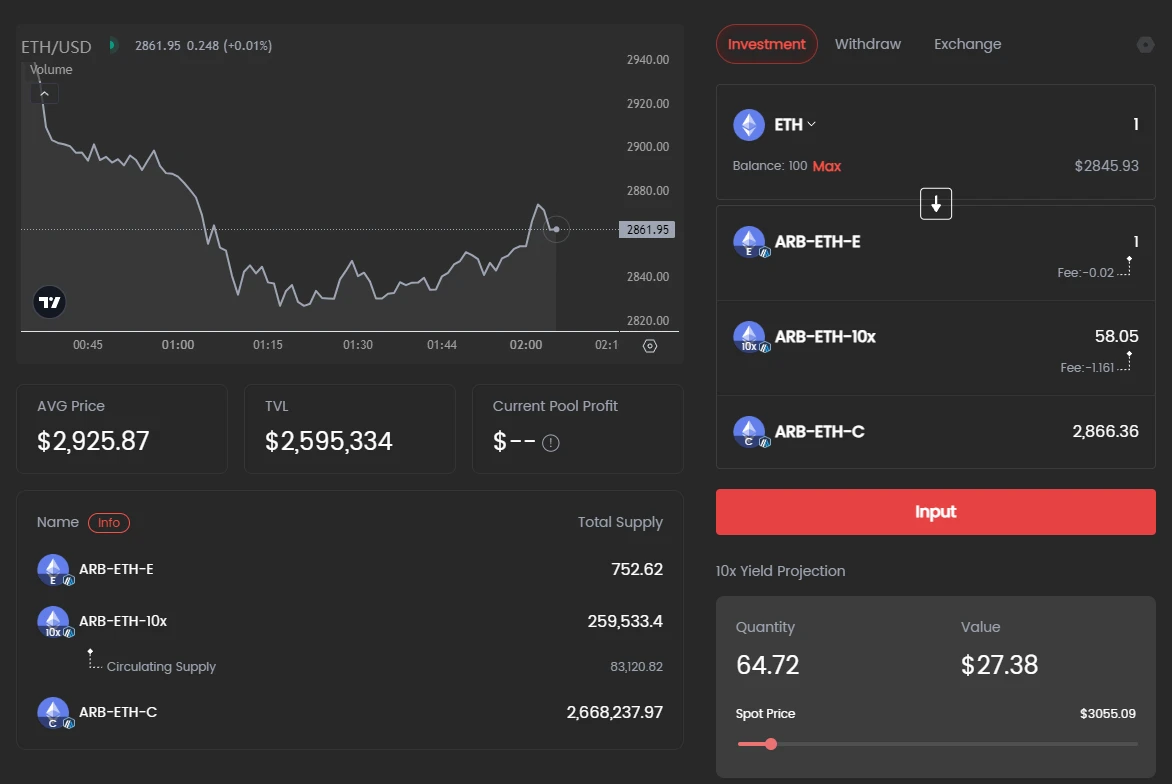
  • 在 Investment 模块投入 ETH,获得 C 代币、E 代币、10x代币(池子浮盈情况下不获得);
众筹版马丁策略Doubler推出空投活动,详解参与策略与协议业务

  • 最终根据 C 持有量计算 DBR 空投量,例如上图投入 1 枚 ETH,获得 2866 枚 C,占总量的 0.107% ,可获得 537 枚代币。读者也可将其他代币置换为 C 代币,以获得更多空投。

  • 是否进行将其他10x代币和 E 代币置换为 C 代币,读者可参照以下思路:

  • 仅为了获得空投,那么在 ETH 有限的情况下,可以全部置换为 C,以获得最大量的空投;

  • 参与空投的同时为了使用协议,获取其利益。认为会持续下跌的,可在空投活动结束后,在读者认为下跌的极限点位将 C 代币转换成10x代币,等待浮盈退出;认为会反弹上涨的,空投结束后立刻兑换为 C 代币;E 代币应在读者认为是 ETH 上涨高点时兑换为10x代币。简单来讲就是跌的时候尽可能多获取10x,然后获利抛售,具体原理参见后文。

  • 需注意,投入资产、提取资产、转换资产均收取 2% 的手续费,应纳入成本计算。

Doubler 速览

Doubler Lite 由四个主要模块组成,其具体运作流程较为复杂,读者可仅先对核心概念留存印象,并阅读下一小节:

  • 马丁策略:在价格下跌时持续投入低成本资产降低平均成本,在价格反弹时实现利润最大化。

  • 收益权分离:将资产的收益权和成本权分离,并将这些权利代币化。

  • 适应性通胀管理:通过自动 Rebase 确保 10x代币数量维持在池总市值(Pool Cap)的 10% 。

  • 动态赎回:根据现货价格和资金池平均价格的变化,动态调整赎回的代币数量,确保平均价格和矿池中其他用户的利益不受影响。

马丁策略

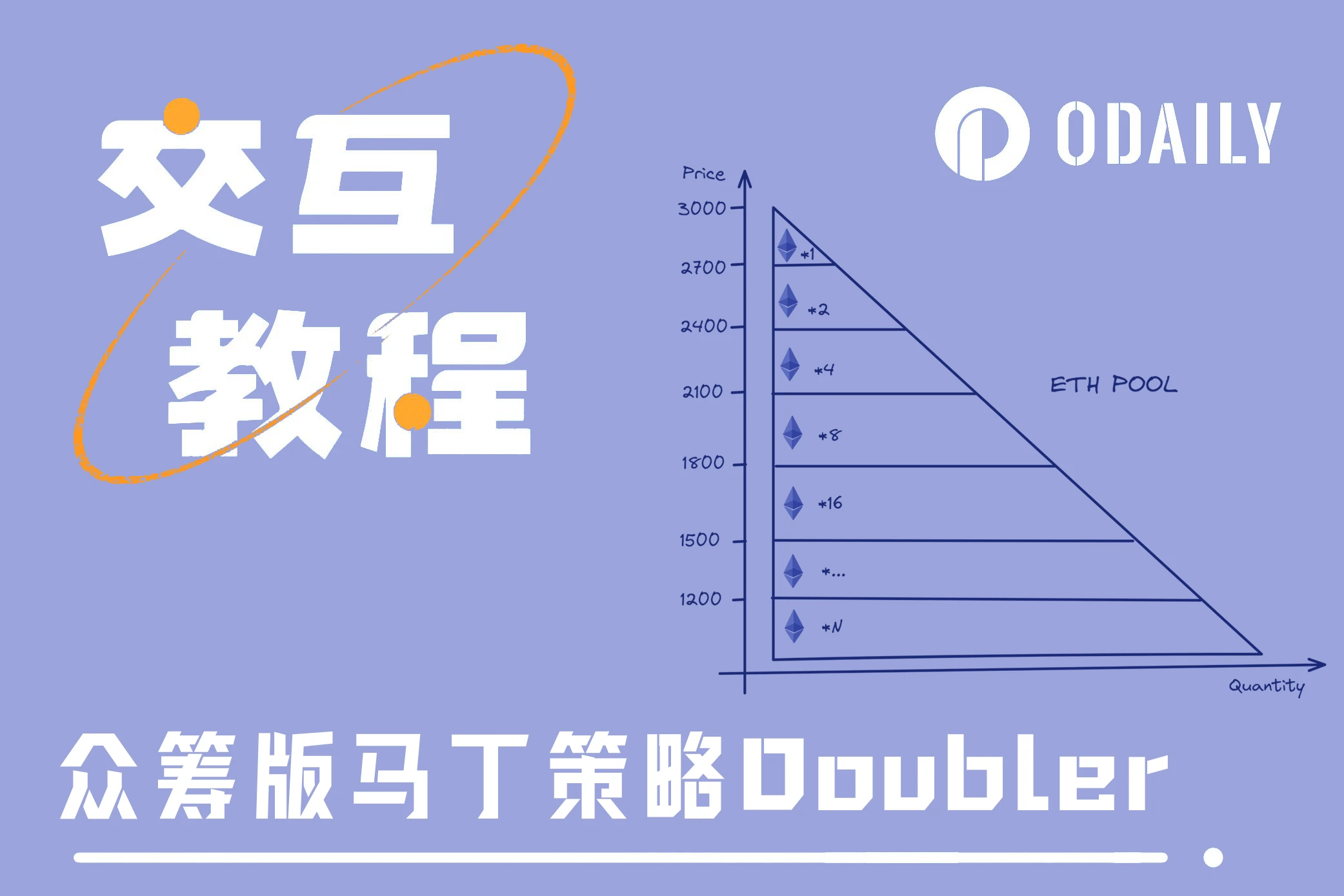
马丁策略(Martingale Strategy)是一种常见的赌博策略,其基本思想是通过加倍复投来弥补之前的亏损,最终获取盈利。

例如初始投注为 10 元,第一次下注 10 元,输了总亏损 10 元;第二次加倍下注 20 元,输了总亏损 30 元;第三次再加倍下注 40 元并赢下,最终总盈利 10 元。马丁策略理论上最终都会盈利,但存在需要大量资金、防黑天鹅能力差的缺点(即连续输钱后复投资金量快速上升,而赌场连输的概率并不小)。

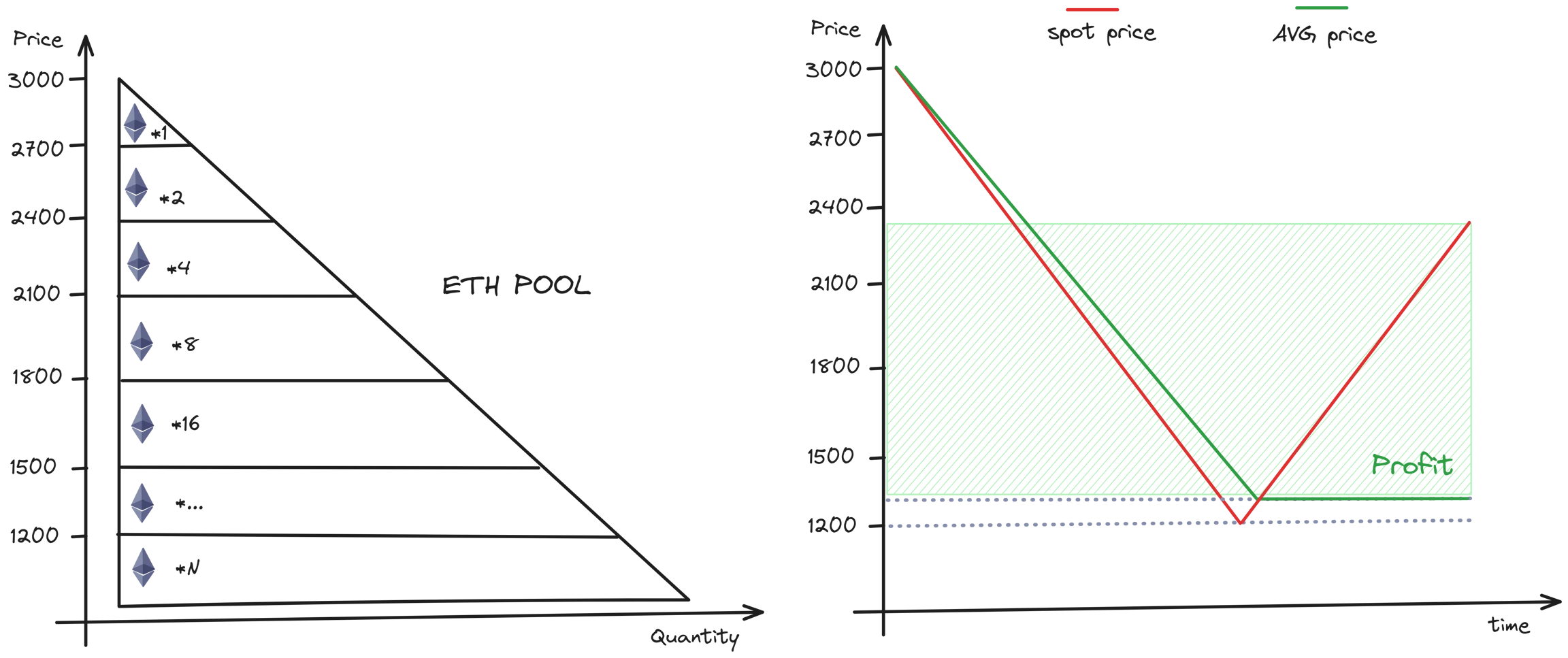
Doubler 将马丁策略用于加密投资中,并通过”集资“的方式解决资金问题,每当标的物下跌一定程度时就注入更多抄底资金,实现均价的快速下降。在最新版的 Doubler Lite 中,不限制具体的抄底点位,而是通过激励机制由市场自行调整购入价格。

进入到下一个问题:集资购买的 ETH,赚钱了怎么分?亏钱了怎么算?具体以什么形式退出?
众筹版马丁策略Doubler推出空投活动,详解参与策略与协议业务

资产凭证:收益权分离

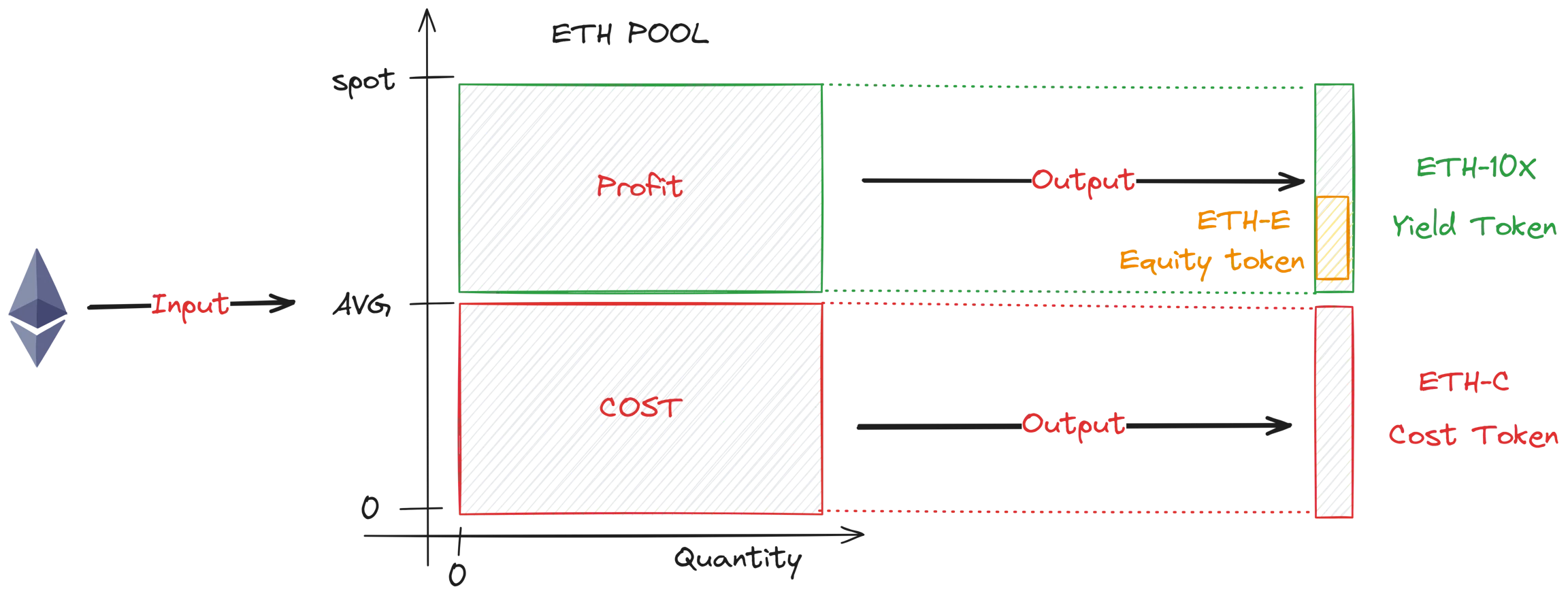
在 Doubler Lite 中,对于注入资金池的资产,协议将成本、收益的所有权分离为成本代币和收益代币,代表成本所有权的代币是 C 代币,而代表收益的代币是10x代币,并加入了 E 代币,能够单向转化为10x代币。
众筹版马丁策略Doubler推出空投活动,详解参与策略与协议业务

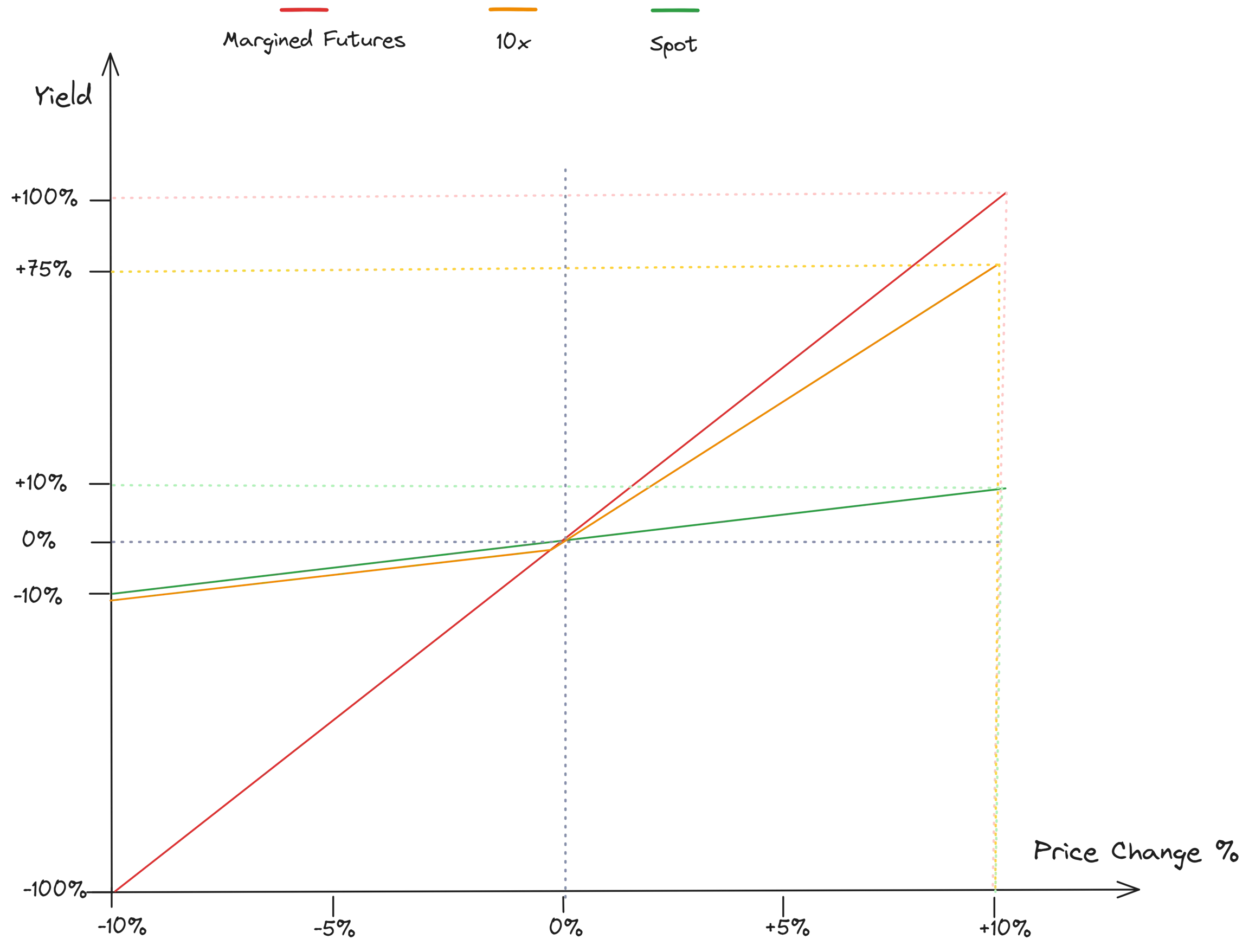
Doubler 对代币铸造和收益分配设计了一套复杂的体系,撇去具体的流程和数值不谈,简单理解就是众筹资金对代币进行抄底操作后,当代币价值超过资金池的平均价格(例如以太坊从 3000 U 一路抄底到 2000 U,平均成本 2500 U,然后又反弹到 3000 U),这时候出现了利润空间,用户可以选择使用10x代币和 C 代币分成利润,单位数量的10x代币分得多,C 代币分得少。
众筹版马丁策略Doubler推出空投活动,详解参与策略与协议业务

项目融资

24 年 1 月 30 日,流动性聚合投资策略协议 Doubler 宣布完成种子轮融资,Youbi Capital 领投,Bixin Ventures、Mask Network、Comma 3 Ventures、Pivot Labs、Continue Capital、Sanyuan Capital、Waterdrip Capital、DWF Ventures、Gate Labs、Formless Capital、MT Capital 和 CatcherVC 等机构参投,具体融资金额暂未披露。

代币信息

DBR 代币总量为 100, 000, 000 枚,具体分配如下:

  • 流动性激励: 40% ,用于奖励使用该产品的社区用户,该计划将在主网上线后根据需要启动;

  • 生态基金: 15% ,用于激励为生态系统做出重大贡献的合作伙伴和社区,促进更稳定、更健康的增长曲线;

  • 投资者: 15% ,其中 10% 在 TGE 发放, 3 个月锁仓, 24 个月线性归属;

  • 社区: 10% ,用于激励测试网 ITO 阶段的早期参与者和支持者, 50% 在 TGE 发放,其余 50% 在第三季度发放;

  • 核心贡献者: 10% ,这些代币将作为奖励保留给当前和未来的团队成员, 0% 在 TGE 发放, 6 个月锁仓, 8 个季度线性归属;

  • 顾问: 5% , 0% 在 TGE 解锁, 6 个月锁仓, 24 个月线性归属;

  • 营销和流动资金: 5% , 10% 在 TGE 发放, 24 个月线性归属。

综上,初始流通比例为(15% * 10% + 10% * 50% + 5% * 10% )= 7% ,即初始流通 700 万枚代币,若按照 1 美元的单价计算,则空投活动共分发 50 万美元代币。

机制详解

10x代币

10x是 Doubler 直接的收益代币,10x代币数量上限TVL 的 10%  (例如当前池内有 10 枚 ETH,单价 3000 美元,则10x代币总量为 10 × 3000 × 10% = 3000 枚,将随着 ETH 价格变动等影响代币池 TVL 的因素而变化),实际运行中数量上限与实际发行量的差额称为“未发行部分”,可由 E 代币转化。

  • 当代币池平均价格小于现货价格时(即现在处于整体盈利状态),用户投入资产不会获得10x。

  • 当代币池平均价格大于现货价格时(即现在处于整体亏损状态),将按照下方公式分发代币,其中 S 为现货价格,AVG 为代币池平均价格,Q 为投入 ETH 数量。

众筹版马丁策略Doubler推出空投活动,详解参与策略与协议业务

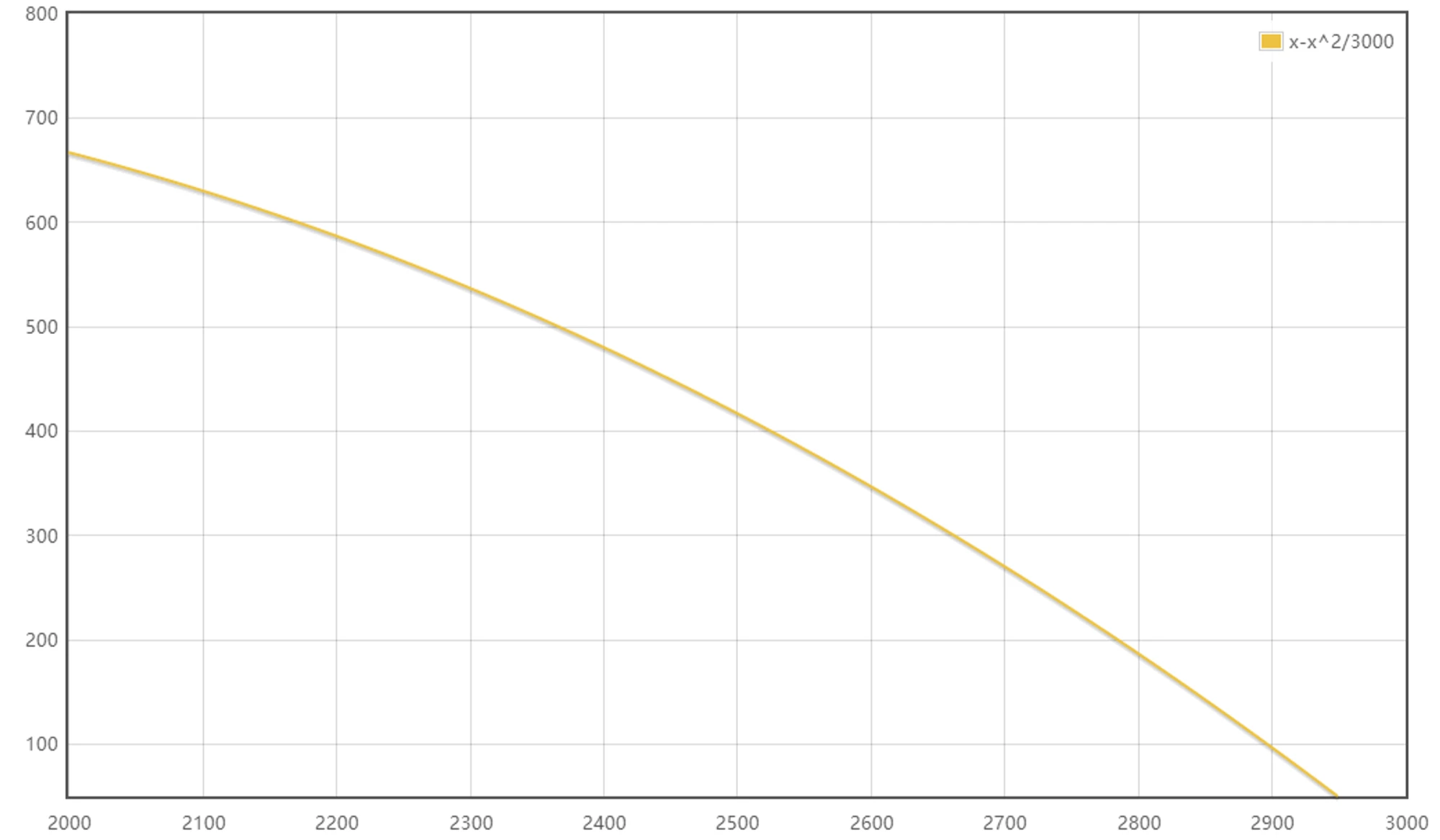
以池子均价 3000 美元为例,投入 1 枚 ETH 获得的10x代币如下图所示,当现货价格越低,能够获得越多的10x代币,这也是前文所述的“不限制具体的抄底点位,而是通过激励机制由市场自行调整购入价格”,价格偏离越大,获得的10x越多,将来回到水上的时候获利越多。
众筹版马丁策略Doubler推出空投活动,详解参与策略与协议业务

C 代币

当池子浮盈,将按照池子均价×投入的 ETH 数量计算返还的 C 代币数量;

当池子浮亏,将按照现货价格×投入的 ETH 数量计算返还的 C 代币数量;

E 代币

当池子浮盈,将按照现货价格×投入 ETH÷池子均价计算返还的 E 代币数量;

当池子浮亏,将按照投入 ETH 计算返还的 E 代币数量。

E 代币可以单向兑换为10x代币,兑换数量为 (投入 E 代币数量÷E 代币总量)×未发行的10x代币数。由于是单向兑换,因此铸造 10 倍代币的时机对最终回报有很大影响。

盈利机制

从上面的兑换公式可以看出,当池子亏得越多,用户投入 ETH 获得的10x代币就越多,C 代币就越少,反之也有相似的规律,因此当池子处于不赚不亏的状态时是平衡点,此时 C 代币和10x代币的边际获取比值为 10: 1 ,意味着二者均衡情况下的单体价值为 1: 10 。

而 Doubler 设定的规则是,用户需要按照代币池中实际的10x和 C 比例,提交相应的两种代币方可提取 ETH。如下图所示,当前总池子内的 C:10x为 10.322 ,因此赎回时也需要同比例的两种代币。而赎回价值则为(赎回代币量÷总量×TVL)= 1000 ÷ 257272 × 257272 = 10000 美元。

随着浮盈程度越来越高,C 代币价值将持续下降,而10x的价值将持续上升。一些简化算法认为超过成本价后,盈利由10x按比例瓜分直观上较易理解。

众筹版马丁策略Doubler推出空投活动,详解参与策略与协议业务

实际上,Doubler 还具有通胀通缩机制,对盈利计算以及 E 代币兑换10x代币的时机都有影响,本篇不再深入解读,但总体而言就是”高抛低吸“,包括下跌时获取10x代币、上涨时消耗10x代币套取池子,或者下跌时抛售 C 代币,上涨时获取 C 代币等。具体盈利目标和操作点位需要根据读者的实际情况变更。

结论

Doubler 对于精于计算的抄底用户较为友好,能够降低其杠杆风险,强化收益。但协议整体设计十分复杂,多数用户难以明确计算得失,普及难度较高。但根据目前的资金参与量,空投仍有较高的参与价值。

Related Reads

U.S. Bonds, AI, Inflation: You Can't Have All Three – What's Bitcoin Betting On?

Title: U.S. Treasury Bonds, AI, and Inflation: A Trilemma Facing Washington, and Where BTC Fits In Core Thesis: The U.S. government faces a trilemma: stabilizing the Treasury market, sustaining the AI investment cycle, and controlling inflation. The likely political choice is to prioritize the first two, accepting higher inflation for longer. This creates a sustained tailwind for both gold and Bitcoin by injecting liquidity and shifting duration risk away from the private sector. Key Pressures on Treasuries: * Long-term yields (e.g., 10-year ~4.70%) are near multi-decade highs due to persistent inflation risks, high fiscal supply, weaker demand for long duration, and new competition from AI infrastructure financing. * AI investment, requiring massive capital (estimated ~$300B in investment-grade bond issuance), is now competing directly with the Treasury in long-duration debt markets. * Geopolitical tensions (e.g., Iran conflict) add upward pressure on oil prices and defense spending. Policy Response: The Treasury, under Secretary Besant, is focusing on market stability through measures like supporting the Yen (to prevent forced Japanese Treasury sales), increasing repo operations for long-dated bonds, and potentially shifting issuance toward the short end. This "aggressive Treasury issuance" can function like "stealth QE," easing financial conditions. Impact on Assets: * **Gold** has already benefited (up ~90% from Aug 2024 to Aug 2026), driven by declining trust in the USD, inflation fears, and a "monetary debasement" narrative. * **Bitcoin** is now showing stronger correlation with this theme. Recent outperformance vs. gold (BTC +22.2% vs. Gold +5.9% in late Aug) coincided with Treasury's enhanced repo actions, suggesting the market may be pricing it as a liquidity/ debasement hedge, not just a speculative tech asset. Conclusion: If high inflation, large deficits, and AI capital demands persist, the cost of stabilizing bonds and growth will be shorter debt maturity, constant liquidity support, and tolerance for higher inflation—a favorable environment for gold and BTC. This view would be challenged only by a return to ~2% inflation, credible fiscal consolidation, or AI becoming self-funding.

marsbit14m ago

U.S. Bonds, AI, Inflation: You Can't Have All Three – What's Bitcoin Betting On?

marsbit14m ago

HBM is Being Redefined

HBM is being redefined as AI-driven demand for computing power shifts the performance bottleneck from processing units to memory bandwidth, making High Bandwidth Memory the critical component for advanced AI hardware. At HotChips 2026, Samsung and SK Hynix unveiled new technical roadmaps for HBM4, moving away from the traditional approach of simply increasing DRAM speed and stacking layers. The focus for HBM4 has shifted from DRAM optimization to a comprehensive system-level redesign of the Base Die. Key innovations include upgrading the Base Die to advanced logic processes (e.g., Samsung's 4nm), adopting hybrid bonding for 3D stacking, and exploring heterogeneous packaging solutions like Intel's EMIB alongside the established CoWoS. This marks HBM's evolution from a simple memory component into an integrated system involving "memory + logic + packaging + IP + EDA." This transition brings benefits like better signal integrity, higher I/O bandwidth (up to 2048-bit), and potential for in-memory computing. However, it also introduces significant complexity. DRAM manufacturers now must deeply collaborate with logic foundries, extending design cycles and increasing supply chain challenges. Furthermore, the industry is moving towards multiple advanced packaging paths, with EMIB emerging as an alternative to CoWoS to alleviate capacity constraints, while hybrid bonding is being developed for future ultra-high (16+ layer) stacks. New core barriers have emerged beyond manufacturing. High-speed PHY/SERDES IP, crucial for HBM4's higher data rates, is concentrated among a few established players, creating an entry barrier for smaller firms. Similarly, the industry lacks mature 3D heterogeneous EDA toolchains capable of co-simulating the coupled electrical, thermal, and mechanical effects across the logic base, memory stacks, and interposer. These "soft" capabilities in IP and EDA are now critical determinants of HBM4's performance and yield. In summary, the HBM industry is entering a new era of systemic competition. The standardized approach is giving way to divergent vendor roadmaps, with multiple technologies coexisting. Success will depend on integrated architecture, packaging, process, and ecosystem capabilities, fundamentally reshaping the competitive landscape for AI memory.

marsbit19m ago

HBM is Being Redefined

marsbit19m ago

The Era of Earning 200,000 from a 3,000 Investment Is Over; AI Comic Dramas Are Not a Get-Rich-Quick Trend

The era of turning 3,000 yuan into 200,000 yuan is over. AI-generated comic dramas are no longer a low-barrier gold rush. A wave of sudden account suspensions has hit creators in AI comic dramas, AI art, and AI tutorials, primarily triggered by new content and copyright compliance rules implemented by Tomato Novel on August 17. This "last straw" exposed the underlying issues: tightening platform rules, rising copyright requirements, increasing costs, and severe content homogenization. The business model was fundamentally unsustainable for most creators. One creator detailed the math: producing five minutes of content daily cost around 510 yuan in AI computing and editing, while a video with 60,000 views might only earn 45 yuan. While a few early viral hits like "Huo Qubing" and "Zombie Cleaner" achieved high returns with minimal investment, they were exceptions. The reality for most solo creators was barely covering costs or operating at a loss. The new regulations mandate formal authorization from original authors for adaptations, limit video length and the amount of原著 content used, and ban terms like "Episode 1" in titles. This directly dismantled the previous "produce first, authorize later" model. Faced with the inability to afford版权 costs and the threat of penalty, many creators chose to halt updates. While some fans expressed frustration, the rules protect original authors who often faced侵权 with little recourse. The shutdowns signal not the failure of AI technology, but an inevitable industry shift from wild growth to regulated refinement. The previous model prioritized quick cash over quality content, leading to formulaic, "AI-face" saturated dramas that audiences grew tired of. The future belongs to creators who use AI as a tool to serve solid storytelling, not replace it. Some are now seeking formal licenses, a slower but necessary process. Upcoming national regulations further underscore this move towards standardization, weeding out those seeking only fast money and making space for genuine creators.

marsbit20m ago

The Era of Earning 200,000 from a 3,000 Investment Is Over; AI Comic Dramas Are Not a Get-Rich-Quick Trend

marsbit20m ago

Trading

Spot
活动图片