dApp2024二季度报告:使用率增长40%,社交领域表现出色

Odaily星球日报Published on 2024-07-05Last updated on 2024-07-05

Abstract

每天有1000万个独立活跃钱包与dApp连接和交互,环比增长40%。

原文作者:Dappradar

原文编译:Felix, PANews

dapp 行业在 2024 年第二季度的表现非常出色。自今年年初以来,目睹了一系列积极的发展,并正在经历一个看涨的趋势,没有任何放缓的迹象。然而这种看涨情绪反映在基本指标和用户参与度上,而不是代币价格上。因为自 2024 年第一季度末以来,比特币已经下跌了 12% 。本文重点不是代币价格,而是分析更广泛的前景,了解生态系统内的用户行为和趋势。

要点:

  • 与上一季度相比,dapp 行业的使用量增长了 40% ,每日独立活跃钱包(dUAW)达 1000 万个

  • 社交领域在Web3中表现出色,dUAW 激增 66% ,达到 190 万

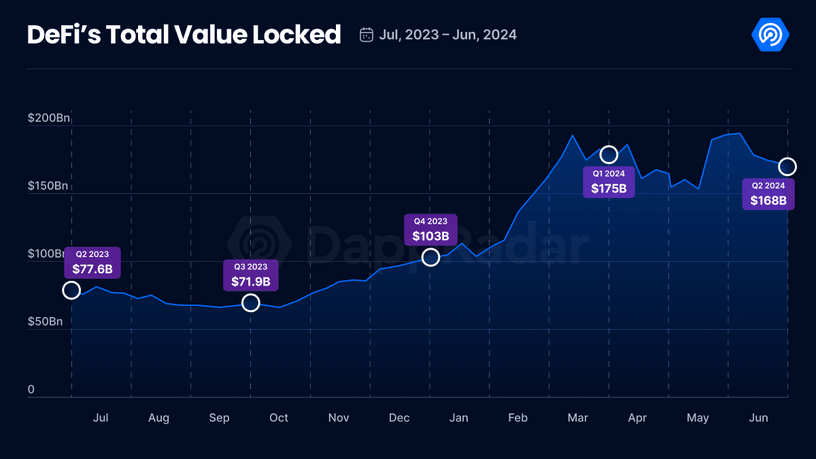
  • DeFi 的 TVL 比上一季度下降了 4% ,降至 1680 亿美元

  • Linea 在 DeFi 领域大放异彩,TVL 达 11 亿美元,增长了 420% 

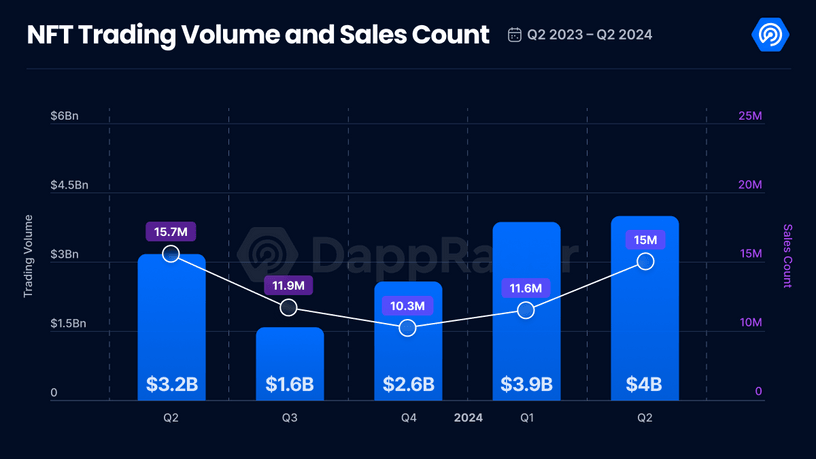
  • NFT 迎来了自 2023 年第一季度以来最好的一个季度,交易量从 1490 万美元增至 40 亿美元

  • 就交易量和主导地位而言,OpenSea 排名第三,但在交易量方面以 12% 的市场份额领先于 NFT 市场。

  • 虽然市场整体表现积极,但漏洞和黑客攻击造成的损失总计为 4.3 亿美元,较上一季度增长 5% 。

1. Dapp 使用率创历史新高

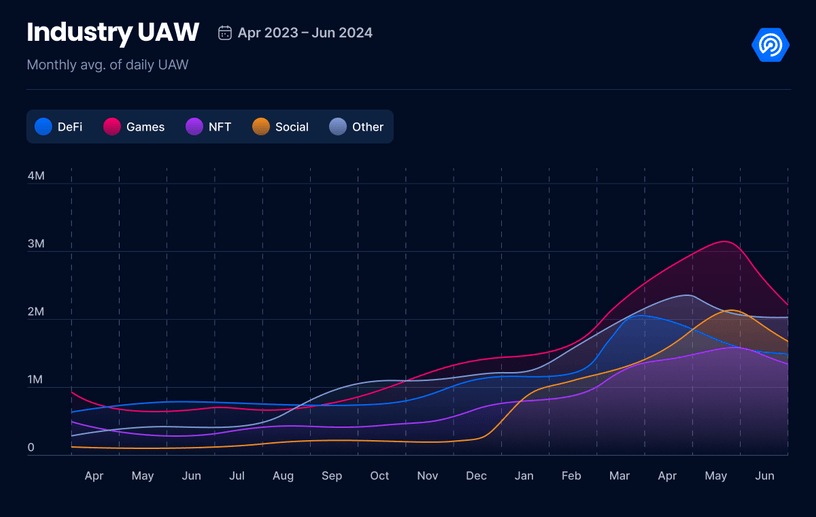
2024 年第二季度对于 dapp 来说是一个非凡的季度,独立活跃钱包(UAW) 数量创下历史新高。现在每天有 1000 万个 UAW 与 dapp 连接和交互,与上一季度相比增长了 40% 。
dApp2024二季度报告:使用率增长40%,社交领域表现出色

dapp 的每条赛道都经历了显著的增长,进而推动了整体看涨。社交领域的增长最为显著,自上季度以来增长了 66% ,平均每天有近 200 万 UAW。这种激增很大程度上是由当前对Web3参与的兴奋所驱动,其中流行的 dapp 如 fantasy.top,、UXLINK 等吸引了大量的关注和使用。
dApp2024二季度报告:使用率增长40%,社交领域表现出色

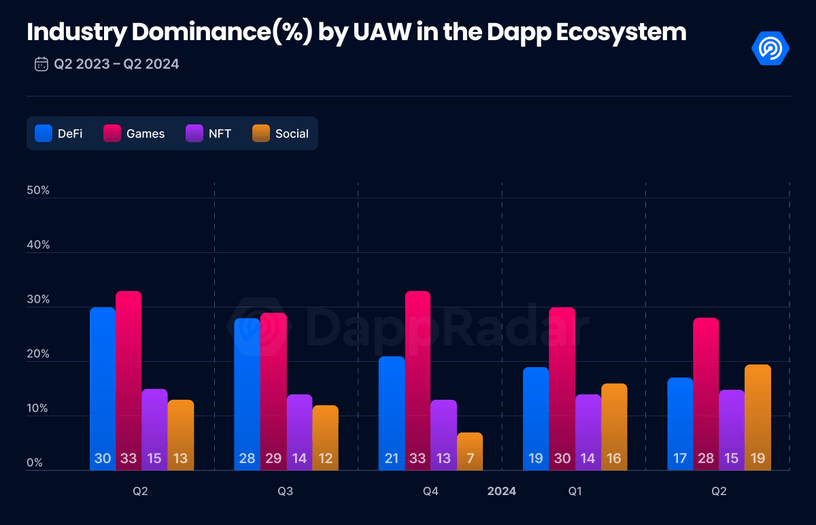
区块链游戏继续主导 dapp,尽管其份额比上一季度略有下降(2% ),与 DeFi 类似。相比之下,NFT 和社交领域的市场份额有所提高,成为 2024 年第二季度的主要趋势。

总体而言,本季度的市场情绪是看涨的,为后续对特定区块链垂直领域的深入探索奠定了积极的基调。

2. DeFi 的 TVL 微跌至 1.68 亿美元

2024 年第二季度,DeFi 的 TVL 出现下降,从第一季度的 1750 亿美元下降到第二季度末的 1680 亿美元。
dApp2024二季度报告:使用率增长40%,社交领域表现出色

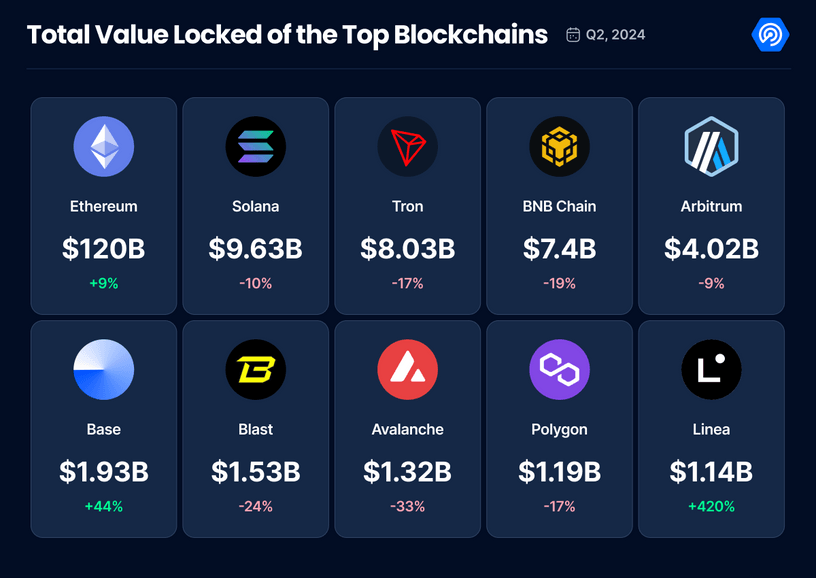
以太坊继续主导 DeFi 领域, 2024 年第二季度的 TVL 达到 1200 亿美元,比第一季度增长 9% 。Solana 的 TVL 下降了 10% ,降至 96 亿美元,主要是因为上一季度模因币的表现比本季度好得多,并使其 TVL 更大。但如今模因币的热度有所下降。
dApp2024二季度报告:使用率增长40%,社交领域表现出色

Tron 经历了更剧烈的下滑,其 TVL 下降了 17% ,至 80 亿美元。这主要是由于监管方面的担忧。同样,Arbitrum 的 TVL 也下降了 9% ,降至 40 亿美元。Arbitrum 正面临着来自其他 Layer 2 网络和可替代的 Layer 1 解决方案的激烈竞争。

相比之下,Base 表现突出,TVL 增长了 44% 达 19 亿美元。该链的创新方法、强大的社区支持和战略合作伙伴关系在其发展中发挥了关键作用。Linea 也表现出了惊人的增长,在创新 DeFi 应用程序、战略联盟和空投挖矿推动下,用户采用激增,其 TVL 飙升了 420% ,达 10 亿美元。Linea 是为数不多的没有代币的L2s之一。

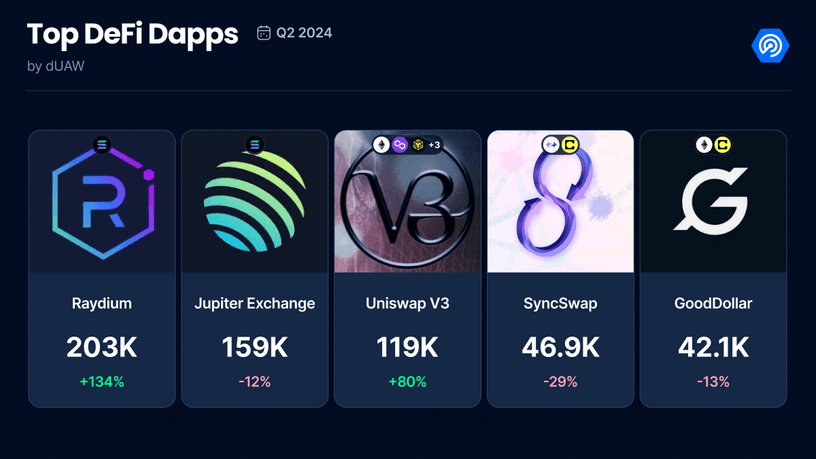
至于最常用的 DeFi dapp,Raydium 和 Uniswap V3的 UAW 增幅最大。这种激增主要是由于其在模因币交易中的使用。这是本季度的主要趋势,大多数用户都在积极交易模因币。
dApp2024二季度报告:使用率增长40%,社交领域表现出色

3. NFT: 2023 年初以来表现最好的一个季度

NFT 市场在 2024 年第二季度保持了看涨趋势。NFT 交易量达 40 亿美元,增长 3.7% ;NFT 交易数量增长 28% ,达 1490 万。
dApp2024二季度报告:使用率增长40%,社交领域表现出色

NFT 市场格局

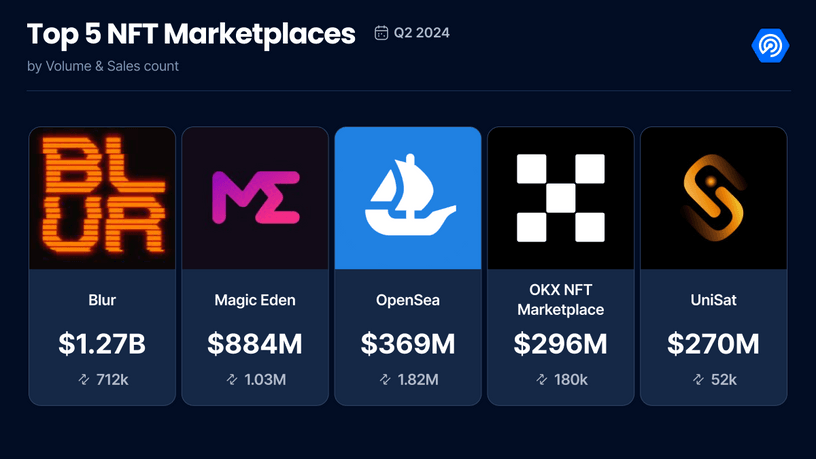
从 NFT 市场的整体情况来看,Blur 以 31% 的市场占有率继续占据主导地位,尽管这一比率比上一季度下降了 50% 。Magic Eden 紧随其后,凭借 BTC Ordinals 获得了成功,其主导地位从 17% 上升到 22% 。就交易量和主导地位而言,OpenSea 排名第三,但以 12% 的市场份额在交易量方面成为领先的 NFT 市场。
dApp2024二季度报告:使用率增长40%,社交领域表现出色

交易量最高的 NFT 系列

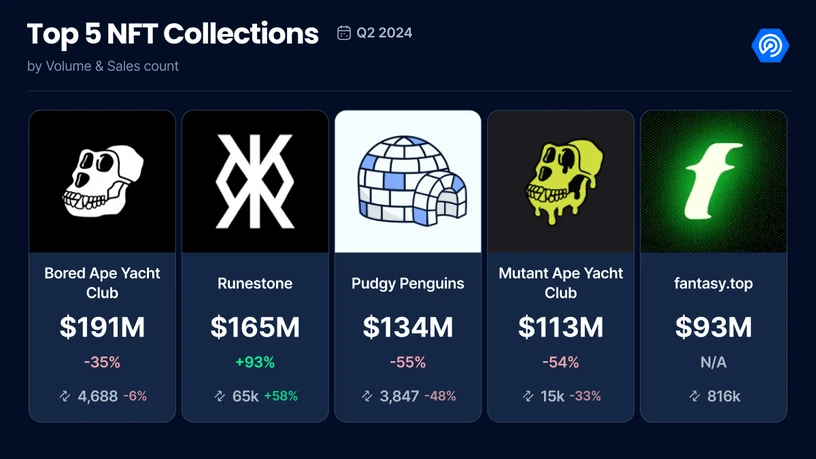
本季度交易量排名前五的 NFT 系列与上一季度基本保持不变,但 Runestone 和 fantasy.top 除外。这两个 NFT 系列在 2024 年第二季度都取得了令人难以置信的成功和人气。
dApp2024二季度报告:使用率增长40%,社交领域表现出色

4. 安全洞察:漏洞和黑客

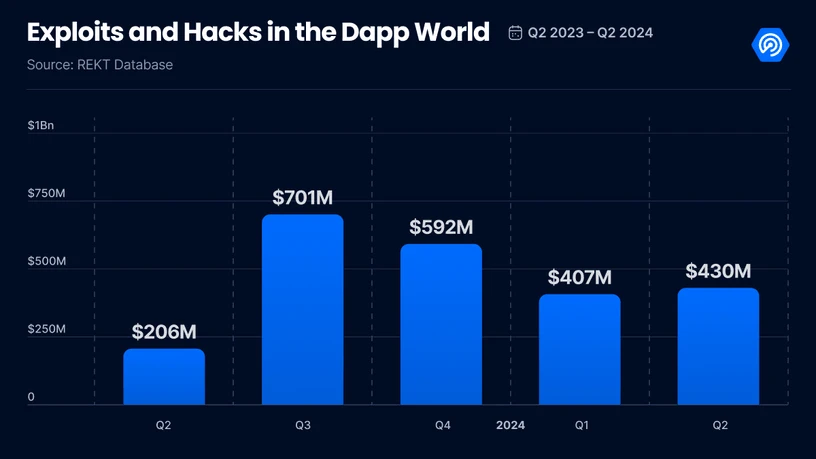
Web3行业的漏洞和黑客攻击仍然是一个值得关注的问题。2024 年第二季度因安全漏洞造成的损失高达 4.3 亿美元,比上一季度增长 5% 。
dApp2024二季度报告:使用率增长40%,社交领域表现出色

以太坊和 BNB Chain 受影响最大,各占总安全事件的 28% 左右。Solana 涉及约 8% 的事件,其余 36% 发生在其他链上,包括 Polygon 和 Arbitrum。

访问控制问题虽然只占所有事件的 23% ,但却导致了高达 75% 的资金损失。“其他”类别占事故总数的 36% ,造成的损失约占总损失的 15% 。闪电贷攻击和骗贷事件各占 13% 左右,每起事件造成的损失约占总损失的 1% 。网络钓鱼仅占事故的 3% ,造成的损失约占总损失的 0.4% 。这种分布凸显了,虽然访问控制问题不那么频繁,但其在财务上的破坏性要大得多。

五大黑客攻击和漏洞
dApp2024二季度报告:使用率增长40%,社交领域表现出色

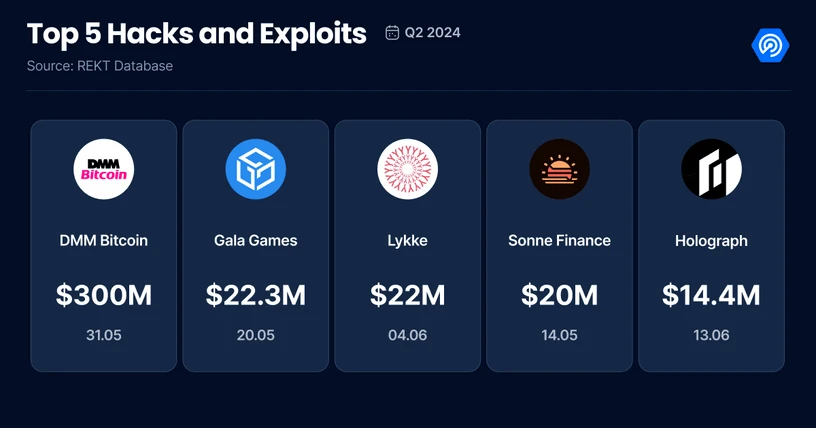
DMM Bitcoin 黑客攻击:日本中心化加密交易所 DMM Bitcoin 在 5 月 31 日盗窃案中损失了 3.05 亿美元。

Gala Games 事件:黑客利用 GALA 代币合约的访问控制漏洞,铸造了 50 亿枚 GALA 代币,并以 2180 万美元的 ETH 价格出售 5.92 亿枚,导致价格下跌 20% 。

Lykke 交易所漏洞:瑞士中心化加密交易所 Lykke 在一次安全漏洞中损失超过 2200 万美元后暂停了提款业务。

Sonne Finance 漏洞:OP 链上的 Sonne Finance 协议遭到黑客闪电贷攻击,攻击者分多次攻击,共造成约 2000 万美元的损失。

Holograph 黑客攻击:NFT 协议 Holograph 遭受了价值 1440 万美元的黑客攻击,原因是一名前开发人员利用智能合约漏洞铸造了 10 亿个 HLG 代币。

可以肯定地说,Web3行业必须在不同的区块链平台上采用强大的安全实践。这包括解决访问控制漏洞,监视各种威胁,以及教育用户安全实践以降低未来发生事故的风险。

5. 结束语

Web3行业的看涨趋势继续蓬勃发展,独立活跃钱包数量、NFT 交易量显著增长,DeFi 和其他领域的创新也引人注目。L2解决方案的兴起无疑将持续下去,越来越多的区块链被推出,以增强可扩展性并降低交易成本。

作为Web3生态系统的重要组成部分,模因币将继续成为一个突出趋势,保持其显著的影响力和市场占有率。SocialFi 也将发挥重要作用,为 Facebook 和 Instagram 等现有平台提供替代方案,随着用户在去中心化世界中寻求新的社交网络体验,SocialFi 将变得越来越重要。

当前空投挖矿趋势导致 UAW 激增,但这种增长可能无法持续。为了确保空投后用户的长期留存,必须专注于提供丝滑的用户体验、稳健的路线图和强大的开发团队。

尽管面临持续的安全挑战,但在持续的热情和进一步发展的潜力的推动下,Web3行业的势头依然强劲。
原文链接

Related Reads

$120 Million Vanishes Overnight! Crypto's 'Steadiest Giant' Stumbles in South America

Summary: Tether's $120 million Bitcoin mining venture in Uruguay, initiated in May 2023, was abruptly shut down in July 2025 when the national power utility UTE cut off electricity. The project, developed in partnership with local firm Microfin in Florida province, was touted as a model for leveraging the country's nearly 98% renewable energy grid. The collapse stemmed from a fundamental contract dispute over electricity supply. Tether interpreted the agreed power volume as a "minimum guaranteed supply," expecting to request more as the mining operation expanded. UTE, however, viewed it as a "strict maximum cap." This disagreement led to frequent power curtailments for the 24/7 mining facility, causing significant revenue loss from lost computing power. Following the 2025 election of left-wing President Yamandú Orsi and a management change at UTE, negotiations broke down. Microfin stopped paying electricity bills in May 2025, formally notified UTE of contract termination in June, and did not attend a final meeting where UTE presented a revised contract. By the July 25 power cut, Microfin's debt approached $5 million. The operation ceased, laying off 30 of its 38 local staff, with all outstanding debts settled by December 2025. The failure highlights key risks for heavy-asset overseas investments: Uruguay's green energy proved not to be cheap energy, especially after the 2024 Bitcoin halving squeezed industry profits. Furthermore, political changes can swiftly alter utility company policies, undermining the long-term regulatory stability critical for such projects. While financially absorbable for Tether, the incident underscores that operational success depends on unambiguous contracts and genuine cost advantages, not just technological scale.

marsbit5m ago

$120 Million Vanishes Overnight! Crypto's 'Steadiest Giant' Stumbles in South America

marsbit5m ago

Is Bitcoin Price Lagging? Record Global M2 Money Supply Could Be a Springboard for BTC's Rise

Bitcoin Price Lagging? Record Global Money Supply M2 Could Springboard BTC Growth The global money supply (M2) is expanding rapidly, similar to global debt. The US M2, representing all money circulating in its economy, has reached a record $23.16 trillion. Combined with figures from major economies like the Eurozone, China, and Japan, the global M2 is approximately $103 trillion. Some estimates, however, place it closer to $195 trillion. This surge in liquidity is significant because excess capital often seeks higher returns in assets like precious metals, stocks, and cryptocurrencies. Bitcoin's recent price surge above $81,000 has brought the global M2 metric back into focus. Following a sharp rise in early August after a US Treasury bond buyback announcement, BTC still trades about 37% below its October 2025 all-time high exceeding $126,000. This gap presents a potential "catch-up" trade thesis. Bitcoin's fixed supply of 21 million contrasts with governments' ability to print fiat currency, making scarce assets like BTC attractive if monetary expansion continues. Historically, Bitcoin's bull cycles in 2017-2018 and 2020-2021 coincided with M2 expansion and increased liquidity. Over the past year, the correlation seemed broken as M2 grew while Bitcoin's price fell sharply from its peak. Observers believe fresh dollars may have remained locked in cash-favorable investments. Some, like Ash Crypto, now suggest a long-awaited alignment between Bitcoin and M2 may be starting, especially as a weakening US Dollar Index this month has seen assets like gold and Bitcoin surge. A softer dollar pressures cash havens and prompts holders to act. While record M2 doesn't guarantee higher Bitcoin prices, a sustained influx of liquidity, a weak dollar, and capital flowing into alternative assets could trigger a catch-up rally sooner than expected. However, changes in these conditions could lead to the opposite outcome.

cryptonews.ru30m ago

Is Bitcoin Price Lagging? Record Global M2 Money Supply Could Be a Springboard for BTC's Rise

cryptonews.ru30m ago

Blockchain Capital Partner: Tokenization Will Reshape the Underlying Structure of Capital Markets

"Blockchain Capital partner Aleks Larsen argues that tokenization will fundamentally restructure capital markets by solving a costly 'packaging' problem in finance. Currently, assets like mortgages, private equity, and stocks exist in fragmented, incompatible systems, creating huge friction and slowing capital flow. Tokenization introduces a standardized, machine-readable interface for assets—akin to shipping containers for finance. Just as containerization standardized global trade, enabling massive efficiency gains and economic growth, tokens standardize financial rights. This allows platforms, lenders, and custodians to interact with assets directly on a shared network without rebuilding infrastructure for each one. Stablecoins demonstrate this potential, processing volumes rivaling Visa with far lower cost and faster settlement. Beyond payments, tokenization is expanding to assets like U.S. Treasuries, commodities, and private credit, now totaling nearly $400 billion on-chain. This shift changes financial service access: instead of depending on relationships with institutions, services become accessible based on the asset's tokenized properties themselves. DeFi protocols like Aave exemplify this, where assets meeting criteria can be used as collateral programmatically. Ultimately, tokenization will reorganize capital markets around open networks of specialized services, lowering barriers to entry and reducing costs. This could unlock global capital for currently underserved assets—small receivables, regional infrastructure, emerging market credit—integrating them into a seamless, programmable financial system. Combined with AI, tokenization promises to make capital allocation more efficient, transparent, and globally accessible, reshaping how economic value is created and distributed."

marsbit34m ago

Blockchain Capital Partner: Tokenization Will Reshape the Underlying Structure of Capital Markets

marsbit34m ago

Trading

Spot
活动图片