深入探讨Solana的费用市场和MEV未来

Odaily星球日报Published on 2024-04-28Last updated on 2024-04-28

Abstract

本文深入探讨了 Solana 的费用市场设计、面临的挑战以及 MEV 对其生态系统的潜在影响,同时对比了以太坊的相关经验和策略。

原文作者:ZHEV

原文编译:Ladyfinger,Blockbeats

编者按:在 DeFi 领域迅速扩张的今天,Solana 区块链凭借其高性能的架构和创新技术,正在成为去中心化应用的新热点。然而,随着经济活动的激增,Solana 的费用市场和最大可提取价值(MEV)问题逐渐成为社区关注的焦点。

本文深入探讨了 Solana 的费用市场设计、面临的挑战以及 MEV 对其生态系统的潜在影响,同时对比了以太坊的相关经验和策略。我们邀请了技术专家 Zhev,他之前在自己的子堆栈上对 AMM 和其他 DeFi 原语进行了深入的技术阐释,来为我们提供对 Solana 费用市场和 MEV 未来的独到见解。通过这篇文章,我们将一起了解 Solana 如何在保持其高性能优势的同时,解决日益增长的 MEV 挑战,并探索其费用市场可能的发展方向。

引言

Solana 的崛起扩大了 DeFi 领域。我们一直在远处关注,但从未提供过新的视角。然而,过去几个月 Solana 上的狂热活动为我们提供了一个新的机会,来观察它在市场上的位置,以及它可能如何发展。Zhev 之前在自己的子堆栈上写过关于 AMM 和其他 DeFi 原语的技术解释。本月,我们与他合作,深入研究 Solana 的费用市场。MEV 已经在以太坊的费用市场讨论中占据主导地位,正如 Zhev 下面探讨的,它很快也将在 Solana 上占据主导地位。

交易费用对于支持区块链上最基本的活动是必要的,因为它们使用户的交易获得有效性并被包含在一个区块中。这些费用的主要目的是阻止垃圾邮件;它也是支付给验证者以构建/验证区块的补贴的一部分。从某种意义上说,这些网络费用类似于租金;用户支付费用以访问每个时间单位都是有限的商品。这里的商品是「区块空间」,也就是,区块上的空间。

在这里,我们评估了两个最大的智能合约区块链,以太坊和 Solana 上的区块空间。当我们深入研究时,我们了解到费用市场,既在协议内设计,也从底层有机发展,使验证者能够利用他们对区块空间的访问。

Solana 的费用市场针对高性能进行了优化,并旨在避免以太坊方法中出现的问题。然而,尽管 Solana 的市场最终可能比以太坊的更高效,但它仍需要经历与其同行类似的 MEV 革命(验证者开始利用他们的特权地位)。Solana 不必走以太坊选择的提案构建者分离(PBS)路线,但它需要确定一种全面的方法来长期稳定其费用市场。

区块空间估值的基础知识

在我们深入之前,让我们尝试了解区块空间价值是如何大致确定的。

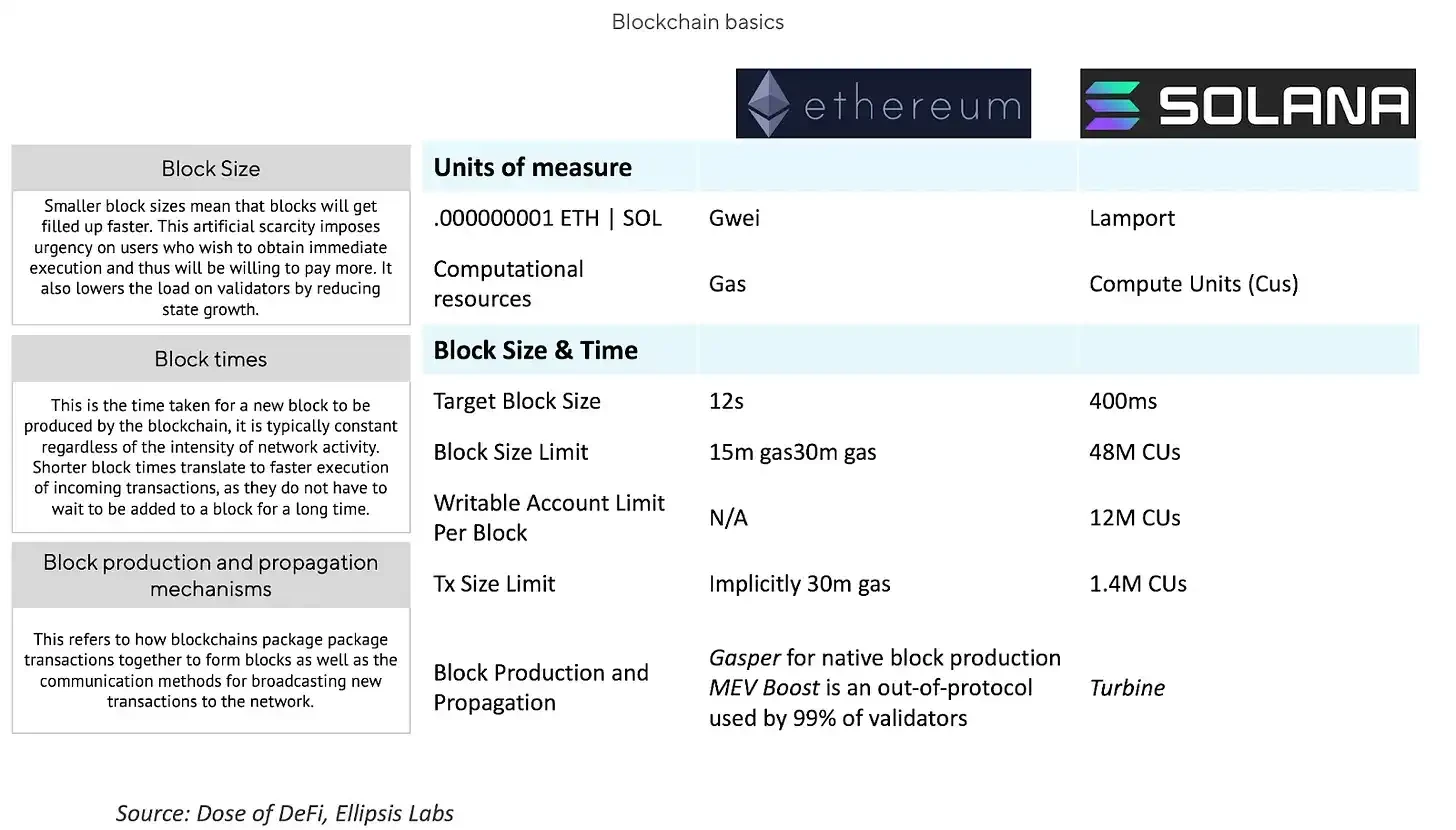
既有技术方面,也有社会层面(基本上是赋予区块链价值的各方的协调)。从技术角度来看,区块链可以调整区块大小、区块时间和区块生产及传播机制。下面的图表提供了更详细的描述和以太坊与 Solana 的方法比较。
深入探讨Solana的费用市场和MEV未来

社会方面是指区块链利益相关者为实现链的技术和财政目标而进行的协调。它也可以被视为区块链的社会地位,虽然主观,但却是一个重要的衡量标准。社会压力和建立解决问题的特定文化一样有效,Solana 和以太坊都建立了这样的文化。最近围绕社交层进行讨论的例子有,关于是否增加以太坊的气体上限和每个纪元的发行量的争论,以及最近关闭 Solana 上 Jito 的 mempool。

现在,让我们更详细地审查并对比以太坊和 Solana 的费用市场。

以太坊的费用市场的摘要

以太坊的受欢迎主要归功于其执行环境:以太坊虚拟机(EVM),它使智能合约成为可能。另一个因素是以太坊的无许可性质产生了多个周期的各种创新应用: 2017-2018 年的 ICO 热潮、 2020 年的 DeFi Summer 和 2021-2022 年的 NFT 狂热。这些应用的持续存在为验证者创造了价值,他们为这些活动提供区块空间。

在以太坊上的经济活动激增后不久,矿工们(这是在转向 PoS 的几年前)开始探索如何利用他们作为区块提议者的地位,在出现套利机会时插入自己的交易。

Phil Daian 是第一个记录这种活动的人。他在 2019 年发表的开创性论文(Flash Boys 2.0)中率先记录了这种活动(我们现在称之为 MEV)。当时,以太坊的费用市场只允许更高的燃气价格作为激励交易包含的方式。这些优先燃气拍卖(PGAs)堵塞了以太坊网络,并提高了燃气价格,直到 Flashbots(由 Daian 共同创立)推出。这为矿工创造了一个市场,他们可以通过搜索者支付交易包含费用,搜索者是链上套利交易者。以太坊研究人员随后意识到,MEV 提取可能比协议内费用更有力。

以太坊费用市场可能最大的变化是 EIP-1559 ,它创建了一个基础费用(每个时期动态确定,阻止垃圾邮件,燃烧),以及一个优先费用(用于显示紧急性或指定偏好,并支付给区块提议者以包含交易)。一个重要的要点是,「优先费用」在功能上与「小费」不同。前者确保包含并由底层链中介,而后者确保排序以及包含并由费用市场中介。

以太坊的方法一直在发展;查看我们去年秋天对 MEV 的两部分深入研究。这是通过社会层面的结合发生的,该层面试图去中心化一个集中的 MEV 行业,以及技术层面,其中 MEV 现在已成为技术路线图的关键部分(Vitalik 称这部分路线图为「The Scourge」)。

Solana 的费用市场的机制

Solana 在区块链架构方面采取了截然不同的方法,特别是在可扩展性方面。

Solana 的一些显著的创新点包括:

1. 没有通用的内存池:在 Solana 中,交易直接从发起客户端转发给当前负责生成区块的 Leader,因此不需要内存池。这在理论上减少了交易确认的延迟时间,但在实际应用中由于 "抖动"(即不同验证器在处理交易或区块时所经历的不同处理时间)的存在,情况并非总是如此。

2. 状态隔离:缺乏内存池的延伸,使其 dAPP 上的交易更加相互独立。这种方法类似于 "增加更多车道以疏导交通 "的概念;Solana 上不同类型的交易必须遵循特定的 "路径",从用户到 Leader,才能被添加到区块中。

3. 并行执行:Solana 能够同时在同一区块中并行处理非重叠的交易。这得益于两个因素:

- Solana 的区块生产(大致)是连续的,因为 Leader 被期望在收到交易时将交易添加到区块中。

- Slot Leader 是固定的,因为他们事先安排在队列中,而且这些 Leaders 还要负责连续生产四个区块。

这两个因素,加上 Solana 的状态隔离,使得交易「多线程」。这就是当前纪元的 Leader 调度多个交易包大致在同一时间被确认(条件是同一线程中的交易不改变相同的状态)以相同的方式和相同的时间。

Solana 的费用市场:更便宜≠更好

Solana 上的网络费用通常非常低(尽管随着最近的需求而上升)。与以太坊形成对比的是,Solana 有一个以 lamports 计量的静态基础费用。然后,它的优先费用以每请求的计算单位的微 lamports 计量。

这意味着,尽管费用随着 EVM 上复杂性和需求的增加而算法性地扩展,SVM 仅需要通过简单的需求来增加其优先级收费。由此产生的非动态性的技术问题在这里详细说明,但要点是,以静态方式定价需求波动剧烈而供应确定的商品并不理想。

Solana 的费用市场:MEV 的不可避免性

Solana 的社会共识认为其低费用是其与其他区块链相比的独特优势。这种方法邀请了垃圾邮件,因此一些人呼吁提高费用或在高活动时期实行动态基础费用(类似于 EIP-1559)。

Solana 迄今为止的方法是实施本地化的费用市场以应对需求增加。由于状态是隔离的,因此网络很容易确定「热点」或正在经历需求激增的州。这种热点方法使区块链能够算法性地为比其他不太需求的州的交易定价更高的目标交易费用。这种方法类似于以太坊上的区块构建者角色由调度器完成,调度器根据优先费用帮助将交易放置在连续的区块中。

作为实施本地费用市场的一部分,Solana 构建了一个协议内调度器,该调度器本地调度交易以执行基于先进先出算法。交易不断地流式传输到插槽 Leader,然后根据它们提供的提示对交易进行排序。

该算法还要求插槽 Leader 与他们连接的一些节点共享他们正在构建的分片,基于后者的股份。然而,正如前面提到的,这个过程被抖动打乱了。具体来说,调度器抖动(由于 Solana 将传入交易随机分配给执行线程)和网络抖动(来自传入交易和分片的 P2P 中继延迟)。

这些「抖动」导致 Solana 上的交易排序不确定,这使得区块空间拍卖在经济上可行。换句话说,每当有抖动时,验证者就有经济动机插入或重新排序交易。对用户来说,这意味着 MEV 泄露,对验证者来说,意味着 MEV 利润。

Solana 与以太坊

快速回顾 MEV-以太坊:在 Flashbots 之前的以太坊上,MEV 活动挤出了常规的区块链活动,通过 PGAs 推高了所有用户的燃气价格。在 Solana 上,费用不会飙升,因为它没有共享状态和像以太坊一样的全局最低价格,但在活动增加时,普通用户在 Solana 上很难完成交易。Flashbots 发布了 MEV-GETH 来处理 PGAs,为 MEV 价值创建了一个单独的通道,该通道在协议内费用机制之外进行拍卖。在 Solana 的情况下,Jito 为验证者推出了一个类似的产品,为他们提供了一个伪内存池和一个定制的调度器,以最有利的方式排序交易。Jito 的内存池对用户来说是有吸引力的,为他们提供了被前置运行(也就是他们的 MEV 被提取)的保证包含权。

虽然是一个受欢迎的产品,但 Jito 的内存池上个月受到了社会压力并关闭了。这可能与超过 20% 的以太坊交易通过私人内存池运行的原因相同:用户厌倦了被三明治攻击。垃圾邮件现在再次成为 Solana 上(从概率上)保证执行时间敏感交易的唯一机制。缺乏高效的区块空间竞标机制导致高需求期间的不确定性。

深入探讨Solana的费用市场和MEV未来

由于 Solana 上的交易现在直接流式传输到插槽 Leader,并且优先级模型已被破坏,拓扑结构(以及由此产生的延迟)是用户将考虑的时间敏感交易的最重要组成部分。

用户在网络中的拓扑结构可以理解为他们离领导者有多 "远",这取决于他们的赌注权重和/或他们所连接的节点的质押权重。因此,理性的代理会寻求与已经控制高额利益的节点相连,从而导致中心化。

作为垃圾邮件的短期后果,Solana 现在如此拥挤,以至于对于不太熟练的用户来说,由于交易失败,而几乎无法使用。因此,解决长期后果(共位和网络股份的中心化)变得更加重要。

一个结构更合理的市场?

Solana 最初的设计理念以消除用户摩擦和允许验证网络以任何方式满足需求为中心。他们忽略的是,当市场在运作方式上具有一定的确定性时,市场才能发挥最大作用。收费市场通过要求用户支付更多费用,将问题从拓扑角度转移到基于激励的角度,从而提供了一种使包容性民主化的方法。

虽然这改变了用户体验,但接受费用市场,特别是它们与 MEV 的关系是 Solana 及其用户前进的最佳路的方法。可以说,提供一条成本密集的包方法,同时保持链的完整性,比根本没有方法要好得多。

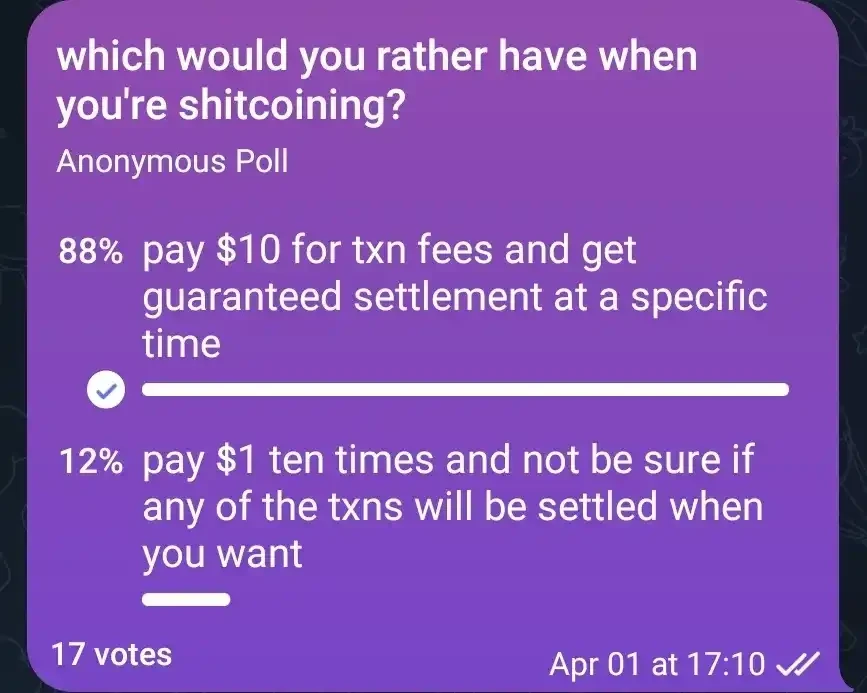
事实上,链上活动几乎总是时间敏感的,特别是当代理寻求以很少或没有经济成本提取价值时。过高的确定性执行比廉价的概率性执行要好。
深入探讨Solana的费用市场和MEV未来

(样本量虽然少,但是仍然如此!!)

费用市场的专业化使区块空间的讨价还价和拍卖可以在远离共识和执行的更高层次上发生。因此,验证者可以履行他们的职责,而不必担心如何优化累积区块空间价值的最佳结果。

Solana 即将到来的 MEV 革命

Solana 正处于全链范围内关于其费用市场应该如何重组的讨论中(以太坊多年来一直在思考这个问题,但仍未解决)。

Solana 尚未经历必要的 MEV 转型。虽然最近链上活动的增加吸引了像 Jito 和 Ellipsis 这样的 MEV 参与者开始构建 MEV 基础设施,但主要的验证者还没有跨过这道坎,开始运行他们自己的 Solana MEV 策略。与此形成鲜明对比的是,以太坊上的所有主要赌注提供商都在运行 MEV。Solana 验证者社区并不像以太坊社区那样具有对抗性,因此,为了优先考虑最终用户的体验,双方达成了不提取 MEV 的握手协议(到目前为止)。

这种情况不会持久;社会层不可能永远监督行为。区块链必须在自利行为者的对抗环境中运行。Solana 的表现可能比以太坊更好,因为它可以解决一些 MEV 问题,而不会像以太坊那样受到去中心化的严重束缚。然而,它还必须回答一些棘手的问题,比如,是否应该像以太坊通过 MEV boost 实现的那样,让所有入股的 SOL 都能获得 MEV 奖励?

为了解决 Solana 的拥堵问题,我们已经在探索一些最小化机制。这些机制包括动态收费结构、即将对本地调度程序规范进行的修改、基于利害关系的限制以及其他应用层面的优化。事情进展很快。Jito 的首席执行官最近承认,"一小批运营商/搜索者正在夹心运行私有 mempool"。

MEV 是经济增长的标志,因此是不可避免的。事实上,即使是比特币,其简单性通常被誉为其最大的特点,在 Ordinals 和经济活动兴起之后,也开始经历一次重塑。选择忽略解决方案是因为负面外部性(如 Jito 的案例)并不消除所说的外部性,它只会导致一个不协调的市场。

社会层面是阻止掠夺性行为的有效工具,但只能持续很短的时间。以太坊正在经历社会层面的不足,随着时间游戏的兴起,这是一种区块提议者有意尽可能长时间地延迟发布他们的区块以最大化 MEV 捕获的策略。这削弱了链的安全性,但从验证者的角度来看是经济意义的。羞耻感可以持续一段时间,但协议研究是唯一的长期解决方案。

现在说 Solana 的 MEV 供应链在几年后会是什么样子还为时过早。但我们现在可以肯定的一件事是,大多数价值将被大量验证者捕获。

Related Reads

Interview with NDV Founder Jason Huang: Piercing the AI Bubble and the MicroStrategy Myth, Seeking the Ultimate Edge in the Crypto Market

In a podcast with WuBlockchain, NDV founder Jason Huang discusses recent market dynamics, expressing a bearish outlook on crypto in the near term. He attributes Bitcoin's recent decline to a combination of cyclical selling pressure, the start of a US stock market correction, and liquidity tightening. A key catalyst is the emerging financial strain on MicroStrategy (MSTR). Huang explains that MSTR's model of borrowing to buy Bitcoin created a positive "flywheel" in a bull market. However, with falling BTC prices turning its stock premium into a discount, the model is now under severe stress. While MSTR only sold 32 BTC recently, the market is "front-running" the fear of its massive 80,000+ BTC holdings potentially being liquidated to meet debt obligations. He believes a true market bottom requires a major, capitulation-level event similar to the FTX collapse. Regarding investments, Huang states his fund is up over 20% this year, outperforming Bitcoin by 50-60%. The strategy involves crypto assets and commodities like oil, gold, and silver, but avoids AI stocks due to a perceived lack of trading edge. He is cautious of crowded trades in semiconductors and sees bubbles in the broader market, citing the hype around a potential SpaceX IPO. Despite short-term pessimism, Huang remains long-term bullish on one crypto innovation: stablecoins. He views them as the clearest example of a "faster, better" financial tool with significant room for global adoption. For the future, he is very bearish on Ethereum. For Bitcoin, he anticipates potential for a significant drop below $48,000 before a eventual rebound, but stresses the need to wait for a true panic-driven bottom marked by widespread despair and disinterest in the market.

marsbit25m ago

Interview with NDV Founder Jason Huang: Piercing the AI Bubble and the MicroStrategy Myth, Seeking the Ultimate Edge in the Crypto Market

marsbit25m ago

Conversation with Jason Huang, Founder of NDV: Puncturing the AI Bubble and the MicroStrategy Myth, Searching for the Ultimate Trump Card in the Crypto Market

In a podcast interview, NDV founder Jason Huang discusses the recent crypto market downturn, attributing the initial phase to typical Bitcoin cycle selling pressure, now compounded by a US stock market correction, tightening liquidity, and MicroStrategy's financial strain. He argues the market hasn't bottomed yet, noting true bear market lows often require a major, despair-inducing event like FTX's collapse. Huang details MicroStrategy's precarious position: its debt-and-equity fueled Bitcoin buying model has reversed into a negative cycle as prices fell. He interprets its sale of just 32 BTC as a signal prioritizing creditors over shareholders, sparking market "front-running" of its larger potential sell-off. A true bottom may arrive only after MicroStrategy resolves its looming debt payments, possibly via a large, private Bitcoin sale. His fund is up ~20% this year, outperforming Bitcoin by 50-60%, by shorting crypto and trading commodities like oil and gold. He avoided AI stocks despite being a heavy user, citing a lack of trading edge in the crowded semiconductor hardware trade, which he views as ripe for a significant correction. Long-term, Huang remains bullish on stablecoins as crypto's clearest, most practical innovation with high growth potential. He is very bearish on Ethereum and skeptical that Bitcoin has found its floor, suggesting $48,000 may not hold. He expects a sharp decline followed by a strong recovery within a year, but only after a major panic event leads to widespread capitulation and despair—the true hallmark of a market bottom.

链捕手31m ago

Conversation with Jason Huang, Founder of NDV: Puncturing the AI Bubble and the MicroStrategy Myth, Searching for the Ultimate Trump Card in the Crypto Market

链捕手31m ago

U.S. Stocks Trend (June 24): Korean Stock Plunge Ripples Global Chip Sector, Micron Tumbles Over 10%, Long-Term Supply Certainty Faces a 'Hard Test'

US Stock Market Trend (June 24): South Korean Market Plunge Disrupts Global Chips, Micron Drops Over 10%, Long-Term Supply Certainty Faces Hard Test On Monday, the South Korean KOSPI index plunged 10%, with SK Hynix and Samsung dropping over 12%, triggered by rumors that SK Hynix might slow its HBM4 production expansion. This shock quickly spread to the U.S. semiconductor sector. Micron plummeted 13.18% to $1,051.77, SanDisk fell 13.64%, and Marvell declined 8%. The Philadelphia Semiconductor Index closed down 7.87%, while the Nasdaq fell 2.21% to 25,587.04 points. The sell-off particularly hit memory chip stocks. Defensive sectors showed relative resilience, with gains in stocks like IBM and Johnson & Johnson. Market volatility spiked, with the VIX index jumping 12.79%. Commodities weakened, with WTI crude oil hitting a near three-month low and gold falling below $4,100. The core issue is not a challenge to AI demand itself, but a market reassessment of overly optimistic capacity expectations for memory chips, especially HBM. The rumor about SK Hynix undermined perceived certainty in the AI infrastructure cycle. Key upcoming events include Thursday's PCE inflation data, which will influence Fed rate expectations, and Micron's earnings report. The market will focus on Micron's HBM gross margins and its long-term capacity guidance. The shift indicates the AI investment cycle is moving from euphoria to rational pricing. Large institutions are questioning the sustainability of AI-related capital expenditure growth. Micron's repricing from an "AI infrastructure staple" to a more cyclical stock highlights this change. Thursday's data and earnings represent a critical juncture for assessing long-term supply certainty, which has now significantly decreased.

marsbit39m ago

U.S. Stocks Trend (June 24): Korean Stock Plunge Ripples Global Chip Sector, Micron Tumbles Over 10%, Long-Term Supply Certainty Faces a 'Hard Test'

marsbit39m ago

Preferred Stock Is Not the Trigger for Corporate Bankruptcy, MicroStrategy's Dollar Reserves Can Cover Dividend and Interest Payments Until February 2027

Preferred Shares Are Not the Catalyst for Corporate Bankruptcy; MicroStrategy's Dollar Reserves Can Cover Dividend and Interest Payments Until February 2027. This article analyzes the nature of preferred shares used by MicroStrategy (MSTR). Legally equity but economically similar to debt, these shares, including its Bitcoin-linked STR convertible preferred notes (STRC), offer fixed or floating dividends. Crucially, MicroStrategy's preferred shares lack rigid redemption clauses, meaning they are not classified as traditional debt. This eliminates principal repayment pressure and means missed dividends do not constitute default or trigger bankruptcy, creating a "self-contradictory virtuous cycle." The article clarifies that if funds are short, MicroStrategy can defer or suspend preferred share dividends (except for non-cumulative types like STRD) without immediate risk. The real potential crisis point lies with its convertible bonds. If a prolonged bear market prevents conversion, MicroStrategy might need to sell Bitcoin to repay these bonds starting from the earliest maturity in September 2027, potentially creating a downward spiral. Preferred dividend suspensions would only exacerbate market panic in such a scenario. Recent financial activity shows MicroStrategy strengthened its position through four weeks of common stock (MSTR) issuances, raising over $851 million without issuing new preferred shares. It increased its dollar reserves to approximately $1.4 billion, which is sufficient to cover all preferred share dividends and interest until around March 2027. While Bitcoin purchases slowed recently, this prioritization of cash reserves enhances the company's near-term financial safety. The analysis concludes that if the Bitcoin bear market ends by early 2025 as anticipated, MicroStrategy can resume issuing MSTR stock in a rising market to replenish reserves and manage future dividend obligations, thereby reducing the long-term pressure from its preferred share structure.

marsbit2h ago

Preferred Stock Is Not the Trigger for Corporate Bankruptcy, MicroStrategy's Dollar Reserves Can Cover Dividend and Interest Payments Until February 2027

marsbit2h ago

Trading

Spot
Futures
活动图片