2026 Prediction Market: The Seven Differentiated Strategies for New Players to Break Through

marsbitPublished on 2026-02-12Last updated on 2026-02-12

Abstract

By 2026, the prediction market landscape is expected to become highly competitive, with new entrants leveraging differentiation to capture market share. Established platforms, while holding liquidity and regulatory advantages, are often burdened by technical debt, creating opportunities for agile newcomers. Differentiation can be achieved across seven key dimensions: 1. **Product Quality**: Superior UX, API stability, transparent fees, and diverse order types. 2. **Asset Variety**: Offering exclusive markets, especially in underserved niches. 3. **Capital Efficiency**: Utilizing yield-bearing collateral and innovative margin mechanisms. 4. **Oracle & Settlement**: Enhancing reliability with hybrid or AI-driven oracles for new markets. 5. **Liquidity Provision**: Incentivizing market makers or adopting pooled liquidity models. 6. **Regulatory Compliance**: Tapping into restricted markets via localized licensing. 7. **Strategic Focus**: Choosing between horizontal (infrastructure-focused) or vertical (end-to-end user experience) approaches. Success will hinge on excelling in one or more of these areas to challenge incumbents.

Author: Jake Nyquist, Founder of Hook Protocol

Compiled by: Blockchain Knight

In 2026, major institutions are launching new prediction markets.

From the competitive battles of the past five years between NFTs and perpetual contract exchanges, we have learned that differentiated products can quickly capture market share.

Although leading platforms currently hold advantages in liquidity and regulation, they are burdened with heavy technical debt, making it difficult to respond flexibly to new players.

So how should newcomers compete? In my view, the core of differentiation in prediction markets revolves around seven dimensions:

1. Product Quality

Founding teams can differentiate in areas such as front-end user experience, API stability, development documentation, market structure, and fee mechanisms.

Currently, many established platforms have obvious shortcomings: unreasonable tier settings, opaque fee rules, slow and unstable APIs, and limited order types.

A high-quality product experience, especially services for API-based programmatic traders, is itself a lasting core advantage, enabling a platform to hold its ground even against competitors with stronger channel capabilities.

3. Capital Efficiency

Capital efficiency determines how effectively traders can use their collateral. Currently, there are two key levers:

First, yield-bearing collateral: Instead of letting idle funds earn only treasury yields, platforms can offer higher returns, similar to Lighter supporting LP deposits as collateral or HyENA's USDC-margined perpetual contract model.

Second, margin mechanisms. Due to gap risk, the value of leverage in prediction markets is generally underestimated. However, platforms can offer limited leverage for continuous markets or implement portfolio margin for hedging positions.

Exchanges can also subsidize lending pools or act as market-making counterparties to internalize gap risk, rather than passing losses on to users.

4. Oracles and Market Settlement

Oracle reliability remains a systemic weakness in the industry. Settlement delays and incorrect outcomes significantly amplify trading risks.

Beyond improving stability, platforms can implement innovative oracle mechanisms: human-machine hybrid systems, zero-knowledge proof-based solutions, AI-driven oracles like Context, etc., to unlock new markets that traditional oracles cannot support.

5. Liquidity Provision

Exchanges cannot survive without liquidity. Viable approaches include: paying to onboard professional market makers, using token incentives to encourage ordinary users to provide liquidity, and adopting Hyperliquid's HLP aggregated liquidity model.
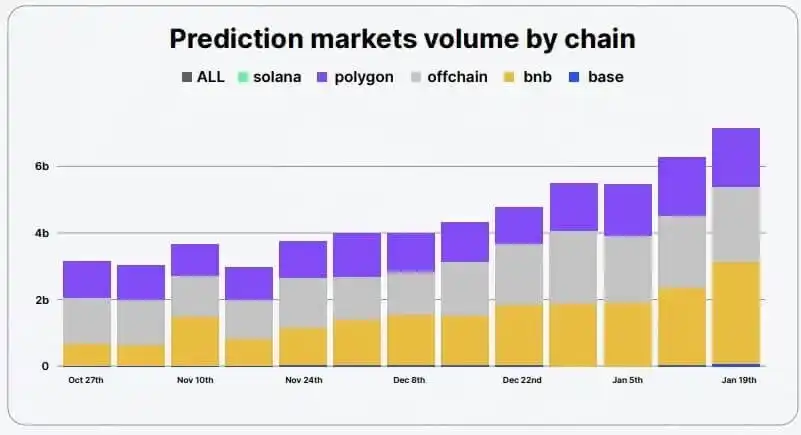
Some platforms can also fully internalize liquidity, emulating FTX's model of relying on Alameda as an internal trading team.

6. Regulatory Compliance

Kalshi, with its US regulatory approval, has achieved embedded distribution through Robinhood and Coinbase, capturing retail traffic that Polymarket cannot reach.

There are still numerous jurisdictions and regulatory frameworks available for exploration. Compliant prediction markets can unlock similar channels, such as adapting to US state gambling regulations.

7. Vertical Strategy vs. Horizontal Strategy

Horizontal Strategy: Similar to Hyperliquid in the perpetual contracts space, focusing on building top-tier underlying trading infrastructure, inviting third parties to build front-ends and vertical scenarios, and encouraging ecosystem builders to add markets and develop revenue-generating front-ends (e.g., Phantom) through proposals.

Vertical Strategy: Exemplified by Lighter, which controls the front-end, launches mobile apps, and creates an end-to-end user experience, focusing on integrated experiences and direct user connections.

Polymarket's resistance to deeply embedded partnerships, contrasted with Kalshi's open attitude, is a clear reflection of the trade-offs between these two strategies.


Related Questions

QAccording to the article, what are the seven key dimensions for differentiation in the prediction market competition?

AThe seven key dimensions are: 1. Product Quality, 2. Asset Types and Market Selection, 3. Capital Efficiency, 4. Oracles and Market Settlement, 5. Liquidity Provision, 6. Regulatory Compliance, and 7. Vertical Strategy vs. Horizontal Strategy.

QHow can new prediction market exchanges compete with established platforms that have liquidity and regulatory advantages?

ANew players can compete by focusing on product differentiation, such as superior user experience, stable APIs, better documentation, unique market offerings, innovative capital efficiency mechanisms, reliable oracles, creative liquidity solutions, navigating different regulatory frameworks, and adopting a focused vertical or horizontal strategy.

QWhat two core methods are mentioned for improving capital efficiency in prediction markets?

AThe two core methods are: 1. Interest-bearing collateral, which allows idle funds to earn higher yields, and 2. Margin mechanisms, which can provide limited leverage for continuous markets or portfolio margin for hedged positions.

QWhat is the difference between a horizontal strategy and a vertical strategy for a prediction market platform, as described in the article?

AA horizontal strategy, like Hyperliquid's, focuses on building top-tier underlying trading infrastructure and inviting third parties to build front-ends and verticals. A vertical strategy, like Lighter's, involves controlling the front-end, launching mobile apps, and crafting a full user experience to connect directly with users.

QWhich platform is cited as an example of using regulatory compliance to gain access to retail traffic unavailable to competitors like Polymarket?

AKalshi is cited as the example, as it leveraged its US compliance credentials to achieve embedded distribution with platforms like Robinhood and Coinbase.

Related Reads

In Jinjiang, Fujian, a Storage Super Unicorn Lies Quiet

In Fujian's Jinjiang, a city known for sportswear, lies a quiet semiconductor giant: Fujian Jinhua Integrated Circuit Co. (JHICC). Once a promising domestic DRAM manufacturer alongside Yangtze Memory and ChangXin Memory Technologies (CXMT), its journey was derailed in 2018 when the U.S. placed it on an Entity List and filed criminal charges for alleged trade secret theft. This halted production for years. A turning point came in February 2024 when a U.S. federal court found JHICC not guilty. However, it had lost crucial time. While CXMT soared to become a top-valued A-share company in 2024, JHICC, with an estimated valuation of 80 billion RMB, was just restarting. Its current output is primarily customized DDR4 chips, not the advanced DDR5/HBM demanded for AI, but it still benefits from the broader memory chip upcycle. JHICC's story is tied to Chen Zhengkun, a veteran engineer who left Micron to lead the venture. Founded in 2016 with state-backed funding, JHICC partnered with Taiwan's UMC to develop DRAM technology. Rapid progress was cut short by the U.S. actions, which Micron initiated, partly due to its heavy reliance on the Chinese market. Post-sanctions, Chen's team worked to rebuild the production line with reduced reliance on U.S. technology. According to its records, JHICC achieved small-scale production and revenue growth under immense pressure. It now focuses on the stable "niche" DRAM market (e.g., TVs, routers) with a monthly capacity of ~40,000 wafers, aiming for 60,000 by 2026. It holds over 1,000 patents but remains on the Entity List. For Jinjiang, investing in JHICC was a bold industrial leap. The local government provided unwavering financial and logistical support during the crisis, helping the company survive. JHICC has become the anchor for a growing local semiconductor cluster. Though its scale lags behind domestic peers, JHICC's persistence symbolizes a hard-won foothold in a global market long dominated by Samsung, SK Hynix, and Micron. Having missed one boom, it seeks a place in the new AI-driven memory supercycle.

marsbit25m ago

In Jinjiang, Fujian, a Storage Super Unicorn Lies Quiet

marsbit25m ago

Must-Watch Events Next Week|CLARITY Act Could Face Senate Vote; SpaceX, Circle to Report Earnings (8.3-8.9)

**Summary: Key Events and Developments to Watch (August 3-9)** The upcoming week is marked by significant financial disclosures, key legislative deadlines, and notable product updates. **Major Financial Events:** Several companies are scheduled to release their Q2 2026 earnings. American Bitcoin (ABTC) will report on August 3, followed by SpaceX and Hut 8 Mining Corp. on August 4, and Circle on August 5. Notably, a significant portion of SpaceX shares (up to 12% of total shares) will be unlocked on August 6 following their earnings release. **Key Legislative Deadline:** The U.S. Senate faces an August 7 deadline to secure 60 votes for the CLARITY Act, a bipartisan bill aiming to establish a federal regulatory framework for cryptocurrencies. The Senate may hold a full vote on the bill during the week. **Economic Data:** The U.S. July Non-Farm Payrolls report will be released on August 7, providing crucial labor market data. **Technology & Product Updates:** * **Shutdowns:** DeFi portfolio tracker Zapper and wallet app Ctrl Wallet will cease operations on August 3. * **Upgrades:** LayerZero will deprecate its v1 relayers on August 3. XRP Ledger's new version 3.3.0, featuring five new functions, is expected next week. * **AI:** Elon Musk announced that the advanced Grok 4.6 AI model is set for release around August 7. * **Bitcoin:** The BIP-110 forced signaling for a potential Bitcoin network change is scheduled to begin around August 8. **Other Notable Events:** Chinese robotics firm Unitree Tech has set its preliminary price inquiry for its IPO for August 5. South Korean exchange Upbit will delist AQT and AERGO tokens on August 3.

marsbit2h ago

Must-Watch Events Next Week|CLARITY Act Could Face Senate Vote; SpaceX, Circle to Report Earnings (8.3-8.9)

marsbit2h ago

Trading

Spot
活动图片




