2026 Davos Annual Meeting: How Did Web3 Giants Discuss the Future?

marsbitPublished on 2026-01-26Last updated on 2026-01-26

Abstract

At the 2026 World Economic Forum in Davos, Web3 leaders and traditional finance executives debated the mainstream integration of blockchain technology. Binance founder Changpeng Zhao (CZ) argued that banks must adopt blockchain infrastructure to improve efficiency and prevent liquidity crises, advocating for 100% reserve models. He highlighted discussions with multiple governments on national asset tokenization and predicted a Bitcoin "super cycle," with crypto becoming essential "fuel" for AI-driven economies. Coinbase CEO Brian Armstrong clashed with the French Central Bank Governor, defending Bitcoin's decentralization and the right for stablecoin holders to earn interest. He asserted that tokenization enhances financial efficiency and democratizes investment access. Key traditional finance figures, including BlackRock's Larry Fink and Standard Chartered's Bill Winters, endorsed tokenization as the future of finance, emphasizing its potential to boost liquidity and reduce costs. However, they stressed the need for collaboration between banks and blockchain. The event also saw the signing of the "Davos Declaration 2026" by Web3 leaders, committing to principles like inclusivity, decentralization, sustainability, and regulatory compliance in advancing blockchain and AI technologies.

Original Author: Eric, Foresight News

2025 was considered a landmark year for Web3 practitioners to enter the main agenda of the World Economic Forum (WEF) on a large scale for the first time. "Crypto at a Crossroads" appeared in the main agenda for the first time, discussing whether cryptocurrencies have entered the mainstream era. One year later, with the entry of Western financial giants, Web3 has evolved from last year's crossroads to truly becoming mainstream.

At this year's World Economic Forum main venue, tokenization and stablecoins became two important topics. Binance founder Changpeng Zhao (CZ) was also invited to participate in a discussion titled "New Era for Finance." Unlike speaking freely on CT (Crypto Twitter), the remarks of Web3 representatives on such a large occasion were noticeably more restrained, but they still did not hide the ambition that "Web3 will change the world."

So, at the 2026 Davos Annual Meeting, where Crypto was recognized as mainstream by traditional finance with a scale of trillions of dollars, what exactly did the big shots say?

Changpeng Zhao: "If Banks Don't Change, We Will Change Banks"

The last time a well-known entrepreneur criticized banks at a large economic and financial conference may date back to the 2020 Bund Financial Summit.
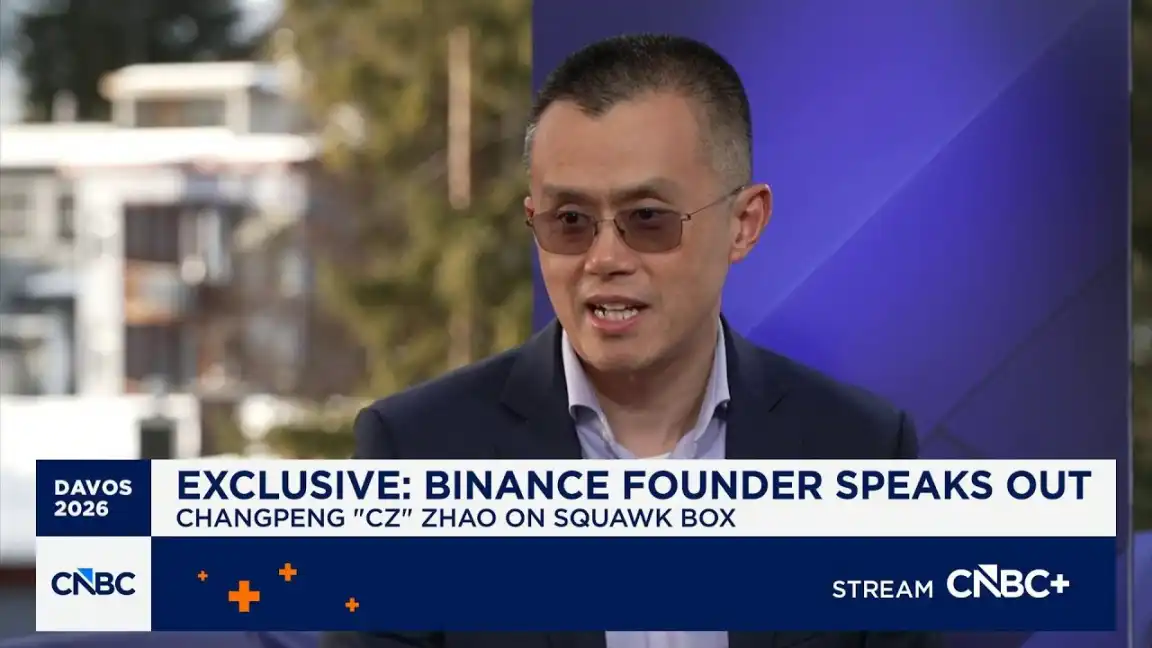
Changpeng Zhao (CZ) participated in the main venue roundtable titled "New Era for Finance" at this Davos Annual Meeting and also gave interviews to media outlets including CNBC. Overall, CZ's viewpoint was not to "replace banks" but rather that banks should embrace blockchain infrastructure, as the two are complementary. His main points include:

  • The reserve system of banks is the root cause of liquidity crises, making it difficult to handle billion-dollar-level withdrawals in a short time without issues, unlike Binance. The 100% reserve model of cryptocurrency exchanges is safer and more reliable. Traditional banks have their value but should embrace blockchain as their infrastructure to improve efficiency and reduce costs;
  • CZ is currently discussing national asset tokenization with governments of more than a dozen countries (such as Pakistan, Malaysia, Kyrgyzstan, etc.), including infrastructure, real estate, commodities, and government bonds. Tokenization can avoid debt issues and improve liquidity, attracting a broader range of investors;
  • Bitcoin's 4-year cycle will be broken, and 2026 will be Bitcoin's "super cycle." Meme tokens are similar to previous NFTs and the metaverse, being highly risky and speculative. Meme tokens with cultural value may exist long-term, but most meme tokens will disappear;
  • Traditional payments are merging with crypto payments, but risk awareness is necessary. AI Agents will use cryptocurrencies as a native payment method. In the future, AI will rely on blockchain for real-time, reliable payments, and cryptocurrencies will become the "fuel" for the AI economy;
  • The crypto industry needs to focus on risk management and regulatory reality, rather than blind optimism, balancing innovation and compliance.

In addition to these points, CZ also revealed details such as his mindset during his previous imprisonment in an interview with CNBC and mentioned on X that more details would be disclosed in his new book to be published in late February or early March.

Coinbase Founder Debates with French Central Bank Governor

In a discussion titled "Is Tokenization the Future," Coinbase founder Brian Armstrong repeatedly interrupted French Central Bank Governor François Villeroy de Galhau and refuted his views on Bitcoin and stablecoin yields.

François Villeroy de Galhau expressed the following views:

  • Strongly opposes private companies paying interest to holders of their issued stablecoins, believing this threatens monetary sovereignty and financial stability;
  • Emphasizes that trust in currency must come from public institutions (central banks) with democratic mandates, not private issuers;
  • Criticizes stablecoins and Bitcoin as private currencies that could lead to systemic risks, promoting the digital euro as a tool to maintain sovereignty;
  • Warns that without improving financial literacy, tokenization could become a "disaster."
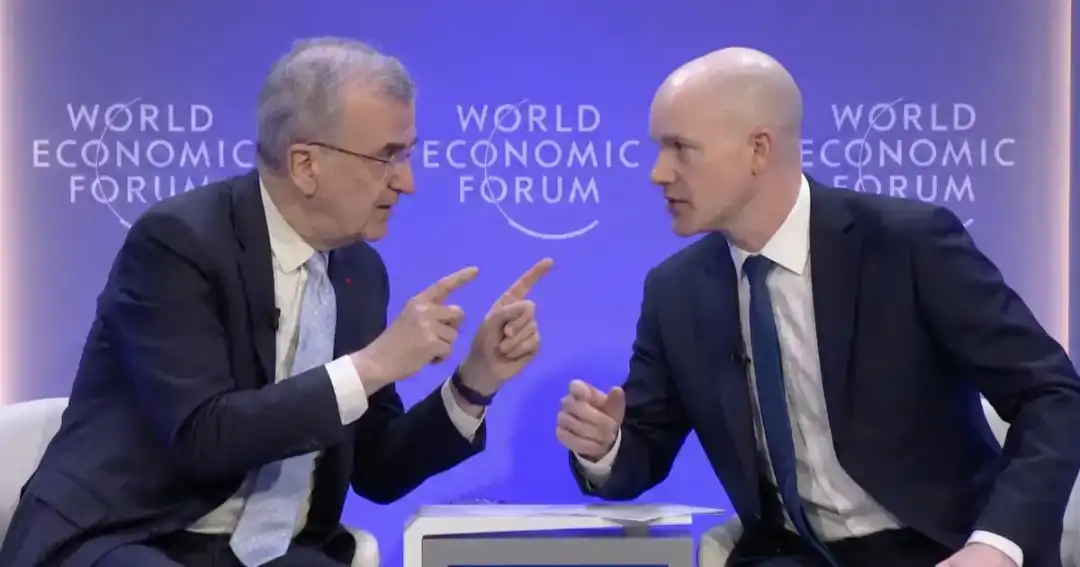
Brian Armstrong's "counterarguments" included:

  • Arguing that Bitcoin has no issuer, and its decentralized nature makes it more independent and anti-inflationary than traditional currencies;
  • Asserting that users have the right to earn yields from stablecoins and that allowing stablecoin interest is part of a country's competitiveness;
  • Emphasizing that Bitcoin and central banks should be in "healthy competition," with public choice becoming the strongest accountability mechanism for fiscal deficits and pushing central banks to be more responsible;
  • Refuting that stablecoins are fully backed by reserves, unlike bank deposits;
  • Tokenization can solve financial efficiency issues, achieve real-time settlement, reduce costs, and "democratize investment access," providing investment channels for 4 billion adults without access to brokerage services, and predicting significant progress in this technology in 2026.

In addition to this highly anticipated clash between "old finance" and "new finance," Brian Armstrong also mentioned in interviews or other occasions that during the meeting, a senior executive from a global top-ten bank told him that cryptocurrencies have now become the bank's "top priority," even seen as a "matter of survival." Armstrong stated that many financial leaders he met at the conference were not only open to cryptocurrencies but were actively seeking ways to enter the market.

Furthermore, Armstrong mentioned that although AI has diverted some attention from cryptocurrencies, the two are closely connected, and in the future, AI will likely use stablecoins by default instead of the existing banking payment system for payments.

In addition to the two main figures, many other well-known figures in the Web3 industry attended the meeting and expressed their views. Ripple CEO Brad Garlinghouse stated that the role of cryptocurrencies has shifted from a "threat" to economic infrastructure, believing that stablecoins will become a global payment bridge but need to protect monetary sovereignty. Brad Garlinghouse did not express the view that crypto payments would "replace" traditional payments but consistently emphasized that Ripple is building a bridge between the two.

Web3 Industry Representatives Sign the "Davos Declaration 2026"

During the side event "Davos Web3 Roundtable" at the Davos Annual Meeting, dozens of Web3 industry leaders, investors, and policymakers, including Animoca Brands co-founder Yat Siu, Unstoppable Domains executive Sandy Carter, and 0G Foundation representative Jonathan Chang, signed the "Davos Declaration 2026."

The declaration emphasizes that when embracing powerful technologies like blockchain and AI, the following principles must be adhered to ensure that technology serves human well-being:

  • Inclusivity: Enable more people (especially in developing countries and marginalized groups) to benefit from Web3 technology.
  • Decentralization: Uphold the core value of Web3 and avoid concentration of power.
  • Sustainability: Promote environmentally friendly and long-term viable innovation.
  • Accountability and Trust: Emphasize compliance, transparency, and responsible development.
  • Long-Term Value Creation: Shift from "hype" to practicality, regulatory friendliness, and institutional-grade infrastructure.

Traditional Finance's View on Web3

In addition to some criticisms of Web3 by the French Central Bank Governor, the meeting also saw recognition of Web3 by financial giants.
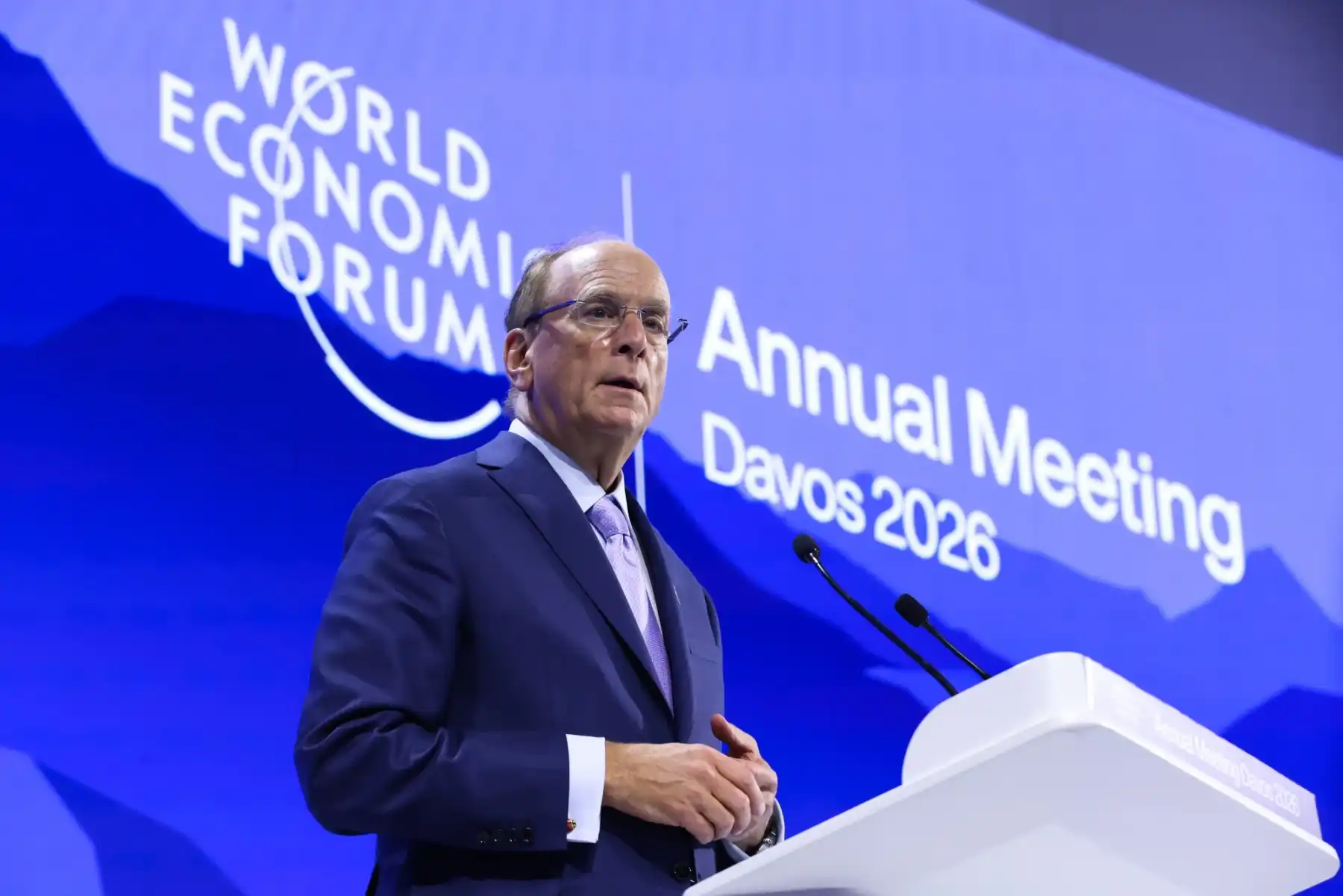
BlackRock CEO Larry Fink believes that tokenization is the future of the financial system, and the entire financial system should migrate to "a common blockchain" (Garrett Jin stated that this blockchain refers to Ethereum) as soon as possible to achieve seamless asset transfers. Tokenization will solve liquidity issues, reduce costs, and make asset transfers between money market funds more efficient. Crypto and tokenization have become themes driving the market, and BlackRock views them as institutional-grade infrastructure.
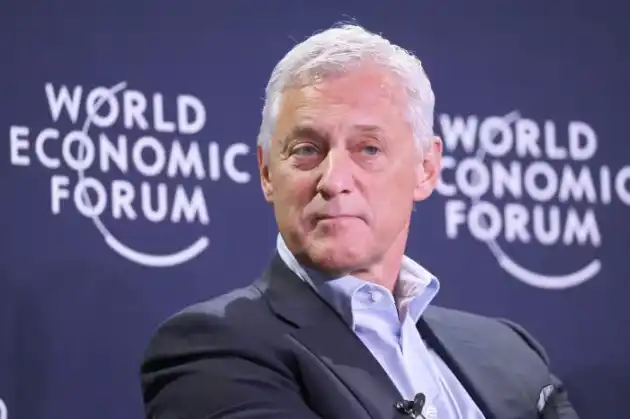
Standard Chartered Bank Group CEO Bill Winters stated that tokenization and stablecoins will bring progress in global financial delivery, including reducing transaction costs and improving cross-border payment efficiency. The integration of traditional banking and blockchain has become a reality, and stablecoins have become the first truly universal blockchain use case.

Other traditional financial giants participating in the main venue roundtable mostly expressed recognition of tokenization, digital assets, and programmable currency in reshaping financial capabilities but also believed that banks should collaborate with blockchain rather than oppose it.

Related Questions

QWhat were the main topics discussed by Web3 leaders at the 2026 Davos Annual Meeting?

AThe main topics included tokenization, stablecoins, the role of banks, Bitcoin's future, and the integration of AI with cryptocurrency payments. Key figures like CZ and Brian Armstrong emphasized the importance of blockchain infrastructure, regulatory compliance, and the transformative potential of Web3 technologies.

QWhat was CZ's (Changpeng Zhao) stance on traditional banks and blockchain technology?

ACZ argued that banks should embrace blockchain infrastructure to improve efficiency and reduce costs. He criticized the fractional reserve system as the root of liquidity crises and advocated for 100% reserve models like those used by crypto exchanges. He also highlighted his discussions with several governments on national asset tokenization.

QHow did Brian Armstrong respond to the French Central Bank Governor's criticism of stablecoins and Bitcoin?

ABrian Armstrong defended Bitcoin's decentralized nature as more independent and inflation-resistant than traditional currencies. He argued that users should have the right to earn interest on stablecoins, viewing it as a matter of national competitiveness. He also emphasized that stablecoins are fully backed by reserves, unlike bank deposits, and that tokenization can democratize investment access.

QWhat principles were outlined in the 'Davos Declaration 2026' signed by Web3 leaders?

AThe declaration emphasized inclusivity, decentralization, sustainability, accountability and trust, and long-term value creation. It called for ensuring that Web3 technologies serve human welfare, particularly benefiting developing countries and marginalized groups, while maintaining core values and avoiding centralization of power.

QHow did traditional financial leaders like Larry Fink and Bill Winters view the future of Web3 and tokenization?

ALarry Fink, CEO of BlackRock, stated that tokenization is the future of the financial system and should migrate to a common blockchain (likely Ethereum) for seamless asset transfers. Bill Winters, CEO of Standard Chartered, highlighted that tokenization and stablecoins would advance global finance by reducing costs and improving cross-border payment efficiency, with stablecoins being the first truly universal blockchain use case.

Related Reads

Understanding CPO (Co-Packaged Optics) in One Article: Why Nvidia Is Willing to Spend $3.2 Billion on a Fiber?

NVIDIA and Corning announced a multi-year strategic partnership on May 6, 2026, with NVIDIA committing up to $3.2 billion to support Corning's U.S. expansion. This investment will triple Corning's manufacturing plants and significantly boost its optical fiber and communications production capacity. The core driver behind this massive investment is the fundamental shift from copper to optical interconnect technology within AI data centers. As GPU clusters scale, copper wires face critical limitations: severe signal attenuation over distance, high energy consumption for signal integrity, and excessive heat generation. Optical fiber, transmitting light instead of electrical signals, solves these issues with minimal loss, near-light speed, and lower power needs. The article outlines a three-stage evolution of data center interconnect: 1. **Traditional Copper Interconnects:** The mainstream solution of the 2010s, now being phased out due to scaling bottlenecks. 2. **Pluggable Optical Modules:** The current mainstream, where modules convert electrical signals to light externally. This process still introduces energy loss and latency. 3. **CPO (Co-Packaged Optics):** The next-generation technology where the optical engine is integrated directly with the GPU chip package. This drastically reduces the electrical signal travel distance to mere millimeters, slashing power consumption and latency while boosting data density. NVIDIA CEO Jensen Huang has identified CPO as an essential core technology for AI infrastructure. NVIDIA's investment signifies a strategic shift from being a buyer to actively controlling its supply chain for critical components. With demand for specialized optical fiber far outstripping supply—evidenced by soaring prices—securing long-term manufacturing capacity has become a competitive necessity. While Corning's expansion may pressure some suppliers, a projected global fiber supply gap of 5-15% over the next few years creates a significant opportunity window, particularly for Chinese manufacturers competitive in optical preforms, chips, and modules. Ultimately, NVIDIA's move is not about chasing a trend but an engineering imperative. The transition to light-based interconnects like CPO is driven by the physical limits of copper, marking a definitive step in the ongoing AI computing revolution.

marsbit10m ago

Understanding CPO (Co-Packaged Optics) in One Article: Why Nvidia Is Willing to Spend $3.2 Billion on a Fiber?

marsbit10m ago

KOL's Perspective: Why Is SOL Set to Rise from This Point?

**Summary: Why SOL is Positioned for Growth at This Level** The article argues that SOL is poised for an upward move from its current price point, citing several key factors. Primarily, SOL has just broken out of a 4-month consolidation phase. This breakout signals a return of risk appetite to the broader crypto market, as SOL is seen as a key indicator of overall crypto health. The token's ownership has reportedly shifted from short-term traders and tourists to long-term accumulators, leading to low volume. Any meaningful increase in trading activity could thus trigger significant upward momentum. Fundamental strengths include strong institutional adoption, integration with DeFi and RWAs (Real-World Assets), and the potential benefits from the Clarity Act. Despite its high volatility—having dropped 70% from its all-time high but still up 12x from its bear market low—SOL is highlighted as one of the few tokens from the last cycle to reach new highs. It boasts a robust ecosystem of applications, users, and protocols. Future catalysts include the expected influx of AI developers following the Miami Accelerate conference, which focused on AI on Solana. Furthermore, Solana is positioned as the premier chain for memecoin activity, a trend expected to continue and drive network usage and fees. The article concludes that recent price action reflects a healthy transfer to long-term holders, setting the stage for growth.

marsbit1h ago

KOL's Perspective: Why Is SOL Set to Rise from This Point?

marsbit1h ago

Those Pre-Bitcoin PoW Protocols Have Recently Been Reimplemented

This article details a recent surge in replicating pre-Bitcoin Proof-of-Work (PoW) protocols, specifically focusing on Hal Finney's 2004 RPOW (Reusable Proofs of Work). Within five days in May 2026, multiple independent builders in the Bitcoin/cypherpunk community launched projects inspired by this early electronic cash proposal. The initiative began with Fred Krueger's `rpow2.com`, a centralized but auditable system that replaced RPOW's original IBM 4758 hardware with Ed25519 signatures. Initially a faithful replica, it later adopted Bitcoin-like features (21M supply cap, difficulty adjustment) and a controversial 5.24% founder allocation. This sparked rapid forks, including `rpow4.com` which incorporated full Bitcoin parameters, a prediction market (`rpowmarket.com`), and a DEX (`rpow2swap.com`). Concurrently, Mike In Space created a prototype of Wei Dai's 1998 b-money proposal (`b-money.replit.app`), pushing the historical exploration even further back. The article contrasts these centralized, server-dependent experiments with Bitcoin's core innovation of decentralized, trustless consensus. It also highlights a parallel development: the `HASH` project on Ethereum, which uses smart contract hooks to enable a purely fair-launch, browser-mineable PoW token with 0% allocations to team or VCs. The collective activity is framed as a meme-driven, educational exploration of cypherpunk history rather than a serious financial movement, with all projects heavily disclaiming any investment value.

marsbit1h ago

Those Pre-Bitcoin PoW Protocols Have Recently Been Reimplemented

marsbit1h ago

South Korean Exchanges 'Battle' Regulators, Challenging the Boundaries of Enforcement and Legislation

South Korea's cryptocurrency industry is engaged in a rare, direct confrontation with regulators. The Financial Intelligence Unit (FIU), the primary anti-money laundering (AML) watchdog, has recently imposed heavy penalties on major exchanges like Upbit and Bithumb for alleged violations involving unregistered overseas VASPs and AML procedures. However, exchanges are now actively challenging these actions in court and through industry associations. In a significant shift, the Seoul Administrative Court ruled in favor of Upbit's operator, Dunamu, overturning part of an FIU-ordered business suspension. The court found the FIU's penalty criteria and justification insufficiently clear. Similarly, the court suspended the enforcement of a six-month business suspension against Bithumb pending a final ruling, citing potential irreversible harm to the exchange. Beyond legal battles, the industry is contesting proposed legislative amendments. The Digital Asset eXchange Alliance (DAXA) strongly opposes a draft rule that would mandate Suspicious Transaction Reports (STRs) for all crypto transfers over 10 million KRW (~$6,800). DAXA argues this "poison pill" clause violates legal principles and would overwhelm the STR system, increasing reports from 63,000 to an estimated 5.45 million annually for major exchanges, thereby crippling effective AML monitoring. This conflict highlights a structural tension in South Korea's crypto governance: comprehensive digital asset laws are still developing, while regulators rely heavily on AML enforcement. The industry's move from passive compliance to active legal and legislative challenges signifies a new phase, pressing for clearer rules and more proportionate enforcement. While short-term disputes may intensify, this clash could ultimately lead to a more mature and sustainable regulatory framework for South Korea's vibrant crypto market.

marsbit1h ago

South Korean Exchanges 'Battle' Regulators, Challenging the Boundaries of Enforcement and Legislation

marsbit1h ago

Trading

Spot
Futures
活动图片