Restaking赛道「内卷」下有何安全风险?

Odaily星球日报Published on 2024-02-08Last updated on 2024-02-08

Abstract

比起单个Eigenlayer合约潜在的安全风险,第三方平台资金的分散反而会降低整体系统性风险。

原文作者:Haotian(X:@tme l0 211)

最近,数十家 Restaking 解决方案同时涌现内卷,市场好生热闹,阵仗可比当初 Lido、RockX、SSV 等 Staking 大战精彩多了。从降低用户 32 ETH 门槛的节点服务「技术实力」大战,变成了如今争抢 Eigenlayer 积分的「运营策略」大战,比较典型的应该算 @KelpDAO 了,愣是凭积分大战,拼到了 TVL Top 3 ,如何做到的呢?

第一阶段,由于@Eigenlayer 暂停了再质押业务,市场用户很长时间内无法直接参与质押,而 Eigenlayer 又推出了明牌积分空投机制,这给了 KelpDAO 等后来者抢夺市场用户的「空窗」机会,KelpDAO 国库将自讨腰包在 Eigenlayer 上分得的积分,再分配给用户。

用户在 @KelpDAO 上质押 ETHx,stETH 以及 sfrxETH 等 LST,除了可以获取 Kelp Miles 积分 Miles 积分外,还能获得 Eigenlayer 提供的 EL Points。在这个阶段,总计有 49 K ETHx 参与了 Eigenlayer 的积分获取。

第二阶段,Eigenlayer 全面开放 Restaking 业务,并取消了质押资金上限。本以为这会让 KelpDAO 等积分大战策略失效,毕竟用户可以直接参与 Eigenlayer 获取积分,对其他竞品平台的需求势必会降低。没想到, @KelpDAO 又推出了 EigenBoost 2.0 策略来紧急应对:

1)用户质押 ETHx 可以获得额外 100 万的 EL 积分,每存入 1 个 ETHx 可获得额外 50 EL 积分;

2)用户可以将 LST 铸造成 rsETH 来向市场提供流动性,当用户每在 Stader 平台上 mint 成功 1 个 rsETH 即可获得 100 K Kelp Miles,rsETH 这部分流动性也不会浪费,用户可以存入 Pendle 享有 30% 的 APY 收益。

有意思的地方就在此,虽然 Eigenlayer 开放了窗口但是, 720 分的标准也不是人人可得,更多的小额资金可能会选择通过 KelpDAO 流入,进而实现一鱼多吃,毕竟 Eigenlayer 的积分若扑空,保底还有 KelpDAO 提供低保。

尤其是 @KelpDAO 也成长到了 Top 3 3 亿美金以上的心理安全关口。这样的运营策略一定会吸引一大部分闲散资金进入。

强中更有强中手,如果说 Eigenlayer 放开质押上限是为了夺回被其他 Restaking 项目吸走的用户,那 KelpDAO 的这一加强版积分运营策略,则是一次有力的回击,确实,当 Eigenlayer 的积分竞争明牌之后,散户一鱼多吃的心理就成为关键了。

若要问,如何看待 Restaking 赛道过于「内卷」存在的安全风险?我抛 3 个浅见:

1)Eigenlayer 的品牌和信誉就是 Restaking 赛道的基本面,由于其 AVS 和节点 Slash 机制并未完善,唯一的安全载体就是 Eigenlayer 自身智能合约。

若大量散户都 fomo 进入 Eigenlayer 存在的风险面会更大,任意小问题爆出后都可以造成挤兑风险。基于此我倒认为让 KelpDAO 这类偏机构化的平台顶在前边,反倒会分摊和降低 Eigenlayer 一家独大潜在的安全风险;

2)看似这类第三方平台,有 Rug 风险,但用户所获取的积分,都不是凭空产生的,Eigenlayer 手里握着这类平台的底牌。一个平台要在内卷市场中获得不错的份额,其 Rug 机会成本也大了,除了要合计被 Eigenlayer 牵制的资金规模之外,市场运维等工作付出的成本也并不小。

乐观点看,比起单个 Eigenlayer 合约潜在的安全风险,第三方平台资金的分散反而会降低整体系统性风险,当然前提是该平台得经受一段时间的市场品牌信誉积累;

3)Eigenlayer 以目前的资金体量,闲散资金参与获取积分捕获空投机会的可能性在降低,越多的资金涌入只会增加低保分的门槛。这个时候第三方平台用大资金抽出来的积分,对散户而言确实是防踏空的一鱼多吃机会;

Note:以上观点仅做参考建议,无论如何要对 Restaking 这种「加杠杆」的流动性玩法行为多一些警惕。毕竟大局未稳,请理性适度参与,切莫盲目冒险。
Related Reads

Latin America's Payments Landscape Is Not What You Think It Is

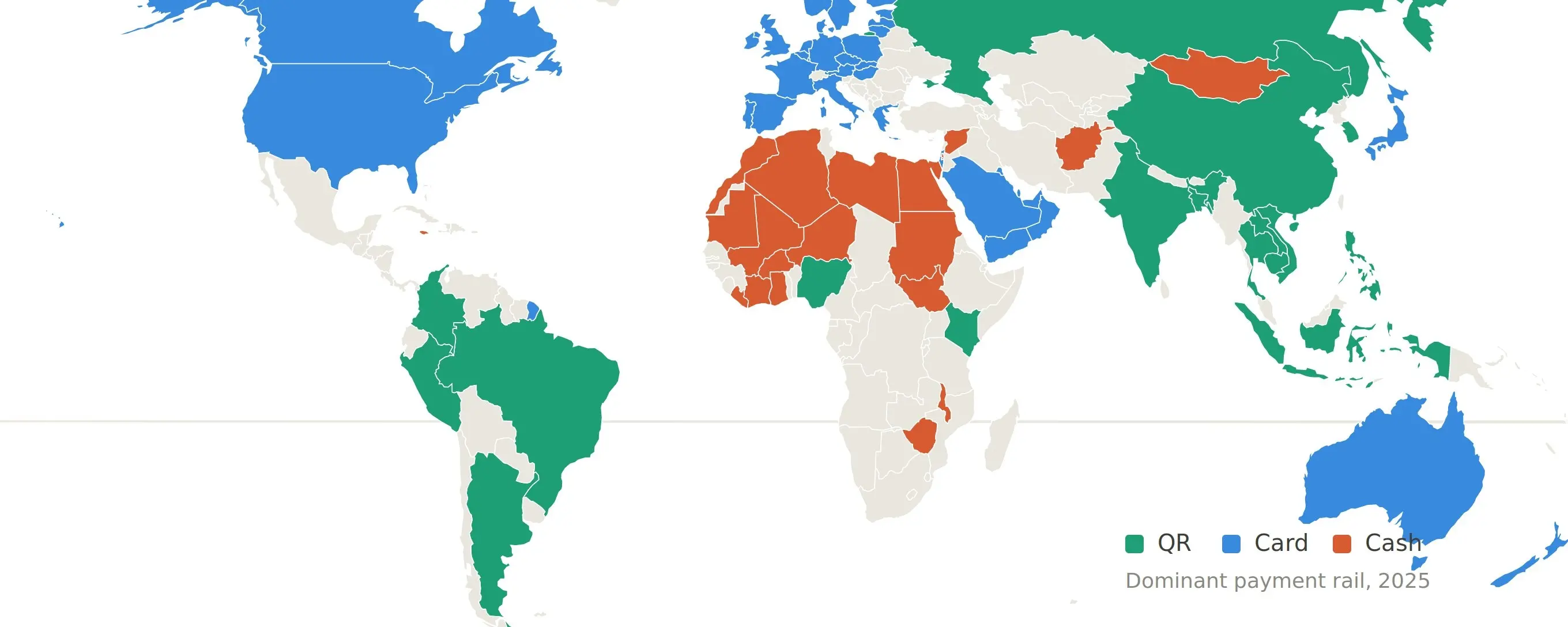
This report challenges common misconceptions about Latin America's payment landscape, based on over 500 hours of firsthand research. Key findings include: 1) Crypto card transaction volume primarily comes from high-net-worth individuals receiving USDT salaries, not retail spending. 2) QR code payments (e.g., Brazil's Pix, Argentina's Mercado Pago) are the dominant payment method across most emerging markets, not cards. 3) A major untapped opportunity lies in enabling cross-border interoperability between domestic instant payment systems. 4) Payment competition is shifting from customer acquisition to owning the settlement layer (e.g., acquiring banks). 5) Latin America is not a single market; Brazil, Mexico, Argentina, and smaller "forgotten five" countries (e.g., Guatemala, Honduras) have vastly different dynamics. 6) Stablecoin-to-fiat conversion margins are collapsing toward zero, pushing companies to build value-added services on top. 7) Future payment winners will be multi-country brands, not single-corridor specialists. 8) Marketing must target specific user segments (e.g., digital nomads, unbanked immigrants) with tailored messaging, not a generic "Brazilian" audience. 9) Contrary to perception, Latin American regulators are often ahead of the US in creating frameworks for digital assets and instant payments, with clear licensing deadlines. The core takeaway is that the region's payment rules are being rewritten, moving beyond cards and stablecoin arbitrage towards integrated, cross-border QR-based solutions.

链捕手5m ago

Latin America's Payments Landscape Is Not What You Think It Is

链捕手5m ago

Vitalik's Algorithmic Stablecoin Vision: Interpreting the Mechanism and Challenges from an Options Perspective

Vitalik Buterin's recent algorithmic stablecoin proposal envisions using an option-like mechanism to create a stablecoin without the liquidation risks inherent in traditional collateralized debt position (CDP) models. The design splits one unit of ETH into two components: a 'stable' leg (P) that maintains value up to a certain strike price, and an 'upside' leg (N) that captures any appreciation above that price. Together, they always sum to one ETH, eliminating the need for debt or liquidation mechanisms. From an options perspective, the stable leg essentially functions as a synthetic, covered call position. However, significant challenges exist. For the stable asset to maintain its peg, it must continuously roll deep in-the-money call options, leading to potential rollover slippage, predictable trading paths vulnerable to front-running, and liquidity issues. Crucially, the system's scalability depends on a constant demand for the upside leg—a form of leveraged ETH long position without funding rates or liquidation risk. It's unclear if such persistent, specific demand will materialize from speculators or market makers who have simpler alternatives like perpetual swaps. The author, drawing from experience with Rysk, argues that DeFi options have struggled as standalone trading products due to complexity and fragmented liquidity. Their potential lies instead as foundational infrastructure underpinning more complex financial primitives like stablecoins, structured yields, or index products—transforming from a direct product into a core pricing and risk distribution engine for the next generation of on-chain finance.

marsbit1h ago

Vitalik's Algorithmic Stablecoin Vision: Interpreting the Mechanism and Challenges from an Options Perspective

marsbit1h ago

GPT-5.6 Countdown: Abandon the Illusion of a Single API, Computational Iteration Can't Outpace a Single Page of Compliance

In mid-June, three seemingly independent industry events—the compliance-driven throttling of Fable 5, the open-sourcing of GLM-5.2, and the leaked release timeline for GPT-5.6—are pushing the global AI industry toward a watershed moment. These shifts signal a fundamental restructuring of the industry's underlying logic. First, **"usability" has substantially overtaken "advanced capabilities"** as the primary weight, pushing the global large language model (LLM) supply chain into a "dual-track" phase of controlled closed-source and local open-source coexistence. Second, **the competitive moats of closed-source giants are shifting**. Their technical focus is moving from "language intelligence" toward "spatial intelligence (world models)"—a domain heavily reliant on computing power. Third, faced with常态化 transnational compliance risks, **a "model-agnostic" decoupled design has become a survival necessity for application-layer developers to maintain business continuity.** The article details how Anthropic's Fable 5, despite its advanced engineering feats, was restricted for non-U.S. citizens within 72 hours of launch, highlighting how geopolitical compliance can instantly limit even the most advanced models. In response, the open-source camp, exemplified by Zhipu AI's MIT-licensed GLM-5.2, is gaining market share by offering stable performance improvements and significant cost advantages (up to 70% savings for enterprises), while achieving full adaptation with domestic semiconductor platforms. Meanwhile, closed-source leaders like OpenAI are pivoting. The anticipated GPT-5.6 reportedly shifts focus from language to spatial intelligence and world models, aiming to rebuild a generational gap in areas like 3D understanding, simulation, and industrial design that demand immense compute. The core conclusion is that the LLM supply chain's logic has changed. Enterprises must now evaluate infrastructure based on a composite of technical performance and policy compliance. For developers, complete reliance on a single closed-source API poses unacceptable risk. Implementing a truly model-agnostic architecture—enabling swift switches to compliant, locally deployable open-source alternatives—is no longer just good practice but a fundamental baseline for business continuity.

marsbit4h ago

GPT-5.6 Countdown: Abandon the Illusion of a Single API, Computational Iteration Can't Outpace a Single Page of Compliance

marsbit4h ago

Trading

Spot
Futures
活动图片