
SignalPlus宏观研报(20240124):悲观!市场认为BTC将在年底跌至2万美元以下

Odaily星球日报Published on 2024-01-24Last updated on 2024-01-24

Abstract

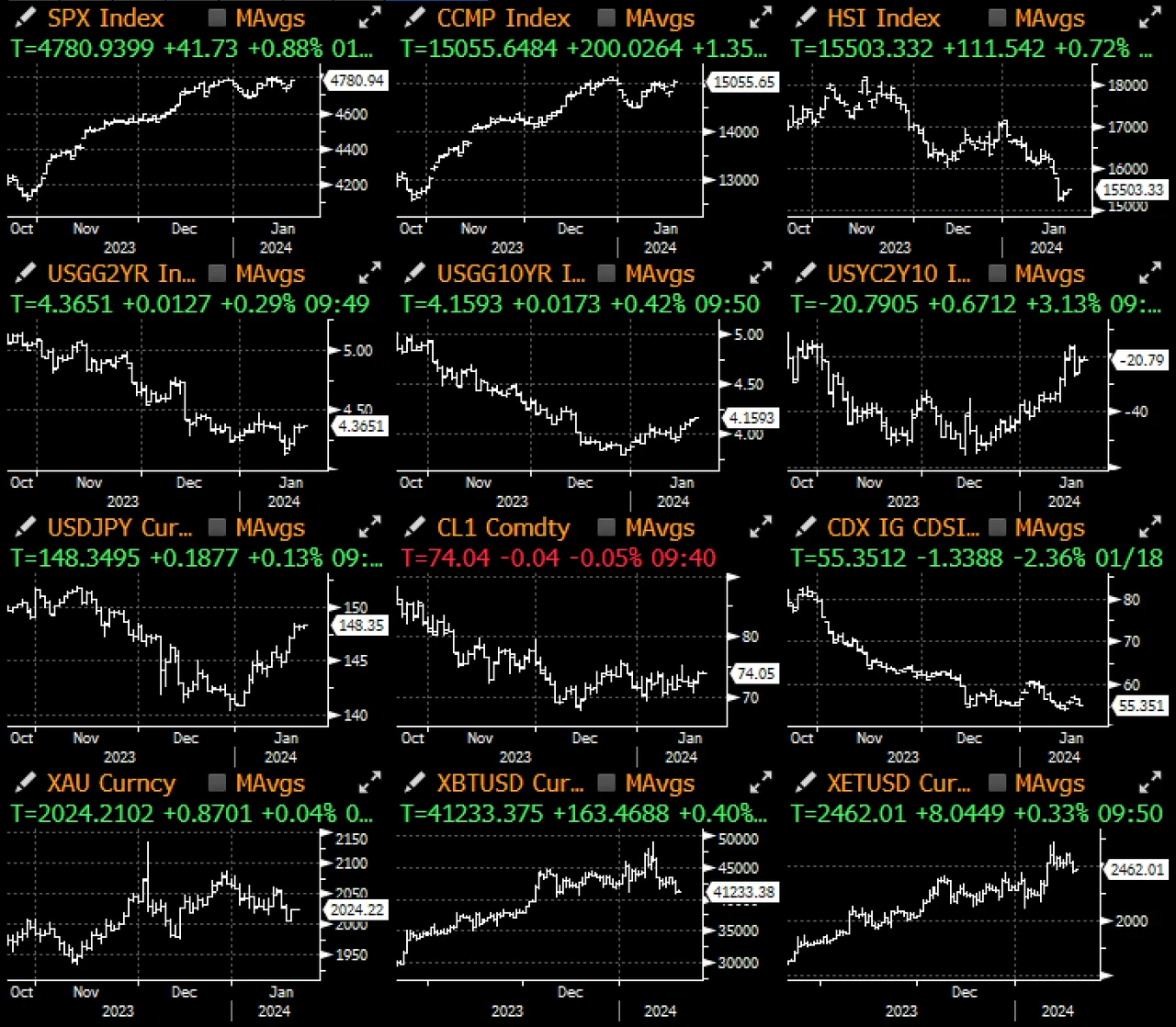
市场情绪仍是混沌不明,不同区域的新闻和发展不尽相同;中国推出新的救市计划,预计将通过离岸资本来提供股市买盘支持(回到量化宽松)。

SignalPlus宏观研报(20240124):悲观!市场认为BTC将在年底跌至2万美元以下

SignalPlus宏观研报(20240124):悲观!市场认为BTC将在年底跌至2万美元以下

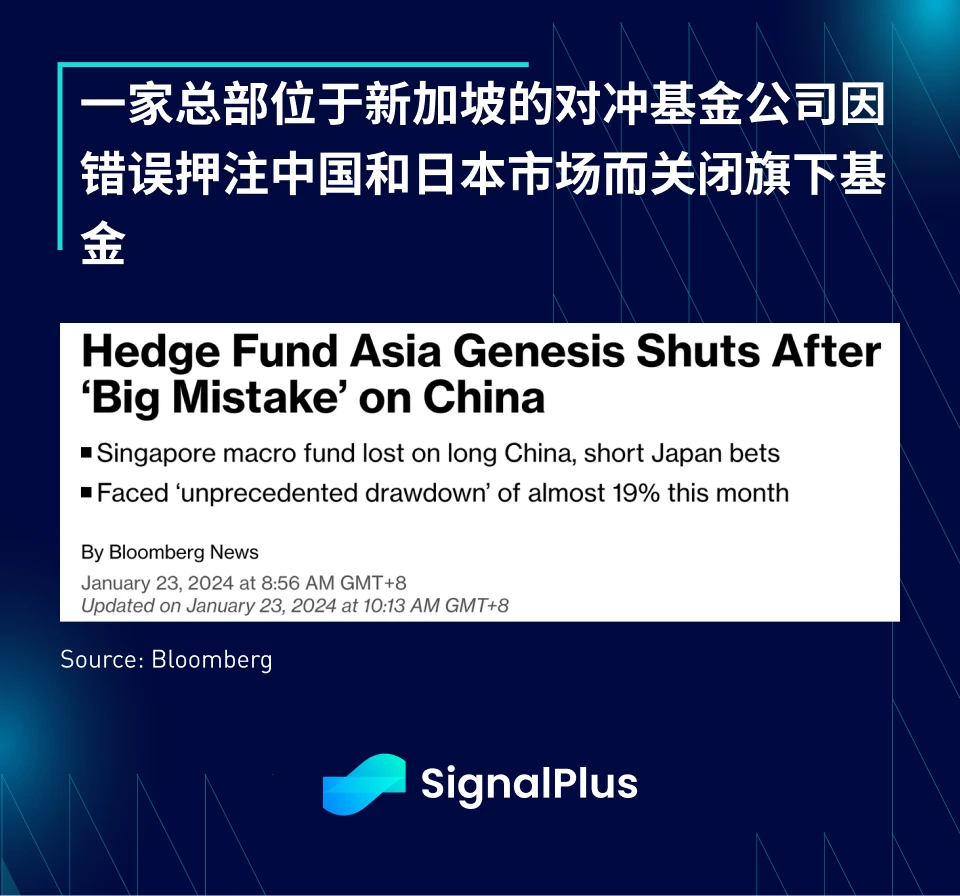
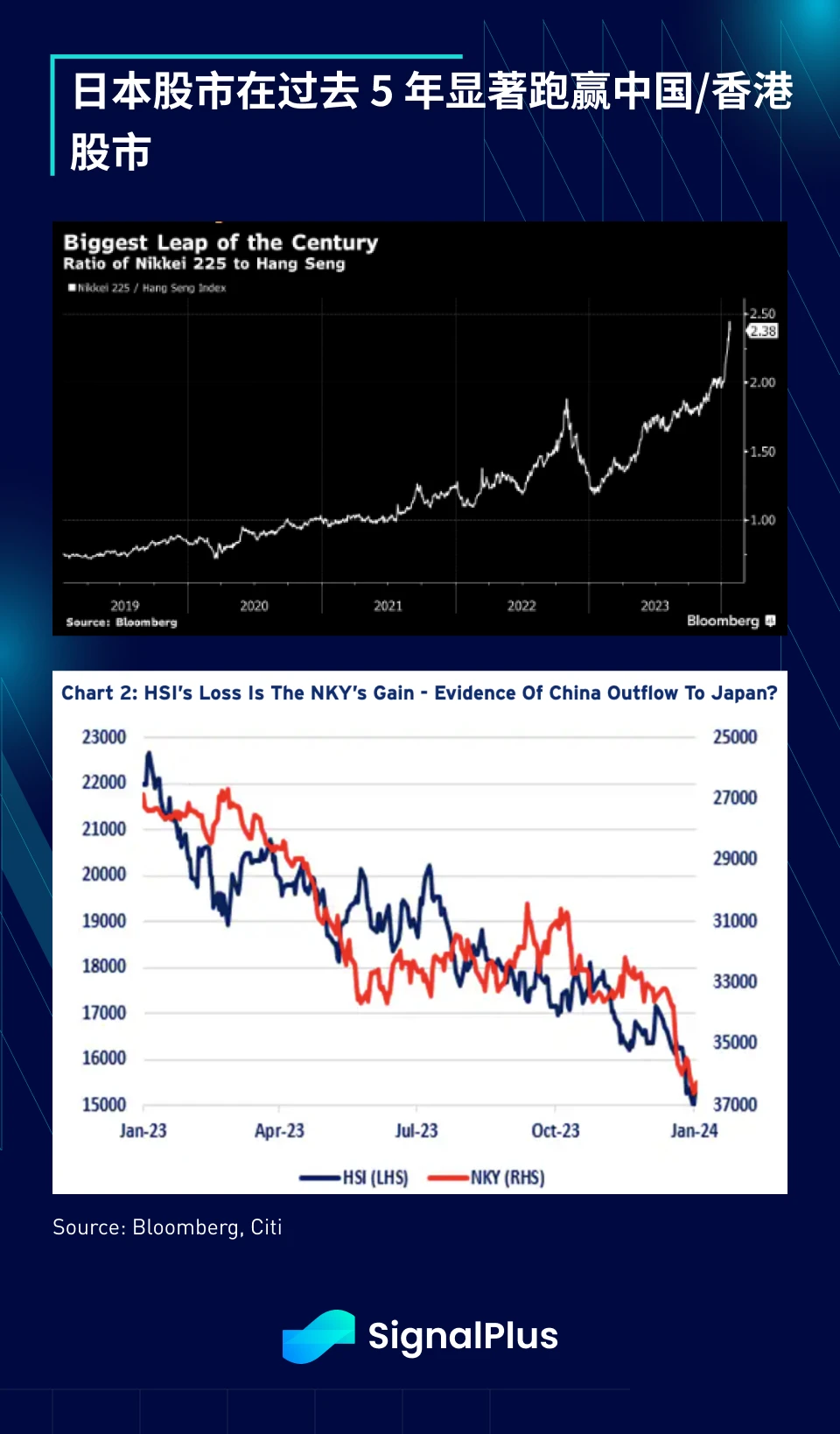
市场情绪仍是混沌不明,不同区域的新闻和发展不尽相同;中国推出新的救市计划,预计将通过离岸资本来提供股市买盘支持(回到量化宽松),而一家总部位于亚洲的对冲基金因错误押注中国和日本市场被迫关闭旗下产品,成为头条新闻,该机构的首席投资官是一位拥有数十年市场经验的资深人士,他坦承自己已经失去了信心,这再次提醒我们宏观是非常难以驾驭的,即使经验再丰富也难以匹敌。
SignalPlus宏观研报(20240124):悲观!市场认为BTC将在年底跌至2万美元以下

SignalPlus宏观研报(20240124):悲观!市场认为BTC将在年底跌至2万美元以下

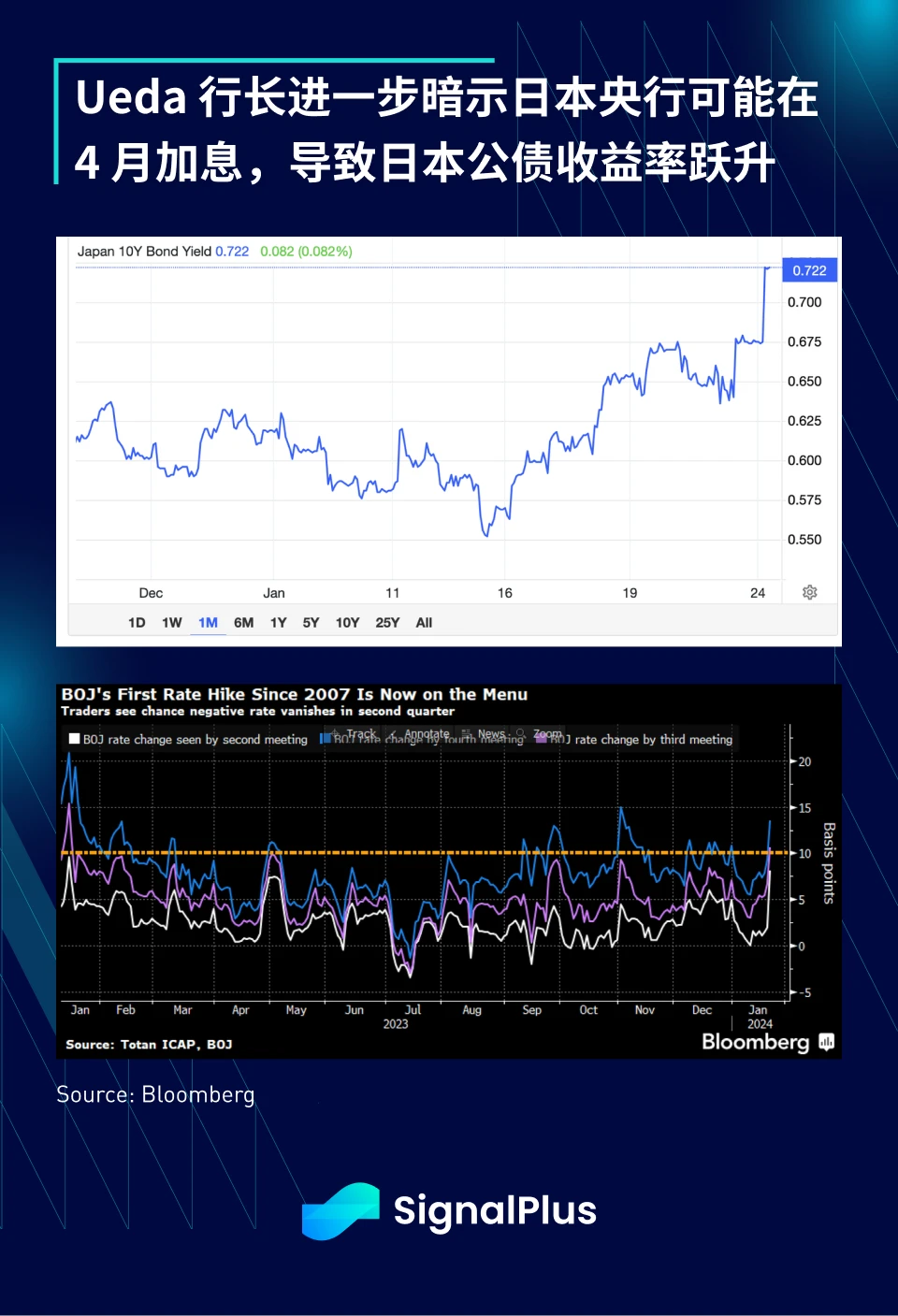
说到日本, 10 年期日本公债收益率已从本月低点跳升了 18 个基点,由于日本央行行长 Ueda 明确将 4 月加息列入考虑,收益率在过去两天又出现一波上涨;Ueda 行长周二在记者会上表示,如果“通胀目标在望”,同时工会也一直在劳资谈判中要求更大幅度的加薪,日本央行将“考虑”结束负利率政策,他也认为,日本央行可以避免在终止负利率政策时出现中断,不过交易员也在关注可能随之而来的反驳新闻,这种情况自 Ueda 接任以来经常发生。
SignalPlus宏观研报(20240124):悲观!市场认为BTC将在年底跌至2万美元以下

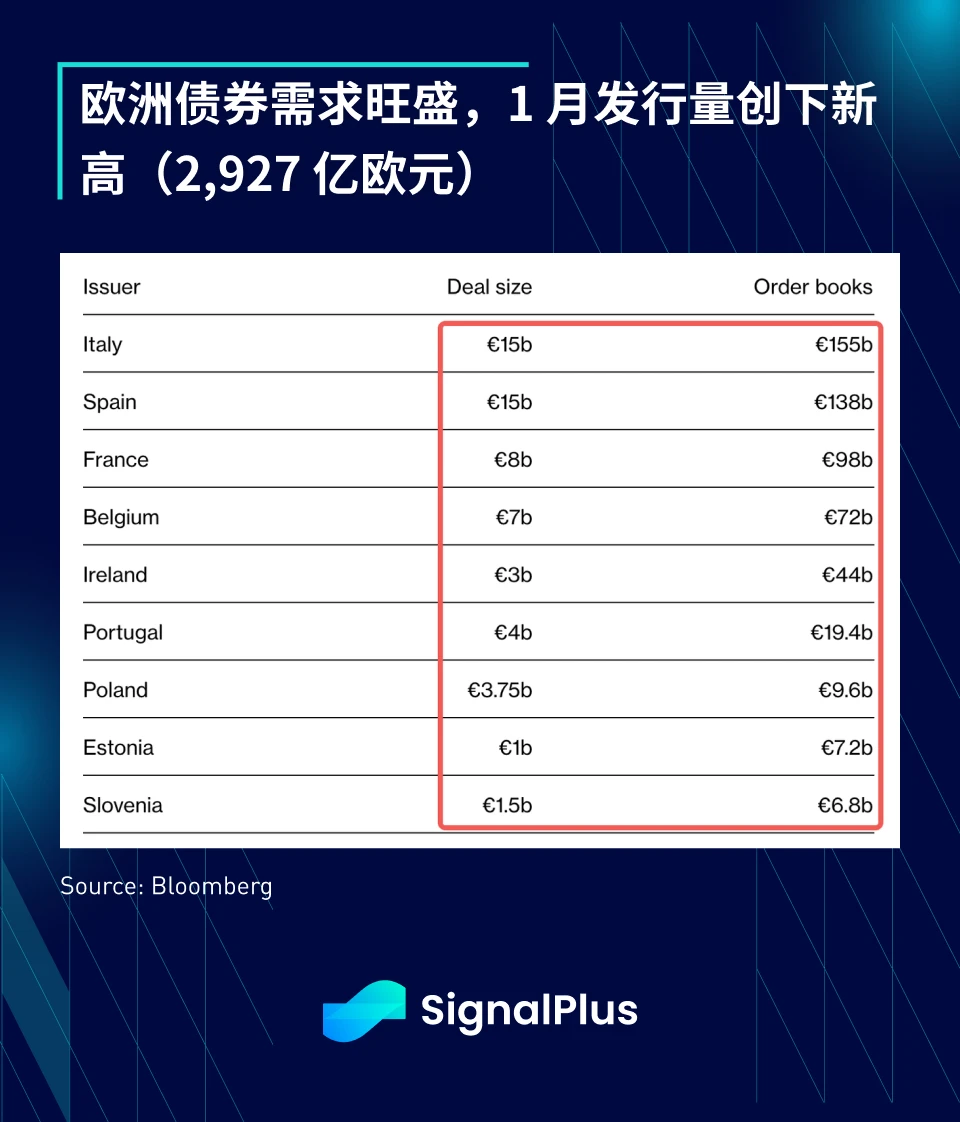
回到欧洲和美国,欧洲债券市场发行量创下新高, 1 月份新债发行达 3, 200 亿美元左右,且大部分的市场反应都十分良好,超过 80% 的交易出现利差收窄(即价格上涨)的情况。
SignalPlus宏观研报(20240124):悲观!市场认为BTC将在年底跌至2万美元以下

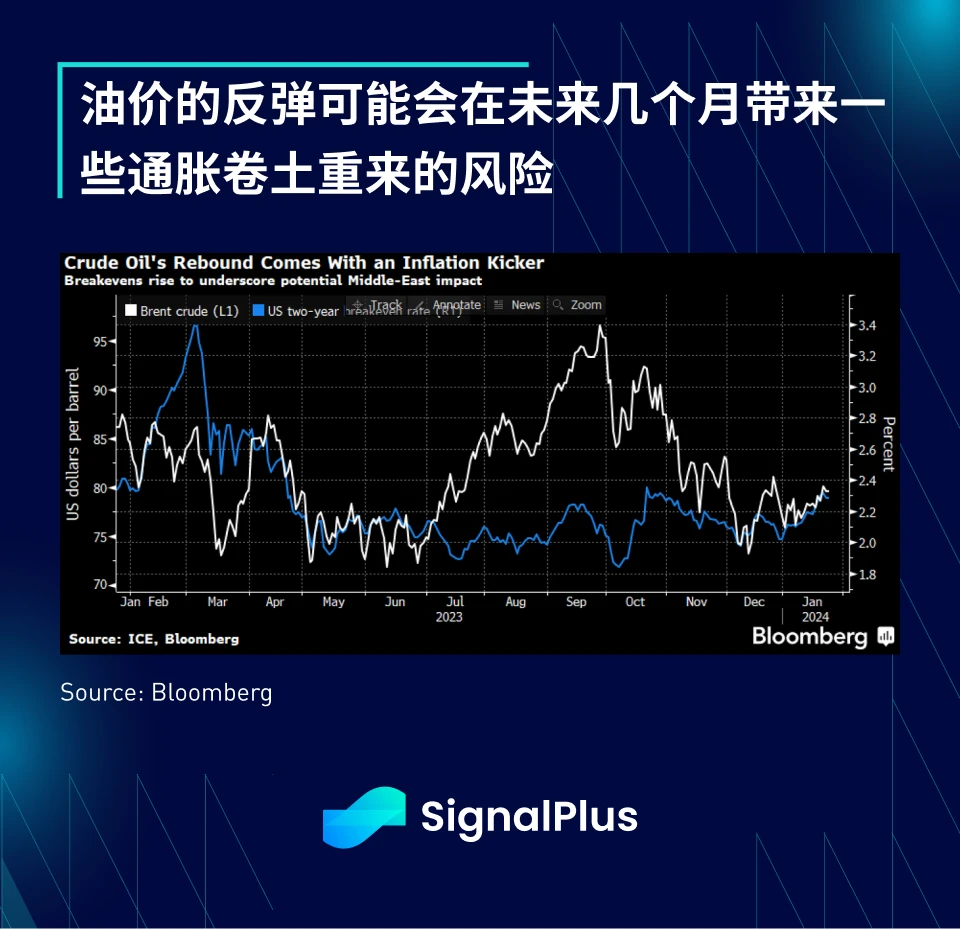
美国方面,创纪录的 2 年期美债拍卖(单次 600 亿美元)的市场需求也不错,发行价格 4.365% 恰好与屏幕价格相符,投标超过 1, 542 亿美元,投标倍数为 2.57 ,交易商占比落至去年 7 月以来最低的 14.8% ,考虑到最近因油价反弹而重新出现的通胀风险,整体拍卖结果相当不错。
SignalPlus宏观研报(20240124):悲观!市场认为BTC将在年底跌至2万美元以下

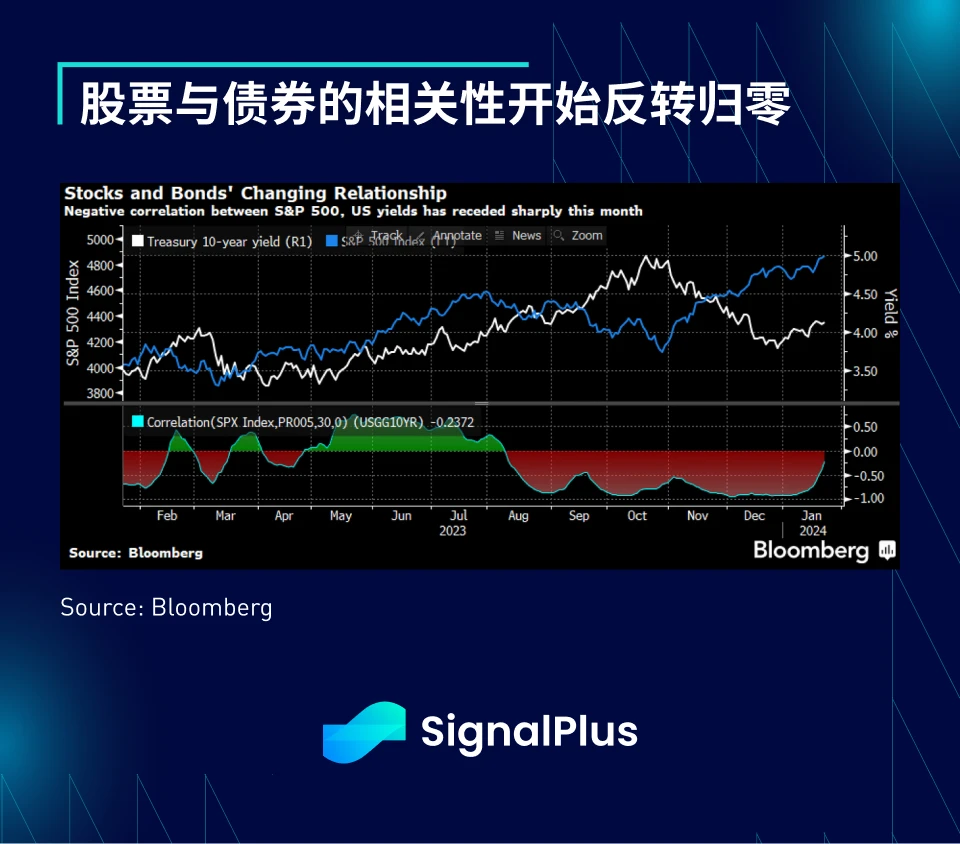
市场整体上较为平静,仍在等待美联储、财政部季度再融资、非农就业数据等结果以及月底的到来,企业财报季也将全面展开,因此交易员本周都较为保守。股票和债券在过去 6 个月的负相关性(多元化投资组合的必要条件)逐渐消失,如果相关性回到零(或更糟,转为正相关)可能会加剧 2 月份的资产价格波动,这让人想起 2023 年第二季度的市场下跌情况,轻松的风险交易似乎即将在短期内结束。
SignalPlus宏观研报(20240124):悲观!市场认为BTC将在年底跌至2万美元以下

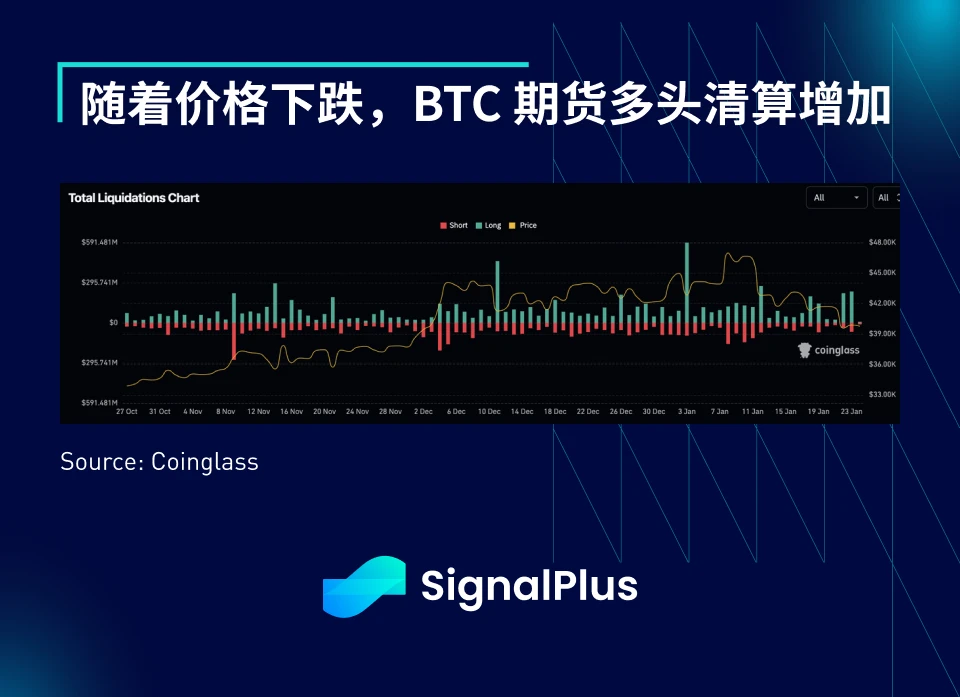
说到蜜月期的结束,GBTC 的资金外流继续对市场造成压力,加密货币价格持续走软,短期内市场缺乏激励因素和资金流入(需要较长期间),导致交易者对短期前景失去信心,过去几天期货多头清算稳步增加。
SignalPlus宏观研报(20240124):悲观!市场认为BTC将在年底跌至2万美元以下

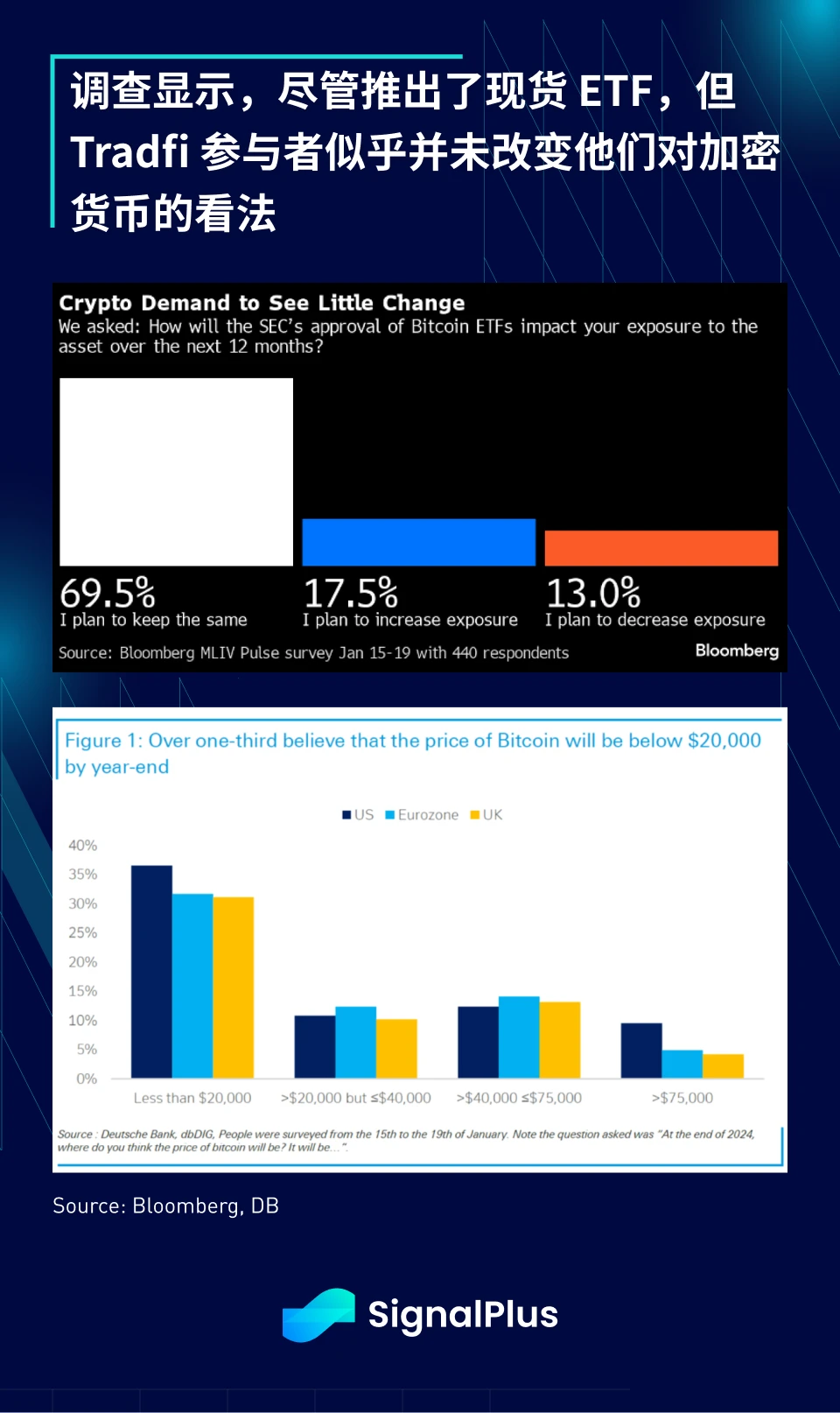
此外,Bloomberg 和一些券商的调查显示,主流群体对加密货币的需求或投资情绪在短期内的变化不大,虽然 ETF 的推出增加了加密货币的合法性,但没有增加虚拟资产的参与度;Deutsche Bank 的一项调查显示, 1/3 的受访者认为 BTC 到年底前将跌至 2 万以下(应该买一些便宜的看跌期权),这与行业参与者的预期非常不同,看来前面的道路仍然漫长!
SignalPlus宏观研报(20240124):悲观!市场认为BTC将在年底跌至2万美元以下

SignalPlus宏观研报(20240124):悲观!市场认为BTC将在年底跌至2万美元以下

您可在 ChatGPT 4.0 的 Plugin Store 搜索 SignalPlus ,获取实时加密资讯。如果想即时收到我们的更新,欢迎关注我们的推特账号@SignalPlus_Web3 ,或者加入我们的微信群(添加小助手微信:SignalPlus 123 )、Telegram 群以及 Discord 社群,和更多朋友一起交流互动。

SignalPlus Official Website:https://www.signalplus.com

Related Reads

No Sales Team, $20 Million in Revenue: How Did AI Employee Viktor Win Over 30,000 Companies?

The AI employee Viktor, developed by a team with DeepMind background, has achieved $20 million in annual revenue without a traditional sales team, serving over 30,000 companies. Its core innovation lies in positioning itself as a "Tier 3 AI Coworker" capable of "end-to-end execution and delivery of results," moving beyond the "draft and wait for human completion" model of typical AI assistants. Users can simply mention Viktor in Slack or Microsoft Teams using natural language commands, and it autonomously performs tasks like pulling sales data from a CRM, generating reports, or even cross-tool operations like creating board meeting PPTs by aggregating data from six different sources. Key to its growth is a pure Product-Led Growth (PLG) model, eliminating complex implementation cycles and per-seat licensing. Instead, it charges based on task credits or consumption, lowering the trial barrier with a $100 free credit offer and no credit card required. This enabled viral, bottom-up adoption within organizations. Viktor's interaction paradigm removes the barrier of prompt engineering, allowing non-technical employees to delegate complex workflows seamlessly. It also features proactive, automated task execution (e.g., overnight bookkeeping, scheduled reports) based on triggers, effectively embedding AI as an automated "process layer" within business operations. However, its expansion into Microsoft Teams—a platform with 320 million users—highlights challenges. Large enterprises require stringent IT compliance, security reviews (e.g., SOC 2), and governance, potentially hindering the frictionless, user-driven adoption that succeeded in Slack. Additionally, the "black box" nature of its autonomous decision-making raises concerns about operational risks, data integrity, and the need for robust audit logs and permission controls. Balancing efficiency gains with security and trust remains a critical hurdle for Viktor and similar AI agents aiming to become core enterprise infrastructure.

marsbit36m ago

No Sales Team, $20 Million in Revenue: How Did AI Employee Viktor Win Over 30,000 Companies?

marsbit36m ago

Manus Buyback Plan Emerges: Chinese Investors Plan to Repurchase Equity with $2 Billion, Path to Hong Kong IPO Becomes Clearer

According to a report by The Information, early Chinese investors of Manus, including Tencent, Sequoia Capital China, and ZhenFund, are planning to repurchase the company from Meta for $2 billion—the same price Meta paid in its acquisition last December. This move is a direct response to the Chinese government's prohibition of the foreign acquisition in April. As part of the repurchase plan, Manus is considering establishing a Sino-foreign joint venture within China. This structure is seen as a way to ensure regulatory compliance for its Chinese investors and to pave the way for a future IPO in Hong Kong. Notably, U.S. investor Benchmark will not participate in the buyback, which will concentrate ownership even more among Chinese capital. Since its acquisition by Meta, Manus's business has grown rapidly, with its annualized revenue run rate reportedly increasing four-to-fivefold to $400-$500 million in roughly six months. This strong growth underpins the investors' willingness to repurchase at the original price. Financially, the forced unwinding of the deal may benefit the early investors, allowing them to regain equity at a cost far below the company's current implied valuation, with the added prospect of an independent future listing. However, specific terms of the repurchase, including funding proportions and the joint venture's equity structure, are still under negotiation. This "repurchase-joint venture-Hong Kong IPO" approach could serve as a reference model for other Chinese AI startups navigating cross-border M&A regulations.

marsbit1h ago

Manus Buyback Plan Emerges: Chinese Investors Plan to Repurchase Equity with $2 Billion, Path to Hong Kong IPO Becomes Clearer

marsbit1h ago

STRC Loses Peg by 11%, Can Strategy's Perpetual Motion Machine Keep Running?

The article discusses the significant and concerning depegging of MicroStrategy's (MSTR) preferred stock, STRC. Designed to trade near its $100 target par value, STRC has recently fallen sharply, reaching a low of $83.26 and closing at $88.59, representing an over 11% discount. STRC is a core component of MicroStrategy's financial strategy. As a perpetual preferred stock, it allows the company to raise capital through an "at-the-market" (ATM) issuance program without diluting common shareholders (MSTR). This capital is primarily used to purchase Bitcoin, creating a "capital flywheel": issuing STRC → raising cash → buying BTC → increasing net assets → supporting STRC's value. The flywheel's operation depends on STRC maintaining its $100 price. To enforce this, MicroStrategy employs a dynamic dividend mechanism, recently raising the rate to 11.5% and increasing payout frequency. However, this has failed to halt the depegging, indicating market concerns extend beyond yield. Analysts cite two main reasons. First, technical factors like forced liquidations from leveraged arbitrage trades may have exacerbated the sell-off. Second, and more fundamentally, is waning confidence in MicroStrategy's financial resilience. A JPMorgan report highlighted the company's limited cash relative to its ~$1.7 billion annual dividend obligation, raising liquidity concerns. While MicroStrategy counters that its massive Bitcoin holdings provide decades of coverage, this argument relies on the potential need to sell BTC—a departure from its long-standing "never sell" narrative. The company's recent sale of a small amount of Bitcoin for "testing," despite being framed as minor, has intensified these fears. The persistent depegging threatens to cripple MicroStrategy's primary funding channel. If STRC remains discounted, the company's ability to fund further Bitcoin purchases weakens. Should cash reserves dwindle while financing is constrained, the market may increasingly price in the risk of MicroStrategy becoming a forced seller of Bitcoin to meet obligations. This shift from a major marginal buyer to a potential seller could pose significant downside risk to the broader Bitcoin market.

链捕手1h ago

STRC Loses Peg by 11%, Can Strategy's Perpetual Motion Machine Keep Running?

链捕手1h ago

Trading

Spot
Futures
活动图片