Court Freezes $1 Billion of Assets of Three Arrows Capital Founders

CoinDeskPolicyPublished on 2023-12-20Last updated on 2023-12-21

Abstract

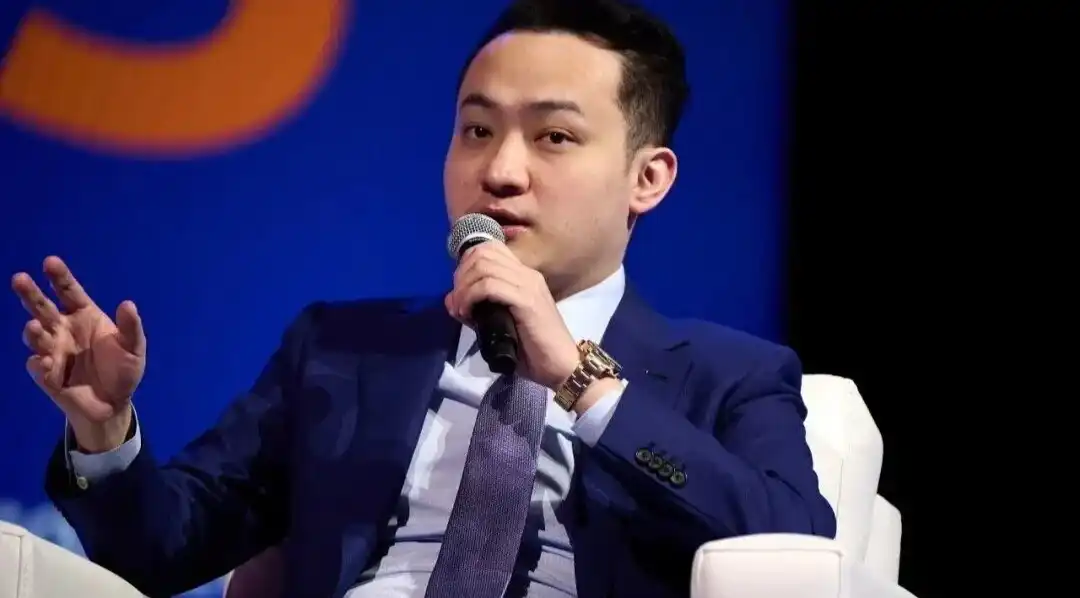
The worldwide order by a British Virgin Islands court applies to Su Zhu, Kyle Davies and Davies' wife, Kelly Chen.

More than $1 billion in assets belonging to the founders of the bankrupt crypto hedge fund Three Arrows Capital (3AC) have been frozen by a British Virgin Islands court, according to the firm's liquidators, Teneo Restructuring.

The worldwide court order, issued Monday, applies to founders Su Zhu and Kyle Davies as well as Davies' wife, Kelly Chen, Teneo said in an email. Zhu was jailed for four months in Singapore in September for failing to help wind up 3AC. He is expected to be released this month for good behavior. 3AC filed for Chapter 15 bankruptcy in July last year after the collapse of stablecoin issuer Terra caused irrecoverable losses.

Teneo has been seeking $1.3 billion and included Chen in the order to use all available avenues to maximize returns to creditors, whose claims total more than $3 billion.

Advertisement
Advertisement

"The order is specifically designed to prevent the Founders and Ms. Kelly Chen from disposing of or otherwise dealing with assets in any way that might frustrate eventual enforcement by the liquidators," Teneo said in a statement.

On Wednesday, a Singapore court applied a domestic freezing order for assets located there.
Edited by Sheldon Reback.


Related Reads

Why Is No One Buying DeFi Insurance?

"Why DeFi Insurance Remains Unpurchased" explores the paradox of decentralized finance insurance. While DeFi insurance promises automatic, unbiased payouts via smart contracts—eliminating traditional insurers' denial practices—it struggles to attract users. The core issue is economic viability. Premiums are prohibitively high relative to the yields from DeFi protocols. For example, insuring a deposit on Aave or Maple Finance can consume most or even all of the annual yield, leaving returns comparable to or worse than traditional savings. Only the safest protocols, like MakerDAO, offer affordable premiums. Furthermore, the DeFi insurance model is structurally fragile. Unlike traditional insurance where risks are uncorrelated, DeFi risks are highly interconnected (e.g., oracle failures, bridge hacks). A single major exploit can simultaneously threaten multiple protocols, potentially bankrupting the entire insurance pool, which holds only millions against billions in total value locked. The governance model also creates a conflict of interest. In platforms like Nexus Mutual, token holders who vote on claims risk their own capital if payouts are approved, incentivizing denials. Consequently, the market is tiny and shrinking. Nexus Mutual dominates with $81.56 million in assets, but the industry lacks the capacity to cover a catastrophic event like the $292M Kelp DAO hack. Other providers have dwindled or shut down. The article concludes that DeFi insurance faces a "tragedy of the commons": its stability requires widespread adoption, but individual users have no incentive to pay for it, as premiums destroy their yields. Current solutions involve preventative measures like bug bounties and seeking external capital from traditional reinsurance, acknowledging that on-chain capital alone is insufficient to cover on-chain risks.

marsbit1h ago

Why Is No One Buying DeFi Insurance?

marsbit1h ago

Trading

Spot
活动图片