Merlin Protocol,一个专业的比特币生态资产适配协议

Odaily星球日报Published on 2023-12-21Last updated on 2023-12-21

Abstract

一文了解比特币生态基础设施 Merlin Protocol,如何有效解决比特币网络资产流动性问题和扩展性问题。

Merlin Protocol,一个专业的比特币生态资产适配协议

作者:Merlin 开发者团队

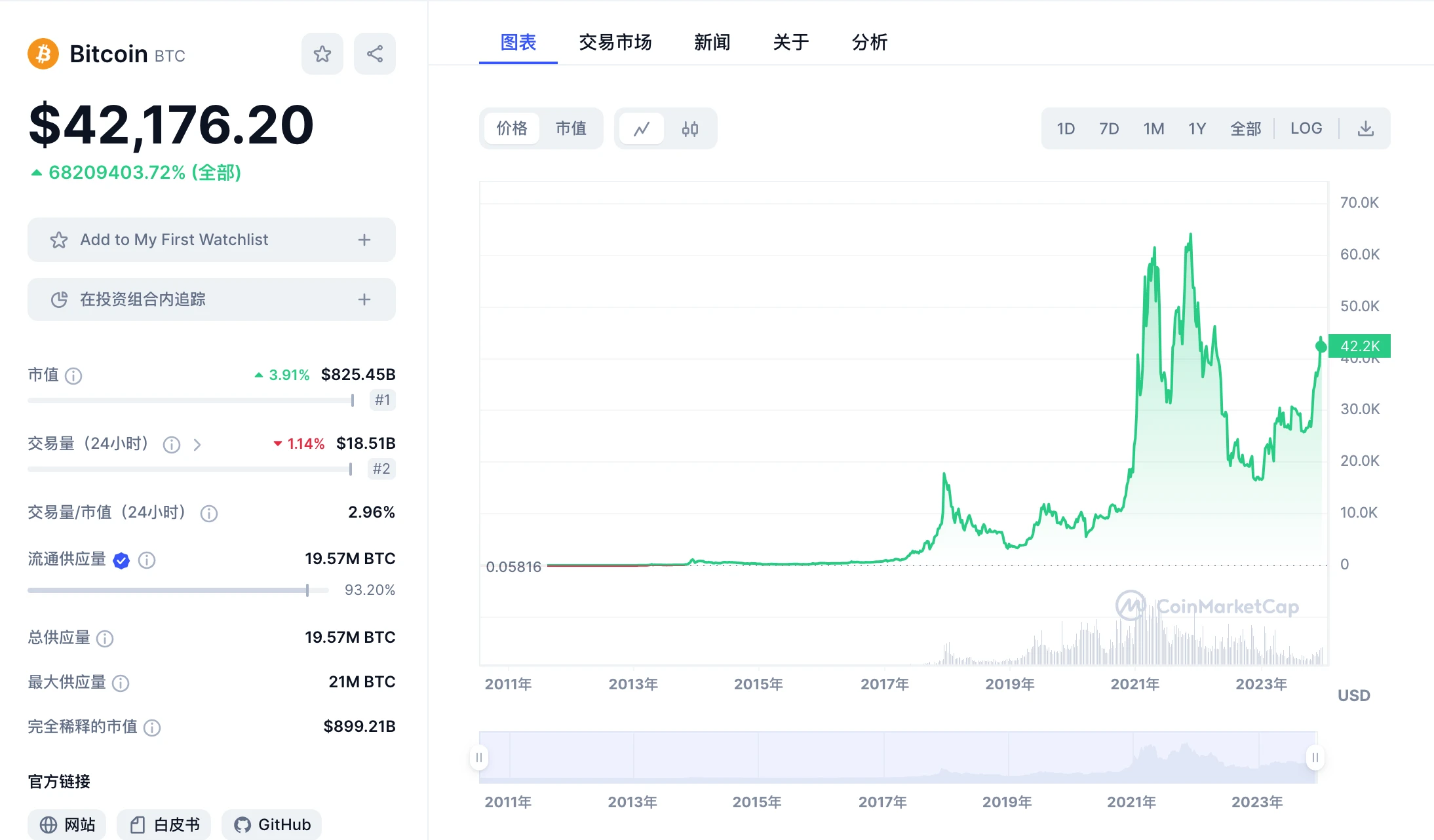
随着最近 2 年比特币生态的蓬勃发展,比特币网络上产生一大批基于 BTC 资产而衍生的加密资产类别,其中包括:铭文 NFT、BRC 20、SRC 20、比特币算力衍生品等比特币生态资产。根据的当前的市场预估,比特币生态加密资产市值总计约为 9000 亿美金,其中包括比特币网络原生资产 BTC、BRC 20、SRC 20、以及比特币算力。
Merlin Protocol,一个专业的比特币生态资产适配协议

众所周知,比特币是世界上最早的区块链项目和加密资产,但比特币网络并不直接支持智能合约的运行,只能通过脚本和其他扩展协议来实现简单基础的逻辑运算。以太坊是在比特币的基础上,增加了 EVM 虚拟机,可以完成任意复杂度的逻辑运算和执行;以太坊的诞生,标志着区块链 2.0 时代的到来。因此,在以太坊网络出现后,比特币生态的可扩展性问题就变得更加突出了,以至于在 2017 年的以太坊 ERC 20 爆发和 2020 年的 DeFi Summer 牛市中,比特币生态都一直处于旁观者的状态存在着,无法直接参与新的加密浪潮中。

比特币网络的扩展性问题一直存在,并困扰着一部分生态开发者,但大家并没有因此放弃,以至于在最近一波的 NFT 浪潮中,比特币生态出现了像 Ordinals 协议和 Unisat Wallet 这样的现象级项目,并引发了比特币生态新一波的开发者热潮,陆续出现了 BRC 20、SRC 20、Bitcoin L2 网络等新的资产协议类别和基础设施项目。但我们不能忽视一个客观事实,那就是比特币网络的扩展性问题仍旧存在,并继续以某种方式影响着比特币生态的未来发展。

当下,最直观的一点是:因为比特币网络的特性,导致比特币网络数万亿美金市值的加密资产无法充分释放其在 DeFi 领域的流动性价值,也无法满足生态开发者群体日益高涨的对于比特币网络加密资产可编程性(扩展性)的正当诉求。这是目前乃至未来严重影响比特币生态可持续繁荣发展的核心问题。为了解决该问题,Merlin 开发者团队推出了 Merlin Protocol,一个专业的比特币生态资产适配协议。
Merlin Protocol,一个专业的比特币生态资产适配协议

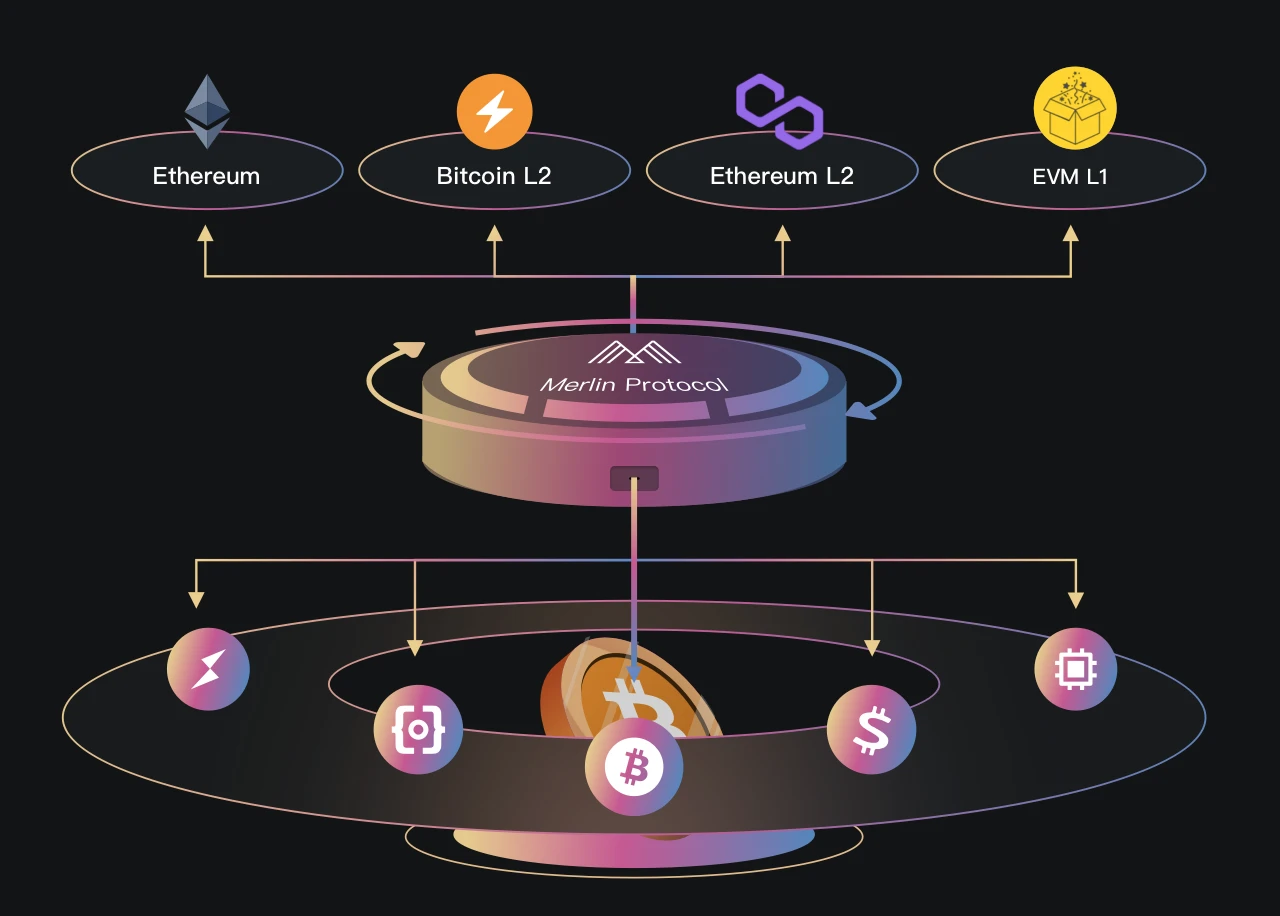
Merlin Protocol 构建了一个专用于比特币网络加密资产的通用适配协议。Merlin 团队通过采用智能合约、数据预言机、加密经济激励机制和加密算法等综合技术方案,将比特币生态的加密资产通过 Merlin Protocol 无缝适配到 EVM 生态和比特币 L2 生态,直接解决比特币网络加密资产的流动性问题和可扩展性问题,为比特币生态开发者开辟一条新的路径。

目前,Merlin Protocol 已经实现了将 BTC、BRC 20 以及比特币算力等加密资产适配发行到 EVM 网络生态,未来也会兼容比特币网络上发行其他类别的新型加密资产,以及比特币 L2 创新协议。
Merlin Protocol,一个专业的比特币生态资产适配协议

通过 Merlin Protocol,比特币生态的加密资产发行方或开发者团队可以运行一个自己项目资产专属的 Merlin Adapter,让社区用户通过该 Adapter 自由的操作相关加密资产,比如将某个 BRC 20 资产从 Bitcoin 网络适配到 Ethereum 网络,然后进行 DeFi 操作(UniswapAaveMakerDAO),或者从 Ethereum 网络将该 BRC 20 资产回归到 Bitcoin 网络,进行长期价值存储和转移操作。

Merlin Protocol 在整个过程中,扮演的是一个资产适配协议标准的创建者和维护者的角色,在保证用户资产所有权独立的前提下,向开发者提供一套具备资产适配功能的底层技术解决方案,确保用户交互过程中的资产安全和隐私保护。Merlin Protocol 为比特币生态的加密资产打开了一扇通往“自由”的双向旋转门,这极大的提高了比特币生态加密资产的流动性和可扩展性,充分释放了比特币底层网络的安全共识价值和比特币网络上发行的加密资产的市场共识价值。

Merlin Protocol 作为比特币网络加密资产适配协议的底层基础设施,为未来比特币资产发展成为世界主流核心资产打下了坚实的基础。最后,欢迎比特币生态的开发者了解并使用 Merlin Protocol,来为更多比特币网络上的加密资产提高自由度!


Related Reads

If the AI Bubble Is Already Bursting, Who Will Truly Survive?

If the AI Bubble is Bursting, Who Will Remain? The debate over an AI bubble is intensifying, with figures like Ray Dalio warning of high levels and Jensen Huang seeing immense, early-stage opportunity. Both views hold truth: a speculative bubble in capital markets likely exists, mirroring the dot-com era, but the underlying technological shift is real and transformative. History shows that while bubbles burst—wiping out overvalued companies and speculative capital—they often leave behind critical physical and digital infrastructure. The dot-com bust, for instance, eliminated many firms but left the global fiber optic networks and data centers that enabled the rise of Amazon, Netflix, and cloud computing. Today's massive AI infrastructure investments (projected at trillions by 2030) in data centers, power, cooling, and GPUs may follow a similar path, creating the foundation for future applications. A key divergence from past bubbles is the "Jevons Paradox" effect in AI. As the cost of AI inference has plummeted by over 99.7% since 2023, enterprise spending on AI has skyrocketed. Cheap "tokens" have unlocked vast, previously uneconomical use cases, moving AI from simple chatbots into core business workflows—code generation, legal document review, scientific simulation, and financial analysis. The market is now in a phase of self-correction, weeding out superficial "API-wrapper" startups, but this cleansing process strengthens the ecosystem. The long-term trajectory is clear. The value is gradually shifting from capital expenditure (CapEx) on hardware to operational expenditure (OpEx) on transformative applications. As AI becomes a utility, the winners will be firms that deeply integrate it to solve vertical industry problems in law, healthcare, finance, and manufacturing. The泡沫 will recede, but the foundational shift towards an AI-powered era across all sectors is irreversible. The underlying productive force of AI contains no bubble.

marsbit3m ago

If the AI Bubble Is Already Bursting, Who Will Truly Survive?

marsbit3m ago

If the AI Bubble Is Already Bursting, Who Will Truly Remain?

**Summary: If the AI Bubble is Bursting, What Will Remain?** The debate around an AI bubble is intensifying, with figures like Ray Dalio warning of high valuations while Jensen Huang sees immense opportunity. This echoes the dot-com bubble, which saw massive wealth destruction but ultimately left behind critical infrastructure like undersea cables and broadband, enabling future giants like Amazon and Netflix. Similarly, today's AI boom involves trillions invested in data centers, power, cooling, and GPUs, while application-layer revenue remains comparatively modest. This investment-disparity signals a bubble. However, the core technological progress is real and accelerating. AI inference costs have plummeted by over 99.7% since 2023, making intelligence increasingly cheap and accessible. This cost collapse is unlocking vast new demand. Instead of reducing spending, enterprises are tripling their AI cloud expenditure. Cheap "tokens" enable AI to move beyond simple chatbots into complex workflows—automating code writing, legal document review, financial analysis, and scientific research. This follows "Jevons's paradox": improved efficiency leads to greater total consumption. The market is now undergoing a necessary purification, weeding out "API-wrapper" startups with no real moat. The deeper evolution involves a shift from capital expenditure (CapEx) on infrastructure to operational expenditure (OpEx) on value-creation in applications. While hardware vendors currently profit most, long-term value will migrate to AI-native firms solving vertical industry problems. Ultimately, a market correction will cleanse speculative excess but will not reverse the AI+ trend. The massive physical and algorithmic infrastructure being built will endure, becoming a cheap, utility-like foundation. Just as the internet became indispensable to all industries post-2000, AI is poised to empower and redefine every sector, moving society irreversibly toward an intelligence-augmented era. The bubble may burst, but the underlying productive momentum is solid.

链捕手10m ago

If the AI Bubble Is Already Bursting, Who Will Truly Remain?

链捕手10m ago

Microsoft CEO: In the AI Era, How Do You Define a Company's Moat?

Microsoft CEO Satya Nadella argues that in the AI era, a company's true competitive edge, or "moat," is not determined by choosing the single most powerful model, but by its ability to build a continuous "learning loop." This system integrates and evolves by connecting human workflows, domain expertise, organizational judgment, and employee experience. He posits that future companies will accumulate two types of capital: Human Capital (employee knowledge, judgment, creativity) and "Token Capital" (a firm's own built and owned AI capabilities). Importantly, AI amplifies rather than devalues human capital. Human direction is essential to guide progress, as computational power alone is aimless. The core opportunity lies in creating a closed-loop system where human and token capital reinforce each other in a compound, self-improving cycle. A company must be able to preserve its unique institutional knowledge—its "company veteran" expertise—even if it switches underlying general-purpose AI models. This requires private evaluation benchmarks, reinforcement learning environments based on internal data, and queryable knowledge bases. Nadella warns against a future where economic value is concentrated by a few dominant models that commoditize entire industries' knowledge. Instead, the priority should be building a broad "frontier ecosystem" where every company, industry, and nation can own its learning loop. This allows organizations to retain control of their intellectual property, amplify employee capabilities, and ensure the economic value created by AI is captured within their own businesses and communities. True corporate sovereignty in the AI age comes from turning organizational knowledge into a compounding system that creates enduring, defensible value.

marsbit44m ago

Microsoft CEO: In the AI Era, How Do You Define a Company's Moat?

marsbit44m ago

ETFs Are Just the Ticket: The True Institutionalization of Bitcoin Is Happening Where You Can't See It

Beyond the Bitcoin ETF spotlight, a deeper institutionalization is underway, leveraging Bitcoin as a foundational financial primitive. Institutions are using Bitcoin for purposes long reserved for assets like U.S. Treasuries and gold: as collateral for loans, insurance reserves, and the backbone of rated bonds. Examples include a Barbados-based insurer capitalizing with $40M in Bitcoin reserves and Ledn's $188M securitization of Bitcoin-backed loans, which received the first-ever investment-grade rating (BBB-) from S&P for a digital asset-backed security. This structure was stress-tested during a 27% price drop in early 2026, triggering automatic liquidations that functioned as designed but revealed the systemic risk of synchronized selling across leveraged positions. Infrastructure is evolving to support this, with platforms like Anchorage Digital's Atlas network enabling secure, institutional-grade settlement and collateral management. Strategies like basis trades and corporate treasuries (exemplified by companies like MicroStrategy issuing billions in equity and debt to fund Bitcoin acquisitions) further integrate Bitcoin into financial mechanics. While ETFs solved "how to own" Bitcoin, these developments answer "what to do with it," embedding the asset into the working machinery of finance—as collateral upon which loans, derivatives, and structured products are built. The real, enduring institutional shift is happening in these largely invisible plumbing and financing systems.

marsbit51m ago

ETFs Are Just the Ticket: The True Institutionalization of Bitcoin Is Happening Where You Can't See It

marsbit51m ago

ZEC Co-Founder Responds to Orchard Vulnerability: No Signs of Theft, Orchard Pool to Be Sealed

ZEC Co-Founder Addresses Orchard Vulnerability: No Signs of Theft, Plans to Sunset Orchard Pool A security vulnerability was recently discovered in Zcash's Orchard shielded pool, raising key concerns. The primary questions are whether the flaw was exploited, if user funds are safe, whether users can verify the total ZEC supply, and if other similar vulnerabilities exist. Analysis suggests the vulnerability was likely not exploited prior to its discovery. It was found proactively by a researcher using specialized tools, not due to an active breach. The development team and mining pools acted quickly to contain the issue. Typical financially-motivated attacks would likely have left visible on-chain evidence, which has not been observed. User funds in Orchard are considered safe and should be recoverable, assuming no prior exploitation. If the flaw was never used, all legitimate funds can be withdrawn. The article outlines risks associated with moving funds to transparent addresses or other pools, but concludes that leaving assets in place is a reasonable option. Currently, users cannot independently verify that the total ZEC supply hasn't been inflated due to this bug. However, the planned Ironwood network upgrade is designed to resolve this. It will permanently close the Orchard pool to new deposits and internal transfers, allowing only withdrawals. This mechanism will cap total withdrawals at the amount of legitimately deposited funds, enabling anyone to cryptographically verify the supply post-upgrade. Multiple teams, including Shielded Labs, have conducted extensive audits focused on counterfeiting vulnerabilities, assisted by advanced AI tools. No additional flaws of this type have been found so far, increasing confidence that no other similar undisclosed vulnerabilities exist. In summary, evidence indicates the Orchard bug was probably not used, user funds are secure, and no other counterfeiting flaws are currently known. The upcoming Ironwood upgrade will restore users' ability to independently verify the total ZEC supply, closing this chapter.

Foresight News56m ago

ZEC Co-Founder Responds to Orchard Vulnerability: No Signs of Theft, Orchard Pool to Be Sealed

Foresight News56m ago

Trading

Spot
Futures
活动图片