Bells复活:致敬居家挖矿时代(的短暂一夜)

Odaily星球日报Published on 2023-12-19Last updated on 2023-12-19

Abstract

而今,普通电脑挖矿想要挖回电费都费劲。

原创 | Odaily 星球日报

编辑 | 0xAyA
Bells复活:致敬居家挖矿时代(的短暂一夜)

还有人在 2023 年的今天拿家用电脑挖矿吗?回答当然是否定的,在专业矿工和矿机四处可见的今天,用笔记本尝试挖比特币等 POW 币种更多的是一种致敬过去的行为艺术,而非经济上的考量——毕竟说不定连电费都挖不回来。

但这种“复古”行为却在最近复活了。

12 月 5 日,狗狗币诞生 10 周年的日子即将到来之际,两个路过的吃瓜群众找到了狗狗币联合创始人 Billy Markus 在 2013 年发的推特,以及他在当时创造的加密货币项目——Bells。随后他们诞生了一个大胆的想法——他们联系上了另外一位 LTC 生态的开发者,并试探性地询问是否能够在这个特殊的日子里复活这个项目。

这位开发者在很短的时间内搞定了代码,于是项目重见天日。

有意思的是,由于年代久远,当初为这个币提供服务的矿池早已在时间长河中不知去向,整条链也停止了出块,几乎没有算力在这个废弃的设施上停留——这意味着,就算是普通家用机的 CPU 算力,也可以轻松挖出币来。
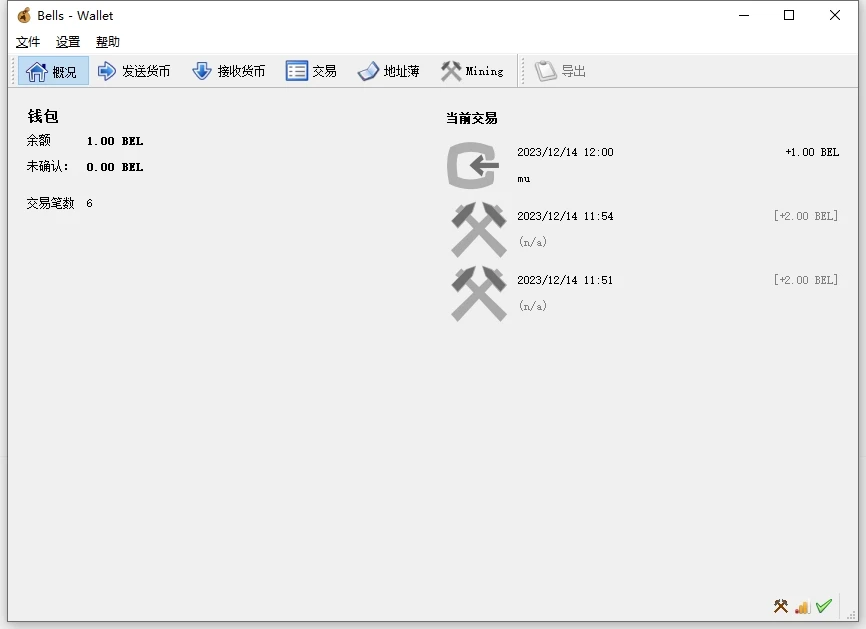
Bells复活:致敬居家挖矿时代(的短暂一夜)

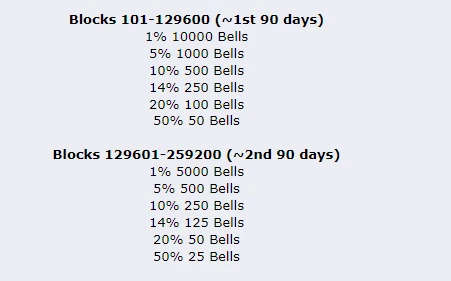
Bells 的设计机制十分有趣,每一组规定好的区块之间,矿工能够挖出来的币是随机的,而非像其他 POW 一样有着较为固定的收获。两台配置一样的电脑,同时连上钱包进行挖矿,结果可能是天差地别,运气好的话一次直接能够爆出 10000 个币,运气不好的话就只能获得基础收益了。
Bells复活:致敬居家挖矿时代(的短暂一夜)

下载钱包、同步区块、开始挖矿——一切都回到了十几年前,更多人参与到这场挖矿行动中来,几乎同时各类场外 OTC 群也搭建了起来。

Bells复活:致敬居家挖矿时代(的短暂一夜)

但算力的进阶比想象中的还要快,仅仅过了一晚时间,挖矿大军就完成了从 CPU 到 GPU 再到专业矿机的转变。而 F2Pool 更是宣布支持 Bells,这意味着这条链重新有了矿池服务——至此,这场挖矿游戏从怀旧复古运动彻底变成了与其他 POW 挖矿无异的专业竞赛。

Bells复活:致敬居家挖矿时代(的短暂一夜)

目前,Bel 代币在场外的价格接近 4 USDT,按照这个价格计算,早期冲进去参与实验的人都获得了不菲的奖励。

随着越来越多专业矿工的加入,Bells 能否保持现有的态势继续发展?又是否会掀起一波类似的 POW 热潮?

在熊市时很难。但在近日的 FOMO 情绪下,我们保留这种可能。
Related Reads

Microsoft Announces Commercial-Grade Quantum Computer to be Completed in Three Years: Will the Boots Land?

Microsoft announces plans to build a commercially viable quantum computer by 2029, a significant acceleration from the previous industry consensus of a decade. The breakthrough is fueled by their new Majorana 2 quantum chip, which boasts a record-breaking average qubit lifetime of 20 seconds—a 1,000-fold reliability improvement over its predecessor. This leap was achieved by leveraging topological qubits, a theoretically more stable technology using Majorana zero modes, and switching the core superconducting material from aluminum to lead. Crucially, Microsoft's "Discovery" agentic AI platform accelerated the R&D process. AI agents autonomously analyzed vast experimental data, optimized manufacturing parameters (like the lead alloy composition), and solved issues like "ghost noise," dramatically speeding up experimentation. While the 20-second coherence time is a landmark, challenges remain: scaling from 12 qubits to the millions needed for practical applications, managing compilation costs, and verifying quantum results. Skeptics call for peer-reviewed data, and questions persist about whether even 20 seconds is sufficient for complex algorithms like breaking RSA encryption. The race is on with other approaches (superconducting, trapped ions), but Microsoft's confidence in its topological roadmap signals a potential shortcut to a scalable quantum future.

marsbit15m ago

Microsoft Announces Commercial-Grade Quantum Computer to be Completed in Three Years: Will the Boots Land?

marsbit15m ago

Is There Really a "World Cup Curse" in the Market?

Is there really a "World Cup Curse" affecting markets? Historical data shows global equity markets often underperform during the tournament. The S&P 500 has averaged negative returns of -1.5% to -2.11% across 19 World Cups since 1950, with declines in 58% of events. China's Shanghai Composite fell in 71% of tournaments since 1994. Studies confirm reduced trading activity during matches, with volumes dropping significantly, especially when a home nation plays. A team's loss can also lead to negative sentiment and selling pressure in its domestic market the next day. However, the "curse" may be partly attributed to seasonal weakness. Many tournaments are held in June-July, a historically weaker period for stocks ("Sell in May and go away"). The 2022 Qatar World Cup, held in November-December, saw a smaller drop in trading volume compared to summer events, suggesting timing plays a role. The cryptocurrency market's performance during World Cups has been mixed and largely driven by its own major catalysts (e.g., Mt. Gox hack, FTX collapse, halving cycles) rather than the tournament. Investment opportunities have shifted over time. Traditional beneficiaries like TV manufacturers have seen fading returns as streaming platforms become the core viewing channel. Classic consumer plays like beer and sportswear face challenges from changing consumption trends. Newer digital assets, like fractionalized collectible player cards on blockchain, have seen explosive growth. While gambling is a traditional sector, prediction markets are emerging. In conclusion, while a statistical correlation exists, the World Cup's direct impact on markets is likely limited and intertwined with seasonal patterns. With lower liquidity during the event, the simplest strategy for many might be to step back from trading and enjoy the games.

marsbit22m ago

Is There Really a "World Cup Curse" in the Market?

marsbit22m ago

Why 'AI Service Subscription' Is Destined to Die Out?

"Why 'AI Service Subscription Models' Are Doomed to Disappear" The article argues that the flat-rate subscription model for AI services is fundamentally unsustainable. It points to recent industry shifts, such as Anthropic limiting access to its flagship Claude Fable 5 model for subscribers after just 14 days, and GitHub and OpenAI moving towards credit-based or usage-based billing. The core problem is that subscription models rely on a capped human consumption limit—like watching videos or listening to music—which keeps costs predictable. However, the rise of autonomous AI agents shatters this premise. Agents can consume 5 to 30 times more computing resources (tokens) than a human chatting, and they operate continuously without user presence. This removes the natural usage cap, making fixed-price plans financially unviable as heavy users incur massive costs. Attempts to patch the model with higher tiers or usage caps have failed, often leading to "adverse selection" where only the heaviest users subscribe. The industry's solution is to hollow out subscriptions, replacing "unlimited" access with prepaid credits charged per token, akin to a utility meter. While chat-based subscriptions may linger, the real value and revenue are shifting to pay-as-you-go models. The current period represents a final, heavily subsidized phase for users. The conclusion is that the soul of subscription—a fixed price for worry-free use—is dying, soon to be replaced by pure usage-based pricing where everyone pays for their own "electricity meter."

marsbit22m ago

Why 'AI Service Subscription' Is Destined to Die Out?

marsbit22m ago

Trading

Spot
Futures
活动图片