美众议员提案禁止美国使用中国区块链:“比封锁Tiktok还严重千倍的灾难”

Odaily星球日报Published on 2023-11-09Last updated on 2023-11-09

Abstract

点名阻止美政府使用Spartan、Conflux、USDT最大发行者和数字人民币。

原创 | Odaily星球日报

作者 | jk
美众议员提案禁止美国使用中国区块链:“比封锁Tiktok还严重千倍的灾难”

美国当地时间 11 月 8 日周三,由美国爱荷华州众议员 Zach Nunn 和弗吉尼亚州 Abigail Spanberger 共同提出的《创造对流氓创新者和技术合法问责(CLARITY)法案》(The Creating Legal Accountability for Rogue Innovators and Technology (CLARITY) Act,简写意为“清晰”)中,将禁止美联邦政府官员与基于中国的加密公司进行交易或是使用他们的技术,且切断政府员工使用中国区块链的权限,或者是支撑加密交易平台的网络;该法案还明确禁止美国政府官员与 iFinex 进行交易,而 iFinex 正是世界上最大稳定币 USDT 的发行者。

该法案还禁止官员与 Spartan Network、Conflux 以及 Red Date Technology Co.进行交易,后者是中国国家区块链项目及央行数字货币(CBDC,数字人民币)的架构师。

该法案明确针对了基于区块链的服务网络(Blockchain-based Service Network),提出中国或者其他外国敌对势力有可能根据相关的区块链科技“后门”访问关键的国家安全情报和美国人的私人信息。

法案还将指示美国财政部长、国务卿和国家情报总监制定一个计划,以防止中国和其他外国敌对势力开发这些技术所带来的风险。
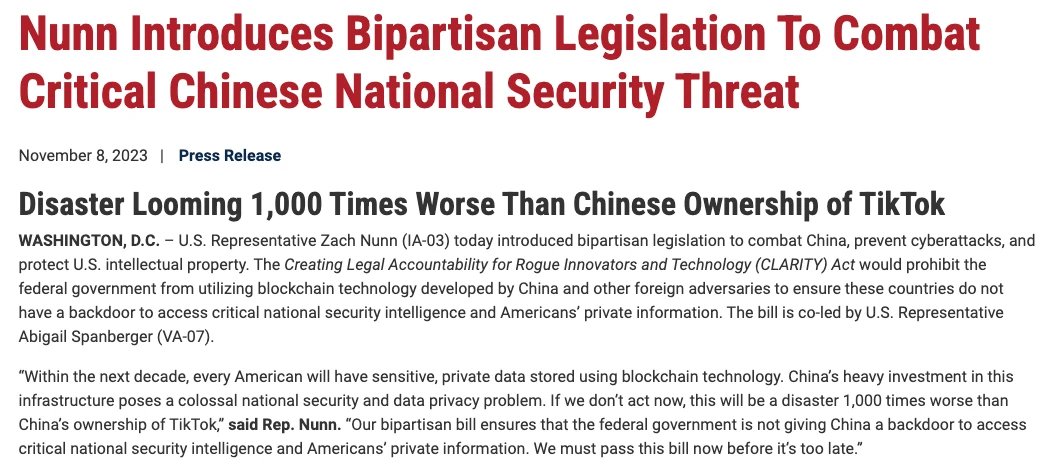
美众议员提案禁止美国使用中国区块链:“比封锁Tiktok还严重千倍的灾难”

众议员 Nunn 的官方网站,上面用醒目的黑字写着“这可能比中国拥有 Tiktok 还要糟糕 1000 倍”

在 Nunn 众议员的官方网站上写道:“虽然区块链目前最为人所知的是与比特币等加密货币的关联,但这项技术预计将在未来十年内在云存储平台上得到广泛应用,作为一种增加安全性和降低成本的方式,从而彻底改变数据隐私。然而,美国对 BSN 的使用将把存储在云平台上的信息暴露给中国的监控,包括社会安全号码、信用卡号码、密码、照片和其他敏感信息。在政府层面,漏洞更加令人担忧,关键的国家安全信息和美国人最敏感的数据可能面临风险。”

网站还特别提到,中国计划“抓住区块链科技所提供的机会”,而这对美国信息安全可能有影响。

“在未来十年内,每个美国人都将使用区块链技术存储敏感的私人数据。中国在这种基础设施上的重大投资构成了巨大的国家安全和数据隐私问题。如果我们现在不采取行动,这将是一个比中国拥有 TikTok 严重 1000 倍的灾难,”Nunn 众议员说。“我们的两党法案确保联邦政府不会给中国一个后门来访问关键的国家安全情报和美国人的私人信息。我们必须在为时已晚之前立即通过这项法案。”

作为一名前中央情报局案件官员,我了解中国对国家控制的区块链网络的投资对美国数据安全构成的重大风险。中国已经将区块链作为国家优先事项,”Spanberger 众议员说。“美国必须制定一个计划,不将美国数据置于我们对手的手中。我很自豪能与 Nunn 代表一起领导两党 CLARITY 法案,保持中国拥有的区块链和联邦政府之间的防火墙,对抗中国在全球经济中的影响力,并保持我们国家的竞争力。”
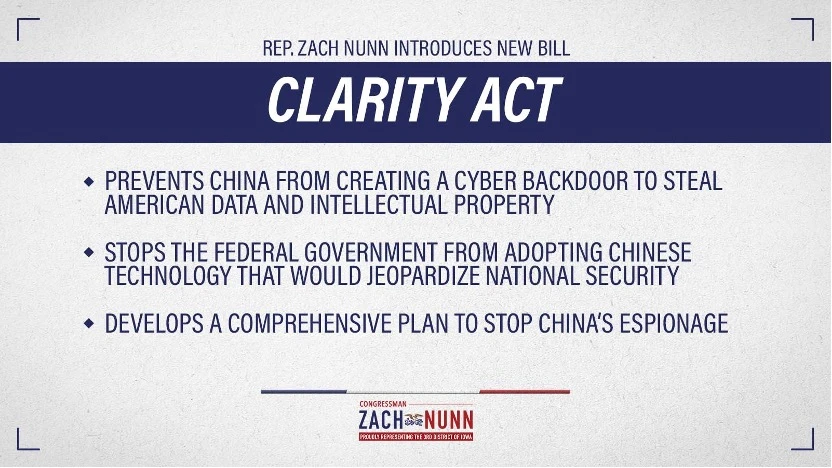
美众议员提案禁止美国使用中国区块链:“比封锁Tiktok还严重千倍的灾难”

以上是 Nunn 众议员在推特上发布的 Clarity Act 总结,包括:

  • 阻止中国开发网络安全后门从而偷窃美国数据和知识产权;

  • 阻止美国联邦政府使用可能损害美国国家安全的中国科技;

  • 起草一个综合的“阻止中国情报活动“的计划。

据 Coindesk 评论说,“法案的两位领导者都不是美国众议院领导人,也没有在委员会中担任突出的职位。其他更资深的立法者已经在推进许多加密货币法案,其中一些也涉及安全问题。一些努力已经得到了整个众议院委员会的批准,并且在流程中走得更远,因此一个新的提案不太可能插队在它们之前。”也就是说,短时间内这项提案不会成为现实,但是仍然反应了美国国会中相当一部分政治人物对于中国的地缘政治和创新科技发展的态度。


Related Reads

Why Is the World Nervous About Japan Raising Interest Rates?

In June 2026, the Bank of Japan raised its policy rate to 1%, marking its first hike to this level since 1995. While this rate remains low compared to global peers like the US and Europe, the move signals a profound shift for a nation that has been a global source of ultra-cheap funding for decades. Japan's long-standing near-zero or negative interest rates had facilitated massive "yen carry trades," where international investors borrowed low-cost yen to invest in higher-yielding assets worldwide, such as US tech stocks and emerging market bonds. This made Japan a critical, often overlooked, source of global liquidity. Japan's ultra-loose policy stemmed from structural challenges post-1990s asset bubble: aging demographics, chronic low inflation/deflation, and high public debt. Recent shifts, including sustained wage growth (exceeding 5% in recent years) and inflation consistently above the 2% target, have created a "wage-price spiral" possibility, prompting the policy normalization. The global market's concern lies not in the absolute rate but in the potential unwinding of the yen carry trade. As Japanese borrowing costs rise, the economics of these leveraged global investments change, potentially triggering deleveraging and capital outflows from risk assets. Market anxiety focuses on the end of a thirty-year consensus that Japan would perpetually provide cheap funding. Ultimately, the global impact will depend on the interplay with US monetary policy. While Japan is tightening, the significant interest rate differential with the US remains. The key future dynamic is whether simultaneous Japanese hikes and eventual US rate cuts will narrow this gap, forcing a major recalibration of global capital flows and asset pricing built on an era of abundant, cheap yen liquidity.

marsbit6h ago

Why Is the World Nervous About Japan Raising Interest Rates?

marsbit6h ago

Trading

Spot
Futures
活动图片