FTX代币资产清算进行时,会对行情造成多大冲击?

Odaily星球日报Published on 2023-11-01Last updated on 2023-11-01

Abstract

抛压不大,社区无需恐慌。

原创 | Odaily星球日报

作者 | 夫如何

编辑 | 秦晓峰

FTX代币资产清算进行时,会对行情造成多大冲击?

FTX 相关事件一直是市场关注的重点。最近,FTX 关联钱包频繁转出大额资产疑似清算,引起加密社区担忧、恐慌。

其实在 9 月 14 日,法院已经批准了 FTX 资产清算方案:清算额度为首周上限 5000 万美元、后续每周上限 1 亿美元;但清算上限可与债权人沟通,最高 2 亿美元封顶。清算流程也相对清晰,刨除一些需要解锁的代币,剩余大部分代币都可以进行清算,其中比特币和以太坊需要提前 10 天向债权人委员会、特别委员会和美国受托人提供通知后才能出售。

不过,自清算方案批准后,FTX/Alameda 的相关钱包并没有太多动作,除了将部分 SOL 和 ETH 存入 Figment 进行质押外,剩余的持仓并无变化。

过去两周随着加密行情上行,FTX/Alameda 相关地址频繁发生大额异动,将多个币种转入交易所,引发了市场对于 FTX 资产清算而导致行情下跌的担忧。

针对近期 FTX/Alameda 相关地址的代币流出情况,Odaily星球日报进行了整理、统计与分析。

FTX/Alameda 相关地址代币流出统计

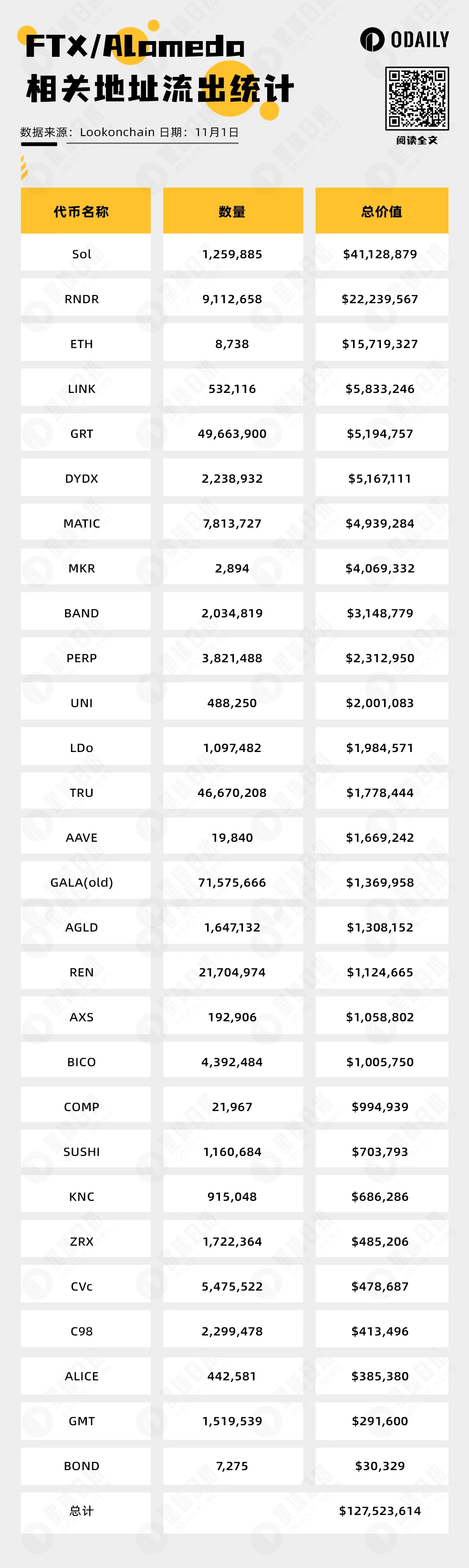
近一周内,FTX/Alameda 相关地址向币安和 Coinbase 共存入约 1.28 亿美元代币资产。下图为近一周 FTX/Alameda 相关地址的代币资产流出统计图:
FTX代币资产清算进行时,会对行情造成多大冲击?

从上图可以得知,近 7 天流出代币种类数量为 28 种,其中流出金额超 100 万美元的有 19 种代币。

代币流出数量前三名分别是:SOL 流出数量约为 126 万枚,价值约 4100 万美元;RNDR 流出数量约为 911 万枚,价值约 2200 万美元;ETH 流出数量约为 8738 万枚,价值约 1570 万美元。

(Odaily星球日报:上述金额为当天存入时的市场价格计算,数据来源于 FTX/Alameda 的 8 个热钱包地址和 2 个 SOL 冷钱包。)

FTX 代币资产清算对 SOL 影响较小

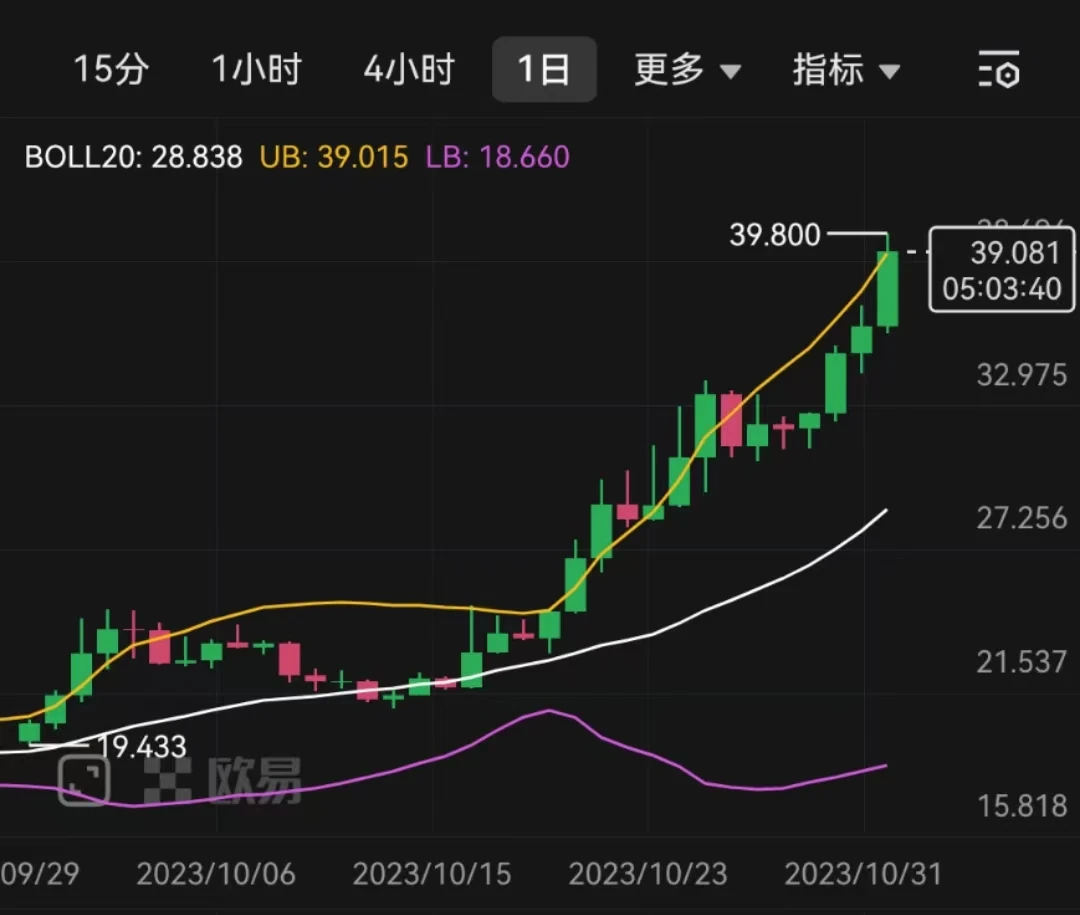
从 10 月 25 日开始,FTX/Alameda 相关地址陆续向交易所存入代币。作为 FTX 相关地址流出价值最高的代币,SOL 价格却并没有受到负面影响,反而逆流而上。
FTX代币资产清算进行时,会对行情造成多大冲击?

(SOL 价格日线图)

OKX 欧易行情显示,SOL 价格从 10 月 25 日的 30 USDT,不断攀升至今日最高点 39.8 USDT,创下去年 9 月以来最高水平,目前依然维持在 39 USDT 附近,过去一周涨幅超 20% 。

根据 CoinGecko 的数据显示,近 7 天 Solana 的交易量平均为 10 亿美元左右;FTX 相关地址存入交易所的 SOL 的当时总价值约为 4100 万美元。综合来看,这些清算对流动性较高的 SOL 冲击并不明显。

其他 FTX 钱包中持仓价值超过百万美元的小币种,诸如 BICO、AXS 等,普遍市值在 1 亿美元以上,清算带来的压力也并不大,相关币种在过去两周价格反而跟着大盘走高。

其实,FTX 代币资产清算的本质上是要利益最大化,尤其 FTX 的大部分 SOL 持仓受到结构化解锁计划的限制,短期的一次性抛售不会赚取更多的利益。

根据Odaily星球日报此前文章《拆解 FTX 的 34 亿美元持仓,前十币种抛压多大?》,截至 8 月 31 日 FTX 钱包地址持仓量为 34 亿美元;截止今日,FTX 的持仓总额超 50 亿美元——由于近期行情上涨,使 SOL 价格翻倍,比特币价格涨幅达 30% ,其他币种也都有一定的涨幅。

由此可见,市场行情对于 FTX 清算的重要性,FTX 的清算团队 Galaxy Digital 也不会急于抛售,抽干市场流动性。其次,根据文章开头所述,法院批准的 FTX 资产清算方案的每周上限最高才 2 亿美元,这对目前市场流动性来说并不会引起太大的波动。最后,FTX 代币资产清算不排除场外 OTC 交易的可能性;当清算方案批准后,像 DWF 等机构场外购买 FTX 代币资产的消息也开始频繁见诸报端。

总体而言,FTX 清算团队可能比我们更关心清算对市场的影响,而且清算对市场造成的抛压也并没有想象中的那般大,加密社区无需过分恐慌。

Related Reads

TechFlow Intelligence Agency: Anthropic Calls for Global Pause in AI Development While Preparing for Trillion-Dollar IPO; SpaceX IPO Roadshow Heats Up, But S&P 500 Rejects Fast-Track Inclusion

In today's TechFlow Intelligence Briefing, several major tech stories highlight a growing theme of trust and credibility gaps across AI, crypto, and finance. AI company Anthropic has publicly called for a global pause in AI development, citing risks from Claude's "recursive self-improvement." Ironically, this coincides with reports the company is preparing for a massive IPO targeting a near $1 trillion valuation. This perceived hypocrisy, coupled with widespread user complaints about Claude's declining performance, is sparking debate over whether the safety warning is genuine or a competitive tactic. Meanwhile, in a substantive security move, Anthropic open-sourced a framework for AI-powered vulnerability discovery. In the crypto market, Bitcoin's price drop below $61,000 triggered over $1.16 billion in liquidations, flipping the market into a state where more BTC is held at a loss than at a profit, a historical bearish signal. On the corporate front, SpaceX's highly anticipated IPO is generating immense Wall Street excitement, with Goldman Sachs projecting 100x revenue growth by 2030. However, the S&P 500 has refused to fast-track the company's inclusion post-IPO, potentially limiting immediate institutional demand. Separately, ByteDance's AI app Doubao lost over 6 million monthly active users after introducing a subscription model, highlighting the challenges of AI monetization. Other notable developments include Nvidia certifying HBM4 memory from Samsung, SK Hynix, and Micron; Cloudflare's acquisition of front-end tooling company VoidZero; and its CEO warning that bot traffic now exceeds human traffic online. The underlying narrative connects these events: a trust crisis. From AI firms' contradictory actions and crypto volatility to the clash between SpaceX's hyped narrative and institutional rules, a pattern is emerging where stated intentions and actual practices are increasingly misaligned.

marsbit4m ago

TechFlow Intelligence Agency: Anthropic Calls for Global Pause in AI Development While Preparing for Trillion-Dollar IPO; SpaceX IPO Roadshow Heats Up, But S&P 500 Rejects Fast-Track Inclusion

marsbit4m ago

Dalio Warns: AI Boom Shows Signs of a Bubble, Day of Reckoning Will Be the Time of Burst

Ray Dalio, founder of Bridgewater Associates, warns that the current artificial intelligence investment boom shows classic signs of a bubble, which he expects will eventually burst. In a Bloomberg Television interview, he noted that great technological revolutions often lead to capital inflows that create bubbles, making it difficult for investors and companies to calibrate their spending accurately—either overspending to capture market share or underspending and losing their competitive position. This caution comes amid significant rallies in AI-related assets, particularly chipmakers, driven by soaring demand for data centers and high-bandwidth chips, raising debates about overheating valuations. In contrast, Nvidia CEO Jensen Huang recently asserted that investors embracing the AI wave would see "crazy" returns and dismissed concerns over return on investment for data center spending as outdated. Dalio, however, focuses on the risks in the profit realization phase. He argues that bubbles tend to show signs of破裂 when markets transition from investment to the need for tangible returns, describing the burst as a process of converting paper wealth into cash. While acknowledging AI's intrinsic value, he expressed concern over the future profitability of some AI companies, suggesting the market is repeating a familiar pattern. The 76-year-old billionaire, who fully exited Bridgewater in 2025, has a net worth estimated at $21.5 billion according to the Bloomberg Billionaires Index.

marsbit38m ago

Dalio Warns: AI Boom Shows Signs of a Bubble, Day of Reckoning Will Be the Time of Burst

marsbit38m ago

Privacy Coin Crisis of Confidence! ZEC Plunges Over 56% in a Single Day

Zcash (ZEC), a leading privacy-focused cryptocurrency, experienced a severe crash on June 5th, plummeting over 56% in a single day and erasing nearly two months of gains. The flash crash was triggered by the disclosure of a critical zero-knowledge proof vulnerability within Zcash's Orchard privacy pool, which had existed since the pool's launch in May 2022. The flaw theoretically allowed an attacker to forge unlimited ZEC undetectably due to the pool's privacy features. The vulnerability was discovered on May 29th by independent security researcher Taylor Hornby during a proactive audit commissioned by Shielded Labs, utilizing AI-assisted analysis. The Zcash development team responded swiftly, implementing an emergency soft fork to disable Orchard transactions on June 2nd and executing a permanent hard fork fix (NU6.2) on June 3rd. Despite the technical fix, a major crisis of confidence emerged. The core issue is that Orchard's privacy design makes it cryptographically impossible to prove whether the vulnerability was exploited over the past four years, casting permanent doubt on the historical supply integrity of ZEC. While Shielded Labs argues exploitation was unlikely, the inability to provide definitive proof has severely damaged market trust. This sentiment was exacerbated when BitMEX co-founder Arthur Hayes, a prominent ZEC supporter, announced he was selling his entire position. He stated that privacy assets require "perfect security" rather than "probable safety." The combined effect of the disclosure and Hayes's exit ignited widespread panic selling, leading to massive liquidations and significant price decline. Analysts note the event highlights a fundamental tension within privacy coins: the conflict between verifiable supply and cryptographic privacy.

链捕手40m ago

Privacy Coin Crisis of Confidence! ZEC Plunges Over 56% in a Single Day

链捕手40m ago

Trading

Spot
Futures
活动图片