China’s Cryptocurrency Verdict: Legal Property Or Trouble Ahead?

BitcoinistPublished on 2023-09-04Last updated on 2023-09-04

Abstract

Cryptocurrency has long been a contentious subject in China, with the government imposing strict regulations and outright bans on various...

Cryptocurrency has long been a contentious subject in China, with the government imposing strict regulations and outright bans on various aspects of the industry. However, a recent report from China’s People’s Court challenges this historical stance, offering newfound recognition to virtual assets as legal property.
In a significant departure from conventional policy, the report titled “Identification of the Property Attributes of Virtual Currency and Disposal of Property Involved in the Case” asserts that virtual assets possess economic attributes that categorize them as property. 
This revelation cited in a report from a local publication is a remarkable departure from China’s blanket ban on foreign digital assets, asserting that individual-held virtual assets should enjoy legal protection under current policy frameworks.
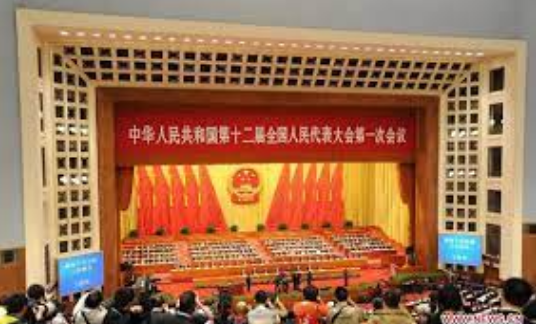

China's People's Court. Source: China Daily
This isn’t the first instance of a Chinese court contesting government crypto policies. In 2018, a Hangzhou case marked a pivotal moment when a Chinese court recognized Bitcoin as “virtual property.”
Despite the illegality of trading and mining Bitcoin at the time, the court justified its decision based on Bitcoin’s intrinsic attributes of value, scarcity, and responsibility. It remains uncertain whether this precedent influenced the recent court ruling.
China’s Complex Relationship With Cryptocurrency
China’s historical stance on cryptocurrencies has been characterized by a series of stringent measures. The government prohibited banks from engaging in Bitcoin transactions in 2013, followed by the crackdown on initial coin offerings (ICOs) in 2017. 
Subsequently, authorities targeted Bitcoin mining operations in 2019, culminating in a comprehensive ban on cryptocurrency trading and mining in 2021. These actions underscored the Chinese Communist Party’s unwavering efforts to control and restrict crypto adoption within the nation.
This recent legal shift raises intriguing questions about China’s evolving perspective on cryptocurrencies. While the court’s report may not directly challenge the existing ban on crypto trading and mining, it recognizes virtual assets as legitimate property, potentially paving the way for more nuanced regulatory discussions in the future.


Bitcoin falls back into the $25K region. Chart: TradingView.com
The Path Forward For Cryptocurrencies In China
The acknowledgment of virtual assets as legal property by a Chinese court signifies a significant milestone in the cryptocurrency landscape. It offers a glimmer of hope for individuals holding virtual assets, even amid strict government regulations.
However, caution is essential, as this recognition might not lead to an immediate shift in government policy. China’s crypto industry continues to face challenges, but this court ruling signals an increasing awareness of the economic significance of virtual assets.
As China grapples with the global evolution of digital currencies, the cryptocurrency community will closely observe how this legal recognition shapes the future regulatory environment.
While it remains uncertain whether this ruling will lead to broader cryptocurrency acceptance, it undeniably marks a noteworthy development in the ongoing debate over the legality and potential of digital assets in China.


Related Reads

Podcast Notes: Hyperliquid Has Become the Top Interest Point for Traditional Hedge Funds

Empire Podcast hosts Jason Yanowitz and Santiago Santos discuss the surging institutional interest in Hyperliquid, a decentralized perpetual exchange, marking the highest level of engagement from traditional hedge fund managers since Paul Tudor Jones endorsed Bitcoin in 2020. The primary driver is the demand for weekend trading of commodities like oil, especially during geopolitical tensions such as the Iran conflict, as Hyperliquid provides the only active price discovery venue when traditional markets are closed. Trade XYZ, a front-end on Hyperliquid, has seen significant growth, with weekend oil price predictions having a median error of only 50 basis points. Santos predicts commodity trading volume on Hyperliquid will surpass Bitcoin within the year and that its market cap could rise from $25 billion to $100 billion. Other key points include Kraken raising $200 million at a reduced valuation of $13.3 billion, and the SEC clarifying that self-custodied DeFi frontends like MetaMask are not subject to broker-dealer rules, resolving a major regulatory uncertainty. The hosts also note the strong correlation between crypto and macro markets, with the S&P 500 posting one of its best 10-day rallies since 1950. They highlight MicroStrategy's continued Bitcoin acquisitions and the potential of real-world asset (RWA) tokenization as a key trend. The discussion concludes with skepticism towards many L2 projects, predicting a wave of protocols truly going to zero as capital concentrates in proven assets like Bitcoin and Hyperliquid.

marsbit54m ago

Podcast Notes: Hyperliquid Has Become the Top Interest Point for Traditional Hedge Funds

marsbit54m ago

a16z: The Next Frontier of AI, The Triple Flywheel of Robotics, Autonomous Science, and Brain-Computer Interfaces

a16z presents a comprehensive investment thesis for the next frontier of AI: Physical AI, centered on a synergistic flywheel of robotics, autonomous science, and novel human-computer interfaces (HCIs) like brain-computers. While the current AI paradigm scales on language and code, the most disruptive future capabilities will emerge from three adjacent fields leveraging five core technical primitives: 1) learned representations of physical dynamics (via models like VLA, WAM, and native embodied models), 2) embodied action architectures (e.g., dual-system designs, diffusion-based motion generation, and RL fine-tuning like RECAP), 3) simulation and synthetic data as scaling infrastructure, 4) expanded sensory channels (touch, neural signals, silent speech, olfaction), and 5) closed-loop agent systems for long-horizon tasks. These primitives converge to power three key domains: * **Robotics:** The literal embodiment of AI, requiring all primitives for real-world physical interaction and manipulation. * **Autonomous Science:** Self-driving labs that conduct hypothesis-experiment-analysis loops, generating structured, causally-grounded data to improve physical AI models. * **Novel HCIs:** Devices (AR glasses, EMG wearables, BCIs) that expand human-AI bandwidth and act as massive data-collection networks for real-world human experience. These domains form a mutually reinforcing flywheel: Robotics enable autonomous labs, which in turn generate valuable data for robotics and materials science. New interfaces provide rich human-physical interaction data to train better robots and scientists. Together, they represent a new scaling axis for AI, moving beyond the digital realm to interact with and learn from physical reality, promising significant emergent capabilities and value.

marsbit1h ago

a16z: The Next Frontier of AI, The Triple Flywheel of Robotics, Autonomous Science, and Brain-Computer Interfaces

marsbit1h ago

Conversation with Bitwise Advisor: From K-Shaped Economy to AI Taking Jobs, How Can Bitcoin Save the Younger Generation?

Jeff Park, a macro strategist and advisor at Bitwise, argues that the traditional financial system is broken, particularly for young generations. He describes a "K-shaped economy" where asset inflation enriches the wealthy while leaving others behind, with unaffordable housing as a key symptom. Park explains that real estate is often a depreciating asset due to maintenance costs and taxes, yet it remains unattainable for many young people due to distorted demand from global capital flows. He proposes Bitcoin as a superior store of value—scarce, portable, and free from maintenance costs or excessive taxation. By diverting capital away from real estate, Bitcoin could help lower housing prices and increase accessibility. Park also discusses the decline of traditional "smart investing" (e.g., value stocks) and the rise of "ideological investing" in non-correlated assets like crypto, luxury goods, and collectibles. On AI, Park warns it could trigger extreme social inequality by eliminating jobs while boosting corporate profits. He believes this will push younger generations toward Bitcoin, not only as a hedge but also as a symbol of decentralization and data sovereignty—offering an alternative to centralized AI systems that use personal data without fair compensation. He advises a diversified portfolio with Bitcoin as a core holding to hedge against currency devaluation and systemic risk.

marsbit2h ago

Conversation with Bitwise Advisor: From K-Shaped Economy to AI Taking Jobs, How Can Bitcoin Save the Younger Generation?

marsbit2h ago

Trading

Spot
Futures
活动图片