a16z称「链上活跃地址」创新高,是真的吗?

动区动趋Published on 2023-06-28Last updated on 2023-06-28

Abstract

这对于加密货币短期内来说并不是一件好事,但我坚信加密货币的长期未来,并预计未来十年会有数十亿的钱包出现。

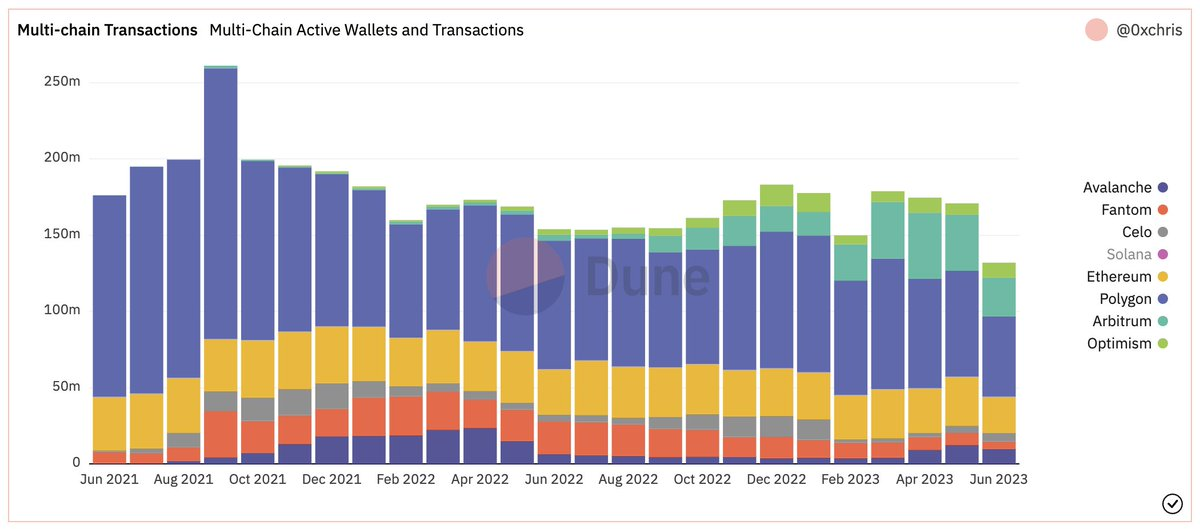
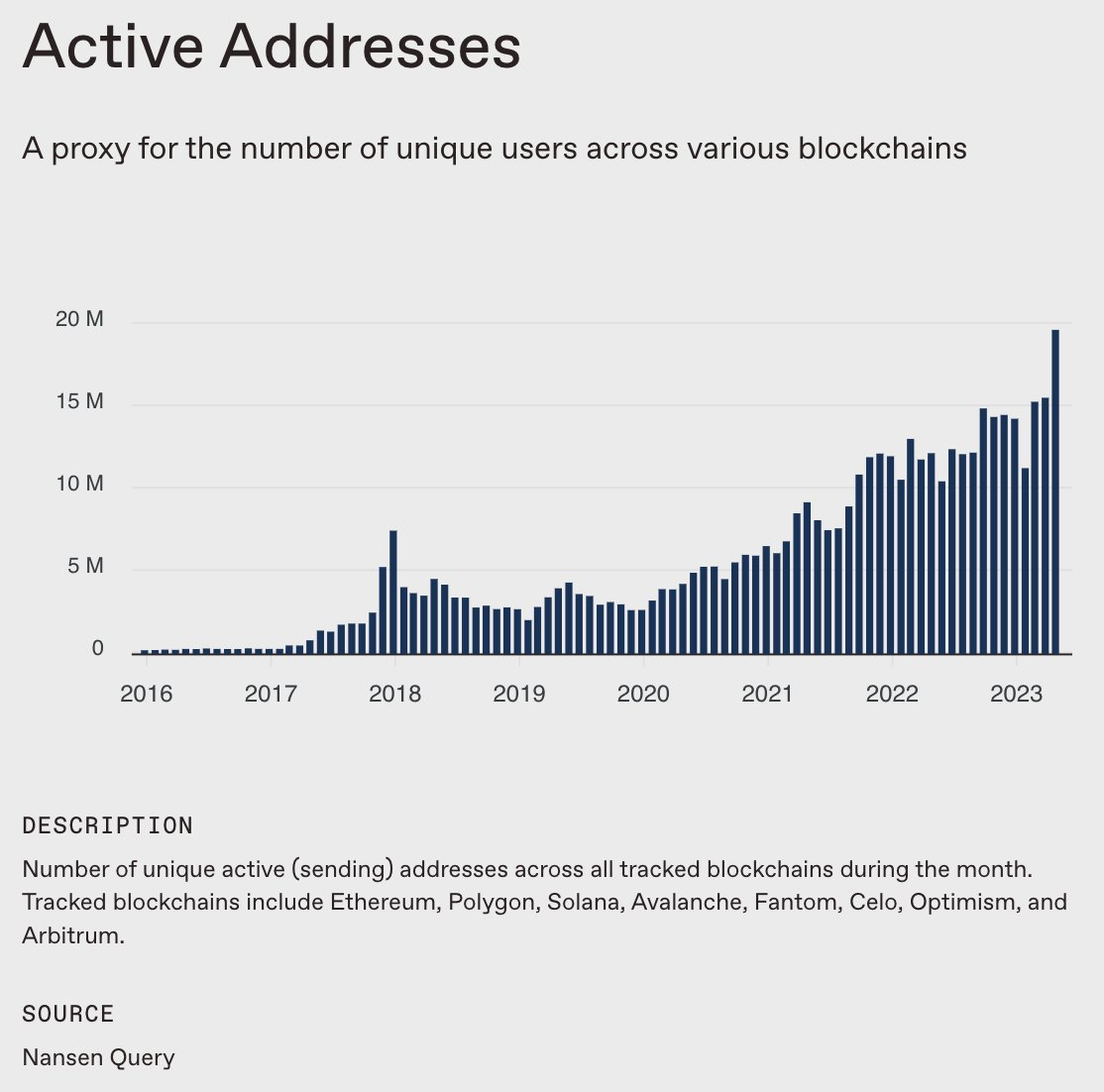
本月早些时候,a16z 发推声称链上「活跃地址」已创下历史新高。加密分析师Chris 利用Dune 上的Celo 资料,对这篇推文进行了更深层次的挖掘。

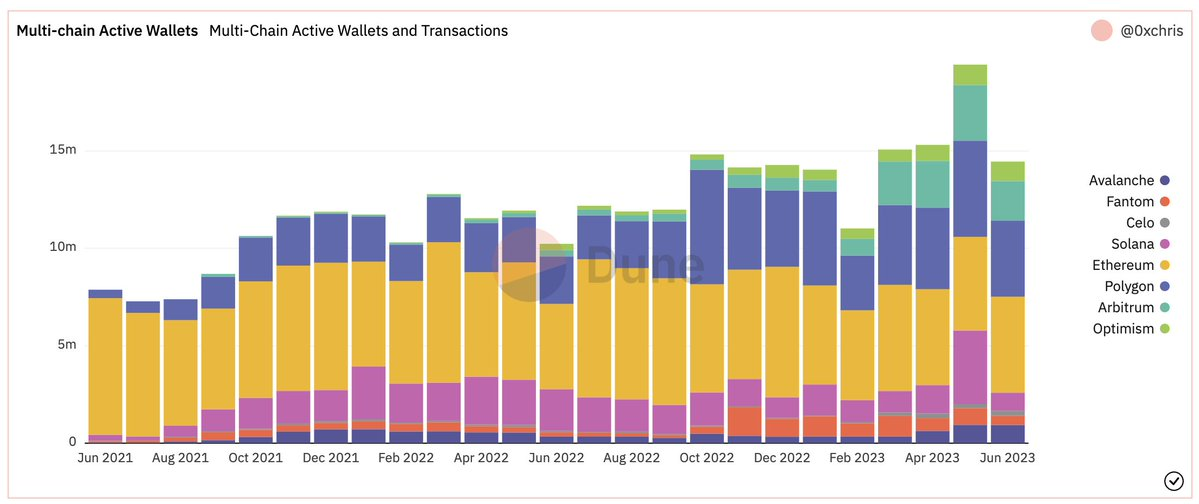
通过观察主要的以太坊虚拟机器(EVM)和Solana 的总活跃钱包数,我们可以发现下图与a16z 在过去两年中的资料相匹配。我们观察到活跃钱包的增长,并在2023 年5 月出现了强劲的增长。

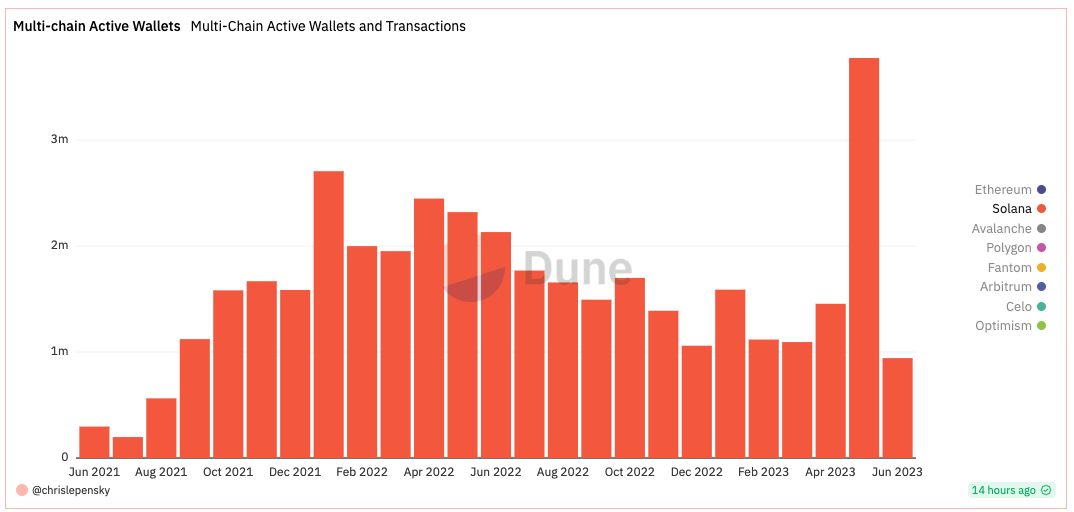
五月份出现的大幅上涨主要是由Solana 活跃钱包驱动的,这似乎是在一个下降趋势中的异常值。Solana 使用量在五月达到了顶峰,但六月份的资料目前来看大幅下降,这表明五月份的上涨可能是不可持续的。

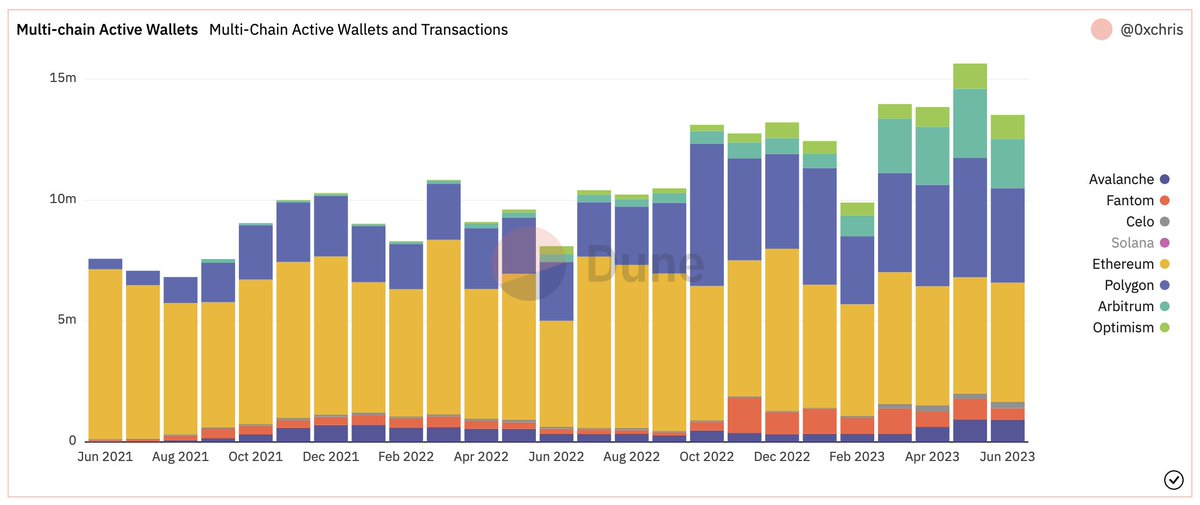
当我们将目光仅局限于EVM 链时,总活跃钱包的峰值就会减少。

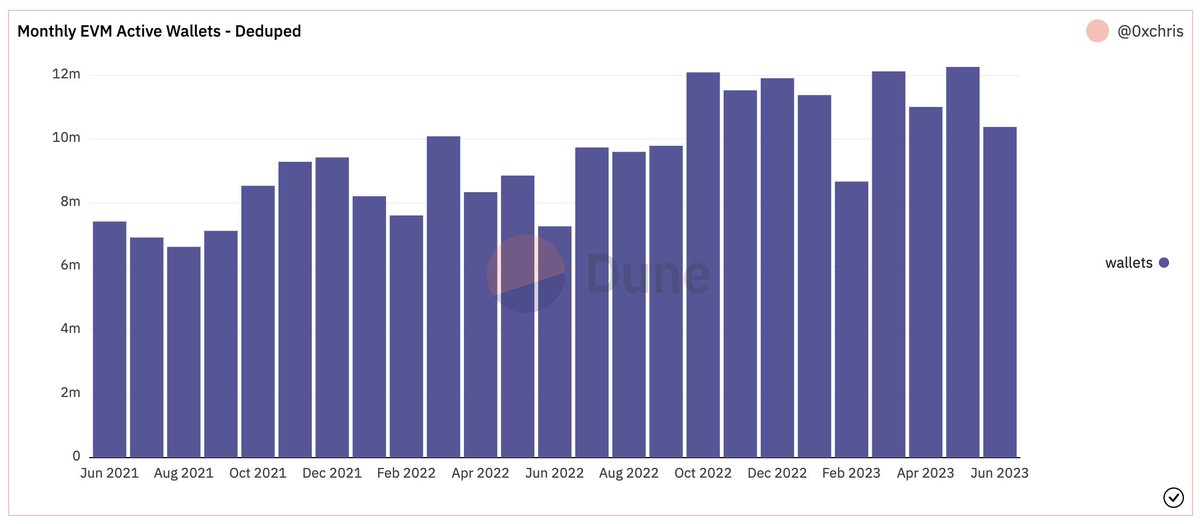
但是,在统计EVM 链上的活跃钱包时,大多数分析并没有排除在多个链上使用同一钱包的情况。如果我使用同一个钱包在各种EVM 链上进行交易,如果资料没有去重,我会被计算为2、3、4 或更多。

当我们考虑到这一点时,我们发现过去两年EVM 区块链的增长显著降低;自2022 年10 月以来的增长相对平稳,到2023 年5 月仅为1%。与第一个未重复资料删除的图表相比,这描绘了一幅截然不同的图景。

另外,在观察交易数量时,情况则完全不同。过去一年半里,交易趋势一直在下降,其中Solana 占据了大部分交易量。

如果我们将Solana 从图表中移除,只观察EVM 链的趋势,我们会发现所有主要链的总交易次数保持平稳或略有下降。

总体而言,当我们分析原始增长图的指标时,发现还有更多内容需要深入了解。从2021 年6 月到2023 年5 月,未经去重的资料显示活跃钱包增长了146%,但如果进行去重,同期增长率仅为65%。

结合最近的活跃钱包资料和交易指标,表明我们真正处于一轮熊市,使用者和使用量增长停滞不前。

虽然最初的多链图可能在特定情况下很有用,但我认为这种去重后的钱包指标是我们评估生态系统内的真实使用者数量和衡量新参与者未来增长的最佳方式。

这对于加密货币短期内来说并不是一件好事,但我坚信加密货币的长期未来,并预计未来十年会有数十亿的钱包出现。

Related Reads

Analyzing the Impact of AI on Economic Growth and Productivity

**Title: Analyzing AI's Impact on Economic Growth and Productivity** This article examines three contrasting views on AI's influence on economic growth and productivity. **The Optimistic View** posits that AI, especially through automating R&D ("recursive self-improvement"), could dramatically accelerate growth, even triggering a technological "singularity" with explosive, potentially infinite, economic expansion. **The Moderate/Mainstream View** acknowledges AI's productivity benefits but emphasizes significant real-world constraints that could limit its impact. These include: limited cost savings per task, structural ceilings on which jobs and industries are "exposed" to AI, adoption bottlenecks (e.g., compute, energy, regulatory hurdles), and the "weak link" effect where non-automatable tasks cap overall gains. Consequently, the realized AI dividend may be far lower than optimistic projections, with estimates typically ranging from 0.1% to 1.3% annual productivity growth. **The Pessimistic View** stems from two strands. The first aligns with the moderate view but applies extremely conservative assumptions about task exposure and efficiency gains, yielding minimal projected impact. The second introduces a demand-side critique: if AI primarily replaces rather than augments labor, it could depress labor's share of income, weaken consumer demand, and create a "demand trap" that ultimately stifles growth, unless offset by redistribution policies. **The authors' assessment** is nuanced: * **Short-term (1-2 years):** AI will support growth primarily through investment spending, not significant productivity gains. * **Medium-term (3-5 years):** Three potential paths emerge based on AI demand and bottleneck severity: 1. **"Optimistic Path":** High demand, few bottlenecks. Rapid productivity gains but risk of major job displacement and social conflict without redistribution. 2. **"Moderate Path" (most likely):** High demand but significant, surmountable bottlenecks. Leads to moderate productivity gains, financial market volatility (K-shaped returns), and sectoral job losses. 3. **"Pessimistic Path":** Low demand or severe bottlenecks. Minimal productivity and growth impact, triggering financial market corrections but allowing a smoother societal transition with less labor disruption. * **Long-term:** AI holds potential for a major productivity revolution and prosperity. The conclusion stresses that no path is smooth. Technologically "optimistic" outcomes could be socially detrimental, while "pessimistic" technological diffusion might be more socially stable. Policymakers must monitor developments and prepare balanced responses to manage economic, financial, and social sustainability.

marsbit18m ago
Analyzing the Impact of AI on Economic Growth and Productivity

marsbit18m ago

The New Cold War is a Tech Stock War

The New Cold War is a Tech Stock War The article argues that the contemporary geopolitical and economic rivalry between the US and China represents a "New Cold War," but one fundamentally fought through technology and financial markets, not physical barriers or conventional trade. Historically, US dominance was secured through financial systems. The Soviet Union, reliant on the rigid "Transferable Ruble," was ultimately undermined by its dependency on the US dollar for oil trade. Later, Japan's semiconductor challenge was countered not just by tariffs (e.g., Plaza Accord, 301 investigations) but by binding it to US Treasury bonds. China presents a more complex, "embedded" challenger. While it holds vast dollar reserves and US debt like Japan, its industrial base is stronger and more diversified than the Soviet Union's. Surviving the initial 2018 trade war phase, the conflict has evolved into a "tech-financial war." The core battlefield is now the stock market. US tech stocks (AI, semiconductors) are treated as sovereign assets, buoyed by bipartisan national will. China is pushing to strengthen its own financial markets to convert industrial strength into financial power and fund its tech ambitions. Companies like ChangXin (semiconductors), Moonshot AI, and DJI compete not just for market share but as financial proxies for their respective systems. The new paradigm is moving from globally efficient monopolies (Apple, Google) towards companies that achieve monopolistic profits within their respective geopolitical spheres. This competition over "pricing power" and financial valuation in segmented markets defines the current era, making the stock market the primary arena for this tech-centric struggle.

marsbit27m ago

The New Cold War is a Tech Stock War

marsbit27m ago

RWA Weekly: Ten European Financial Institutions Establish Tokenized Asset Cooperative; Ondo Launches New Execution Network Ondo Network

RWA Weekly: European Banks Form Tokenized Asset Cooperative; Ondo Launches New Execution Network Ondo Network Covering July 24-31, 2026, the RWA sector saw a steady on-chain total value locked (TVL) of $36.8 billion, with holder count hitting a record high. However, stablecoin transfer volumes fell sharply (~30%), indicating low on-chain settlement demand. Key regulatory moves include South Korea advancing stablecoin legislation and a push to scrap crypto taxes, Kenya lowering capital requirements for stablecoin issuers, and Zimbabwe approving seven projects for its crypto sandbox. In project developments, BIS-led Project Agorá successfully tested cross-border payments with tokenized funds across six currencies. Ten major European financial institutions formed the RL1 blockchain cooperative to build tokenized asset infrastructure. Other notable updates: Aviva launched a tokenized dollar liquidity fund on XRPL, POSCO International tokenized commercial invoices on Injective, and a Brazilian farmer used tokenized cattle as collateral for a loan. Additional progress includes BNY Mellon migrating its core transfer agent operations to blockchain, Securitize gaining SEC investment advisor registration, and Tether’s compliant stablecoin USA₮ launching on Celo. Ondo Finance introduced Ondo Network, a new execution layer focused on speed and privacy, moving away from its initial chain plans. An analysis highlights that despite the growing scale of on-chain RWAs (~$32B), approximately 90% remain underutilized in DeFi, pointing to a critical challenge in unlocking liquidity and fostering real-world application beyond mere issuance.

marsbit28m ago

RWA Weekly: Ten European Financial Institutions Establish Tokenized Asset Cooperative; Ondo Launches New Execution Network Ondo Network

marsbit28m ago

Trading

Spot
活动图片