Cryptocurrency Investment Advice: “When in doubt, shrink”

Tap Chi BitcoinPublished on 2023-06-13Last updated on 2023-06-13

Abstract

As the cryptocurrency market continues to evolve, it is essential that investors consider many factors before making any investment decisions. Relying solely on short-term price movements can lead to an immediate reaction, potentially missing out on the long-term potential that Bitcoin and other cryptocurrencies possess.

Over the past 24 hours, the crypto market has gone through a tumultuous period, with Bitcoin and many altcoins in the red, worrying many investors. However, a closer look at Bitcoin's On-Chain data reveals a more positive and reassuring outlook.

CryptoQuant, a well-known On-Chain analytics firm, recently reported that despite the short-term volatility of the market, Bitcoin appears to be in great shape, demonstrating resilience and growth potential. . The company has provided three key charts, which shed light on key metrics, to reinforce this point.

The first chart shows the exchange's Bitcoin reserves continuously decreasing, indicating that investors are withdrawing their funds from exchanges, potentially signaling a shift to long holding strategies. term rather than active trading. A decrease in the supply of Bitcoin on exchanges could contribute to increased scarcity and bullish pressure in the future.
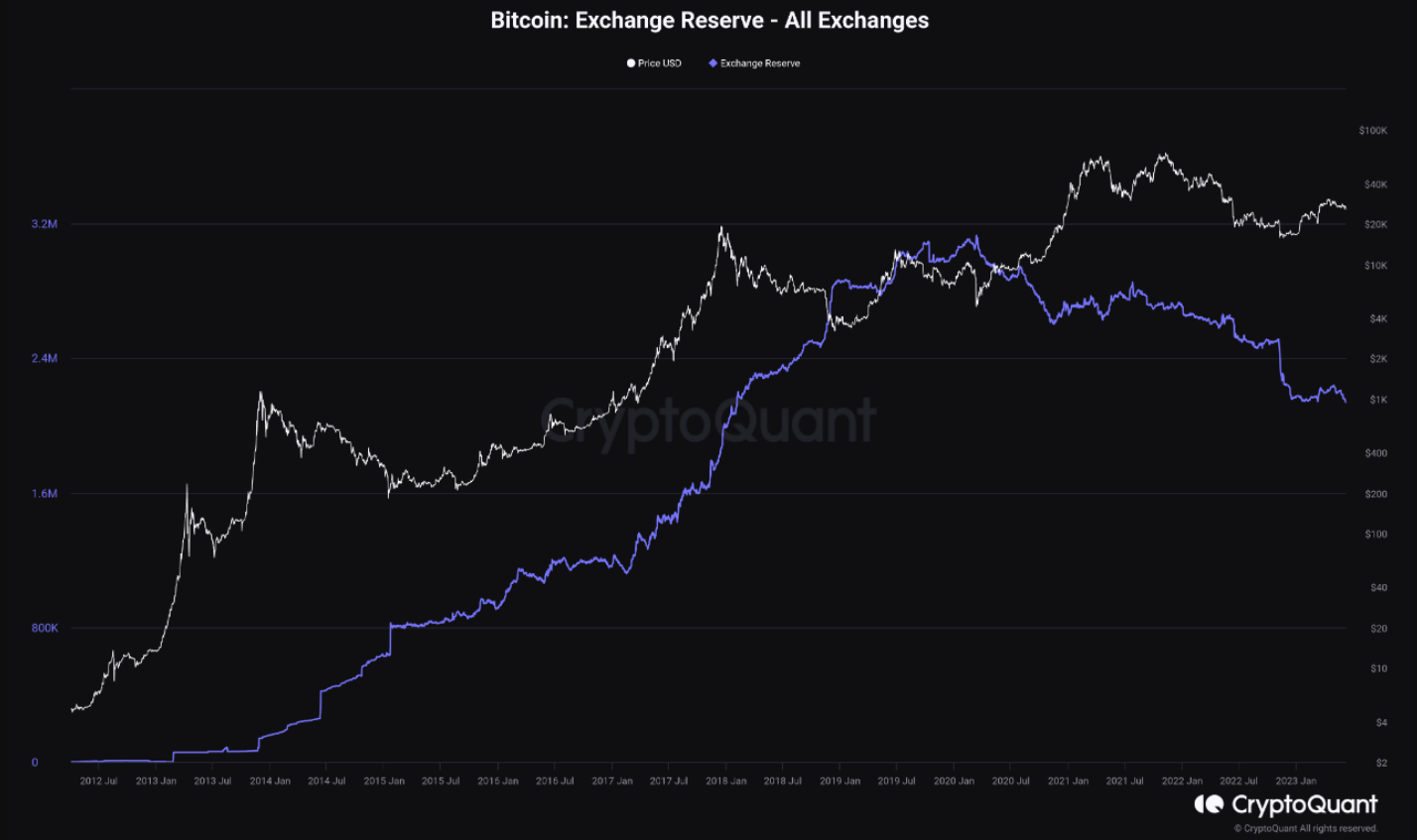
Reserve Bitcoins on exchanges | Source: CryptoQuant

The second chart depicts the percentage of Bitcoin held by long-term holders, comparable to previous market cycles. This data implies that despite recent market volatility, a significant portion of Bitcoin investors remain confident in the asset's long-term outlook. The stability shown by long-term holders reinforces the view that Bitcoin is more than a short-term speculative instrument and highlights the cryptocurrency's resilience amid market uncertainty.
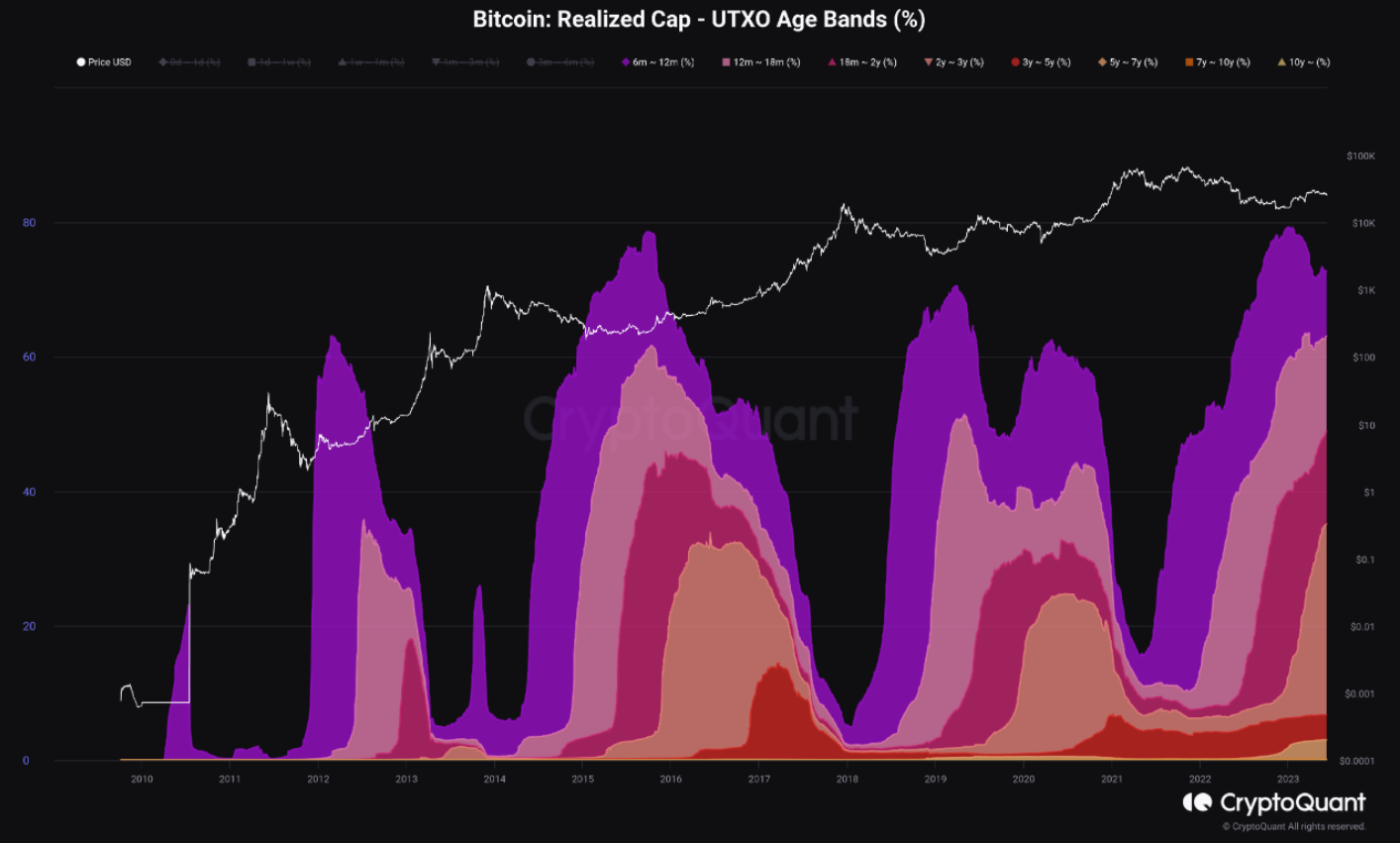
Bitcoin Holding Rate | Source: CryptoQuant

The third chart focuses on Bitcoin's hashrate, a measure of computing power used to secure the network. Currently, the hashrate is at an ATH, showing strong cybersecurity and growing interest from Miners. A higher hashrate signifies increased engagement, investment, and overall confidence in Bitcoin, further cementing its lead in the crypto space.
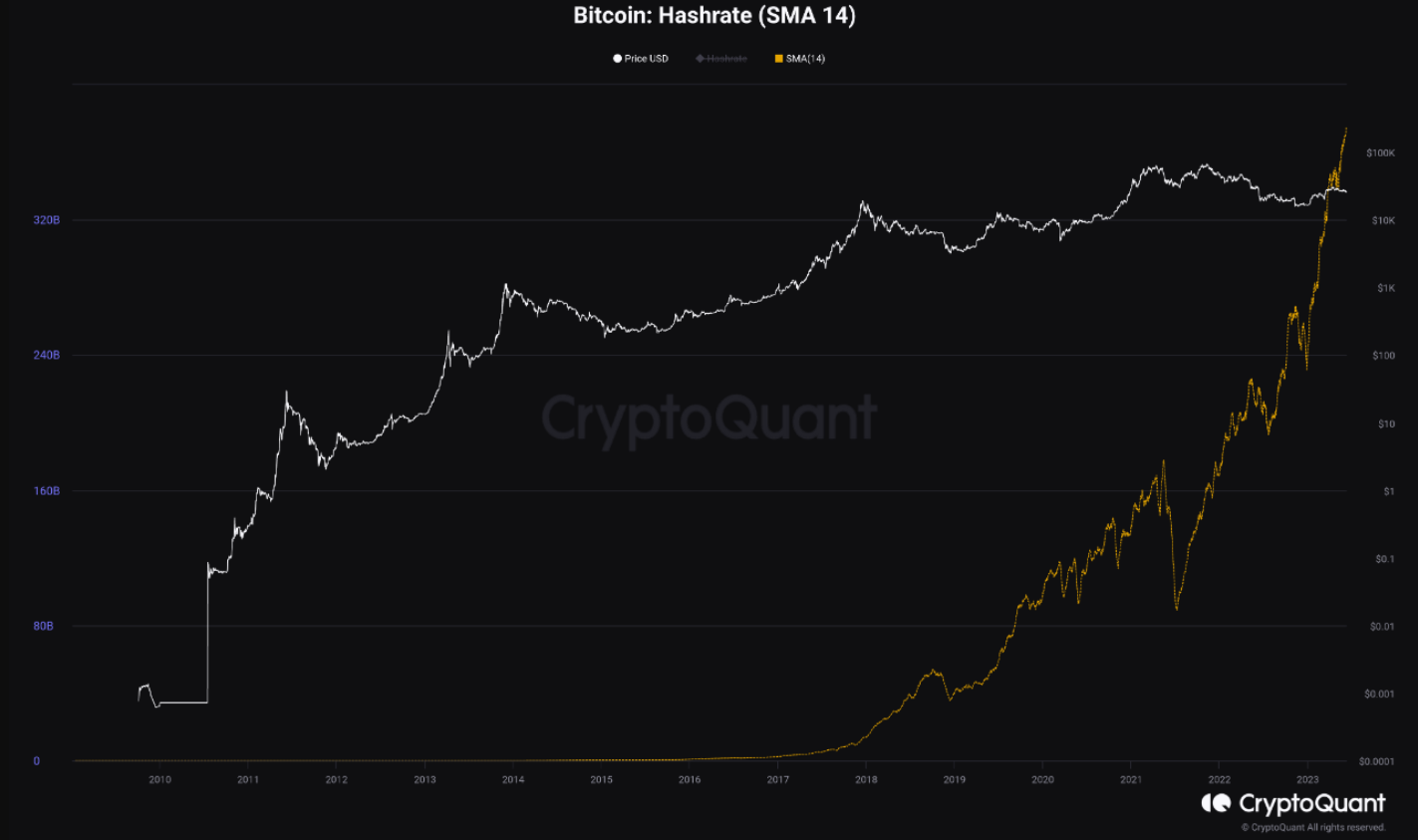
Bitcoin Hashrate | Source: CryptoQuant

While it is natural for investors to feel skeptical during a market downturn, the advice of an old stock market guru, “When in doubt, zoom out, let's zoom out,” is also relevant in the crypto space. By taking a step back and adopting a broader perspective, the situation becomes more encouraging. Looking beyond short-term price movements, On-Chain data presents a positive story about Bitcoin's long-term prospects.

It is important to note that market volatility is Capital to cryptocurrencies and prices can fluctuate unpredictably. However, On-Chain analysis provides valuable insights into Bitcoin's fundamentals, suggesting that the recent drop may not accurately reflect the cryptocurrency's true value.

As the cryptocurrency market continues to evolve, it is essential that investors consider many factors before making any investment decisions. Relying solely on short-term price movements can lead to an immediate reaction, potentially missing out on the long-term potential that Bitcoin and other cryptocurrencies possess.

Related Reads

Japanese Rates Return to 1996 Levels, Can Bitcoin Withstand the September Rate Hike?

Japanese borrowing costs have hit their highest levels since 1996, with yields on 30-year bonds reaching 4.185%. This marks a significant shift for a country long reliant on negative rates. Concurrently, Bitcoin surged 22% past $80,000, seemingly decoupled from the bond market turmoil. Historically, the massive yen carry trade has fueled global risk assets, predicated on near-zero Japanese rates. This assumption is now challenged. A potential rate hike by the Bank of Japan in September could strengthen the yen, forcing carry trade unwinds and potentially triggering a global deleveraging event, as seen in August 2024 when Bitcoin fell sharply. Conversely, if the yen weakens further, Bitcoin could attract Japanese investors as a hedge against currency depreciation and the country's massive debt burden. Institutional adoption in Japan is growing, with regulatory changes paving the way for potential crypto ETFs by 2027. The key variable is the BoJ's September policy signal. If it hints at a rapid tightening cycle to combat inflation and support the yen, risk assets like Bitcoin may face selling pressure from carry trade liquidation. However, if debt sustainability concerns limit its hawkishness, leading to a weaker yen, Bitcoin could benefit. Currently, the market is betting on a slow-motion debt crisis, not a sudden collapse. While Bitcoin shows resilience, its fate remains tied to the direction of the yen and the scale of any carry trade unwind.

marsbit3m ago

Japanese Rates Return to 1996 Levels, Can Bitcoin Withstand the September Rate Hike?

marsbit3m ago

How Can Bitcoin Resist Quantum Computers? A Comparison of Three Lattice-Based Signature Schemes

"Bitcoin's Quantum Defense: A Comparison of Three Lattice-Based Signature Schemes" by the Blockstream Research Team explores how Bitcoin can transition to quantum-resistant digital signatures, as current schemes like Schnorr and ECDSA are vulnerable to quantum computers. The report evaluates three lattice-based signature candidates—Dilithium, Falcon, and Hawk—against criteria like on-chain cost (key/signature size), implementation complexity, deployment risks, and support for Bitcoin's key derivation standard (BIP-32). The analysis recommends a minimum Security Level 3 for Bitcoin due to its long-term security needs. Dilithium (ML-DSA) is praised for its simplicity and integer-only operations, making it easier to implement securely, but it has the largest signature size (~5.3 KB for Level 3). Falcon (FN-DSA) offers the most compact signatures (e.g., ~3.1 KB for Level 5) and the fastest verification, though its signing requires complex floating-point sampling—a solvable engineering challenge. Hawk, despite its small size, was withdrawn from NIST standardization after a security vulnerability was discovered, highlighting the importance of conservative security margins. Currently, neither Dilithium nor Falcon has a fully viable, production-ready BIP-32 key derivation method. The report concludes that if a lattice-based scheme had to be chosen now, Falcon-1024 would be the preferred option for its balance of size, speed, and mature security assumptions. However, the short-term recommendation remains hash-based signatures (like SPHINCS+) for their lower risk, with a potential future hybrid or full transition to Falcon once its standard (FN-DSA) is finalized and well-supported.

marsbit5m ago

How Can Bitcoin Resist Quantum Computers? A Comparison of Three Lattice-Based Signature Schemes

marsbit5m ago

Trading

Spot
活动图片