图解比特币与全球宏观资产的相关性:市值越大,关联越高

PanewsPublished on 2023-05-30Last updated on 2023-05-30

Abstract

一般来说,随着资产市值的增加,其与全球宏观资产相关性的方差也会增加。比特币的相关性方差值在2023 年比2020 年更高,而其市值也增了三倍。

我周末花费了一些时间研究比特币与其他全球宏观资产的相关性,以下是得出的部分结论:

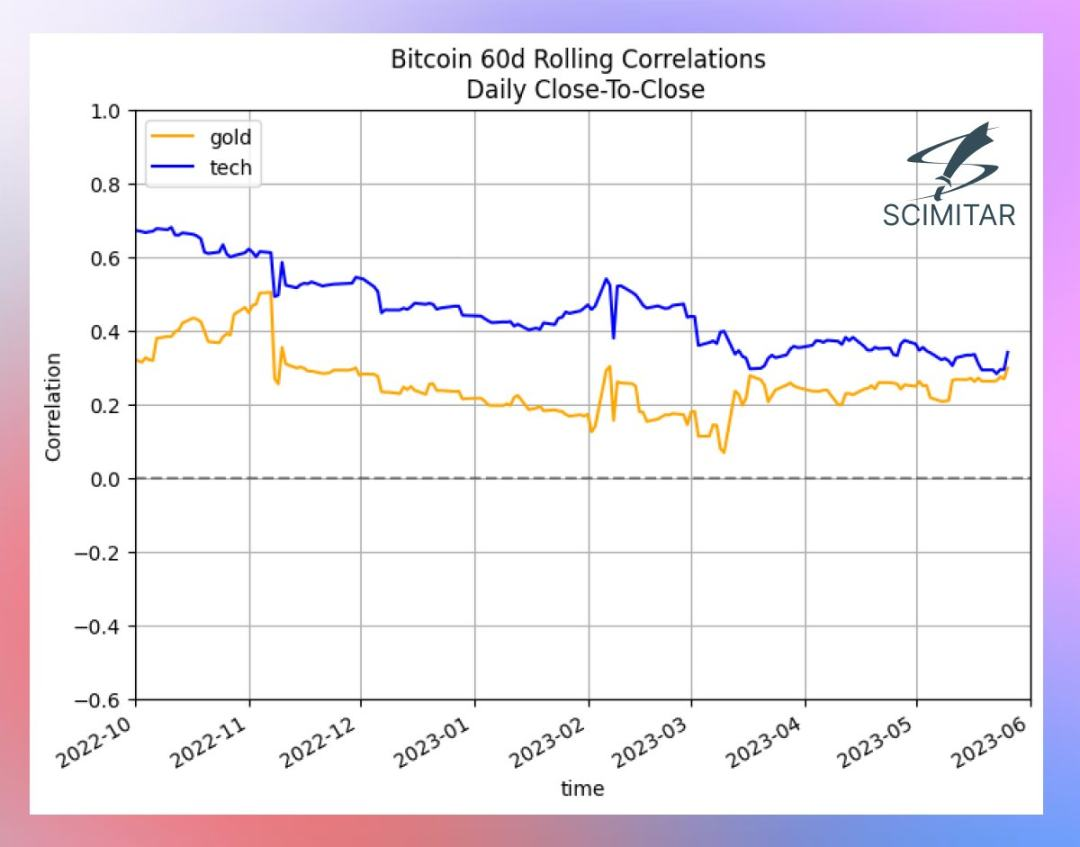
比特币与科技行业的相关性在过去几个月稳步下降;比特币与黄金的相关性在过去几个月保持相对稳定。

3 月中旬以来,比特币与科技行业、黄金相关性之间的差距在逐步减小。这种现象可能是比特币作为避险资产推动的。话虽如此,比特币现在与科技行业的相关性仍然略高。

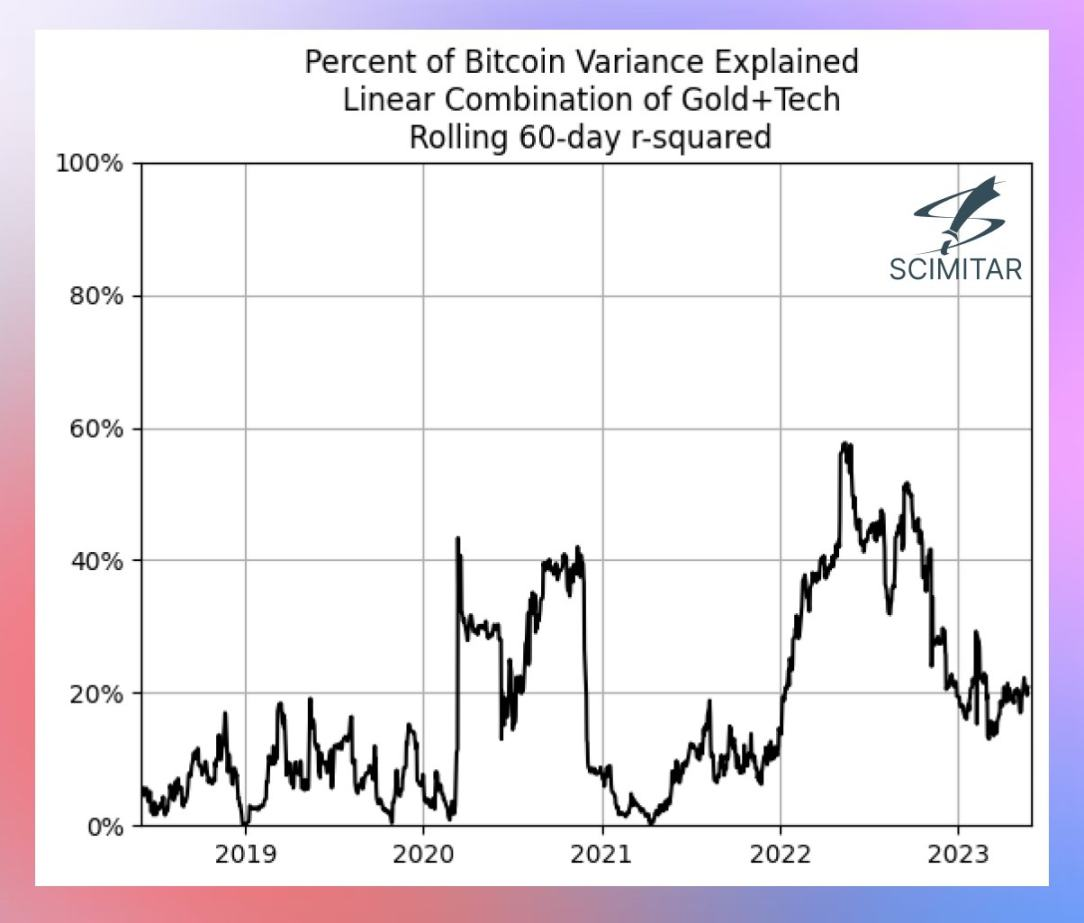
我计算了比特币与黄金和科技行业的60 日滚动回归。 r 值反映了比特币与黄金和科技行业相关性的方差。

当全球宏观资产的方差百分比很小时,说明比特币的走势更「特殊」,因为它的相关性很低。

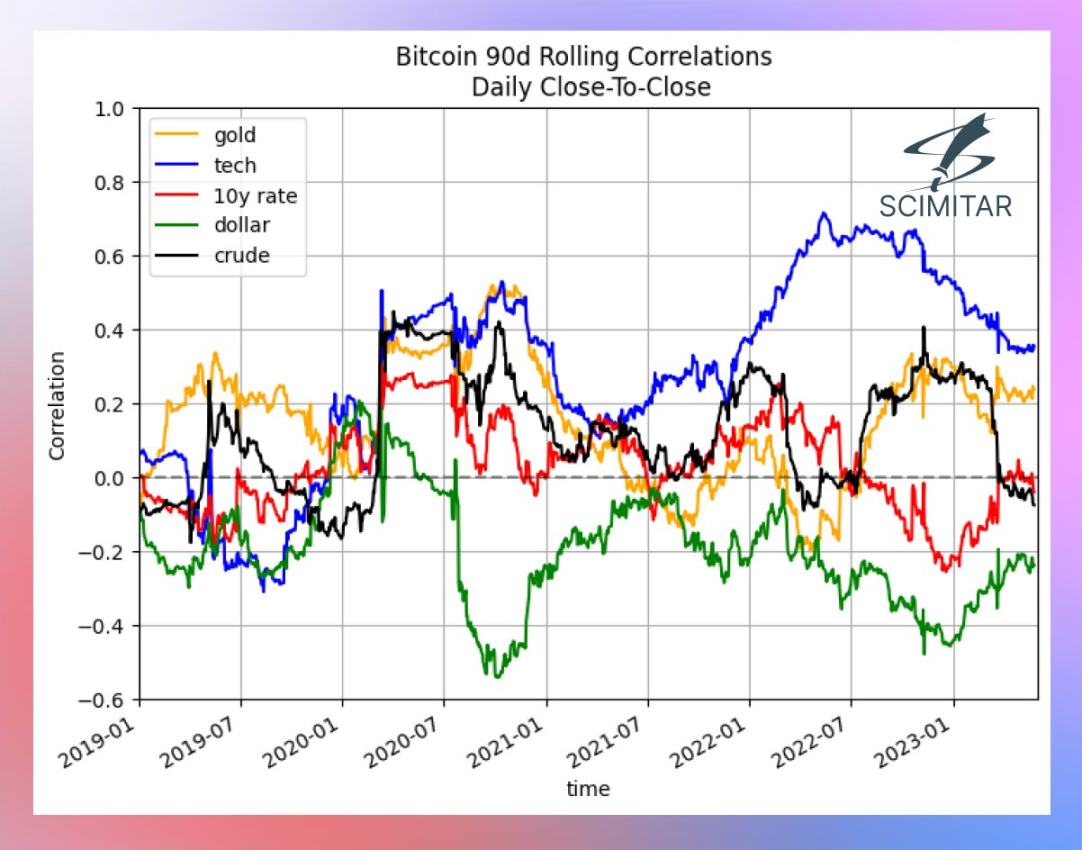
从上图可以看出,近五年来比特币与宏观资产的相关性:

2018-2019 年:比特币交易表现特殊,因为它是一种规模较小的资产。

2020 年:比特币表现出与科技、黄金和原油的相关性

2021 年:比特币与全球宏观资产相关性较弱

2022 年:比特币与科技行业相关性强

2023 年:待定

一般来说,随着资产市值的增加,其与全球宏观资产相关性的方差也会增加。比特币的相关性方差值在2023 年比2020 年更高,而其市值也增了三倍。

Related Reads

Microsoft is Afraid of Being Marginalized by AI Giants

Microsoft, once the defining force of the PC era, now faces a familiar challenge in the AI age: the risk of being relegated to a profitable but invisible infrastructure provider. This anxiety was laid bare at Build 2026, where CEO Satya Nadella unveiled a major strategic pivot. The catalyst was a quiet April agreement that dissolved Microsoft's exclusive licensing and cloud-hosting deal with OpenAI, its once-vital partner. This erased Microsoft's key AI moat. With OpenAI and Anthropic defining AI applications and gaining enterprise traction—even within Microsoft's own ranks—Nadella had to answer: without exclusivity, what is Microsoft's role? The answer was a suite of seven in-house AI models, a developer-focused AI workstation (Surface RTX Spark Dev Box), and, most crucially, the Agent 365 platform for enterprise AI governance. The models, notably targeting Anthropic's strengths in coding and enterprise, signal a defensive move. However, the broader strategy is to make the models themselves less decisive. Financially, Microsoft's AI revenue is strong, driven largely by Azure running others' models. Yet its user-facing products like Copilot show weak penetration and engagement. Microsoft earns infrastructure money but lacks direct user mindshare. Nadella's core fear is being "hollowed out." As OpenAI and Anthropic prepare for IPOs and gain financial independence, they may build their own infrastructure, threatening Azure's lucrative AI revenue stream. Microsoft's window is to entrench itself deeper: not as the model creator, but as the indispensable platform for securely deploying, managing, and governing all AI models within the enterprise through Agent 365. Build 2026 revealed Microsoft's bet: in the AI era, the ultimate power lies not in any single model, but in the enterprise "operating system" that controls them. Nadella is determined to ensure Microsoft is the driver of this new era, not just a passenger.

marsbit1m ago

Microsoft is Afraid of Being Marginalized by AI Giants

marsbit1m ago

CPU, Quietly Returning to the Center of the AI Computing Power Stage

Over the past three years, AI computing power narratives have been dominated by GPUs. However, starting in 2026, this story began to shift. While training large models remains GPU-intensive, the rapid growth of inference and AI agent workloads, which require high levels of task orchestration, concurrency, and data flow management, has highlighted a renewed critical role for CPUs. These are tasks GPUs are not designed to handle. Intel's recent launch of the Xeon 6+ processor, built on its Intel 18A process and featuring up to 288 efficiency cores (E-cores), exemplifies this strategic pivot. It is positioned not as a mere companion to GPUs but as the essential "control plane" for AI infrastructure, optimized for high-density, energy-efficient, and high-throughput workloads characteristic of AI agents and inference. This "CPU resurgence" is not about CPUs outperforming GPUs in raw computation. It reflects a systemic bottleneck: as AI scales from training single models to deploying countless intelligent agents, the demand for coordination and data handling surges. Major cloud providers are also developing their own high-density ARM-based server CPUs for similar workloads. However, Intel's success with this strategy faces significant challenges. Competition includes NVIDIA's integrated CPU-GPU solutions, the expanding adoption of cloud vendors' in-house ARM CPUs, and the crucial market test of Intel's 18A manufacturing process against rivals like TSMC's N2. In conclusion, CPUs are indeed reclaiming a central, though redefined, role in AI compute—managing the complex orchestration that enables massive-scale AI deployment. While the trend is clear, which company will ultimately lead this CPU resurgence remains an open question to be decided in the data centers of 2027 and beyond.

marsbit22m ago
CPU, Quietly Returning to the Center of the AI Computing Power Stage

marsbit22m ago

Trading

Spot
Futures
活动图片