可口可乐发布“像素味”可乐,诞生于元宇宙,它到底是个什么味?

FBIF食品饮料创新Published on 2022-04-07Last updated on 2022-04-07

Abstract

4月5日,可口可乐宣布推出「Byte字节限定系列」,并公布了该系列的首款产品——像素味(the flavour of pixels)无糖可乐。

4月5日,可口可乐宣布推出「Byte字节限定系列」,并公布了该系列的首款产品——像素味(the flavour of pixels)无糖可乐。
可口可乐在其官网中说,像素味是“第一款诞生于元宇宙的可口可乐口味”,受到网络游戏世界以及元宇宙的启发,这款新饮料旨在吸引年轻一代熟悉网络的消费者。
图片来源:可口可乐可口可乐新品「像素味无糖可乐」
FBIF了解到,这款新品将于5月23日在中国地区上线,此外,Byte限定系列的其他版本也将在今年陆续发布。
不久前的2月,可口可乐曾推出首款以太空为灵感的“太空味”限定可乐。这次的像素味也再次引发了猜测——像素味是什么味?可口可乐怎么迷上了这些新奇口味?可口可乐又为何频繁与元宇宙联动,大开脑洞?
“像素味”可乐,是什么味?
FBIF了解到,这款像素味可口可乐于已于4月4日,在拉丁美洲部分国家的零售店限定上架,之后还将于5月2日在美国地区发售,5月23日在中国地区发售。
官方报道称,像素味可口可乐售价约为15美元,以两罐装形式限定发售,“数量十分有限”,售完即止。
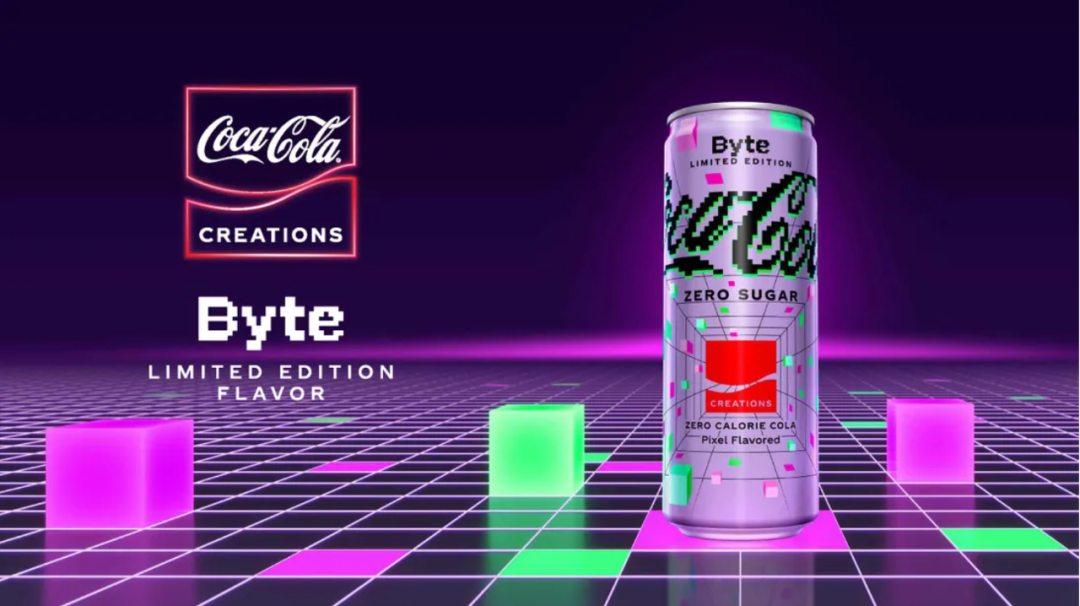
在包装上,这款可乐罐身整体呈现为紫色,标有可口可乐旗下全球创意平台“乐创无界”(Coca-ColaCreations)的红色logo。绿色、紫色的像素方块以空间渐进感分布,Coca-Cola字样被像素化,颇具电子游戏的异次元风格。
目前我们尚不清楚这种饮料的味道如何,但可口可乐表示,“它尝起来像像素”,具有“直截了当、前卫的味道”和“清爽体验”。
在可口可乐的官方推文下,有网友大胆猜测,认为喝起来会像葡萄、冰块,甚至像电池。

图片来源:Twitter用户有网友猜测,像素味尝起来会像“电池”
网络上也已经有幸运消费者抢先买到了这款产品,评价说喝起来“还挺像软糖”。
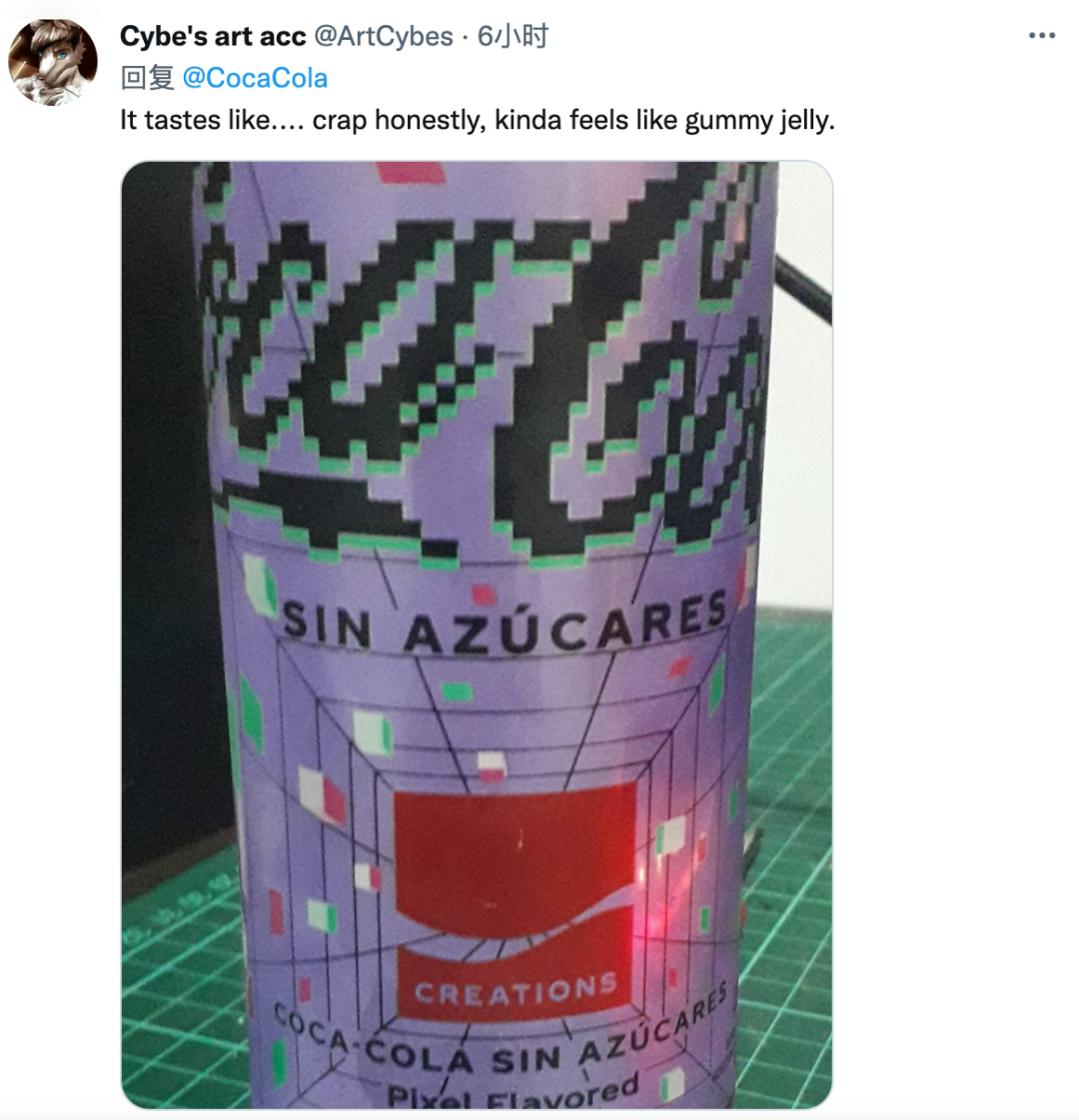
图片来源:Twitter用户网友称新品口感像软糖
可口可乐表示,新产品受到了在线游戏堡垒之夜(Fortnite)的启发,因此品牌团队决定创造这款零糖像素口味,“在超越数字和物理领域的饮料中将像素的味道带入现实生活”。
据了解,这个由北美运营部门带领的全球跨职能可口可乐团队,集结了创意、营销、技术、研发和设计领域的领导者,该团队合作确定了合适的元素,“让像素在味觉体验中栩栩如生”。
欢迎进入可口可乐“元宇宙”
事实上,这不是可口可乐品牌第一次涉足“元宇宙”,去年,可口可乐曾经和数字可穿戴设备设计平台Tafi联合推出了NFT数字藏品,宣布进军元宇宙。
可口可乐将这款「像素味无糖可乐」描述为“诞生于元宇宙的第一个可口可乐风味”,正因如此,在这款可乐正式发售前,其“数字版”已经提前出现在了游戏的虚拟世界中。

图片来源:可口可乐「像素味无糖可乐」以数字形式出现在游戏中
配合这款新品,可口可乐和电竞组织PWR在游戏“堡垒之夜”中,创造了一套身临其境的数字体验,其核心是一个“Pixel Point”岛屿,玩家可以通过输入对应代码进入。
进入后,玩家将在这个虚拟世界中发现Byte系列产品,并通过4个多人迷你游戏与其他玩家互动,其中一个游戏甚至置景在可口可乐的经典玻璃可乐瓶里。
除了堡垒之夜Pixel Point岛屿,可口可乐还在自家创意平台“乐创无界”推出了一款AR游戏,在Byte的实体版发布后,人们可以通过扫描罐子上的二维码,进入该AR游戏。
该游戏讲述了“BYTE”的故事,即可口可乐在进入元宇宙时留下的一个8bit像素。玩家可以用手指按住箭头可以引导BYTE“跳”上螺旋楼梯,让那些孤立的像素重新加入可口可乐的标志中。
太空味、像素味……可口可乐到底还有多少脑洞?
Byte限定系列是可口可乐“乐创无界”平台落地的第二款产品。该平台迄今推出的两款产品,无一例外都在中国上市,由此也可看出可口可乐对中国市场的重视程度。
今年2月我们曾报道,可口可乐公布了旗下首个全球创意平台“乐创无界”,在当天发布会上,可口可乐还同步推出该平台首个“星河漫步”(Starlight)限定系列,包含四款以太空为灵感的“太空味”可乐。
产品从口味到包装,再到AR沉浸式演唱会数字营销,都以太空为主题,提出了“元宇宙玩法”的概念。

图片来源:可口可乐今年2月推出的Starlight星河漫步系列
颇显神秘的太空风味、前卫的元宇宙概念,让该系列产品在网络上引起不少讨论和猜测。年轻一代对有趣、新鲜事物的好奇,为这些产品给足了热度,也让可口可乐的营销声量得以扩大。
可口可乐曾表示:“创意平台意味着可口可乐团队未来将加速新品的发布”。[1]
事实证明,可口可乐的确加快了推新步伐。这次新公布的Byte限定系列,也仅间隔不到2个月。
可口可乐全球战略高级总监Oana Vlad表示,像素味可乐是“对乐创无界的第二次表达,我们希望创造一种创新口味,其灵感来自像素的趣味性,根植于游戏带来的体验”。
太空味、像素味……如今的可口可乐似乎“迷上了”抽象的新奇口味,与此同时,两个系列同步推出的AR数字化体验、游戏、线上演唱会等方式,也让产品变得多元、新潮,试图吸引更多的年轻一代。
创意平台与元宇宙概念的挂钩,也是可口可乐对其Real Magic理念的延伸,Real Magic旨在体现品牌在音乐、电竞游戏、运动等方面与文化的连接。
可口可乐还表示,将在今年晚些时候发布更多限量版饮料,并预计这款Byte系列将成为2022年第一季度产品的落脚点。但到目前为止,官方透露的信息还不足以让我们想象“像素味”到底是什么味,这款口味又与“太空味”有哪些不同?我们也期待这款新品5月在中国上市后,会收获怎样的消费评价。
参考来源:
[1]首发 | 美炸了!可口可乐重磅推出“太空味可乐”,还同步揭秘了全球创意平台,2022年2月19日,FBIF食品饮料创新


Related Reads

US Calls for Restrictions on Sports Prediction Markets

The National Football League (NFL) has urged the U.S. Commodity Futures Trading Commission (CFTC) to tighten rules for prediction markets on sports events. In a July letter, the NFL argued that current proposals fail to adequately protect the integrity of games and market participants. Key demands include banning contracts on events easily manipulated by individuals (e.g., a kicker missing a field goal), clarifying definitions to prevent gambling-like contracts, and explicitly prohibiting trading based on non-public insider information. The league also called for restricted person lists, a ban on margin trading, advertising limits, stronger user protections, and a minimum age of 21. This push coincides with an ongoing jurisdictional dispute between the CFTC and several states. The CFTC claims exclusive federal oversight, classifying event contracts as swaps, while states argue these platforms violate local gambling laws. Recent legal actions in Michigan and Minnesota highlight the conflict, with a federal court temporarily blocking Minnesota from applying a new law to CFTC-registered platforms like Kalshi and Polymarket. Meanwhile, prediction markets are experiencing significant growth. In June, driven by events like the World Cup, Kalshi's trading volume exceeded $31 billion (85% from sports contracts), while Polymarket's global platform hit a monthly record of $10.8 billion. However, platforms face legal challenges, such as lawsuits from Kentucky accusing them of operating unlicensed sports betting disguised as prediction markets.

cryptonews.ru10m ago

US Calls for Restrictions on Sports Prediction Markets

cryptonews.ru10m ago

Peskov Says Russia Is Among Top Five Leaders in AI Race. What Do Global Rankings Say?

On July 27, 2026, Kremlin spokesman Dmitry Peskov stated that Russia remains among the top five countries in the global AI development race. He acknowledged Russian models still lag behind leading U.S. counterparts but claimed they have reached a "very high level," aiming to close the gap with "superhuman efforts." He highlighted the differing approaches of Russia's GigaChat, built from scratch, and Yandex, which initially used foreign technology. However, this claim is not supported by major international AI rankings. Stanford University's Global AI Vibrancy Tool (2024-25) ranks Russia 28th out of 36 countries. The top five are the U.S., China, India, South Korea, and the UK. The Stanford AI Index Report 2026 does not mention Russia's position, focusing instead on U.S. and Chinese leadership across various metrics like investments and model performance. In benchmarks, GigaChat ranks 25th on the Russian-language LM Arena. While it passed a financial analyst exam in December 2025, its business usage costs are reportedly tens to hundreds of times higher than China's DeepSeek. In related developments, President Putin signed a law on July 26, 2026, establishing a legal framework for sovereign AI models and granting developers access to state data. Previously, Russia joined 28 other nations, including China, to establish the World AI Cooperation Organization (WAICO) in Shanghai. The article notes that rankings vary due to different criteria, such as research, investment, infrastructure, or responsible AI governance. While Russian authorities are bolstering AI through legislation and international cooperation, independent analyses suggest the country faces significant challenges, including a hardware deficit for training models, which legal frameworks alone cannot resolve.

cryptonews.ru11m ago

Peskov Says Russia Is Among Top Five Leaders in AI Race. What Do Global Rankings Say?

cryptonews.ru11m ago

From Sand to Chips: Hefei's Semiconductor Alchemy

From Sand to Chips: Hefei's Semiconductor "Alchemy" On July 27, 2026, a memory chip maker from Hefei made history by surpassing the market capitalization of Industrial and Commercial Bank of China on its Shanghai Stock Exchange debut. This marks the culmination of Hefei's two-decade industrial transformation, often summarized in three strategic leaps: "Screen, Chip, Vehicle." The journey began in 2008 with a bold investment in BOE, establishing China's first 6th-generation LCD panel line. The second leap was the "Project 506" in 2016, which gave birth to ChangXin Memory Technologies (CXMT). With initial backing of 14.4 billion RMB from Hefei's state-owned investment platform, CXMT aimed to break into the global DRAM market, then over 95% controlled by three overseas giants. CXMT achieved a breakthrough in 2019 by producing China's first 8GB DDR4 DRAM chip, employing "generational leapfrog" R&D to catch up. After years of significant losses, the company turned profitable in 2025. A dramatic surge followed in 2026, driven by AI-driven demand and full capacity utilization, propelling CXMT to become the world's fourth-largest DRAM manufacturer. CXMT's success is not isolated. It anchors a dense, localized semiconductor ecosystem in Hefei. Within its vicinity are numerous supporting companies for equipment, materials, and packaging & testing. This cluster has fueled the regional economy, with Hefei's integrated circuit industry output growing over sevenfold between 2016 and 2025. The ripple effects extend beyond high-tech, revitalizing local communities with new businesses and services catering to the influx of workers. For individuals, Hefei offers competitive tech salaries at a significantly lower cost of living compared to major coastal cities, along with improved amenities and shorter commutes. Hefei's story demonstrates two decades of focused, long-term industrial policy, transforming the city from a provincial capital into a trillion-RMB GDP "Double Ten-Thousand" city (10 million people, 1 trillion RMB GDP). It shows how persistence in strategic sectors—turning sand into chips—can redefine a city's economic destiny.

marsbit40m ago

From Sand to Chips: Hefei's Semiconductor Alchemy

marsbit40m ago

Trading

Spot
活动图片