Bitcoin HODLing Has Never Been More Popular

CoinDeskPublished on 2023-05-24Last updated on 2023-05-24

Abstract

More BTC than ever has been held for at least a year, according to Glassnode, a potentially bullish sign.

Investors are hanging onto their bitcoin (BTC) longer than ever – HODLing in industry parlance – according to data from Glassnode.

The proportion of BTC that’s been held for at least a year has climbed to a record 68%, Glassnode data shows, while 55% of bitcoin has been held for at least two years and 40% for three years.

Many analysts consider it bullish when BTC sits dormant on grounds that investors are choosing to hold on rather than sell. The prevalence of buy-and-hold in crypto contrasts with the long-term shift in U.S. stocks, a market where investors now hold assets for dramatically less time than they used to.
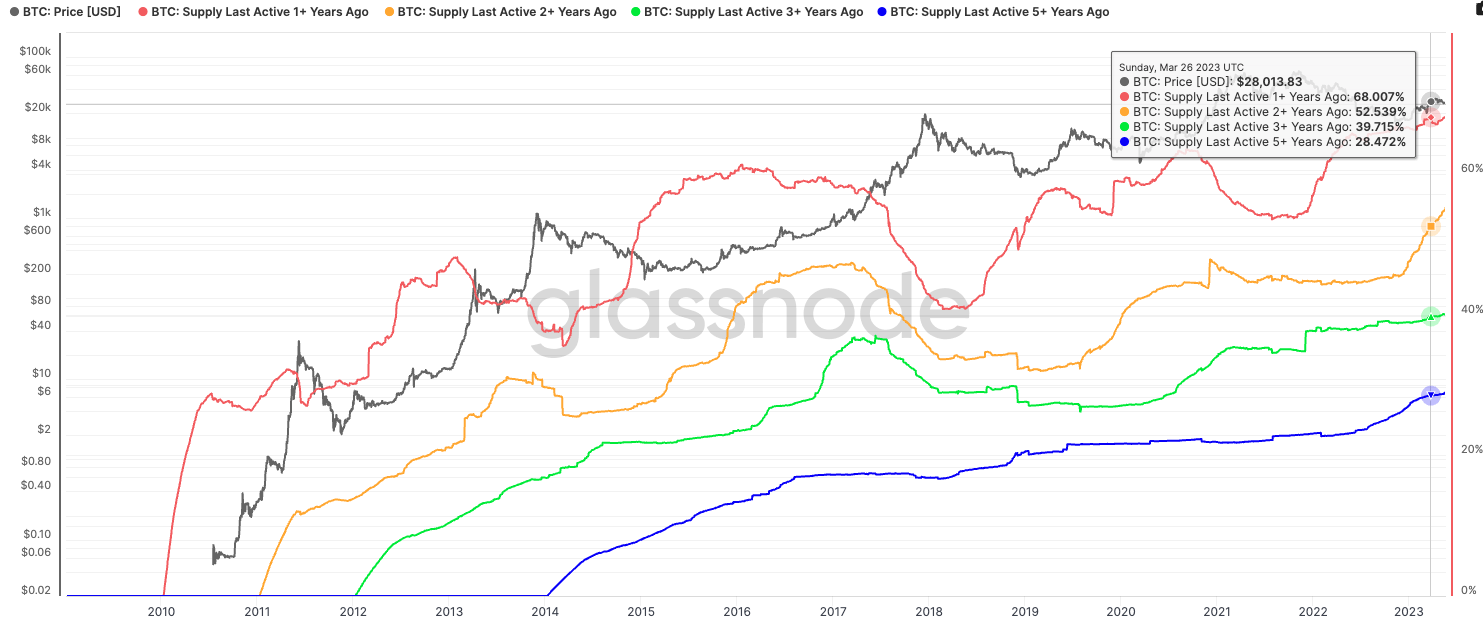
BTC: supply last active 1yr + age bands (Glassnode)

Sean Farrell, head of digital assets research at FundStrat, said that being a long-term holder has tended to get more popular over time. The exception is when markets get frothy and investors who bought dips sell their older coins to eager buyers.

“The trend is bullish insofar it means that higher prices are ahead in this cycle and any reticence to sell from current HODLers could result in a mini-supply squeeze,” said Farrell.

He added that looking at long-term holder supply metrics is not necessarily useful for short-term price signals.

Long-Term-Holder Supply, which Glassnode deems as coins held for longer than 155 days, has also seen a new all-time high — reaching 14.46 million bitcoin. “This reflects coins acquired immediately after the FTX failure maturing into long term holder status,” said the report.
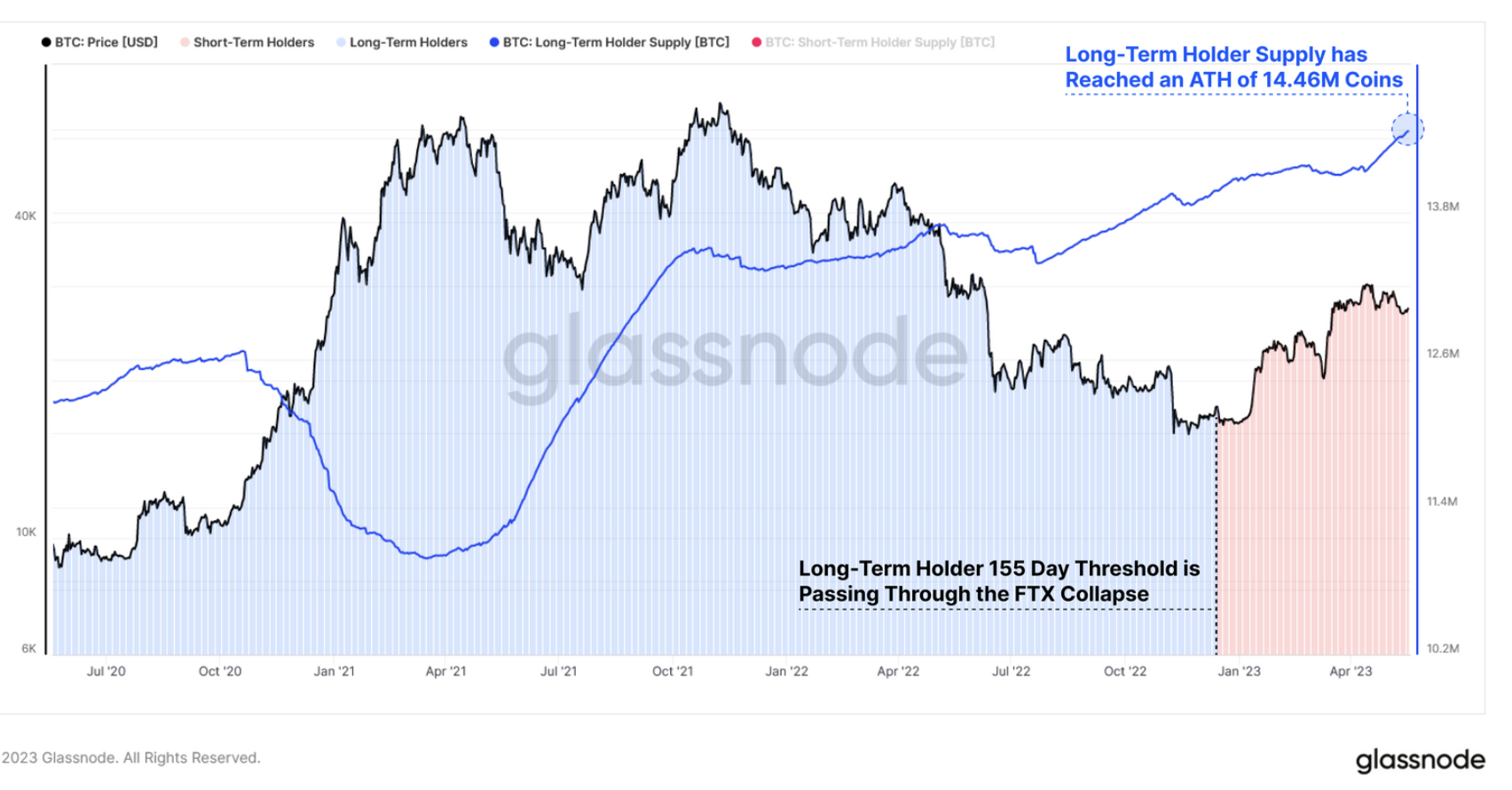
Bitcoin long term/short term holder threshold (Glassnode)

Glassnode’s Liveliness metric – which compares the relative balance between HODLing and spending behavior – also shows investors are hanging on. It has fallen to the lowest level since December 2020.


Related Reads

a16z on Hiring: How to Choose Between Crypto-Native and Traditional Talent?

Hiring in Crypto: Balancing Crypto-Native and Traditional Talent As the crypto industry grows, founders face the dilemma of whether to prioritize hiring professionals with blockchain experience or those with traditional tech backgrounds who can learn. The key is recognizing that crypto companies are still tech companies at their core and should apply proven hiring best practices. Crypto-native talent offers immediate productivity and is essential for roles involving high-stakes, specialized work like smart contract development, where errors can be catastrophic. However, traditional professionals from large-scale software companies bring valuable experience in scaling products, operational flexibility, and expertise in areas like fintech, UX, and security, which are crucial as crypto products target mainstream adoption. Recruiting requires tailored approaches. Some candidates may be hesitant due to crypto's volatility or complexity, while others are excited by its innovative potential. Assess candidates' motivations, curiosity, and alignment with the company's vision early. Emphasize the opportunity to shape technology's future and address financial incentives, such as token-based compensation, which can offer liquidity compared to traditional equity. Onboarding is critical. Identify knowledge gaps during hiring and design education programs, mentorship, knowledge-sharing sessions, and resources like blogs or courses to accelerate learning. Pairing new hires with experienced crypto professionals helps bridge gaps and fosters collaboration. Ultimately, successful teams blend both crypto-native and traditional talent, leveraging their strengths to drive innovation and growth.

marsbit4h ago

a16z on Hiring: How to Choose Between Crypto-Native and Traditional Talent?

marsbit4h ago

Trading

Spot
Futures
活动图片