FDIC Compensation and USDC Crypto Market Recovery!

HuobiPublished on 2023-03-21Last updated on 2023-03-21

Abstract

The recent bankruptcy of Silicon Valley Bank (SVB) has sent ripples through the financial industry and the crypto market. As the second-largest bank failure in American history, it has caused widespread concern among investors and users alike. However, the Federal Deposit Insurance Corporation (FDIC) has stepped in to provide compensation and resolution for SVB, fully protecting its users.

The recent bankruptcy of Silicon Valley Bank (SVB) has sent ripples through the financial industry and the crypto market. As the second-largest bank failure in American history, it has caused widespread concern among investors and users alike. However, the Federal Deposit Insurance Corporation (FDIC) has stepped in to provide compensation and resolution for SVB, fully protecting its users. This intervention has helped restore confidence in the crypto market and led to a recovery in the prices of popular tokens such as BTC and ETH. This article explores the impact of the FDIC compensation on the crypto market and how it has contributed to its recovery.

Bankruptcy Overview:

“”

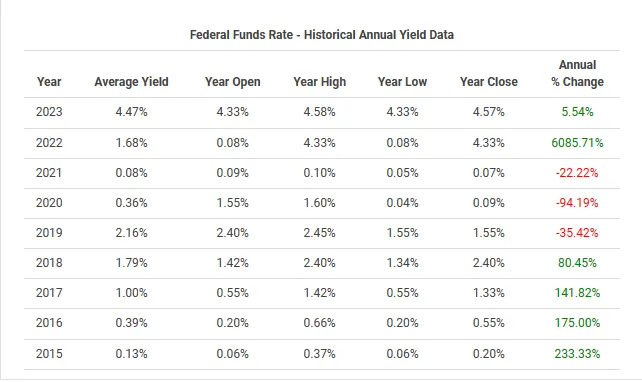
In the last week, two major banks, Silvergate Bank and Silicon Valley Bank (SVB), filed for bankruptcy, marking the second-largest bank failure in American history and the biggest since the 2008 financial crisis. While some people may attribute this to the chaos in the crypto market, the reality is that the main cause is due to the traditional banks’ asset allocation and risk management, coupled with the recent increase in interest rates by the US Federal Reserve. The US Federal Reserve has been gradually increasing rates since 2015. As of March 2023, the federal funds rate stands at 2.25%, compared to 0.25% in 2015.
Crypto Market Impact:

“”

The bankruptcy of SVB has had a significant impact on the crypto market, which started with a popular stablecoin called USDC de-pegging from its $1 USD mark. This popular stablecoin was a significant asset in the crypto ecosystem with a market cap of $39,474,245,476, which ranked this digital asset in the top 5 within Coingecko rankings. The USDC price dropped from $1 to $0.89 as its mother company, Circle, has an investment of $3.3 billion in SVB. BTC also dropped below $20,000, and all popular tokens suffered a significant drop in price.

Solution For Bankruptcy:

“”

The FDIC has recently stepped in to complete the resolution of Silicon Valley Bank, fully protecting its users deposits. Banks usually stand at a cap of $250,000 for each account, meaning that all account above this account level would be in a loss of assets. However, starting March 13, because of FDIC, depositors will have access to all their money even if it’s above the limit of $250,000, which most of the account were above this mark due to the amount of VC’s and big tech business with account in SVC. Next, HSBC offered to acquire Silicon Valley Bank UK for £1. This offer was accepted and has allowed accounts even more security in knowing that funds are safe with this new bank owner. Additionally, a Canadian banking regulator has taken temporary control of Silicon Valley Bank’s unit in the country.

“”

Crypto Market Recovery:

“”

With the FDIC and US Federal Reserve stepping in to cover the losses of SVB, users realize that the bankruptcy was not caused by the crypto market and regained confidence in the cryptocurrency industry. Also, Circle who is the company which owns and executes the USDC stablecoin was assured that all funds in SVB bank would be accessible to the company. The USDC has almost regained it’s dollar peg to bring the market of USDC back almost in line to what it was before SVB had issues within it’s ecosystem. To add, BTC and ETH both increased by 9%+ as a result.

“”

Conclusion:

“”

The FDIC compensation and resolution of Silicon Valley Bank (SVB) have had a significant impact on the crypto market, with the compensation helping to restore confidence among investors and users alike. Furthermore, news of “interest rates may be halted or decrease due to issues with traditional banks” has also contributed to the market’s recovery. This news has caused many investors to shift their focus to alternative investment options, such as cryptocurrencies. Another factor contributing to the market’s recovery could be the increased mainstream adoption of cryptocurrencies, with more companies and institutions recognizing the potential of this emerging asset class. Overall, the three factors of FDIC compensation, the news of potential interest rate changes, and increased adoption of cryptocurrencies, have all played a role in the recent recovery of the crypto market.


Related Reads

Without It, There Would Be No ImageNet... Now It's Gone

Amazon is shutting down its crowdsourcing platform, Mechanical Turk (MTurk), on September 30th, ending a 21-year run. Launched in 2005, MTurk connected businesses with a global online workforce to perform small, repetitive tasks—known as Human Intelligence Tasks (HITs)—that were easy for humans but difficult for computers at the time. At its peak, it hosted over 500,000 workers worldwide. MTurk played a pivotal, though often unseen, role in the rise of modern AI. Its most famous contribution was to the creation of the ImageNet dataset. In the late 2000s, researcher Fei-Fei Li and her team faced the monumental challenge of manually sorting and labeling millions of internet images to build a large-scale visual database for training AI. They turned to MTurk, distributing the work to nearly 50,000 workers from 167 countries. This "human-in-the-loop" effort made the massive ImageNet project feasible. ImageNet, in turn, became the foundational benchmark for the 2012 ImageNet Large Scale Visual Recognition Challenge. The victory of Geoffrey Hinton and his students' deep convolutional neural network, AlexNet, on this dataset dramatically demonstrated the power of deep learning, catalyzing the AI revolution that followed. Now, MTurk is closing. The platform has declined as the very AI it helped build has become capable of automating the simple tasks it once provided. Furthermore, the AI industry's data needs have evolved, shifting towards more specialized expertise for model tuning and evaluation, served by newer platforms. Ironically, some studies suggest MTurk workers themselves began using AI tools like ChatGPT to complete tasks, adding a layer of automation to the "artificial artificial intelligence" service. The shutdown marks the end of an era where human effort, distributed globally via the internet, laid the crucial groundwork for the intelligent machines of today.

marsbit13m ago

Without It, There Would Be No ImageNet... Now It's Gone

marsbit13m ago

Bill Gates' Latest Long-Form Article: The Real Trouble with AI is That We Aren't Ready

Bill Gates' latest essay, "The turbulent AI era is here. The choices we make now are critical," warns that society is unprepared for the profound social and economic transition AI will bring. While optimistic about AI's long-term potential in healthcare, education, and other fields, Gates focuses on the "transition period" over the next 10-20 years. He argues this transition differs from past technological shifts like the Industrial Revolution because AI automates cognitive labor itself, potentially reducing the total number of future jobs. Risks like enhanced cyber-attacks and social disruption are already emerging, not distant future threats. A key concern is "low-cost intelligence substitution," where AI performs defined tasks cheaper than humans, gradually thinning workforces. Gates introduces the concept of "Human Reserved" jobs—roles like nursing or delivering serious medical news—where human judgment and empathy should remain central, even if AI is technically capable. To manage the transition, he calls for new governance, stronger social safety nets, retraining, and international cooperation, especially between the US and China. Crucially, he proposes taxing AI usage and robots to slow displacement and fund social programs. The core dilemma Gates presents is that AI could become humanity's "greatest equalizer" or its "worst source of injustice," depending on whether its immense productivity gains are broadly shared or concentrate wealth and power. The fundamental challenge is not just advancing the technology, but adapting our social and economic systems to it.

marsbit28m ago

Bill Gates' Latest Long-Form Article: The Real Trouble with AI is That We Aren't Ready

marsbit28m ago

Just Now, Anthropic Unveils Physical MCP: Claude Begins Controlling the Real World

Anthropic has announced the Model Hardware Standard (MHS), a new standard enabling AI agents like Claude to safely control physical devices. Building on the Model Context Protocol (MCP), MHS standardizes communication between AI agents and hardware such as microscopes, robotic arms, and lasers, marking a significant step for AI from the digital into the physical world. Developed in collaboration with HHMI Janelia Research Campus, MHS uses standardized drivers to translate basic commands (e.g., read, write) into a format any programmable device can understand. This drastically reduces integration time from weeks to hours or minutes and allows agents to discover and operate new devices using natural language tags that describe machine properties and safety limits. Agents can control devices via MCP, command-line interfaces, or APIs. They can sequence operations, monitor results, adjust parameters in real-time, and generate deterministic scripts for long-running tasks. Early tests show Claude interacting with hardware exploratively, like a scientist, learning to calibrate a laser and scripting the process. Early adopters and partners include AWS, Automata, Danaher, Doosan Robotics, and Tecan, who are integrating MHS support into their platforms. While promising, challenges remain: Claude's physical reasoning is limited, requiring expert oversight, and MHS currently only works with programmable hardware. Anthropic plans further refinements and broader device support before open-sourcing the standard.

marsbit1h ago

Just Now, Anthropic Unveils Physical MCP: Claude Begins Controlling the Real World

marsbit1h ago

History's Only Asset with a 100% Win Rate After 4 Years of Holding

**Title: The Only Asset with a 100% Win Rate Over Any 4-Year Holding Period** This article analyzes which major, freely-tradable assets have historically never produced a nominal loss over any rolling 4-year holding window. It concludes that only two distinct categories achieve this: ultra-low-risk contractual assets and Bitcoin. Among traditional risk assets, none maintain a perfect 4-year record. The S&P 500 had negative 4-year periods (e.g., 1929-1932: -64.8%). The Nasdaq 100 fell roughly 60% from 2000-2003. Gold saw a ~47.7% loss from 1981-1984. US real estate declined about 23.3% from 2007-2010. Even long-term US Treasury bonds (e.g., 2021-2024: -19.8%) and corporate bonds can produce 4-year losses due to interest rate and market price risks. In contrast, the first category achieving 100% nominal success includes assets like rolling 3-month US Treasury Bills, 4-year certificates of deposit (CDs), and US Treasuries held to maturity within 4 years. Their "guarantee" stems from contractual obligations and credit backing (e.g., FDIC insurance, US sovereign promise), not price appreciation. The sole exception in the high-risk category is Bitcoin. Analysis of daily data from 2010-2026 across 4,419 rolling 4-year windows shows a 100% positive return rate. The worst 4-year period (April 2021 to April 2025) still yielded a +32.6% total return (~7.3% CAGR). This record is unique because Bitcoin has no issuer, promises no cash flows, and has endured severe drawdowns (70-90%), yet its market price has always recovered within a 4-year span. The key distinction is the source of the "100%": contractual assets offer known, low nominal returns, while Bitcoin's record stems purely from historical price appreciation despite extreme volatility. The article suggests that for Bitcoin, the ability to hold for 4+ years is more critical than active trading strategies.

marsbit1h ago

History's Only Asset with a 100% Win Rate After 4 Years of Holding

marsbit1h ago

How One Article Moved 45 Billion: The Collapse of a 25-Year-Old 'AI Stock Guru'

This article details the dramatic rise and near-collapse of a hedge fund built by Leopold Aschenbrenner, a 24-year-old former OpenAI researcher. The fund, named Situational Awareness, amassed $45 billion in assets within two years. Its explosive growth stemmed from Aschenbrenner's influential 165-page manifesto predicting AGI's arrival by 2027 and his high-profile Silicon Valley connections. The fund employed an extremely aggressive strategy: high concentration and 400% leverage to bet long on AI infrastructure stocks while shorting legacy software firms. In July, this structure backfired when both sides of the trade reversed simultaneously—AI stocks plunged while shorted stocks rallied—triggering massive losses that nearly wiped out all equity. Major player Jane Street reportedly lost billions. The fund's leveraged public portfolio was ultimately sold at a discount to Citadel. The SEC is now investigating banks like Goldman Sachs for their role in facilitating the fund's high-leverage trades. The article compares this to past blow-ups like Archegos, highlighting systemic failures in risk management where the pursuit of short-term profits overrode due diligence. It questions whether such risky leverage concentrated in the AI sector, currently at record highs, poses a broader systemic threat. Ironically, Aschenbrenner, who studied AI safety at OpenAI, designed a fund structure prone to uncontrolled failure. Days after the crisis, he reportedly raised another $400 million for new investments.

marsbit1h ago

How One Article Moved 45 Billion: The Collapse of a 25-Year-Old 'AI Stock Guru'

marsbit1h ago

Trading

Spot
活动图片