【研报精选】华尔街最准分析师:美国先衰退,美股才会有牛市

华尔街见闻Published on 2023-02-27Last updated on 2023-02-27

Abstract

美银认为,在下一次衰退中,为保持美元的储备地位和西方金融体系不被分解,美联储将会效仿日本央行,被迫启动收益率曲线控制政策。

美银分析师警告,美国财政赤字正在恶化,大衰退在所难免,唯有美联储才能拯救美国政府。

上周,美国银行首席投资官,过去几年最准的华尔街策略师Michael Hartnett在他最近的报告中重申了财政赤字的风险,并指出只有美联储推出类似日本央行收益率曲线控制(YCC)政策类似的举措,牛市才会到来。

他仍然预计标普500指数在今年3月8日之前将跌至3800点,并重申这个预测“主要是由全球金融条件的收紧所推动的”。在1月“不着陆”数据发布之后,2月新的“不着陆”数据将继续推动债券收益率上升,继而使标普500指数下跌。

他表示,上半年有弹性的增长将与利率上升相吻合,但下半年的经济将更急剧放缓。

对于2020年初美国政府为了应对新冠病毒大流行所推行的财政刺激,Harnett指出,虽然这些举措成功避免了2020年代初的经济衰退,结果是赤字再次上升,导致长期痛苦:

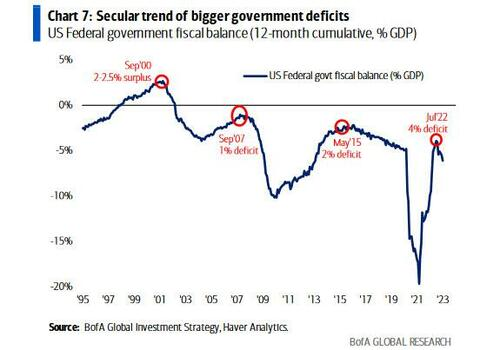
由于财政基础设施支出,美国联邦赤字高达GDP的6.1%;在2000年扩张的高峰期,美国有财政盈余,2007年扩张的高峰期赤字占GDP的1%,最近一次扩张的高峰期赤字占GDP的2.5%,但最近一次赤字占GDP的4%。
美国国会预算办公室最近的一份债务预测显示,美国公众持有的联邦债务预计将从2023年的占GDP的98%上升到2033年的118%,平均每年增加2%。

在此期间,利息成本和强制性支出的增长速度超过了收入和经济的增长速度,推高了债务。这些因素在2033年之后依然存在,使得联邦债务将在2053年达到GDP的195%。
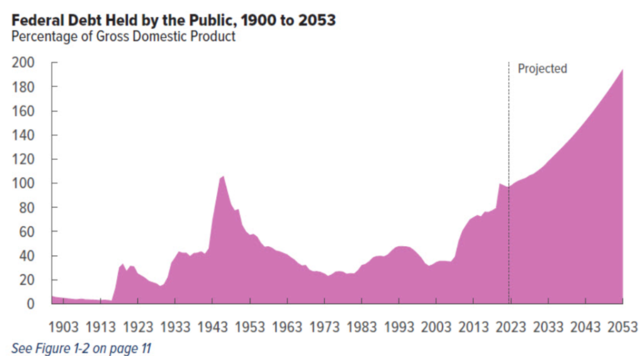
Hartnett说,这表明美国联邦债务正在出现长期的恶化。

随着美联储加息,美国政府不断增加的债务和不断增加的财政赤字将导致越来越高的利息支出。素来以“毒舌”为名的金融博客ZH也对此评价道:

这只能被描述为 “游戏结束”。

美国政府目前有31万亿美元的债务。Hartnett表示,在下一次大的经济衰退时,美联储将会像日本那样,被迫启动收益率曲线控制政策,以保持美元的储备地位和西方金融体系不被分解:

美国政府债务在未来10年将增加21万亿美元,这相当于每天52亿美元,每小时2.18亿美元......2020年通货膨胀的最大讽刺是在下一次经济衰退中,美联储被迫采用YCC来拯救美国政府......

而这正是下一个风险大牛市的开始。

Related Reads

Qualcomm Chip Price Hike Deals a Blow to Android Phones

Qualcomm has officially announced a new round of price increases for its entire chip portfolio, effective September 1. The hikes, reaching up to 18% for the flagship Snapdragon 8 Elite Gen 6 Pro, follow similar moves by MediaTek, intensifying cost pressures on the already strained smartphone industry. CEO Cristiano Amon confirmed the plan, citing the need to offset rising industry-wide costs and restore declining profit margins. Qualcomm's Q3 FY2026 results showed a 25% drop in net profit, with mobile revenue plunging 20% year-over-year, hitting its lowest level since 2021. The surge in AI computing demand has led memory manufacturers to prioritize HBM production, creating a shortage in general-purpose DRAM and NAND Flash chips. Their prices soared by 93%-98% and 55%-60% respectively in Q1 2026, causing the memory cost share in smartphones to jump from 10%-15% to over 30%. Coupled with the soaring cost of advanced nodes like TSMC's 2nm and packaging, overall chip costs have reached historic highs. These upstream pressures are forcing downstream smartphone brands like Xiaomi, OPPO, and vivo to cut orders for mid-to-low-end models by up to 20% and use cost-saving measures like older chipsets. Reportedly, the Snapdragon 8E5 will be repurposed as a "long-lasting" chip for sub-brand phones in H2 2026. Amid this cost crisis, the Android market remains sluggish. Q2 2026 smartphone shipments in China fell 4.3% year-over-year, marking five consecutive quarters of decline. Major Android brands saw market share drop, while Huawei and Apple, with their in-house chip advantages, gained share. Qualcomm is diversifying into automotive and IoT sectors to reduce reliance on smartphones, but these new segments cannot yet fill the mobile revenue gap. Industry observers warn that the full impact of component cost hikes will hit in the second half of 2026, likely leading to higher-than-expected price increases for Android flagships and a further contraction in the Chinese smartphone market.

marsbit27m ago

Qualcomm Chip Price Hike Deals a Blow to Android Phones

marsbit27m ago

Breaking: GPT-5.6 Prices Slashed Effective Today

OpenAI has announced significant price cuts for its GPT-5.6 model API, effective immediately. The entry-level **GPT-5.6 Luna** sees the most drastic reduction, with input prices dropping 80% to $0.20 per million tokens and output prices falling to $1.20 per million tokens. The mid-tier **GPT-5.6 Terra** is reduced by 20%, now costing $2.00 (input) and $12.00 (output) per million tokens. The flagship **GPT-5.6 Sol** maintains its original price but introduces a new **Fast mode**, offering speeds up to 2.5 times faster for double the cost. The company attributes these price reductions to efficiency gains achieved through **GPT-5.6 Sol's own involvement in optimizing its production systems**. The model assisted in rewriting GPU kernels and improving speculative decoding, leading to a 20% reduction in end-to-end service costs and over 15% improvement in token generation efficiency. OpenAI emphasizes this process remained human-led. A key focus of the降价 is to lower the barrier for running **AI agent workflows**. By making the capable, tool-calling Luna model significantly cheaper, OpenAI aims to enable more frequent use in cost-sensitive, high-volume tasks like code review and monitoring. This creates a potential feedback loop: model-assisted efficiency gains lead to lower costs, which enables broader agent deployment, which in turn drives further optimization. The new pricing and features will also apply to Codex and ChatGPT Work subscriptions. The changes intensify competition in the large language model market, with OpenAI directly challenging rivals like Anthropic to respond.

marsbit56m ago

Breaking: GPT-5.6 Prices Slashed Effective Today

marsbit56m ago

Trading

Spot
活动图片