撒钱盛宴后,Blur精心挑起新一轮版税大战

Odaily星球日报Published on 2023-02-17Last updated on 2023-02-17

Abstract

“告诉你Opensea,我Blur已经不是当初的Blur了。”

2 月 15 日凌晨 2 点 30 分,“万众瞩目”的 NFT 市场 Blur 在各大交易所上线了其原生代币 BLUR ,并开放了空投领取。至此,这场开「盲盒」空投的活动也终于落地。

”“

作为今年 NFT 市场「上涨小行情」的带头人,Blur 已被认为能与行业龙头 OpenSea 掰掰手腕。加之在去年的 NFT 市场版税大战中,Blur 找准了赚取流量的切入点,成为了可选版税中的一员,让用户自由设定版税比率,同时还会以空投代币激励等方式来鼓励用户支付版税(如将版税设置在 0.5% 以上的买家,将会获得更多的空投奖励)。凭借这一系列措施,Blur 市场的流量一度超过了 OpenSea。

”“

而在此轮备受期待的空投中,Blur 没让用户失望,造富效应可观。有推特用户统计,最大的 BLUR 空投受益者获得 了 320 万个 BLUR,且大约产生出 25 个单钱包获百万 BLUR 的“富翁”。

”“

正在大家沉浸在 Blur 空投季喜悦气氛时,Blur 趁热打铁,又开启了版税竞争的新篇章。就在代币上线后的第二天,其发布了新的版税政策,其中一项是推荐 NFT 创建者屏蔽 Opensea,任何不使用 Opensea 的 NFT 项目在 Blur 上都会被强制执行全额版税。很显然,Blur 是在利用这一时机回击其最强大的竞争对手,接力新年“版税争夺”的第一棒。

”“

从 Blur 发布的解释文章来看, Blur 此次版税的新政策涉及 4 个选项,根据文章内容,这里做出简单解读:

”“

1. 如果藏品不使用黑名单来禁止零版税或可选版税市场的话, Blur 会帮助你强制收取最低 0.5% 的版税,而 OpenSea 则是可选版税——Blur 为创作者提供了最低保障

”“

2. 如果藏品使用黑名单的话,虽然无法在 Blur 上出价,但仍然可以在 Blur 上交易(利用 Seaport 协议)。该类藏品可以同时在 Opensea 和 blur 上获取版税,但 Blur 只强制收取最低 0.5% 的版税。这点也已经被证实,如 A KID Called BEAST 和 Sewer Passs 等项目现已降至最低 0.5% 的版税。
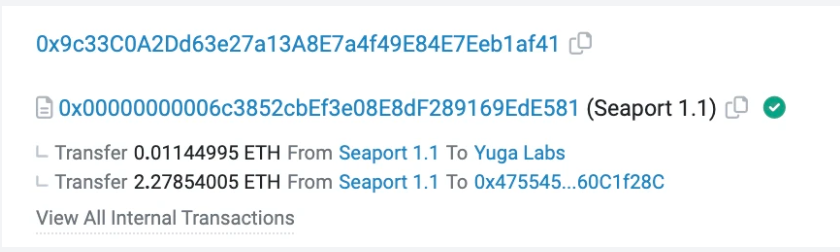
但是当 Blur 通过 Seaport 为新项目建立后门时,曾经所有的收藏品都可以获得 OpenSea 和 Blur 的“全部版税”。而最新的版税政策却是只能最低获得 0.5% 的版税,且一些收藏品的创作者也并没有提前被告知政策的更改,Blur 此次默默完成了版税政策更新,可谓是给予了使用黑名单创作者的无声警告

”“

3. 第三点是 Blur 推荐的方案,即希望创作者把 Opensea 拉入黑名单,这样他们就可以在 Blur 上获得全额版税,但无法在 Opensea 上架交易。是不是看着有点眼熟,这就是 Opensea 当初对待 Blur 的方案,现在又以同样的方式还给对方

”“

4. 紧接着第四个方案是双方都取消黑名单机制,“我 Blur 会放下以前的恩怨与你和解”,双方能够真正的从保护创作者角度出发,让他们可以在所有平台都收取版税。

”“

回顾 Blur 过往的版税政策,一直是都偏温和派,尽量避免与 Opensea 之间的冲突,尽管 Opensea 将其列入黑名单,Blur 也秉着与 Opensea 和解的意图,希望其解除对它的黑名单限制,但却被 Opensea 强硬拒绝。当时,虽然 Blur 的交易量和热度都已逼近 Opensea,但大量的清洗交易和较大差距的用户数量,仍然无法让 Blur 与 Opensea 这样的巨头抗衡。

”“

但是随着 Blur 逐渐占据 NFT 市场的头部流量,以及 Opensea 迟迟不发平台币,所以大家对 Blur 代币价值的预期逐渐拉高。在经过了三轮空投「盲盒」后,Blur 的使用人数激增。其中,巨鲸几乎垄断了排行榜,也短暂地带动了 NFT 的交易量。这或许给予了 Blur 一定的信心,于是 Blur 也在尝试主动出击

”“

仔细观察下来,Blur 此次的版税政策可谓是“精心”布局。

”“

首先 Blur 利⽤ OpenSea ⾃⼰的底层交易协议 Seaport 开发了⼀个新的交易市场,解决了新项目无法在 Blur 上交易的问题。

”“

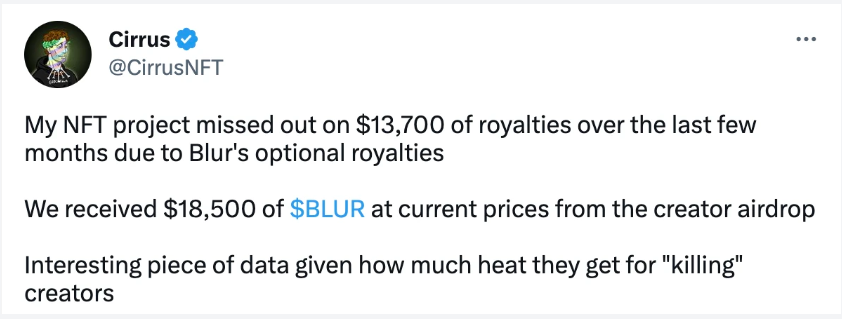
其次,虽然可选版税让很多 NFT 创作者失去了部分报酬,但 Blur 会给仍然选择上架该市场的创作者空投,如推特账号 @CirrusNFT 表示其 NFT 项目在过去几个月中错过了 13700 美元的版税收益,但是他们从 Blur 的创作者空投中收到了 18500 美元的 BLUR 代币,进而弥补了这部分损失。
然后又放出最后一拳,推出新版税政策:不管怎样你都可以在我这拿到 0.5 % 的版税,屏蔽 Opnesea 还能拿全额。

”“

这三步棋可谓是拿捏了创作者和交易者的心理,同时还通过空投引流的方式,提升了整个 NFT 市场的流动性和交易量,从 OpenSea 和其他竞争对手手中夺取了大量的市场份额。

”“

从短期数据上看,进入 2 月以来,Blur 的交易量已经逐步超过 Opensea。且昨日 NFT 交易量暴增至 30409.79 枚 ETH,创近三个月新高。此外,Blur 昨日 NFT 销售量为 32773 ,独立用户为 9689 人,均创近三个月新高。其出价池锁仓额已达 8400 万美元,创下历史新高。
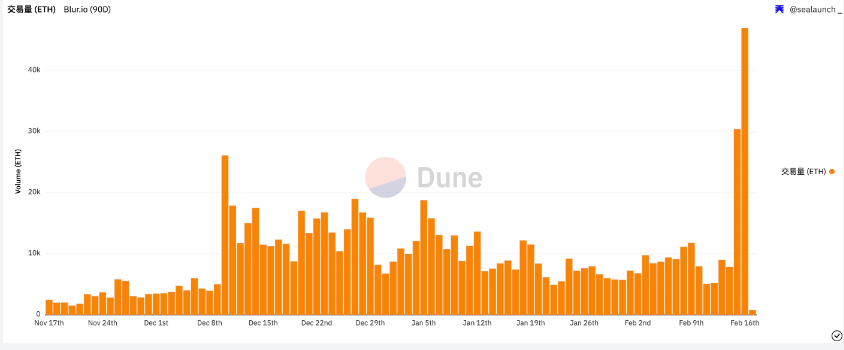
紧接着 Blur Season 2 即将开始,虽然大部分人认为第二季未必会有第一季奖励丰厚,且尚不清楚脱离了开「盲盒」 空投的 Blur 能维持多久的受欢迎程度。但经过 Blur 此次的布局和营销,其竞争优势已经非常明显。

”“

看起来 Blur 这次是势在必得,直接放出了开战的信号。假设 Opensea 不会故步自封,什么都不做。预计接下来的 NFT 市场赛道将会更多激烈的战斗。

Related Reads

Must-Watch Events Next Week|CLARITY Act Could Face Senate Vote; SpaceX, Circle to Report Earnings (8.3-8.9)

**Summary: Key Events and Developments to Watch (August 3-9)** The upcoming week is marked by significant financial disclosures, key legislative deadlines, and notable product updates. **Major Financial Events:** Several companies are scheduled to release their Q2 2026 earnings. American Bitcoin (ABTC) will report on August 3, followed by SpaceX and Hut 8 Mining Corp. on August 4, and Circle on August 5. Notably, a significant portion of SpaceX shares (up to 12% of total shares) will be unlocked on August 6 following their earnings release. **Key Legislative Deadline:** The U.S. Senate faces an August 7 deadline to secure 60 votes for the CLARITY Act, a bipartisan bill aiming to establish a federal regulatory framework for cryptocurrencies. The Senate may hold a full vote on the bill during the week. **Economic Data:** The U.S. July Non-Farm Payrolls report will be released on August 7, providing crucial labor market data. **Technology & Product Updates:** * **Shutdowns:** DeFi portfolio tracker Zapper and wallet app Ctrl Wallet will cease operations on August 3. * **Upgrades:** LayerZero will deprecate its v1 relayers on August 3. XRP Ledger's new version 3.3.0, featuring five new functions, is expected next week. * **AI:** Elon Musk announced that the advanced Grok 4.6 AI model is set for release around August 7. * **Bitcoin:** The BIP-110 forced signaling for a potential Bitcoin network change is scheduled to begin around August 8. **Other Notable Events:** Chinese robotics firm Unitree Tech has set its preliminary price inquiry for its IPO for August 5. South Korean exchange Upbit will delist AQT and AERGO tokens on August 3.

marsbit1h ago

Must-Watch Events Next Week|CLARITY Act Could Face Senate Vote; SpaceX, Circle to Report Earnings (8.3-8.9)

marsbit1h ago

Stocks Are Plummeting More Sharply Than Cryptocurrencies. Where Has the Money Gone?

Stock Markets Plunge Deeper Than Cryptocurrencies: Where Did the Money Go? In late July, Seoul's Kospi index triggered circuit breakers for two consecutive days, plummeting over 40% from its June high. The collapse was led by heavyweight stocks like SK Hynix, whose record profits still disappointed investors, and devastating leveraged ETFs, with one major product losing over 83% of its value. This signaled a global, forced deleveraging targeting the most crowded trades. Interestingly, while stocks exhibited extreme volatility akin to crypto markets, Bitcoin rose nearly 15% in July after a prior steep drop. Analysis shows the money fleeing equities did not flow into Bitcoin. Instead, Bitcoin had already absorbed its sell-off in May-June, when U.S. spot Bitcoin ETFs saw historic outflows. The true safe-haven beneficiary was gold, whose price rose over 20% year-on-year, highlighting a decoupling between Bitcoin and gold as "digital gold." The sell-off was a targeted unwinding of leveraged positions in tech and semiconductors, accelerated by broker-dealer risk management and shifts in the AI narrative, including new competition from Chinese memory chipmakers. The retreat path was clear: from high-valuation tech stocks to cash and U.S. Treasuries, then to gold. For Bitcoin to attract sustained institutional inflows, conditions like eased global liquidity pressure, a "soft-landing" Fed rate cut, and U.S. regulatory clarity via legislation like the stalled CLARITY Act are needed. Currently, Bitcoin is not a safe haven but an already-cleared asset. Its low correlation with tech stocks, however, makes it a potential diversification play for institutional portfolios once the storm passes. The money isn't here yet, but the positioning is underway.

marsbit1h ago

Stocks Are Plummeting More Sharply Than Cryptocurrencies. Where Has the Money Gone?

marsbit1h ago

In Conversation with Ray Dalio: We Are Currently in an AI Bubble, with 1% of My Portfolio in Bitcoin

Ray Dalio, founder of Bridgewater Associates, warns in an interview that the current AI boom shows classic bubble characteristics, which could lead to significant economic downturns as seen in past cycles like 1929 or 2000. He explains that speculative enthusiasm, fueled by debt and overvaluation, often precedes a crash when rising rates or taxation force asset sales, causing widespread losses and recession. Dalio also outlines his "Big Cycle" theory, describing an approximate 80-year pattern where widening wealth gaps, massive government deficits, and shifting geopolitical power (like China's rise) create internal conflict and global instability. He emphasizes that we are in a late-cycle, transitional phase where traditional powers like the US and UK face decline. For personal wealth protection, Dalio advises diversification beyond cash into assets like stocks, bonds, real estate, and particularly gold, which he prefers over Bitcoin. While he holds about 1% of his portfolio in Bitcoin as a non-printable hard asset, he views gold as more secure from technological or governmental threats. Regarding AI's impact, Dalio believes it will disproportionately benefit capital owners, worsening inequality by replacing both physical and cognitive labor. He suggests that human intuition and emotional intelligence, combined with AI, will be key for future workers. On taxation, Dalio argues that wealth taxes are impractical and risk triggering asset sell-offs, reducing productive investment. He points to the UK as a cautionary example of debt, low productivity, and political strife. Geopolitically, Dalio foresees a more regionalized world, with the US showing weakness in prolonged conflicts like with Iran, akin to past imperial declines. The ideal outcome, he suggests, is coexisting powerful blocs (e.g., Americas, China-Asia Pacific) without major war.

marsbit5h ago

In Conversation with Ray Dalio: We Are Currently in an AI Bubble, with 1% of My Portfolio in Bitcoin

marsbit5h ago

Trading

Spot
活动图片




