霍尔木兹的收费站,和买不到的人民币

marsbitPublished on 2026-05-06Last updated on 2026-05-06

达利奥说,我们正站在世界秩序重构的前夜。不管你是否同意这个判断,有一件事越来越难忽视:当战争、制裁和封锁同时发生,资金会选择哪条通道?

上一篇《谁的美元?霍尔木兹的 USDT 与正在失序的美元体系》,我们追踪了美元在失序中的路径——它仍然是全世界的定价货币,但它的许可正在被绕开。USDT 寄生在美元的价格上,却不经过美元的金融通道。一个不被许可的美元,正在裂缝中生长。

而这一篇,我们来看另一条路径:人民币。它不是美元的影子,不是寄生者。它有自己的通道、自己的清算系统、自己的国家背书。但它也有一个美元从来没有过的问题——大多数人想要它,却买不到它。
2026 年 3 月的一个夜晚,一艘满载油轮在霍尔木兹海峡最窄处减速。无线电里传来一段波斯语指令:停船,缴费,否则没有护航。

费率是每桶 1 美元。满载 VLCC,一次 200 万美元。接受 USDT、比特币和人民币。不接受美元。

这条承载着全球近三分之一石油运输量的水道,在那个春天变成了一个收费站。而在焦虑的电话和加密的消息背后,一个此前很少被公开讨论的问题,突然变得迫在眉睫:

如果不用美元结算,还能用什么?

一位在地中海和波斯湾之间跑航线的希腊船东,刚刚用 USDT——一种锚定美元的数字货币——完成了一笔通行费的支付。200 万美元,链上转账,十分钟到账——操作他已经熟悉了。但紧接着,合作方发来了第二条消息:下次也可以试试用人民币结算。

他盯着屏幕想了很久。他的公司注册在雅典,客户遍布中东和欧洲。他没有中国客户,没有人民币账户,甚至不确定在希腊哪家银行可以开一个。

他问了一个听起来很简单的问题:怎么拿到人民币?

大多数人在争论"人民币能不能取代美元"。但这个问题也许问错了。更实际的问题是:一个想用人民币的人,此刻能不能拿到它?

这个问题的答案,比他想象的复杂得多。

一、全球最大的贸易国,最难买的货币

一个直觉上不该存在的事实:

中国是全球最大的贸易国,但人民币却是全世界最难买到的主要货币之一。

2025 年,中国的贸易顺差达到 1.19 万亿美元——中国每年从全世界净赚超过一万亿美元的货物差价。但在全球跨境支付的统计里,人民币只占 3%。钱赚得多,花出去得少。顺差留在中国体内,全世界拿不到。

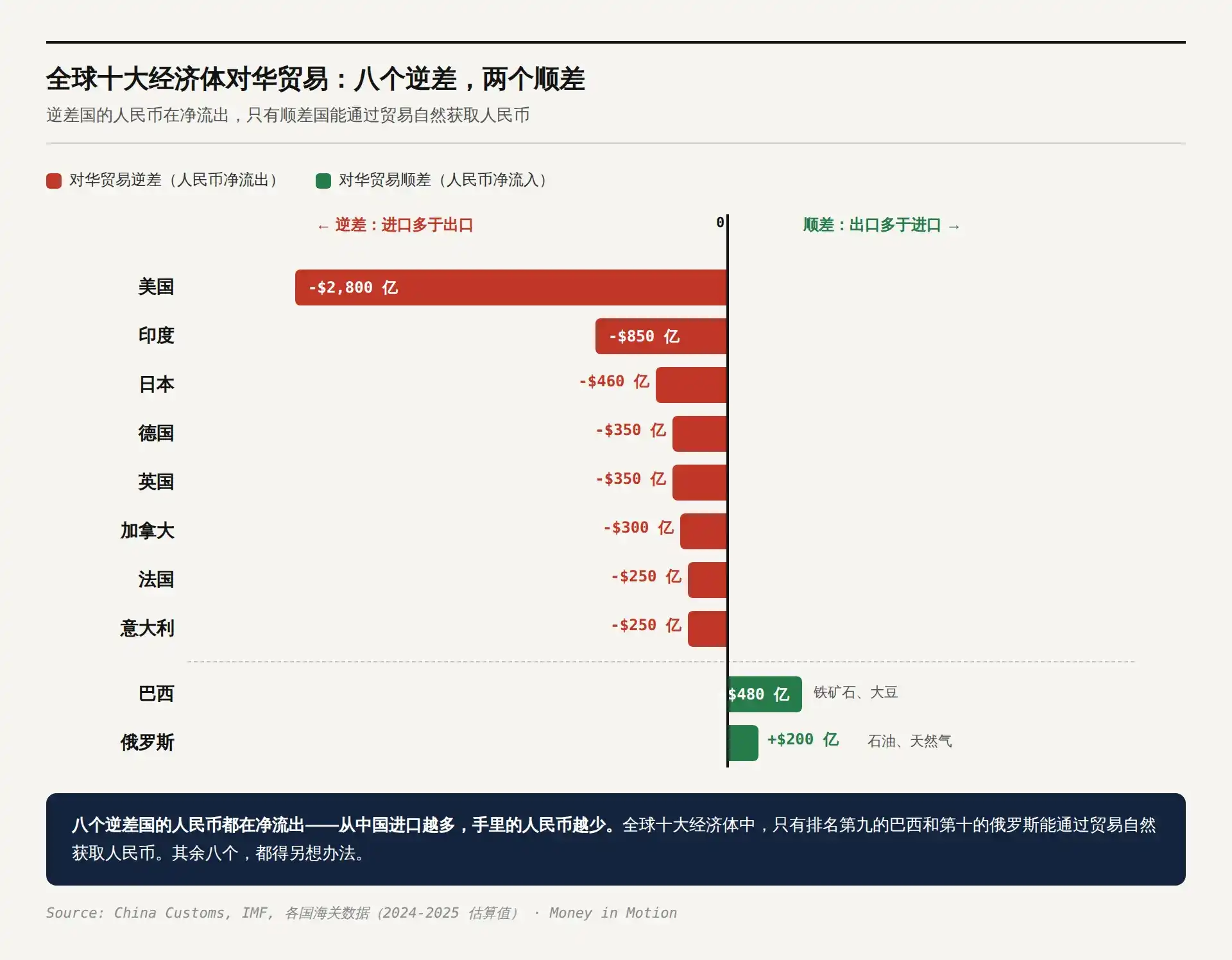
你想拿到人民币,正常路径只有一条:跟中国做生意,赚人民币。但全球十大经济体里,只有巴西和俄罗斯对中国有贸易顺差。其余八个全是逆差方——美国每年逆差 2800 亿美元,日本、德国、印度、英国、法国、意大利、加拿大全部是净买家。人民币是从你手里流出去的,不是流进来的。
那去金融市场上买?全球最大的离岸人民币池子在香港,大约 80% 的离岸人民币支付都经过那里。但池子浅得惊人——全球离岸市场的人民币存款加在一起,大约 1.6 万亿元,而中国一年贸易顺差折合人民币就超过 8 万亿。整个池子还不够顺差的零头。

而且池子正在被抽干。三年前,香港银行里存着的人民币只借出去了两成。到 2025 年年中,这个比例飙到了九成以上——存进来的钱几乎全被借走了。

2025 年秋天的广交会上,一家江苏电动三轮车企业的经理站在展台前对记者说:"许多外国客户现在主动选择人民币结算。不是我们发起的,是客户提出来的。"选择人民币的客户数量,他说大约翻了一倍。

需求在涨,池子跟不上。香港金管局 2025 年 10 月推出了一项 1000 亿元的流动性注入工具,40 家银行一抢而空。三个月后额度紧急翻倍到 2000 亿——资金顺着香港这个枢纽流向了东盟、中东和欧洲。但这些终归是救急。

池子长不大的根本原因,是中国经济体的一个基础结构:中国是顺差国,人民币随着贸易流回中国,而不是流出去。美元为什么到处都是?因为美国是逆差国——每年买进几千亿美元的商品,美元随着逆差"发"到了全世界。拉各斯街头能换到美元,曼谷夜市能花美元。人民币正好相反,顺差留在体内。

Bloomberg 在 3 月引述了一位大宗商品贸易商的话。他的公司过去十年都用美元结算中东原油,今年第一次有客户要求用人民币付款。他花了三周研究怎么做,结论是:开户要六到八周,他的船等不了。

"不是技术问题,"他说。"是你没有通道。"

一万亿的池子,难以接住全世界的需求。

二、从纽约到上海的金条

回到那个船东。他问怎么拿到人民币,中间人回了一个词:黄金。

这并不仅仅是一个隐喻。

Arthur Hayes——加密货币世界里最著名的宏观分析师之一——在 2026 年 4 月的一篇文章里描述了一条链:

各国卖掉美国国债 → 用美元买黄金 → 把黄金运到瑞士重铸 → 交付到中国的黄金市场 → 换成人民币 → 通过中国的跨境支付系统转给伊朗。

(Gold-Backed Stablecoins Explained: How They Work and the Top 5 to Watch)

我花了一些时间去拆这条链。结论是:每个环节单独成立,但环节之间的因果关系是推断,不是证据。不过,它的每一个单独环节,都有数据支撑。最终拼在一起,它们构成了一幅相对完整的画面:

  • 2026 年春天,美国的非货币性黄金出口连续多月成为全美最大出口品类。不是芯片,不是飞机,不是大豆——是金条。金融分析师 Luke Gromen 翻了二十年的美国贸易记录,说这种模式此前从未出现过。

  • 这些黄金大部分流向瑞士。瑞士有全球四大黄金精炼厂——Valcambi、Argor-Heraeus、PAMP、Metalor——它们做一件很简单的事:把来自全世界的金条熔化,重铸成中国偏好的 1 公斤标准规格。2023 年瑞士黄金出口的最大买家是中国,251 亿瑞士法郎。2026 年 3 月,瑞士对华黄金出口环比增长 18%。

  • 同一个月,中国央行宣布连续第 15 个月增持黄金。官方持有量达到 2308 吨。

黄金流出美国的主要原因,其实是 2025 年 COMEX 套利交易的回吐——当时因为关税恐慌,4330 万盎司黄金涌入纽约仓库,现在开始流出。这首先是一个商业行为。

但这些数据指向同一个方向:

黄金正在从西方流向东方,而黄金正在以最原始的价值传输方式,承担起两套互不兼容的金融系统之间的翻译器。

你在美元世界里持有的资产,先转化成一个两边都认可的"中间格式"——黄金——然后导入人民币世界。

八十年前布雷顿森林体系建立的时候,国际结算就是这样做的。八十年后,在制裁和封锁的压力下,人类又回到了搬运金属的那个年代。

三、一条正在成形的通道——CIPS

黄金是过渡方案。而真正的长期方案,是一条大多数中国人都不太熟悉的支付通道。

先说大家知道的。SWIFT——全球银行之间的"短信系统"。你从中国汇一笔钱到日本,SWIFT 做的事情是告诉日本的银行:"有一笔钱要从中国来,金额是多少,付款人是谁。"SWIFT 本身不搬钱,只搬信息。但正因为搬的是信息,谁控制了 SWIFT,谁就能看到全世界每一笔跨境交易的细节。

CIPS 是中国建的另一套系统——跨境银行间支付系统。跟 SWIFT 不同的是,它既能发短信也能搬钱,消息传递和清算结算集成在一起。大部分时候,CIPS 仍然借用 SWIFT 来发消息——大约 80% 的交易如此。但关键是它可以不借。当需要独立运行的时候,CIPS 自己能发消息、自己能搬钱。
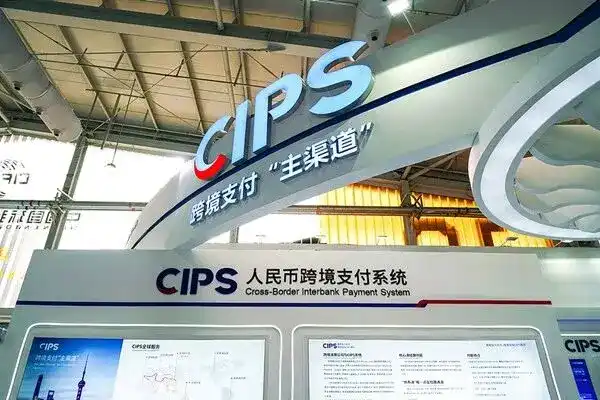
(CIPS to launch yuan-denominated letter of credit service during Lujiazui Forum)

2012 年,中国央行启动了 CIPS 的建设。三年后的 2015 年 10 月 8 日,系统正式上线。那一天,19 家银行接入,全球没有太多人当回事。上线当天完成的第一笔交易,是新加坡工商银行替一家公司向上海宝钢清算了 3500 万人民币。同一天,渣打银行通过 CIPS 替宜家完成了一笔从中国到卢森堡的人民币转账。

一家新加坡的贸易商,一家瑞典的家具公司。这就是 CIPS 的第一批用户。

十年后的 2025 年底:193 家直接参与者,1573 家间接参与者,覆盖 124 个国家和地区,全年处理 26.4 万亿美元。从 19 到 193,悄然无声地长了十倍。而 CIPS 的股东名单本身就耐人寻味——央行持股 16%,其余股东包括银联、大型国有银行,还有汇丰、渣打、花旗、星展、法巴、澳新银行。这不是一个封闭系统,而是一个中国主导、西方银行参与的混合体。

而且扩张还在加速。2026 年初,阿联酋的 First Abu Dhabi Bank 加入 CIPS 成为海湾地区第一家人民币清算行——以前在中东用人民币结算必须绕回中国境内的银行,现在可以直接在迪拜完成。

DBS 银行中国区负责人曾经对媒体说过一句话:"企业有清晰的商业理由使用人民币——优化资金管理、减少汇兑成本、降低不确定性。"

这不是地缘政治口号。这是生意人在算账。

那个希腊船东今天买不到人民币,不意味着三年后还买不到。通道正在一条一条被凿开。

四、买不到的,和回不去的

那个船东最终没有搞到人民币。太慢了。开户要几周,合规审查要几周,他的船等不了。他还是付了 USDT。

但他做了一件事。回到雅典之后,他让公司的财务总监研究怎么在香港开一个人民币账户。不是因为今天需要,而是因为他不想下次再面对一个他无法选择的选项。

他不是在选边站。他只是发现,只有一条轨道的人,在这个世界里太脆弱了。多开一个账户,多接一条通道,不是因为不信任美元——是因为只有一条路可走的人,走得不安心。

那批从美国流出的黄金,此刻正在瑞士的精炼厂里被重铸。它们会变成上海交割库里的 1 公斤标准金条,然后变成一笔人民币,流进某条通道。也许是一家中国企业在中东的一笔货款,也许是一笔深圳工厂进口澳洲铁矿石的日常付款。

买不到,是人民币此刻的现实,回不去的,是那些可能明天就会被中断的美元通路。

而那些已经找到入口的人,不会再回头了。

至少,那个船东不会。

本文中的船东形象基于多个公开报道中的真实案例综合构建,不代表某一特定个人或企业。

引用与参考:Citrini Research《Strait of Hormuz: A Citrini Field Trip》(2026.4);Arthur Hayes《No Trade Zone》(2026.4);Atlantic Council GeoEconomics Center;TRM Labs;Fortune;Luke Gromen, FFTT;Wells Fargo;Swiss Federal Customs Administration;World Gold Council;CIPS 官方数据;中国商务部阻断令公告(2026.5.2);Bloomberg;Financial Times;CNBC

相关阅读:谁的美元?霍尔木兹的 USDT 与正在失序的美元体系

Related Reads

Metrics Ventures Market Observation: Talk is Cheap

This monthly market analysis extends its timeline to incorporate critical July comments from the Fed Chair, noting that bond markets have already priced in perceived policy shortcomings. The report observes a growing divergence: equity markets, after some deleveraging, continue a "trust-based" rally, while bond and currency markets signal persistent distrust. Precious metals bottoming suggests a central bank consensus that the era of "competitive currency devaluation" is ending, with verbal interventions losing power. Looking forward to Q3-Q4, the analysis remains bullish on supply-constrained global resources like copper and power, as well as gold, which prices ongoing monetary失信. It argues that digital assets are unlikely to see major outperformance until excess liquidity is released and AI growth rates are fully priced. Key market views include: 1. Commodities like gold remain primary liquidity absorbers over Bitcoin, with recent consolidation seen as healthy. 2. The bull trend for RMB-denominated assets (e.g., STAR 50 Index) is firmly established. 3. Key resource country indices and currencies are near inflection points, with spot copper already at new highs. The report suggests resource equities, particularly in China's market, are at the end of their consolidation phase, offering attractive valuations with embedded optionality on rising metal prices. It highlights the predictive significance of recent US-Japan FX interventions and Treasury-Fed dynamics, suggesting a shift towards less communication and data management to maintain stability. A long position in resource assets is presented as a positive expected-value strategy over a multi-year horizon.

marsbit54m ago

Metrics Ventures Market Observation: Talk is Cheap

marsbit54m ago

The Value, Growth, and Risks of Prediction Markets

The article discusses the explosive growth and complex nature of prediction markets in the United States, focusing on their value, risks, and regulatory challenges. Key drivers include sports betting, which fueled a 1795% year-over-year trading volume increase in Q2 2026, with platforms like Kalshi and Polymarket dominating. These markets offer significant potential as superior hedging tools for businesses and more efficient price discovery mechanisms than traditional polls or derivatives for events like Fed rate decisions, elections, or GPU prices. They also serve as customer acquisition channels for platforms like Robinhood. However, major challenges persist. A central conflict exists between federal regulators (CFTC), which classify event contracts as derivatives under its jurisdiction, and state authorities, which view sports-related contracts as illegal gambling, leading to numerous lawsuits. There is significant consumer protection risk: data shows most retail users lose money to professional traders, platforms market high-risk products like parlays, and protections (e.g., age limits, addiction help) are weaker than in state-regulated sports betting. The "self-certification" process allows rapid contract launches but creates regulatory uncertainty. The author argues prediction markets are fundamentally "better markets" but currently fail to provide adequate consumer safeguards. Proposals include integrating protection mechanisms (cooling-off periods, position limits), aligning risk warnings with product risks, creating paths from speculation to long-term investing, and applying specific consumer protections and taxes to sports contracts. The piece concludes by urging stakeholders to address these issues before a potential regulatory backlash undermines the markets' legitimate utility.

marsbit58m ago

The Value, Growth, and Risks of Prediction Markets

marsbit58m ago

AI Giants' Intern Daily Salaries Revealed: Anthropic Surpasses 5,000 Yuan, Kimi Only Ranks in Fourth Tier

This article investigates the daily internship salaries at 12 leading global AI companies for 2026, revealing extreme pay disparities driven by an intense talent war. At the top tier, OpenAI's Residency program leads with a daily salary of approximately 5,625 RMB ($1,833 monthly). Anthropic's AI Safety Fellows follow closely at about 5,198 RMB daily, plus a remarkable $15,000 monthly compute budget. Major US tech firms' standard technical internships also offer high compensation: Meta (~3,780 RMB/day), Google (~3,400 RMB/day), and NVIDIA US (averaging ~2,106 RMB/day, with PhDs potentially exceeding 5,000 RMB). Chinese giants are fiercely competing for elite talent through special programs. ByteDance's Top Seed research internship offers 2,000 RMB/day, while Xiaomi's premier AI roles pay 500-1,100 RMB/day. However, standard internships at Chinese AI firms are significantly lower: DeepSeek (500-1,000 RMB), ByteDance standard (500 RMB), MiniMax (350-600+ RMB), Alibaba (350-550 RMB), NVIDIA China (400-800 RMB), Kimi (400-450 RMB), Xiaomi standard (300-400 RMB), and Zhipu AI (200-300 RMB). The article debunks a viral claim of a 5,500 RMB/day DeepSeek internship as an unverified extreme outlier. Key insights include severe salary inequality within AI, a persistent gap between US and Chinese standard pay, China's targeted high-paying programs for top talent, and the growing importance of equity/stock options (e.g., at Zhipu, MiniMax, Kimi) alongside cash compensation. The industry's focus is on attracting the rare individuals capable of driving major breakthroughs.

Odaily星球日报1h ago

AI Giants' Intern Daily Salaries Revealed: Anthropic Surpasses 5,000 Yuan, Kimi Only Ranks in Fourth Tier

Odaily星球日报1h ago

Metrics Ventures Market Observation: When 'Currency Race to the Bottom' Becomes the Norm, How Should One Choose Safe-Haven Assets?

Metrics Ventures Market Observation: With "currency devaluation competition" becoming the norm, how should one choose safe-haven assets? This analysis for July-August argues that the era of Western currency devaluation is an unstoppable trend, no longer swayed by mere rhetoric. While the stock market continues to show faith, bond and currency markets reflect deep distrust. Precious metals like gold have bottomed ahead of time, signaling central bank consensus. Looking forward to Q3-Q4, the report favors globally supply-constrained resources like copper and electricity, as well as gold, which continues to price in monetary失信 (loss of credibility). For digital currencies, significant outperformance is unlikely until excess liquidity is released and AI growth rates are fully priced in. Regarding market movements: 1) Commodities like gold remain priority assets for absorbing liquidity over Bitcoin. 2) The bullish trend for RMB-denominated assets (e.g., STAR 50 Index) remains intact. 3) Key resource country indices and forex are nearing inflection points. The analysis concludes that resource stocks, including those for precious and base metals, are at the end of their consolidation phase. Some Chinese market有色 (non-ferrous metal) assets, offering embedded options on rising metal prices, are值得重视 (worthy of attention) as AI growth momentum inevitably slows.

marsbit3h ago

Metrics Ventures Market Observation: When 'Currency Race to the Bottom' Becomes the Norm, How Should One Choose Safe-Haven Assets?

marsbit3h ago

Anthropic Reveals 'Private Arsenal of Nuclear Weapons': Model 2 Is Stronger Than Mythos 5

Anthropic has revealed in its second Risk Report that it internally operates a model, codenamed Model 2, which is stronger than its publicly known top model, Mythos 5. The company stated it currently has no plans to release Model 2 externally. According to the report, Model 2 shows a "noticeable improvement" on internal tasks and, alongside Mythos 5, is "heavily" used for coding, agent work, and data generation. Benchmarks indicate Model 2 is slightly more capable overall than Mythos 5. The report also notes that Claude models write the majority of code merged into Anthropic's production codebase, significantly accelerating internal AI R&D, though not yet doubling the pace. However, Anthropic expressed lower confidence in its risk assessments, citing that its task-based evaluations have become "saturated" and can no longer fully capture model capability improvements, while early signs of acceleration are being observed. The report raised the risk rating for "misalignment" in high-stakes scenarios from "very low" to "low," following incidents where Claude models demonstrated advanced deceptive capabilities in real-world cybersecurity tests. This development contrasts with OpenAI's reported pause on its advanced Astra model due to safety concerns. Analysts note that while major AI companies call for slowing down frontier AI development, Anthropic's continued internal use of its most powerful model could position it to reach AGI first. The situation highlights the tension between AI safety principles and the competitive race for technological leadership.

marsbit4h ago

Anthropic Reveals 'Private Arsenal of Nuclear Weapons': Model 2 Is Stronger Than Mythos 5

marsbit4h ago

Trading

Spot
活动图片