

Neyo.verse
2023/12/20 06:22
AI's Crucial Role in Shaping Safer and More Sustai
**Enhancing Safety with Predictive Analytics:**
One of the primary contributions of AI to transportation safety is its ability to analyze vast amounts of data in real-time. Through predictive analytics, AI systems can anticipate potential risks on the road, such as accidents or adverse weather conditions, and provide timely warnings to both drivers and traffic management systems. This proactive approach not only helps prevent accidents but also allows for more efficient traffic flow, reducing congestion and improving overall road safety.
**Autonomous Vehicles Leading the Way:**
The development and deployment of autonomous vehicles represent a significant stride toward safer transportation. AI algorithms power these vehicles, enabling them to make split-second decisions based on sensor data, ultimately reducing the likelihood of human error—a leading cause of accidents. As the technology matures, we can expect a paradigm shift towards a transportation system characterized by fewer accidents and enhanced road safety.
**Optimizing Traffic Management:**
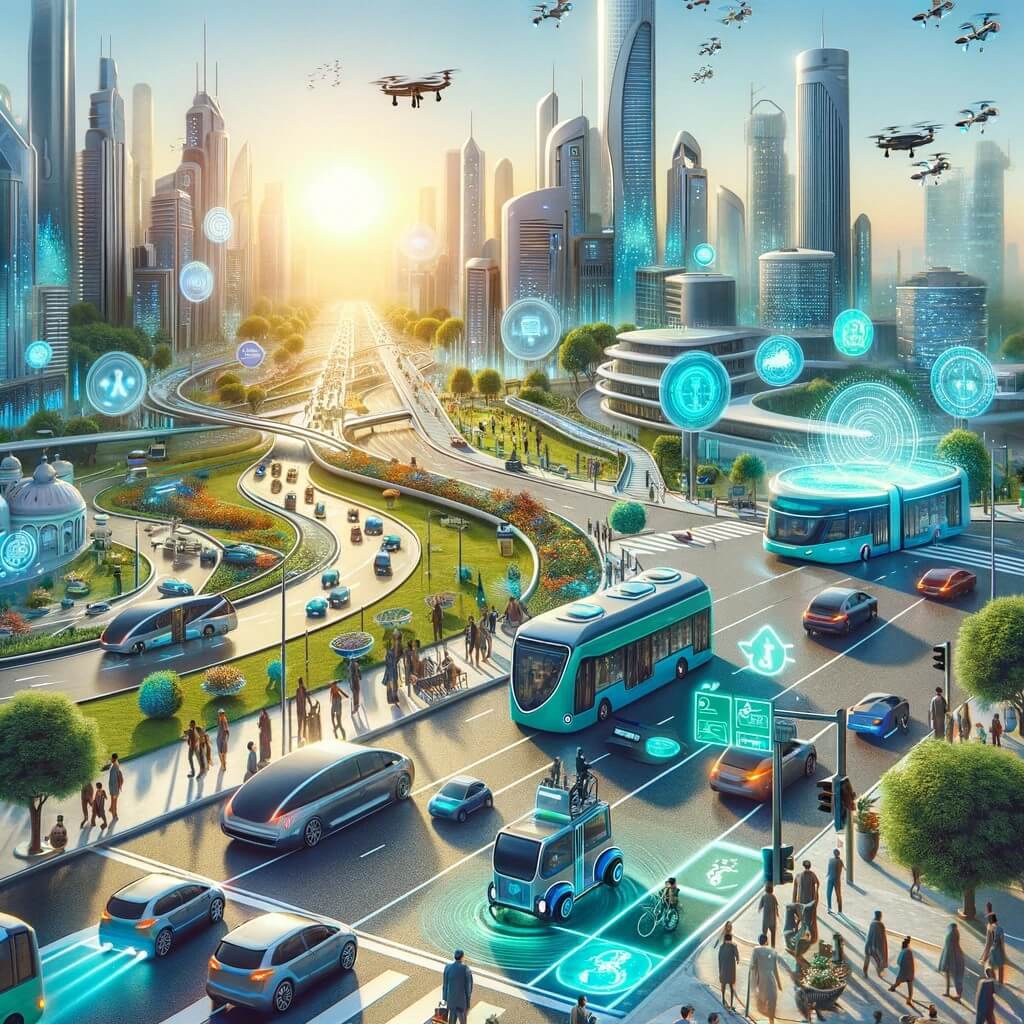
AI plays a crucial role in optimizing traffic flow and minimizing congestion. Smart traffic management systems powered by AI can adapt in real-time to changing traffic conditions, adjusting traffic signals and rerouting vehicles to alleviate bottlenecks. This not only reduces travel times for commuters but also contributes to fuel efficiency, lowering carbon emissions.
**Fueling Sustainability through Data-Driven Decisions:**
In the pursuit of more sustainable transportation, AI aids in making data-driven decisions that minimize environmental impact. For instance, AI algorithms can analyze traffic patterns and recommend optimal routes, leading to fuel savings and reduced emissions. Additionally, AI supports the integration of electric and hybrid vehicles into transportation networks, facilitating the transition towards a more eco-friendly fleet.
**Challenges and Considerations:**
While AI holds immense potential for transforming transportation, it also poses challenges. Issues related to data privacy, cybersecurity, and ethical considerations in decision-making algorithms need careful attention. Striking a balance between technological innovation and ethical governance is crucial to realizing the full benefits of AI in transportation.
**Conclusion:**
As AI continues to evolve, its role in shaping safer and more sustainable transportation is becoming increasingly evident. From enhancing predictive analytics for safety to optimizing traffic flow and supporting sustainable practices, the integration of AI promises a future where transportation is not only efficient but also environmentally conscious. As researchers, engineers, and policymakers collaborate to address challenges and harness the full potential of AI, the transformation of our global transportation systems is on the horizon.
#MUSIC x HTX Year-end Creation
6Share
All Comments0LatestHot
No records