The live price of Polygon Ecosystem Token (POL) is $0.07 USD and its current market capitalization is $-- USD.
Get real-time POL/USD updates on HTX. Stay informed with the latest data and market trends to make smart trading decisions. HTX, your trusted source for accurate cryptocurrency price information.
Get the latest Polygon Ecosystem Token price details on HTX: 24-hour high and low, all-time high (ATH), and daily price change percentage.
24h Low
$0
24h High
$0
All-Time High
$0
Market Cap
$0.00
24h Volume (USD)
$--
Circulating Supply
--
What is POL?
Polygon (formerly Matic Network) is a Layer-2 Ethereum scaling solution that aims to address the scalability issues faced by blockchain networks, particularly Ethereum. It provides a framework for creating interoperable and scalable blockchain applications with lower gas fees and faster speeds. The native token of Polygon is called POL.
Polygon uses Plasma technology to process transactions off-chain before finalizing them on the Ethereum network, achieving high transaction throughput. With the Plasma framework, Polygon can theoretically process 60K+ transactions per second on a single sidechain at near-zero fees while maintaining the security and integrity of the main Polygon chain. The network relies on a set of PoS validators to ensure the accuracy and security of off-chain transactions.
One of the key features of Polygon is its compatibility with Ethereum, allowing developers to deploy Ethereum-compatible blockchains with ease. It also supports a variety of decentralized finance (DeFi) protocols and enables applications such as blockchain-based games and NFT marketplaces.
The POL token is used for participating in network governance, paying transaction fees, distributing staking rewards, and staking collateral to become a validator.
It's super easy to buy POL on HTX. Simply click here to view a complete guide to buying Polygon Ecosystem Token with ease.
Real-Time POL Markets
View real-time Polygon Ecosystem Token prices on HTX's spot markets. Switch between spot and futures markets to instantly compare live prices and 24-hour price changes.
Based on the historical performance of Polygon Ecosystem Token, our prediction tool estimates that the price of Polygon Ecosystem Token (POL) could reach -- by --.
Predicted POL Price in --
Our most recent forecast indicates the price of Polygon Ecosystem Token (POL) will increase to -- by --, with a price change of --% and a cumulative ROI of approximately --%.
Buy your first POL on HTXSign Up
POL FAQs
QWhat is the Polygon Ecosystem Token (POL) price today?
AThe current price of Polygon Ecosystem Token (POL) is $0.07 USD.
QWhat is the Polygon Ecosystem Token (POL) market cap?
AThe current market capitalization of Polygon Ecosystem Token (POL) is $0.00 USD, calculated by multiplying its circulating supply by its current price.
QWhat is the Polygon Ecosystem Token (POL) circulating supply?
AThe current circulating supply of Polygon Ecosystem Token (POL) is -- POL.
QWhat is the Polygon Ecosystem Token (POL) all-time high?
AAs of 2026-06-22, the all-time high of Polygon Ecosystem Token (POL) is $0 USD.
QWhat is the Polygon Ecosystem Token (POL) 24h trading volume?
AThe 24-hour trading volume of Polygon Ecosystem Token (POL) is -- USD on HTX.
QCan I buy Polygon Ecosystem Token (POL) on HTX?
AYes, HTX offers industry-leading trading fees and deep liquidity, ensuring a smooth and secure Polygon Ecosystem Token (POL) purchase experience.
Polygon (POL) recently achieved a milestone in stablecoin transfers and saw high network activity, along with a significant token burn aimed at reducing supply. Despite these positive fundamentals, the long-term trend remains bearish. POL briefly surpassed $0.1 and tested the $0.119 resistance before reversing. While the A/D indicator suggests buyer strength could push prices toward $0.164, the $0.135 level poses a major obstacle. Short-term price action shows buyers were exhausted after a high-volume rally, leading to a rejection. With a bearish hourly structure and Bitcoin's rejection near $70.7K, further downside is likely in the next 24-48 hours. A move toward $0.135 is possible only if $0.119 flips to demand.
Polygon has surpassed Ethereum in daily transaction fees, a significant milestone, with its daily fees exceeding $300,000. This surge reflects a notable increase in network activity, as daily transactions on Polygon also rose by approximately 50% over the past week. A key driver behind this growth is the rise of payment-focused AI agents, which have boosted micro-transaction volumes. Additionally, the adoption of more crypto card products and payment apps has contributed to increased activity in small and medium transfer categories. Data indicates that monthly payment transfers on Polygon nearly doubled to 2 million in January and could reach around 2.3 million in February if the current pace continues.
The increased network usage is also positively impacting POL's price, which climbed roughly 15% in the past week, moving from around $0.09 to briefly test above $0.11 before settling near $0.107. While the token remains in a steady upward trend, some indicators suggest the rally may be slowing, though continued network growth could support further price stability and potential upside. Overall, Polygon's flipping of Ethereum in daily fees and its rising transaction volume signal strong momentum for the network.
Polygon (POL) has declined by 11% in the past 24 hours, pushing its price toward a critical demand zone at $0.90. This level is now a key support, and a breakdown below it could lead to further losses. On-chain metrics show mixed signals: exchange reserves are flattening, suggesting reduced immediate sell pressure, while a drop in withdrawing addresses indicates holders are waiting rather than selling. However, negative inflow trends reflect weak demand. The Stochastic RSI suggests selling pressure may be fading as it nears oversold conditions. The price action at the $0.90 level will likely determine POL's short-term direction—a hold could trigger a rebound, but a break below may intensify bearish momentum.
Berachain has implemented a major reform of its Proof-of-Liquidity (PoL) mechanism, reducing the annual inflation rate of its non-transferable governance token $BGT from 8% to 5%—a 46% cut in emissions. This move, described as a "fiscal reform," signals the end of the initial subsidy-driven growth phase and a shift toward a more capital-efficient economic model.
The update also involves removing around 200 underperforming reward vaults and introducing stricter, performance-based criteria for vault eligibility. Key tokens in the PoL system include $BERA (gas token), $HONEY (native stablecoin), and $BGT (governance token). The reforms aim to enhance the value and utility of $BGT by directing incentives toward protocols that demonstrate real user activity, sustainable demand, and measurable contributions to the ecosystem—such as boosting transaction volume or deepening liquidity.
This restructuring is designed to prioritize quality over quantity, encouraging projects with stronger product-market fit and business models. By making $BGT emissions more scarce and targeted, Berachain aims to build a self-sustaining economy where incentives function as productive capital rather than subsidies, ultimately supporting long-term growth and value creation for token holders.
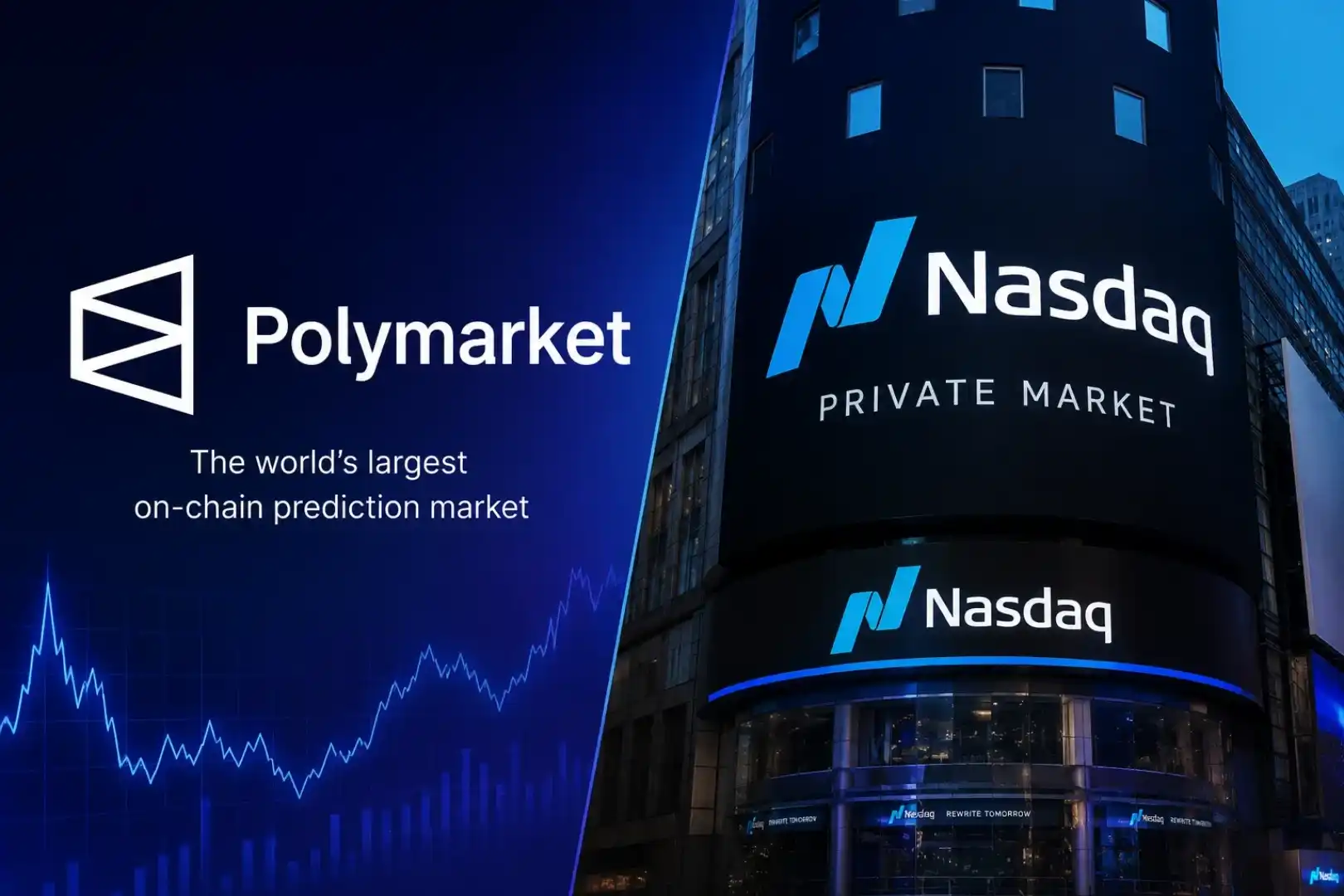
At the dawn of a major tech IPO wave, prediction market platform Polymarket is forming an exclusive partnership with Nasdaq Private Market (NPM) to launch contracts predicting the valuations of pre-IPO giants like OpenAI, Anthropic, and SpaceX. This move aims to capture the "valuation adjudication right" in the booming but opaque private market, where accurate valuation data is scarce for retail investors.
Facing stiff competition from rival Kalshi, which holds an 89% US market share and full regulatory approval, Polymarket's deal with NPM is a strategic counterattack. NPM provides crucial, real-time secondary market transaction data from employee stock sales to settle the new prediction contracts. In return, Polymarket's market-generated probability data becomes a valuable "institutional signal" for NPM's clients.
This follows Polymarket's broader strategy of monetizing its prediction data through partnerships with giants like ICE (Intercontinental Exchange) and Dow Jones, integrating its signals into mainstream financial data feeds and media. The Nasdaq deal specifically targets the lucrative and high-profile arena of pre-IPO tech valuations, potentially raising the entry barrier for competitors in this niche.
marsbit2026.05.20
Threads
Welcome to the HTX Community. Here, you can stay informed about the latest platform developments and gain access to professional market insights. Users' opinions on the price of Polygon Ecosystem Token (POL) are presented below.
Related Questions
Welcome to the Crypto FAQ. Users' questions and answers on Polygon Ecosystem Token (POL) are presented below.