The live price of Genius (GENIUS) is $0.35 USD and its current market capitalization is $-- USD.
Get real-time GENIUS/USD updates on HTX. Stay informed with the latest data and market trends to make smart trading decisions. HTX, your trusted source for accurate cryptocurrency price information.
Genius Key Stats
24h Volume (USD)
$--
Price Change Today
-0.28%
Circulating Supply (GENIUS)
335.37M
Sign up and trade to win rewards worth up to 1,500 USDT.Join Now
GENIUS Price Performance
Track Genius price movements with chart views spanning 1 day, 30 days, 60 days, 90 days, 1 year, and the period since it was listed on HTX.View more data for the Genius prices
Time
Change
Change%
Highest Price
Lowest Price
No data
GENIUS Market Information
Get the latest Genius price details on HTX: 24-hour high and low, all-time high (ATH), and daily price change percentage.
24h Low
$0
24h High
$0
All-Time High
$0
Market Cap
$0.00
24h Volume (USD)
$--
Circulating Supply
--
What is GENIUS?
Genius Terminal is the first private and final onchain terminal.It’s what comes after aggregators, intents bridges, and wallet extensions — a purpose-built trading OS for professional users who want DeFi without DeFi UX.
It's super easy to buy GENIUS on HTX. Simply click here to view a complete guide to buying Genius with ease.
Real-Time GENIUS Markets
View real-time Genius prices on HTX's spot markets. Switch between spot and futures markets to instantly compare live prices and 24-hour price changes.
Based on the historical performance of Genius, our prediction tool estimates that the price of Genius (GENIUS) could reach -- by --.
Predicted GENIUS Price in --
Our most recent forecast indicates the price of Genius (GENIUS) will increase to -- by --, with a price change of --% and a cumulative ROI of approximately --%.
Buy your first GENIUS on HTXSign Up
GENIUS FAQs
QWhat is the Genius (GENIUS) price today?
AThe current price of Genius (GENIUS) is $0.35 USD.
QWhat is the Genius (GENIUS) market cap?
AThe current market capitalization of Genius (GENIUS) is $0.00 USD, calculated by multiplying its circulating supply by its current price.
QWhat is the Genius (GENIUS) circulating supply?
AThe current circulating supply of Genius (GENIUS) is -- GENIUS.
QWhat is the Genius (GENIUS) all-time high?
AAs of 2026-08-06, the all-time high of Genius (GENIUS) is $0 USD.
QWhat is the Genius (GENIUS) 24h trading volume?
AThe 24-hour trading volume of Genius (GENIUS) is -- USD on HTX.
QCan I buy Genius (GENIUS) on HTX?
AYes, HTX offers industry-leading trading fees and deep liquidity, ensuring a smooth and secure Genius (GENIUS) purchase experience.
Six U.S. federal agencies are progressing with rulemaking for the GENIUS Act payment stablecoin framework, aiming for a July 18 deadline. This development provides crucial regulatory clarity on stablecoin reserves, issuer capital requirements, and new licensing pathways, particularly for commercial banks.
The primary impact is on market structure and long-term operational certainty, not immediate token prices. For traders, builders, and compliance teams, the update offers a concrete data point in a rapidly evolving sector. Stablecoins are a foundational component of crypto, linking exchanges, payments, and settlements, meaning changes to their regulation have broad implications.
The story's significance lies in its contribution to understanding the regulatory trajectory for stablecoins in the current cycle. It underscores a move towards clearer rules rather than representing final legal certainty. The value is in a precise, source-based assessment of what has changed, who is affected, and what steps come next, avoiding overblown conclusions.
GPT-5.6 has reportedly achieved an IQ score of 136 on Tracking AI's proprietary offline test, surpassing the human "genius" threshold of 130 for the first time. This places it above an estimated 99% of humans in this specific metric. The test is designed to prevent memorization by using a private question bank. Multiple GPT-5.6 variants, including the vision model, consistently scored 136, leading competitors like Claude-5 Fable (130). User anecdotes suggest practical superiority over rivals in real-world coding and problem-solving tasks, such as building a physics simulation or a customer service app from a single prompt. While some speculate this approaches AGI for most users, the article notes IQ tests only measure a narrow slice of cognitive ability like pattern recognition. The significance lies in GPT-5.6's apparent ability to translate high test scores into effective task performance on novel, real-world problems.
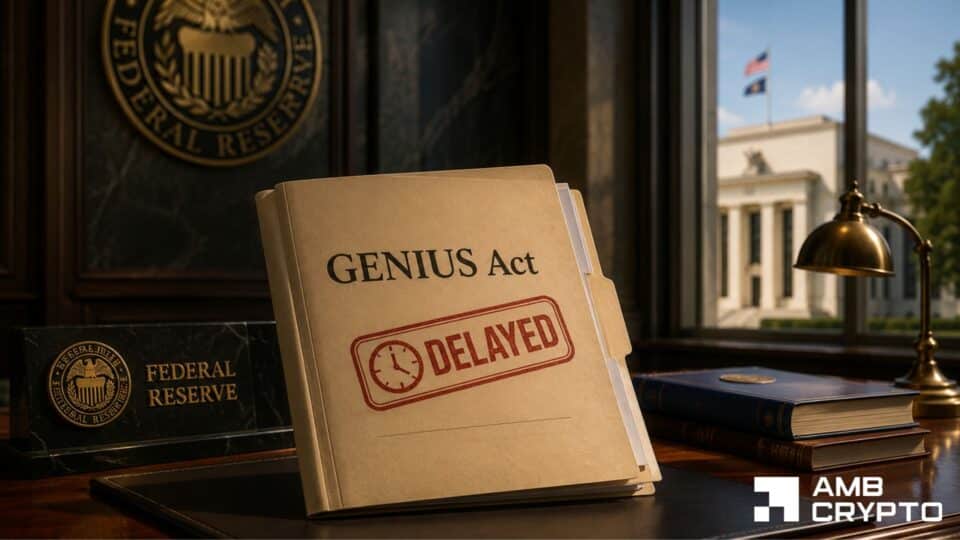
The GENIUS Act, the U.S. stablecoin framework passed in July 2027, has missed its first major rulemaking deadline. Regulators, including the Federal Reserve, were required to finalize rules by July 18, 2027, but none of the 10 related proposals have been officially completed. Six are past the comment period, while four remain open. Federal Reserve Chairman Kevin Warsh indicated final rules could be issued imminently. The banking industry has expressed concerns about the legislation creating an uneven playing field. Despite the regulatory delay, the stablecoin market has responded positively, with total supply growing from $250 billion to over $300 billion since the law's passage, and firms like Fidelity launching new offerings. Senator Bill Hagerty, a co-sponsor, hailed the act as a "watershed moment" for U.S. leadership in digital assets.
One year after the GENIUS Act became law, key implementation rules for stablecoins remain unfinished. Regulators missed a July 18 deadline to finalize core standards covering issuer reserves, capital, liquidity, custody, and risk management. Agencies like the OCC, Federal Reserve, and FDIC are still drafting these rules and gathering public feedback on proposals. This regulatory uncertainty complicates planning for issuers like Circle and Paxos, even as the stablecoin market has grown to over $310 billion. Despite the delays, regulators aim to enforce the Act by January 18, 2027.
Institutional adoption is gaining momentum, with firms like BlackRock and JPMorgan launching stablecoin-related products. Lawmakers, including Senator Cynthia Lummis, stress the urgency of completing the framework and passing further legislation like the CLARITY Act to solidify U.S. leadership in digital assets. Finalizing the remaining rules will be crucial for determining the pace of broad institutional adoption of regulated stablecoins in the United States.
US and UK regulators held a high-level meeting in London to advance stablecoin regulations and promote international cooperation. The 13th session of the Financial Regulatory Working Group, involving officials from both countries' treasuries, central banks, and major financial regulators, focused on aligning principles rather than proposing specific rules. Discussions centered on implementing the US's GENIUS Act to establish a federal framework for payment stablecoins and the UK's progress on its Wholesale Financial Markets Digital Strategy. Both nations committed to responsible digital asset development, consumer protection, and supporting stablecoins backed one-for-one with liquid assets. The Bank of England has relaxed certain proposed stablecoin rules, including removing individual holding limits and setting a temporary annual issuance cap of £40 billion for systemic stablecoins. It also adjusted reserve requirements, allowing a higher proportion to be held in UK government bonds, bringing the UK's approach closer to a new transatlantic regulatory alignment.
TheNewsCrypto22小时前
Threads
Welcome to the HTX Community. Here, you can stay informed about the latest platform developments and gain access to professional market insights. Users' opinions on the price of Genius (GENIUS) are presented below.
Related Questions
Welcome to the Crypto FAQ. Users' questions and answers on Genius (GENIUS) are presented below.