Point your camera at QR code

to get HTX App

More options
Language
Currency
Log out
Language
Currency
chip

USD.AI (CHIP) Plunge

CHIP Plunge History

Over the past year, CHIP has recorded a 24h drop of 5% a total of 16 times, 10% a total of 4 times, and 20% a total of 1 times.

Live CHIP Chart (CHIP/USD)

Last Updated:

  • 1H
  • 24H
  • 1W
  • 1M
  • 1Y
  • All
No data

CHIP 24h Plunge History (>5%)

Track CHIP price movements and major plunge events on HTX, with the latest 10 records.View more data for the CHIP prices

DateCryptoOccurrence #Price24h Change
2026/06/19USD.AI (CHIP)16$0,034079-5,49%
2026/06/16USD.AI (CHIP)15$0,034598-5,53%
2026/06/15USD.AI (CHIP)14$0,036651-8,66%
2026/06/09USD.AI (CHIP)13$0,033392-8,93%
2026/06/05USD.AI (CHIP)12$0,029516-8,83%
2026/06/04USD.AI (CHIP)11$0,032378-8,91%
2026/06/03USD.AI (CHIP)10$0,035608-9,55%
2026/05/27USD.AI (CHIP)9$0,039886-6,91%
2026/05/25USD.AI (CHIP)8$0,043885-7,4%
2026/05/20USD.AI (CHIP)7$0,049198-6,36%

CHIP 24h Plunge History (>10%)

Track CHIP price movements and major plunge events on HTX, with the latest 10 records.View more data for the CHIP prices

DateCryptoOccurrence #Price24h Change
2026/05/02USD.AI (CHIP)4$0,059373-11,3%
2026/04/28USD.AI (CHIP)3$0,062102-13,64%
2026/04/24USD.AI (CHIP)2$0,070545-20,46%
2026/04/22USD.AI (CHIP)1$0,095559-15,09%

CHIP 24h Plunge History (>20%)

Track CHIP price movements and major plunge events on HTX, with the latest 10 records.View more data for the CHIP prices

DateCryptoOccurrence #Price24h Change
2026/04/24USD.AI (CHIP)1$0,070545-20,46%

Articles

Xpeng and NIO Compete on Computing Power, Li Auto Shifts Architecture

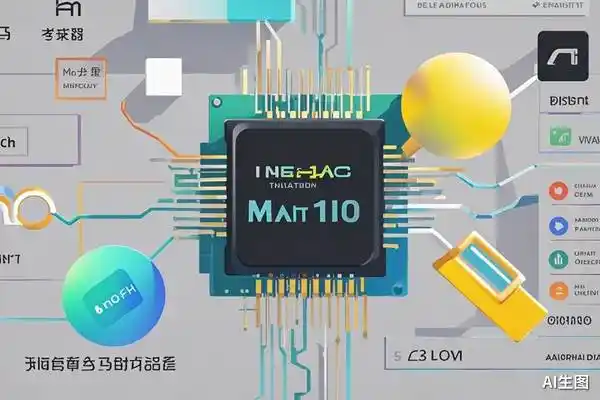
On June 15, 2026, Li Auto unveiled details of its self-developed chip, Mahe M100, for its new L9 Livis model. CTO Xie Yan stated the goal was not just a faster chip, but a fundamentally different one, targeting the chip architecture itself. While competitors like NIO, Xpeng, and Huawei highlight TOPS (computing power) figures for their self-developed chips, Li Auto’s Mahe M100 focuses on redesigning the underlying architecture. It employs a "dynamic data flow architecture" to address memory bandwidth bottlenecks in large model inference, claiming up to 3x the effective computing power of Nvidia's Thor U for its specific workloads and a 40% reduction in latency. The chip's design was peer-reviewed and accepted at ISCA 2026. However, this performance is highly optimized for Li Auto's own VLA2.1 algorithm, meaning it may not generalize as well to other tasks. Li Auto aims to achieve full-stack in-house development with Mahe M100, covering chip, compiler, OS, AI algorithms, and domain controller—a level of vertical integration few competitors match. Beyond the chip, CEO Li Xiang introduced a new strategic narrative: the "embodied intelligent vehicle," defined as an integration of an EV, a professional driver, an AI computer, and a life assistant. This shifts competition from features like large screens to systemic AI capabilities. A key commitment was that Li Auto's Mahe VLA autonomous driving model will match Tesla's FSD V14 by Q4 2026, with specific OTA milestones set for July, September, and December. Financially, Li Auto faces pressure with declining revenue and vehicle gross margins since Q4 2025, while maintaining high R&D investment (approx. ¥12B in 2026, 50% AI-related). Its 2026 sales target is 550,000 vehicles, up from 406,000 in 2025. The new L9 Livis garnered over 10,000 pre-orders in two weeks. The effectiveness of these strategic moves—new products, OTAs, and the novel chip architecture—will begin to show in Q3 2026 financial results, with the year-end FSD V14 benchmark being the ultimate test.

Xpeng and NIO Compete on Computing Power, Li Auto Shifts Architecture - marsbit

The 'Chip' Challenge and Breakthroughs in China's Optical Industry Chain

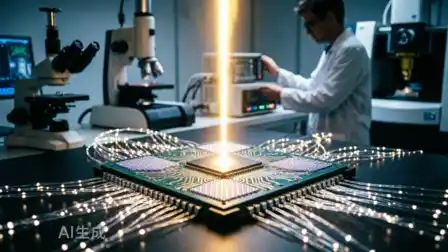
China's Photonics Industry: Bottlenecks and Breakthroughs In the global AI race, computing chips dominate the narrative, but the underlying bottleneck increasingly defining the scale of AI clusters is light—or more specifically, optical connectivity. Optical modules, which translate electrical signals to light and vice versa, are crucial for connecting thousands of GPUs in AI data centers, preventing data congestion and ensuring efficient model training. High-speed modules (800G, 1.6T) are now standard, with performance hinging on advanced DSP (Digital Signal Processor) chips. This is where a critical dependency lies. Two US giants—Marvell and Broadcom—collectively dominate over 90% of the high-end DSP chip market. Chinese optical module leaders like Zhongji Innolight and Eoptolink rely on these chips to manufacture modules for overseas AI customers, primarily in North America. While this creates a supply chain vulnerability, complete decoupling is difficult. Marvell derives over half its revenue from Greater China, and the US firms depend on Chinese partners for chip packaging and optical components. The risk from laser chips (e.g., from Lumentum), another key component, is considered more manageable due to multiple global suppliers and faster progress in domestic alternatives from companies like YOFC and Accelink. To mitigate risks, China's industry is pursuing a multi-pronged strategy: diversifying supply chains and locking in long-term orders; fostering a domestic market ecosystem to adopt homegrown DSPs from firms like Huawei HiSilicon and CETC; accelerating R&D in high-speed DSPs and advanced packaging; and investing in next-gen technologies like silicon photonics and Co-Packaged Optics (CPO) to reduce reliance on discrete DSPs. The ultimate solution lies not in short-term博弈 but in persistent advancement of domestic high-end chip R&D and manufacturing. While challenges remain in performance, certification, and ecosystem building, China's vast domestic market and manufacturing base provide a crucial buffer, buying time for the industry to achieve greater technological independence.

The 'Chip' Challenge and Breakthroughs in China's Optical Industry Chain - marsbit

$10 Billion, Qualcomm to Acquire Chip Legend Jim Keller's Company

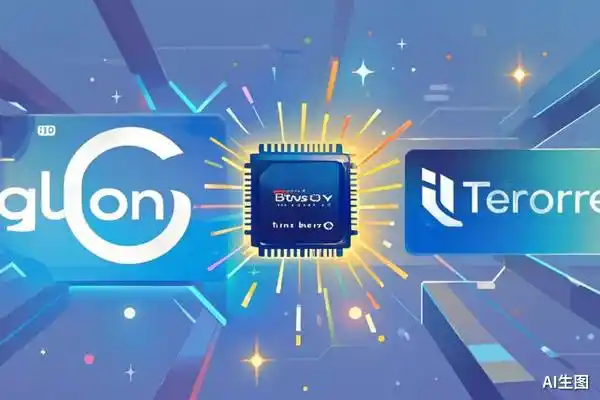
Global mobile chip giant Qualcomm is in advanced talks to acquire AI chip startup Tenstorrent in a deal valued between $8-10 billion, according to media reports. This potential acquisition would be one of the largest in the AI chip sector in recent years. Tenstorrent, led by legendary chip architect Jim Keller, has gained prominence for its RISC-V architecture and AI accelerator designs. The move highlights Qualcomm's strategic push to diversify beyond its core smartphone chip business. As the smartphone market matures, Qualcomm is aggressively targeting growth in automotive, data center, and cloud AI. Acquiring Tenstorrent would allow Qualcomm to rapidly enter the high-end AI computing market, bypassing lengthy in-house development cycles. Tenstorrent's cost-effective system architecture, which avoids expensive HBM memory and relies on standard Ethernet for clustering, offers a potential alternative to Nvidia's costly solutions. Furthermore, Tenstorrent's high-performance RISC-V CPU technology and its focus on the automotive and edge computing segments align with Qualcomm's strategic goals, including its "Snapdragon Digital Chassis" platform. Despite the strategic rationale, the high valuation has sparked some investor caution. The successful integration of Tenstorrent's open-source culture and independent team into Qualcomm's organization, along with the commercialization of its technology, remains a key challenge.

$10 Billion, Qualcomm to Acquire Chip Legend Jim Keller's Company - marsbit

Market Trend (June 19): US-Iran Deal Drives Out Geopolitical Premium; Chip Stocks Soar to New Highs; Energy Sector Leads Declines

U.S. Market Trends (June 19): U.S.-Iran Deal Eases Tensions, Chip Stocks Soar, Energy Sector Leads Declines. U.S. stocks rallied on Thursday as the signing of a temporary U.S.-Iran deal in Geneva de-escalated Middle East tensions, with Saudi oil tankers transiting the Strait of Hormuz. This geopolitical relief helped markets recover from recent Fed-driven volatility. The S&P 500 rose over 1%, the Nasdaq gained nearly 2%, and the Dow Jones Industrial Average closed at another record high. The Philadelphia Semiconductor Index surged over 6% to a historic peak. Chip stocks were the standout performers. Reports of an Apple-Intel design and foundry deal for certain products, alongside mentions of potential Nvidia and SpaceX collaborations with Intel, propelled the sector. Intel surged ~10.5%, while memory chip makers like Micron also saw significant gains, highlighting sustained confidence in long-term AI capital expenditure. In contrast, the energy sector was the day's sole loser, with the S&P 500 energy sub-index declining as WTI crude fell ~2% to around $74.29/barrel. The reopening of key shipping routes erased prior geopolitical risk premiums. SpaceX extended losses for a second day on news of a potential large bond offering. Market volatility (VIX) dropped sharply, indicating a swift reversal of post-Fed jitters. Treasury yields dipped slightly but remained elevated. The focus now shifts to upcoming economic data, including next week's PCE inflation report and Micron's earnings, which will serve as a key test for the AI trade's durability.

Market Trend (June 19): US-Iran Deal Drives Out Geopolitical Premium; Chip Stocks Soar to New Highs; Energy Sector Leads Declines - marsbit

The "Iron Rule" of Chip Equipment Is Being Broken

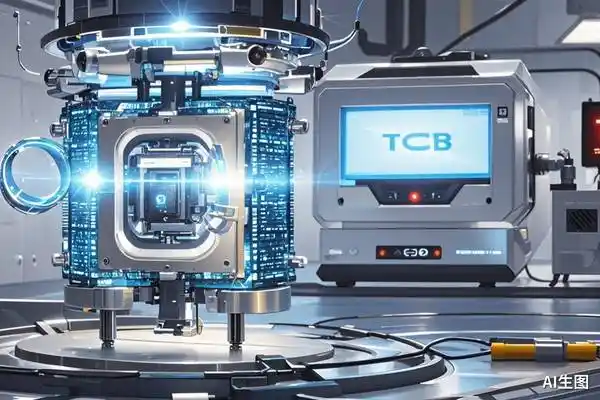
For years, the semiconductor equipment industry followed an unwritten "iron rule": suppliers offered steep discounts for new tool introductions (Design-in) and faced consistent price pressure during repeat orders, especially during market downturns. This long-standing buyer's market dynamic is now being upended. Recently, SK Hynix's primary equipment suppliers have reportedly requested a 3-4% price *increase*, a nearly unprecedented move. This shift is driven by a severe supply-demand imbalance fueled by the AI compute boom. Securing equipment has become an urgent arms race as chipmakers' expansion speed dictates their ability to fulfill massive AI chip orders. Key areas feeling the strain include: **TCB (Thermal Compression Bonding) Equipment:** Demand is exploding, driven by the simultaneous needs of HBM4 memory stacking, AI chip Chip-on-Substrate (C2S), and logic Chiplet Chip-on-Wafer (C2W) packaging. Players like Hanmi Semiconductor, Hanwha Semitech, and ASMPT are receiving major orders. While hybrid bonding is seen as the future, TCB remains the pragmatic choice for HBM4 mass production, with its lifecycle extended by relaxed specifications and ongoing technological upgrades. **Test Equipment Bottlenecks:** Ironically, AI-driven shortages are now crippling test equipment manufacturing. Critical components like FPGAs, Driver ICs, and CPUs face severe shortages and extended lead times (up to 52 weeks for FPGAs), as AI data center and server vendors prioritize supply. This creates a paradoxical cycle: AI chip shortages drive fab expansion, which requires more test equipment, whose production is delayed because its key parts are diverted to make AI chips. The industry is entering a broad, AI-powered upcycle. SEMI forecasts global semiconductor equipment sales to hit a record $156 billion by 2027, fueled by investment in advanced logic/foundry, HBM-driven DRAM, and advanced packaging (like CoWoS). Major players like TSMC, SK Hynix, and Micron are aggressively ramping capital expenditure. In conclusion, leading equipment vendors are no longer just selling tools; they are selling the critical capability to deliver AI-era capacity. Pricing power is shifting decisively to those with indispensable technology in key process nodes like advanced logic, HBM, and advanced packaging, rewriting the industry's traditional power structure.

The "Iron Rule" of Chip Equipment Is Being Broken - marsbit

Recommendations

ctr
CitreaCTR
wstusdt
wrapped stUSDTWSTUSDT
apr
aPrioriAPR
ctx
Cryptex FinanceCTX
audio
AudiusAUDIO
mantra
MantraMANTRA
xvs
VenusXVS
waxl
AxelarWAXL
bill
Billions NetworkBILL
pyth
PYTH (Pyth)PYTH
rune
THORChainRUNE
velodrome
Velodrome FinanceVELODROME
brev
BrevisBREV
zrx
ZRX(0X)ZRX
cake
PancakeSwapCAKE
jst
JUSTJST
sun
SUNSUN
zbt
ZerobaseZBT
1inch
1inch1INCH
twt
Trust WalletTWT
dexe
DeXeDEXE
lista
Lista DAOLISTA
avax
AvalancheAVAX
re
ReRE
zkc
BoundlessZKC
era
CalderaERA
aster
AsterASTER
carv
CarvCARV
knc
Kyber NetworkKNC
btt
BitTorrentBTT
btw
BitwayBTW
cfg
CentrifugeCFG
blue
BluefinBLUE
hana
HANA NetworkHANA
o
O1 exchangeO
pendle
PendlePENDLE
orbs
Orbs Network ORBS
kaito
KaitoKAITO
panther
Panther ProtocolPANTHER
order
OrderlyORDER
chip
USD.AICHIP
based
BasedBASED
sfp
SafePalSFP
dia
DIADIA
jup
JupiterJUP
ach
Alchemy PayACH
api3
API3API3
bmt
BubblemapsBMT
swtch
SwitchboardSWTCH
genius
GeniusGENIUS
red
RedStoneRED
prove
SuccinctPROVE
soph
SophonSOPH
avail
AvailAVAIL
lit
LighterLIT
acx
Across ProtocolACX
resolv
ResolvRESOLV
layer
SolayerLAYER
elf
aelfELF
req
Request NetworkREQ
morpho
MORPHOMORPHO
trb
Tellor TributesTRB
opg
OpenGradientOPG
opn
OpinionOPN
sxt
Space and TimeSXT
spk
SparkSPK
ondo
OndoFinanceONDO
waves
WavesWAVES
dbr
deBridgeDBR
night
MidnightNIGHT
me
Magic EdenME
trx
TRONTRX
nft
AINFTNFT
eul
Euler FinanceEUL
hsk
HashKey Platform TokenHSK
kava
KavaKAVA
avnt
AvantisAVNT
sqd
SubsquidSQD
safe
SafeSAFE
ava
TravalaAVA
es
EclipseES
bard
LombardBARD
scrt
Secret NetworkSCRT
gwei
ETHGasGWEI
avl
AvalonAVL
usdd
USDDUSDD
plume
Plume NetworkPLUME
synd
SyndicateSYND
xch
Chia NetworkXCH
win
WINkLinkWIN
met
MeteoraMET
sent
SentientSENT
theta
ThetaTHETA
solv
Solv ProtocolSOLV
ff
Falcon FinanceFF
fhe
Mind NetworkFHE
inj
InjectiveINJ
towns
TOWNSTOWNS
wan
WanchainWAN
crv
Curve DAO TokenCRV
grt
The GraphGRT
dydx
dYdXDYDX
cbk
CobakCBK
krrx
KyrrexKRRX
rpl
Rocket poolRPL
uni
UniswapUNI
zama
ZAMAZAMA
inx
InfinexINX
ldo
LidoLDO
xdc
XDC NetworkXDC
link
ChainLinkLINK
xtz
TezosXTZ
obt
Orbiter FinanceOBT
enso
ensoENSO
zest
Zest ProtocolZEST
well
Moonwell ArtemisWELL
bio
BIO ProtocolBIO
lqty
LiquityLQTY
anime
AnimecoinANIME
nil
NillionNIL
newt
Newton ProtocolNEWT
ctc
CreditcoinCTC
rad
RadicleRAD
skr
SeekerSKR
home
Defi.appHOME
Language