The live price of Sonic (S) is $0.02 USD and its current market capitalization is $-- USD.
Get real-time S/USD updates on HTX. Stay informed with the latest data and market trends to make smart trading decisions. HTX, your trusted source for accurate cryptocurrency price information.
Track Sonic price movements with chart views spanning 1 day, 30 days, 60 days, 90 days, 1 year, and the period since it was listed on HTX.View more data for the Sonic prices
Time
Change
Change%
Highest Price
Lowest Price
No data
S Market Information
Get the latest Sonic price details on HTX: 24-hour high and low, all-time high (ATH), and daily price change percentage.
24h Low
$0
24h High
$0
All-Time High
$0
Market Cap
$0.00
24h Volume (USD)
$--
Circulating Supply
--
What is S?
Sonic is an L1 blockchain network delivering 10,000 TPS with sub-second finality. The network connects to Ethereum's liquidity through the Sonic Gateway and features unique developer incentives including Fee Monetization that allows developers to earn up to 90% of fees their apps generate. Built by the team behind Fantom Opera, Sonic plans to support dynamic fees, fee subsidization, and native account abstraction while maintaining full EVM compatibility.
Based on the historical performance of Sonic, our prediction tool estimates that the price of Sonic (S) could reach -- by --.
Predicted S Price in --
Our most recent forecast indicates the price of Sonic (S) will increase to -- by --, with a price change of --% and a cumulative ROI of approximately --%.
Buy your first S on HTXSign Up
S FAQs
QWhat is the Sonic (S) price today?
AThe current price of Sonic (S) is $0.02 USD.
QWhat is the Sonic (S) market cap?
AThe current market capitalization of Sonic (S) is $0.00 USD, calculated by multiplying its circulating supply by its current price.
QWhat is the Sonic (S) circulating supply?
AThe current circulating supply of Sonic (S) is -- S.
QWhat is the Sonic (S) all-time high?
AAs of 2026-06-21, the all-time high of Sonic (S) is $0 USD.
QWhat is the Sonic (S) 24h trading volume?
AThe 24-hour trading volume of Sonic (S) is -- USD on HTX.
QCan I buy Sonic (S) on HTX?
AYes, HTX offers industry-leading trading fees and deep liquidity, ensuring a smooth and secure Sonic (S) purchase experience.
Alliance Co-founder's Letter to Entrepreneurs: On Cursor's $60 Billion Sale
Many aspiring founders see massive exits like Cursor's $60B sale and wonder why they can't achieve the same, often concluding opportunities are exhausted. But great companies aren't built in obvious, crowded spaces.
Cursor, like Stripe, Figma, and Shopify before it, started with a non-consensus belief about the future. Before ChatGPT, they believed AI would transform knowledge work. They focused on a genuinely exciting domain, became their own customer, and obsessed over power users. Their journey involved years of "glass-chewing" effort before the market was ready. The pattern is consistent: identify a long-term technological shift, find a missed entry point, and execute for years before the trend becomes obvious.
First-generation products (PayPal, Adobe, Amazon) prove a market exists. Second-generation winners (Stripe, Figma, Shopify) rebuild that market around new insights, technology, or changing customer behaviors. Founders must identify their phase in the cycle. Early entrants like Coinbase or Cursor focus on making new technology usable for power users. Later entrants find the "yin" to the established "yang"—the blind spots incumbents miss as they grow distant from individual users.
The key is deep market immersion. Use every product in your space. Talk to users. Build an audience. Stop looking for ideas and start *seeing* them everywhere. Then, choose one. The idea must offer a 10x improvement or solve a "hair-on-fire" pain point—something severe enough that users are already crafting workarounds.
When building, avoid feature bloat. Ask: why would someone switch? Great startups rarely force new behaviors; they improve familiar workflows with drastically lower friction (e.g., Cursor forked VS Code instead of creating a new editor). Distribution is the underestimated moat. Before product-market fit, achieve distribution-market fit. How do customers discover new tools? Founders like those at Airbnb, Stripe, and Cursor did unscalable, manual work to recruit early users.
The final, unteachable ingredient is resilience. Cursor built for years pre-market, faced rejection, and persisted. So did Airbnb, Nvidia, and Rain (which launched post-FTX collapse). The lesson isn't that these founders were smarter, but that they stayed in the game long enough for their insights to compound.
Framework: Spot technological cycles. Cultivate unique insight. Obsess over your market. Talk to customers. Find a hair-on-fire problem. Build the simplest wedge. Win your distribution channel. Above all, don't quit when it gets hard. Most people won't do these things consistently. The few who do build the next generation of great companies. Go build.
In three days, Google lost two AI legends. On June 18, Noam Shazeer, co-author of the seminal "Attention is All You Need" paper and Gemini co-lead, left for OpenAI. Just 48 hours later, John Jumper, 2024 Nobel laureate and AlphaFold lead, departed DeepMind for Anthropic. This follows Andrej Karpathy joining Anthropic in May. These moves highlight a structural trend: top AI talent is concentrating at mission-driven, pre-IPO firms like OpenAI and Anthropic, while Google becomes a primary source.
The exodus stems from a core mission mismatch. Google's ad-centric model often subordinates AI research to product and revenue goals, creating friction for pioneers like Shazeer, who returned in 2024 only to leave again. In contrast, OpenAI and Anthropic offer singular focus on pushing AI boundaries, whether towards AGI or safety-aligned models, which deeply appeals to top researchers like Jumper.
Financial incentives amplify the pull. With both OpenAI and Anthropic nearing IPO, employees stand to gain immensely from equity, an upside Google's mature stock cannot match. Furthermore, the 2023 merger of Google Brain and DeepMind, intended to consolidate strength, has instead created cultural tension and slowed the path from research to product, as evidenced by Gemini's pace.
This talent redistribution is reshaping the AI landscape. While Google retains vast data and compute resources, its true crisis is the quiet, continuous loss of the people who define the field's future. The real moat in AI is not infrastructure, but the concentration of brilliant minds—a battle Google is currently losing.
"1996 or 1999? Wall's First Big Test Is 'How to View AI'"
Federal Reserve Chairman Wall's initial challenge is not whether to raise or cut rates, but a more fundamental judgment: what kind of boom is the current AI boom? This will determine the Fed's policy path and define his legacy.
Economics is split between two opposing views, according to reporter Nick Timiraos. One sees imminent productivity gains that will increase supply and cool inflation, allowing the Fed to hold steady. The other argues that while productivity benefits are distant, demand shocks are here now, and waiting for data confirmation risks missing the intervention window, forcing sharper rate hikes later.
Wall has signaled a leaning toward the first view, echoing 1996-era Alan Greenspan, who embraced strong, productivity-driven growth without fear of inflation. However, Wall faces a different macro environment than Greenspan did, with tariff pressures, expanding fiscal deficits, and diminishing globalization benefits, which could force more significant inflation pressures even if AI benefits materialize.
Wall's logic, expressed before taking office, is that AI-driven productivity gains won't show in official data for years. If the Fed waits for confirmation, it might mistakenly tighten policy and choke off the very growth that could suppress inflation. This argues for using forward-looking narratives over lagging data.
Chicago Fed President Austan Goolsbee presents a key counter-argument. He distinguishes between expected and unexpected productivity booms. A widely anticipated boom, like the current AI wave, can cause people to spend future wealth gains in advance, overheating the economy before productivity actually rises, thus requiring preemptive rate hikes. He cites rising costs for AI data centers as evidence of such overheating.
Fed Governor Christopher Waller offers a rebuttal to Goolsbee, noting the "expected spending" mechanism only works if people can borrow against future income, which many households cannot do due to borrowing constraints.
Wall also faces a paradox related to his desire to reduce the Fed's use of "forward guidance" (pre-announcing policy moves). This practice was established in 1999 when Greenspan began signaling hikes to avoid market shocks. If the economy follows a less optimistic path, Wall may be forced to choose between using the guidance he wants to abolish or risking market volatility by staying silent.
The ultimate question defining Wall's first major test remains: Is this 1996 or 1999?
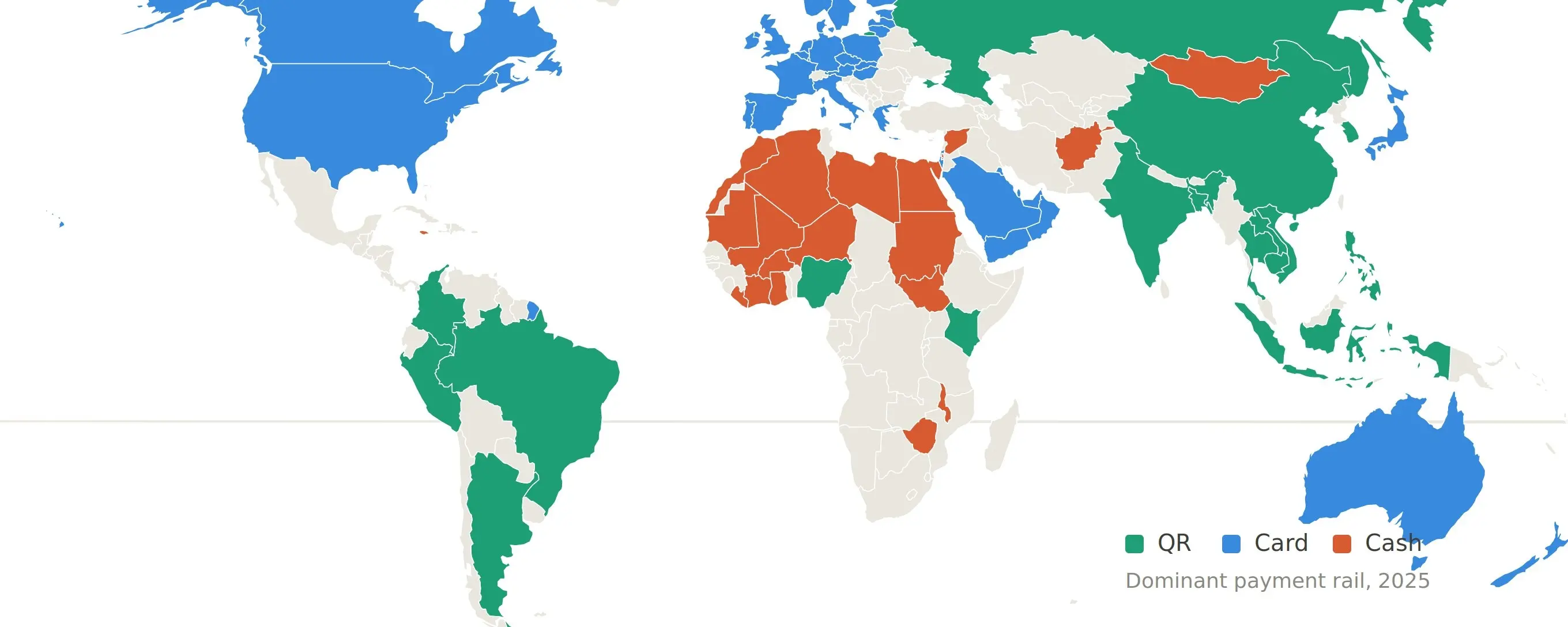
This report challenges common misconceptions about Latin America's payment landscape, based on over 500 hours of firsthand research. Key findings include: 1) Crypto card transaction volume primarily comes from high-net-worth individuals receiving USDT salaries, not retail spending. 2) QR code payments (e.g., Brazil's Pix, Argentina's Mercado Pago) are the dominant payment method across most emerging markets, not cards. 3) A major untapped opportunity lies in enabling cross-border interoperability between domestic instant payment systems. 4) Payment competition is shifting from customer acquisition to owning the settlement layer (e.g., acquiring banks). 5) Latin America is not a single market; Brazil, Mexico, Argentina, and smaller "forgotten five" countries (e.g., Guatemala, Honduras) have vastly different dynamics. 6) Stablecoin-to-fiat conversion margins are collapsing toward zero, pushing companies to build value-added services on top. 7) Future payment winners will be multi-country brands, not single-corridor specialists. 8) Marketing must target specific user segments (e.g., digital nomads, unbanked immigrants) with tailored messaging, not a generic "Brazilian" audience. 9) Contrary to perception, Latin American regulators are often ahead of the US in creating frameworks for digital assets and instant payments, with clear licensing deadlines. The core takeaway is that the region's payment rules are being rewritten, moving beyond cards and stablecoin arbitrage towards integrated, cross-border QR-based solutions.
The departure of high-profile AI talent from Google, including transformer pioneer Noam Shazeer and AlphaFold's John Jumper, has sparked debate about the company's competitive position. However, this is less a sign of decline than a pressure test typical of the pre-IPO talent wars among AI giants like OpenAI and Anthropic. Google's true strength lies not just in models but in its unparalleled full-stack position: extensive AI research, proprietary infrastructure (TPU, Google Cloud), a massive user base across products (Search, YouTube, Android), and established enterprise relationships. It is simultaneously a competitor and a key infrastructure provider for rivals. While facing the innovator's dilemma inherent to protecting its core search business, Google is aggressively integrating AI across its ecosystem. The narrative shouldn't focus on individual departures but on Google's systemic advantages—its deep talent pool, integrated product strategy, and capacity to compete across every layer of the AI stack for the long term.
marsbit5小时前
Threads
Welcome to the HTX Community. Here, you can stay informed about the latest platform developments and gain access to professional market insights. Users' opinions on the price of Sonic (S) are presented below.
Related Questions
Welcome to the Crypto FAQ. Users' questions and answers on Sonic (S) are presented below.