Robinhood Chain flips Hyperliquid – 2 metrics show speculative interest

ambcrypto2026-07-11 tarihinde yayınlandı2026-07-11 tarihinde güncellendi

Özet

Robinhood Chain, a new Ethereum Layer 2, has rapidly become a major hub for speculative trading, surpassing Hyperliquid and BNB Chain in daily DEX volume. Its volume skyrocketed from under $10 million to a record $600 million, driven largely by viral memecoins like CashCat and a public bet by Robinhood's CEO. This surge has positioned it as the fourth-largest chain for such activity. However, the memecoin frenzy has reignited a broader debate about the value of L2s to Ethereum. Critics, including Bankless's David Hoffman, argue L2s operate as largely independent chains that do not economically benefit ETH. Uniswap CEO Hayden Adams countered that ETH-denominated trading pairs could increase ETH burns. The debate centers on whether L2 growth, while scaling Ethereum, ultimately undermines ETH's value by reducing transaction fees burned on the mainnet.

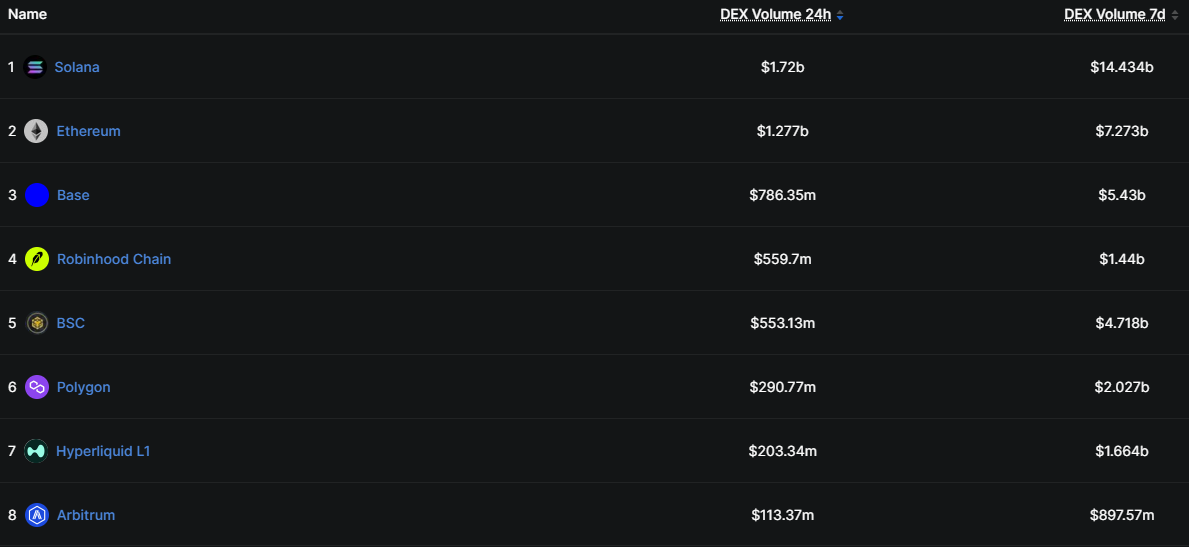
The new Ethereum Layer 2 (L2) Robinhood Chain has surpassed Hyperliquid and BNB Chain in speculative interest.

A week ago, Robinhood’s DEX volume (which tracks trading volume and broader speculative interest) was less than $10M.

As of writing, the daily DEX volume has hit a record level of $600M, making it the fourth dominant chain in speculative activity.

In the past two days, it has effectively surpassed BNB Chain and Hyperliquid on this front thanks to Robinhood’s CEO’s memecoin bet.
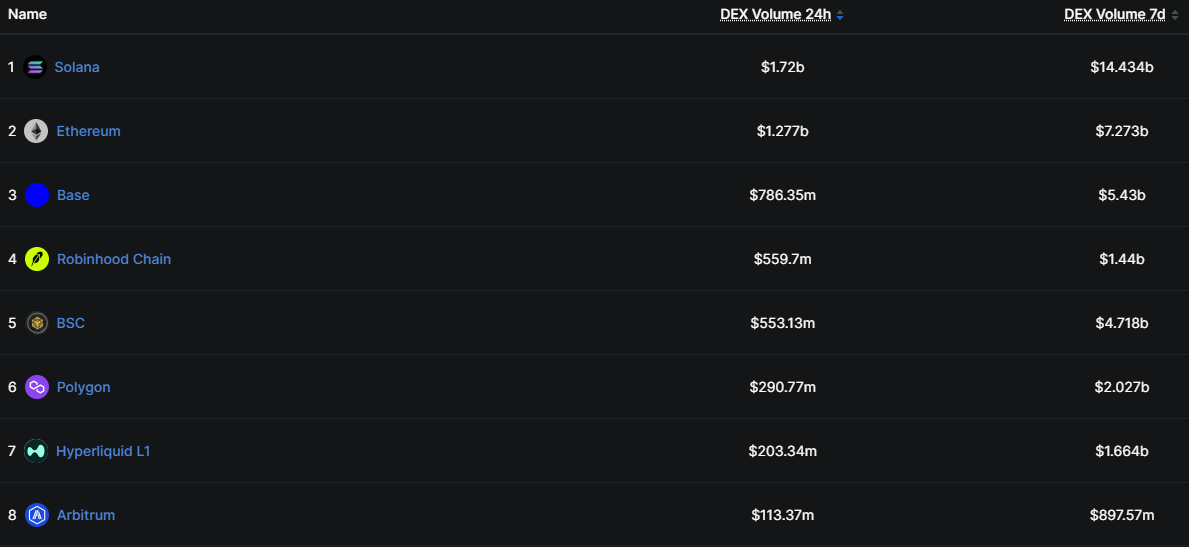
Source: DeFiLlama

As Robinhood Chain-based memecoins like CashCat [CASHCAT] went viral and posted massive gains, the FOMO attracted users and capital inflows.

Robinhood’s memecoin frenzy sparks L2 debate

If the memecoin mania persists, it could surpass Base in DEX volume to become the third-largest place for speculative trading.

Worth pointing out that Uniswap crossed $1B in volume on Robinhood Chain since launch, further underscoring how crazy the memecoin mania is on the new L2.
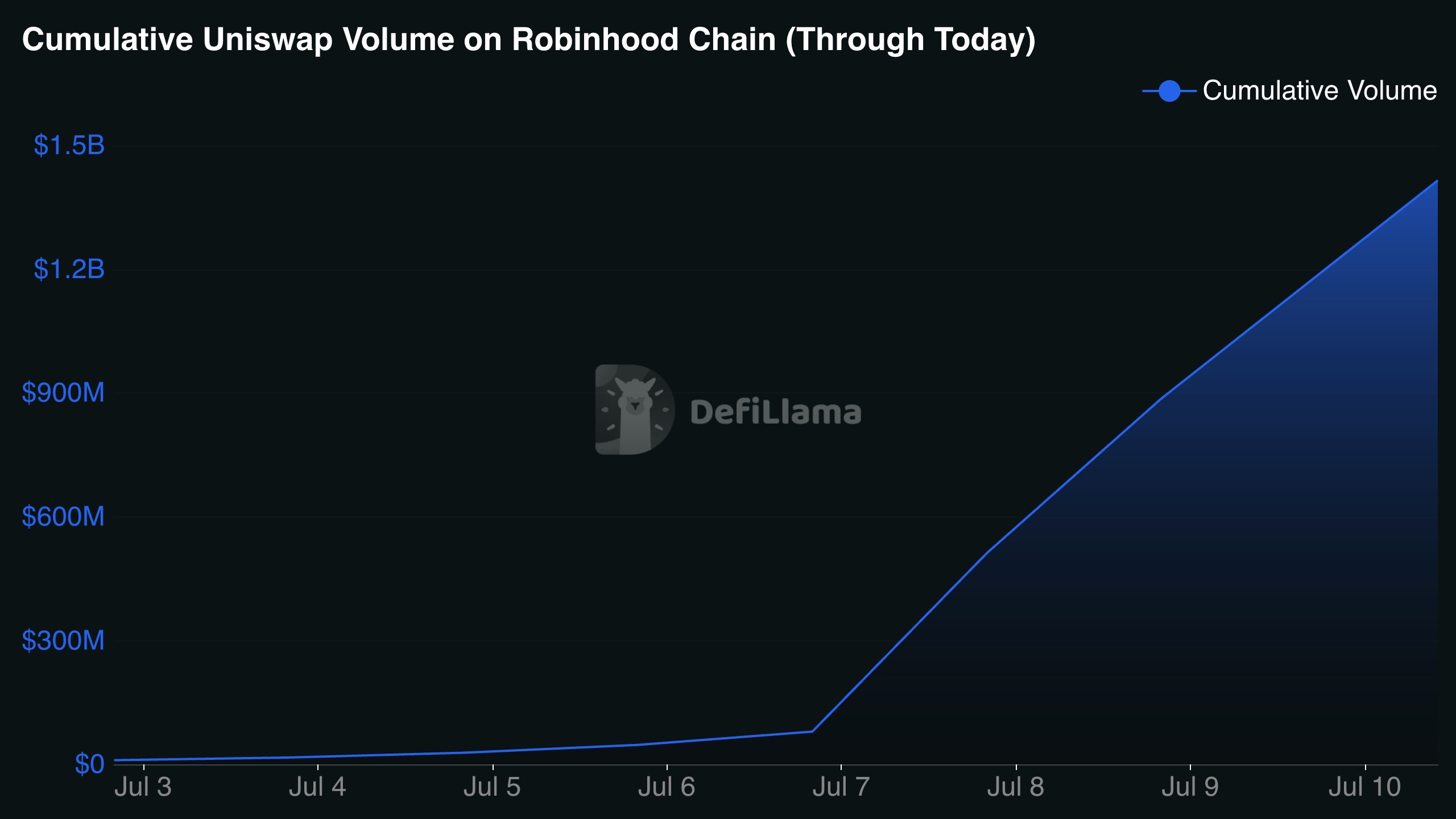
Source: DeFiLlama

But critics have been opposing the memecoin push. Most questioned the need for another Ethereum Layer 2 (L2) if its use case is risky memecoin speculation. The debate has since evolved to whether L2 growth benefits ETH’s value.

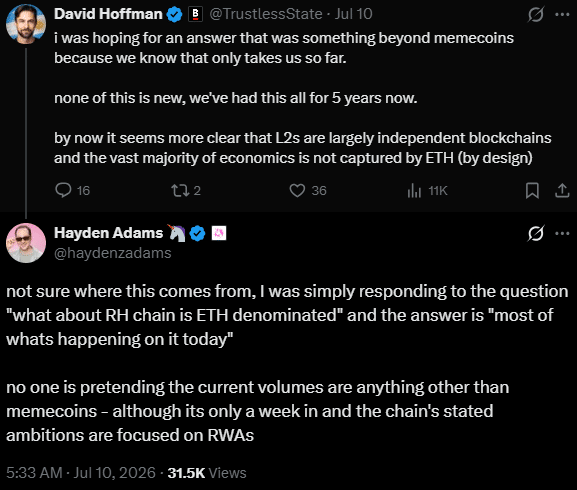
For Bankless’ David Hoffman, L2s aren’t helpful to ETH.

By now it seems more clear that L2s are largely independent blockchains and the vast majority of economics is not captured by ETH (by design).

Uniswap CEO Hayden Adam countered that most of the pairs on the chain are denominated in ETH and will eventually help burn more ETH, especially if the RWA narrative picks up momentum.
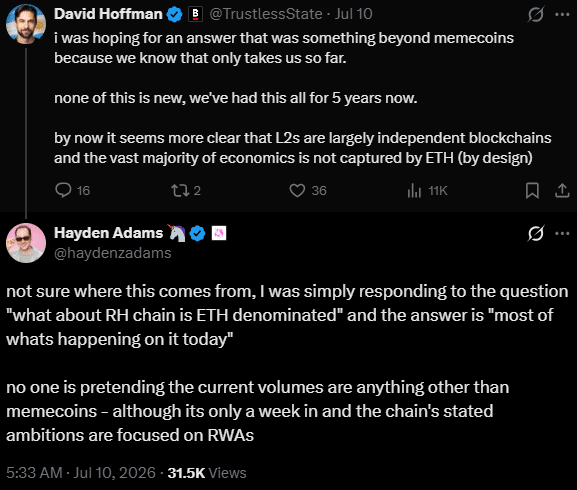
Source: X

Do Layer 2s actually help Ethereum?

The L2 roadmap has been under heavy criticism. With corporate chains such as Stripe’s Tempo, SWIFT, and more, the criticism has deepened.

For lawyer Gabriel Shapiro, the entire roadmap was ‘poorly executed’ to benefit ETH value.

The roadmap was just very poorly executed so that it’s mostly negative to ETH & leaves the L2s with too much optionality to become L1s, no real lock-in.

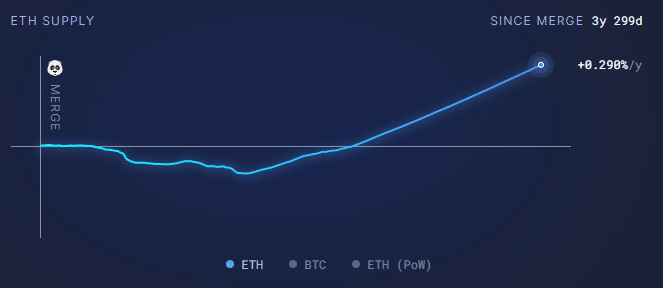
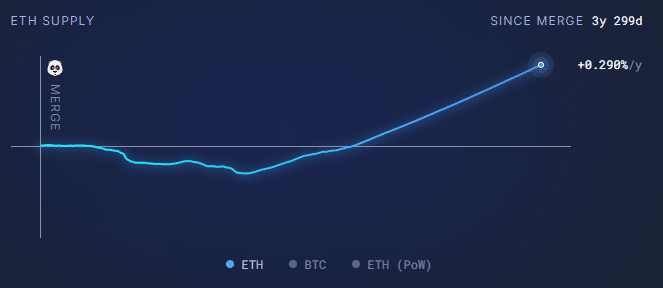
Ethereum’s best shot at scaling was through L2s, and recent upgrades have made them cheaper and attracted more traffic.

But this has also reduced the number of ETH burned, making the asset inflationary and denting its ‘store of value’ narrative.
Source: Ultrasoundmoney

Whether the renewed L2 debate will drag ETH’s market sentiment and price remains to be seen. As of writing, Ethereum [ETH] traded at $1.8K, a key inflection point that could trigger the next leg of price recovery or another pullback.


Final Summary

  • Robinhood L2 has become the fourth largest on-chain place for speculative trading, flipping BNB Chain and Hyperliquid
  • Amid the hype, Ethereum L2s are under scrutiny again for being non-beneficial to ETH’s value

Trend Kriptolar

İlgili Sorular

QWhat recent achievement did Robinhood Chain accomplish according to the article?

ARobinhood Chain has become the fourth largest on-chain platform for speculative trading, surpassing BNB Chain and Hyperliquid in daily DEX volume, which reached a record $600 million.

QWhat is the primary driver behind the surge in speculative activity on Robinhood Chain?

AThe surge is primarily driven by a memecoin frenzy, particularly following a memecoin bet by Robinhood's CEO, which led to viral memecoins like CashCat [CASHCAT] posting massive gains and attracting significant user interest and capital inflows.

QWhat criticism is highlighted regarding Ethereum Layer 2s (L2s) in the article?

AThe main criticism is that L2s are largely independent blockchains and their economic activity does not significantly benefit Ethereum (ETH) by capturing value for it. Critics argue this design has made L2s potentially negative for ETH's value, reducing the amount of ETH burned and making the asset inflationary.

QWhat does Uniswap CEO Hayden Adams argue about L2s and Ethereum?

AHayden Adams counters the criticism by arguing that since most trading pairs on L2s are denominated in ETH, the increased activity will eventually help burn more ETH. He believes this will be especially beneficial if the Real World Asset (RWA) narrative gains momentum.

QAccording to the article, what is a key concern about Ethereum's current price level?

AAs of the article's writing, Ethereum is trading at $1.8K, which is identified as a key inflection point that could determine whether the price begins its next recovery phase or experiences another pullback.

İlgili Okumalar

Investors Begin 'Switching Tables'

Investors Begin to “Change Tables” A notable shift is occurring in China's venture capital landscape. While the hard tech sector, especially AI, experiences a funding frenzy with record-breaking investment rounds, many investors are opting to leave traditional investment firms to join portfolio companies. This movement, termed "changing tables," marks a departure from past downturns where such moves were often a last resort. Currently, the trend is driven by proactive choice. Seasoned investors, including partners and managing directors, are being lured by attractive salaries, equity incentives, and core roles like VP, General Manager, or even co-founder at fast-growing startups in hot sectors like AI, embodied intelligence, and aerospace. This "going ashore" to companies is seen as a strategic career move. The shift is a two-way street. Booming fundraising and feverish investment activity have created intense competition among VCs for a narrow set of "star projects." Simultaneously, these high-flying tech companies, engaged in rapid, multi-round financing, urgently need talent with deep capital market expertise and institutional connections to manage their complex funding needs. Companies like Zhiyuan Robot, MoonDark AI, and MiniMax are actively recruiting from investment firms. For investors, the move also reflects concerns about the sustainability of the current market. Risks like valuation inversion between primary and secondary markets, high IPO破发 rates, increased regulatory scrutiny, and the uncertainty of eventual exits are prompting a reevaluation of the traditional VC path. While this transition offers new opportunities, it is not without challenges. Success requires adapting from evaluating companies to operating within one, focusing on execution over analysis. Nevertheless, this trend underscores the expanding career boundaries and fluidity within China's innovation ecosystem.

marsbit13 dk önce

Investors Begin 'Switching Tables'

marsbit13 dk önce

Ethereum Community in Uproar! Whose Cake is EIP-8363 Cutting Into?

**Ethereum Community Debates Controversial Staking Proposal EIP-8363** A new Ethereum proposal, EIP-8363, dubbed "Tapered Issuance Burn," has ignited heated debate within the community. The core idea is to reduce and eventually eliminate new issuance rewards for validators as the total amount of staked ETH approaches 50% of the total supply (around 60.25 million ETH). The authors, including EthCC founder Jérôme de Tychey and Ethereum Foundation researcher Justin Drake, argue the current system perpetually incentivizes more staking, potentially leading to centralization as stake flows to large custodians and liquid staking tokens (LSTs). They also aim to reduce dilution pressure on non-staking ETH holders. Under the proposal, validator rewards from consensus-layer issuance would be partially burned based on a formula tied to the total staked amount. Net rewards would gradually approach zero as staking nears the 50% threshold. Notably, execution-layer rewards (tips, MEV) are unaffected. A proposed 18-month transition period would soften the initial impact. The community reaction has been predominantly critical. Key concerns include: * **Centralization Risk:** Critics like Obol's Oisín Kyne argue very low rewards could drive out solo stakers and smaller operators, leaving only large, cost-insensitive institutions, thus increasing validator centralization. * **Ecosystem Impact:** Aave's Stani Kulechov warns it could hurt ETH's predictable yield appeal for institutions and compress yields for LST-based DeFi strategies (e.g., recursive lending). * **Process & Timing:** Some, like ether.fi's Mike Silagadze, criticize the proposal's late submission ahead of a key upgrade deadline, limiting discussion time. Supporters believe the change is necessary to maintain ETH as a neutral reserve asset and avoid excessive security costs and holder dilution. If implemented, solo stakers would face higher relative operational costs and longer recovery times from penalties. LST yields would converge with native ETH, challenging their value proposition. The entire DeFi interest rate ecosystem, built around staking yield, could be pressured. While all ETH holders would benefit from reduced dilution, the net effect on ETH's price and adoption remains uncertain due to potential demand-side impacts from lower yields. The proposal is currently an early-stage draft and has not been officially slated for inclusion in any upcoming network upgrade.

marsbit42 dk önce

Ethereum Community in Uproar! Whose Cake is EIP-8363 Cutting Into?

marsbit42 dk önce

İşlemler

Spot

Popüler Makaleler

LAYER Nasıl Satın Alınır

HTX.com’a hoş geldiniz! Solayer (LAYER) satın alma işlemlerini basit ve kullanışlı bir hâle getirdik. Adım adım açıkladığımız rehberimizi takip ederek kripto yolculuğunuza başlayın. 1. Adım: HTX Hesabınızı OluşturunHTX'te ücretsiz bir hesap açmak için e-posta adresinizi veya telefon numaranızı kullanın. Sorunsuzca kaydolun ve tüm özelliklerin kilidini açın. Hesabımı Aç2. Adım: Kripto Satın Al Bölümüne Gidin ve Ödeme Yönteminizi SeçinKredi/Banka Kartı: Visa veya Mastercard'ınızı kullanarak anında Solayer (LAYER) satın alın.Bakiye: Sorunsuz bir şekilde işlem yapmak için HTX hesap bakiyenizdeki fonları kullanın.Üçüncü Taraflar: Kullanımı kolaylaştırmak için Google Pay ve Apple Pay gibi popüler ödeme yöntemlerini ekledik.P2P: HTX'teki diğer kullanıcılarla doğrudan işlem yapın.Borsa Dışı (OTC): Yatırımcılar için kişiye özel hizmetler ve rekabetçi döviz kurları sunuyoruz.3. Adım: Solayer (LAYER) Varlıklarınızı SaklayınSolayer (LAYER) satın aldıktan sonra HTX hesabınızda saklayın. Alternatif olarak, blok zinciri transferi yoluyla başka bir yere gönderebilir veya diğer kripto para birimlerini takas etmek için kullanabilirsiniz.4. Adım: Solayer (LAYER) Varlıklarınızla İşlem YapınHTX'in spot piyasasında Solayer (LAYER) ile kolayca işlemler yapın.Hesabınıza erişin, işlem çiftinizi seçin, işlemlerinizi gerçekleştirin ve gerçek zamanlı olarak izleyin. Hem yeni başlayanlar hem de deneyimli yatırımcılar için kullanıcı dostu bir deneyim sunuyoruz.

454 Toplam GörüntülenmeYayınlanma 2025.02.11Güncellenme 2026.06.02

LAYER Nasıl Satın Alınır

Tartışmalar

HTX Topluluğuna hoş geldiniz. Burada, en son platform gelişmeleri hakkında bilgi sahibi olabilir ve profesyonel piyasa görüşlerine erişebilirsiniz. Kullanıcıların LAYER (LAYER) fiyatı hakkındaki görüşleri aşağıda sunulmaktadır.

活动图片