Venice platform's VVV token has soared 1500% since the beginning of the year. Where is the growth coming from?

cryptonews.ruPublished on 2026-09-10Last updated on 2026-09-10

Abstract

The native token $VVV of the privacy-focused AI platform Venice.ai surged 50% in 24 hours, reaching a new all-time high above $29 and marking a 1500% increase since the start of 2026. Founded by ShapeShift's Erik Voorhees, Venice positions itself as a private ChatGPT alternative, encrypting user data client-side. The token entered the top 55 cryptocurrencies by market cap at $1.35 billion. Venice operates on Coinbase's Base blockchain, offering a unified interface for various AI models while emphasizing uncensored access and user privacy. The platform uses part of its revenue from subscriptions and AI token costs to buy back and burn $VVV tokens. A key growth driver has been this burn mechanism, with nearly 33.9 million $VVV (worth ~$900 million) destroyed to date. The token's rise aligns with several market trends: privacy (alongside ZEC), AI (with TAO), and projects with real revenue and token buybacks. However, concerns arose in July 2026 when Venice raised $65 million by selling company equity (not tokens) to investors at a $1 billion valuation, granting them legal rights and profit sharing—advantages not available to public token holders. This news initially caused a price drop from $22 to $10, but a recovery began in August, with the price up 150% from its summer low.

"RBC Crypto" does not provide investment advice, the material is published for informational purposes only. Cryptocurrency is a volatile asset that can lead to financial losses.

The native cryptocurrency of the privacy-focused AI protocol Venice ($VVV) has reached a new all-time high above $29, rising 50% in 24 hours from September 8 to 9. The crypto asset is the fastest-growing since the beginning of 2026, with an increase of over 1500% at the time of publication.

The $VVV token became the native asset of the Venice.ai platform founded by Erik Voorhees, the founder of the ShapeShift crypto exchange. The project is positioned as a private alternative to ChatGPT, where all user data is encrypted on the client side and is not stored on servers.

The token has entered the top 55 cryptocurrencies by market capitalization with a figure of $1.35 billion, surpassing, for example, the tokens of layer-2 networks Arbitrum (ARB), Polygon (POL) and the Cosmos (ATOM) blockchain.

What is Venice ($VVV)

Venice operates on the Base blockchain (a layer-2 network from the Coinbase crypto exchange). The project offers a unified interface for working with models such as ChatGPT, NanoBanana, DeepSeek, Claude, and others, ensuring that user data and queries remain private. The platform tokenizes access to uncensored large language models (LLMs), targeting users and developers seeking alternatives to corporate control over AI.

The project is managed by Voorhees, and the Chief Operating Officer position is held by Tiana Baker-Taylor, who was previously Vice President at USDC stablecoin issuer Circle.

Part of Venice's revenue is directed to buying back and burning $VVV. The token allows for earning staking rewards but does not grant holders any rights to the company. They cannot vote, influence its decisions, or change project parameters. Venice has been open about this from the beginning.

In July 2026, Venice raised $65 million at a valuation of $1 billion. The company sold a stake in the business, not tokens. Investors received a stake in the company and a certain amount of locked $VVV.

Token holders and crypto market participants saw a conflict of interest in this: investors with a stake in the company received legal rights and also the opportunity to profit from the growth of a profitable business. At the same time, ordinary buyers of $VVV on exchanges can only count on price growth, including due to voluntary buybacks by the team (buybacks).

After the news about the sale of the company stake, the token price dropped significantly from $22 to $10 by mid-summer, but growth resumed from August. At the time of publication, the price of $VVV has increased by 150% from its August low.

Why $VVV has grown

A significant factor for the growth was the token burning. According to the team's statement, the mechanism works as follows: part of the company's revenue, generated from subscription fees and AI token expenses, is directed to buybacks from the open market. According to their dashboard, nearly 33.9 million $VVV have been burned in total, or almost $900 million at the current rate.

The token also successfully caught several market "narratives" at once: privacy (growing simultaneously with ZEC), AI (growing simultaneously with TAO), and the trend towards projects generating real revenue and buying back their own tokens (like PUMP or HYPE).

end-content

Related Questions

QWhat is the Venice platform and what does it offer?

AVenice is a privacy-focused AI protocol positioned as a private alternative to ChatGPT. It offers a unified interface to work with various AI models (like ChatGPT, Claude, DeepSeek) while ensuring user data and queries are encrypted client-side and not stored on servers.

QWho founded the Venice project and what notable figure is its COO?

AThe Venice project was founded by Erik Voorhees, the founder of the ShapeShift crypto exchange. Its Chief Operating Officer is Tiana Baker-Taylor, a former Vice President at Circle, the issuer of the USDC stablecoin.

QBy what percentage has the $VVV token grown since the beginning of 2026?

AThe $VVV token has grown by more than 1500% since the beginning of 2026.

QWhat controversial event in July 2026 caused the price of $VVV to drop, and what was the conflict of interest?

AIn July 2026, Venice raised $65 million by selling equity in the company. This caused a price drop because it created a perceived conflict of interest: investors who bought equity received legal rights and a share in a profitable business, while regular $VVV token buyers on exchanges only benefit from potential price appreciation and token buybacks.

QWhat are the three key market narratives ('narratives') that contributed to the rise of the $VVV token?

AThe three key market narratives that contributed to the rise of $VVV are: 1) Privacy (growth alongside ZEC), 2) Artificial Intelligence (growth alongside TAO), and 3) The trend of projects that generate real revenue and buy back their own tokens (like PUMP or HYPE).

Related Reads

MSCI Confirms Removal of Strategy and Metaplanet From Stock Indexes

MSCI has confirmed that Strategy (NASDAQ: MSTR) and Japan's Metaplanet will be removed from its equity indexes following its November 2026 review, effective at the market close on November 30. Strategy will leave the MSCI USA Index, while Metaplanet will be removed from the MSCI Japan Small Cap Index. The decision follows MSCI's adoption of new eligibility rules for companies classified as non-operating businesses, including firms whose assets are largely held as investments rather than used in traditional operations. Four other companies were also identified for deletion under the screening: UK-based Yellow Cake, Iceland's Skel Fjárfestingafélag, UK-listed Agronomics, and US-based Upexi. Another 19 companies were placed on a watchlist but not confirmed for removal. MSCI's methodology examines operating assets and five financial measures, including operating expenses, cash flow, changes in the value of non-operating assets, and dependence on external financing. Companies whose operating assets exceed 50% of total assets pass the initial test; those below face further screening, and existing index members can be removed if they fail the required tests across their two most recent annual reporting periods. The decision drew attention because Strategy and Metaplanet have built large Bitcoin reserves as core corporate strategies. Strategy previously challenged MSCI's proposed rules, arguing that treating digital asset treasury companies as non-operating businesses was discriminatory. The removals could affect demand for their shares, as index-tracking funds generally adjust holdings when companies leave benchmarks, potentially creating selling pressure around November 30. Strategy warned its exclusion could lead to roughly $2.8 billion in share sales by index-tracking funds, though this remains an estimate. JPMorgan estimated potential selling could reach $8.8 billion if other index providers follow MSCI's approach. The decision does not require either company to sell its Bitcoin holdings; it changes their index eligibility, not their ownership of digital assets.

TheNewsCrypto29m ago

MSCI Confirms Removal of Strategy and Metaplanet From Stock Indexes

TheNewsCrypto29m ago

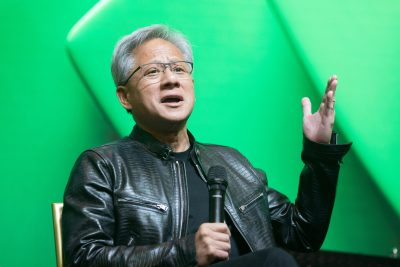
The 10 People Who Decide Jensen Huang's Fate: A Power Map of Nvidia's Board

The article discusses the uncertainty surrounding Jensen Huang's future at Nvidia amid a scandal, and profiles the 10 board members who will decide his fate. The board includes: 1. Stephen C. Neal – Joined 2019; honorary chairman and senior counsel at Cooley LLP, Nvidia's longtime legal counsel; Harvard and Stanford Law graduate. 2. Tench Coxe – Billionaire VC and early Nvidia investor; board member since 1993; former managing director at Sutter Hill Ventures. 3. John O. Dabiri – Joined 2020; Caltech professor of aeronautics and mechanical engineering; National Medal of Science recipient. 4. Dawn Hudson – Board member since 2013; former NFL CMO and CEO of Pepsi-Cola North America. 5. Harvey C. Jones – Joined 1993; former Synopsys CEO; managing partner at Square Wave Ventures. 6. Melissa B. Lora – Joined 2023; former president of Taco Bell International; praised for financial expertise. 7. A. Brooke Seawell – Joined 1997; partner at New Enterprise Associates; former NetDynamics executive. 8. Aarti Shah – Joined 2020; former Eli Lilly SVP and chief information and digital officer; PhD in applied statistics. 9. Mark A. Stevens – Board member 1993–2006 and again since 2008; managing partner at S-Cubed Capital; former Sequoia Capital managing partner. 10. Suzanne Nora Johnson – Newest member, joined July; former Goldman Sachs vice chairman with 21 years at the firm. The board's decision will significantly impact Nvidia's future.

Odaily星球日报34m ago

The 10 People Who Decide Jensen Huang's Fate: A Power Map of Nvidia's Board

Odaily星球日报34m ago

Trading

Spot
活动图片