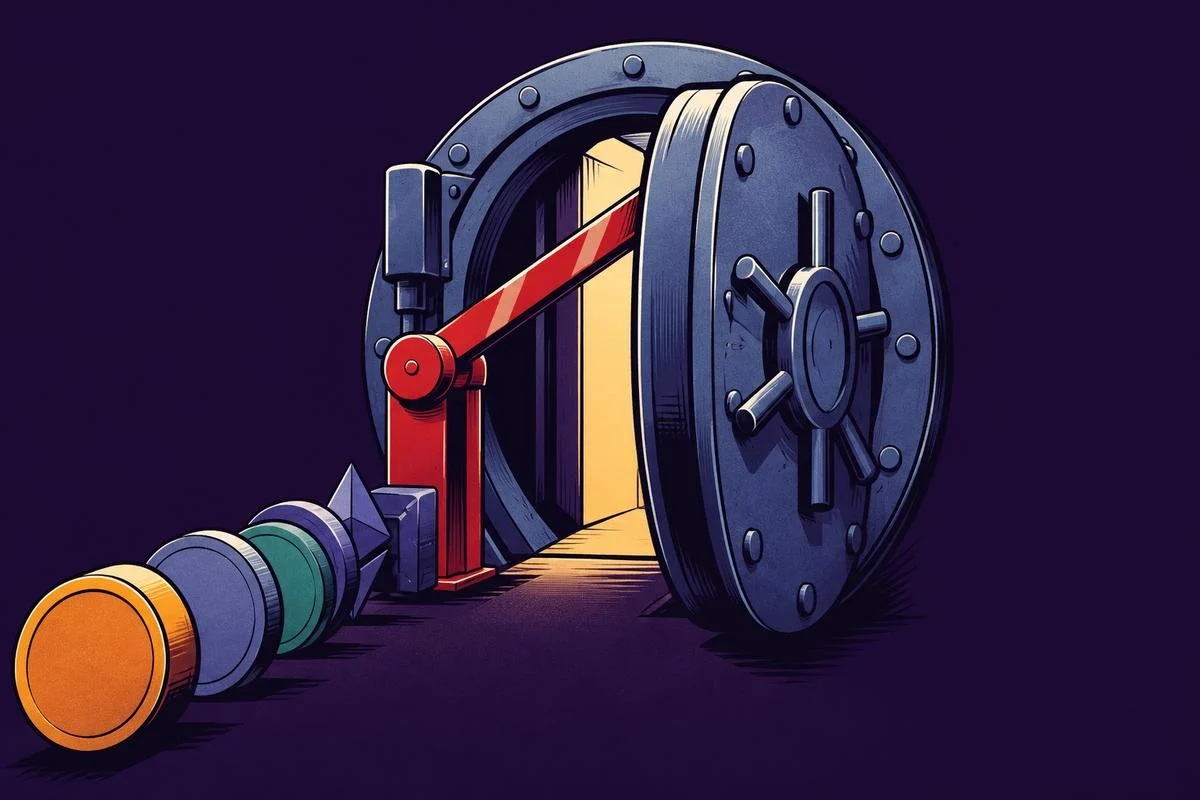
Pudgy Penguins-backed Abstract to shut down after ‘tens of millions’ in losses

cointelegraphPublished on 2026-10-07Last updated on 2026-10-07

Abstract

Abstract, an Ethereum layer-2 blockchain backed by Pudgy Penguins' parent company Igloo Inc., will shut down on December 15, 2026, after failing to achieve sustainable growth. The consumer-focused network, which launched in early 2025, lost tens of millions of dollars over two years and could not find product-market fit despite partnerships with major brands. Its CEO cited minimal institutional adoption, low liquidity, and a limited DeFi ecosystem as key constraints. Abstract is urging users to bridge their assets off the chain before the shutdown date, and its team is assisting projects to migrate elsewhere. This closure follows similar recent announcements from other blockchain networks like Blast and Botanix.

Abstract, a consumer-focused Ethereum layer-2 blockchain backed by Pudgy Penguin’s parent company Igloo Inc., said Tuesday it will be shutting down this year after struggling to scale and find a product-market fit.

In an X post, Abstract said its focus on “consumer crypto” ultimately proved to be an unsustainable business model. Abstract launched its mainnet in January 2025, aimed at driving consumer crypto adoption by targeting mainstream entertainment. For users, it aimed at stripping away many of the complexities that traditional blockchains require.

“Unknown to most, Igloo, Inc. had been funding Abstract over the last 18 months,” said Luca Netz, CEO of Igloo Inc. “After losing tens of millions of dollars over two years, building consumer products, assembling an all-star team, onboarding some of the biggest brands in the world, and building a community of millions, we still had not found product-market fit.”

Abstract’s shutdown highlights the limits of its consumer-first strategy. Both Abstract and Netz cited minimal institutional crossover, alongside thin liquidity and a restricted DeFi ecosystem, as constraints on growth.

Abstract urges users to bridge assets

Abstract said users with funds on the network should begin to bridge their assets off the chain, which will shut down on Dec. 15, 2026.

This can be done through Migration Hub, or through the Native Bridge. Any funds not bridged by the date will be inaccessible.

Abstract said its engineering and ecosystem team will also be working with Abstract-based projects to migrate to different chains.

Related: Proof of Play to shut down after blockchain gaming thesis falls short

Abstract joins a growing list of blockchain networks with plans to wind down this year as adoption fell short. Ethereum layer-2 Blast said last week that operating costs exceeded revenue, while Bitcoin-focused Botanix announced its closure in June after failing to find sufficient product-market fit.

Magazine: Capital starting to rotate back to crypto from AI: Raoul Pal
Trending Cryptos

Related Questions

QWhat is Abstract and why is it shutting down?

AAbstract is a consumer-focused Ethereum layer-2 blockchain backed by Pudgy Penguins' parent company, Igloo Inc. It is shutting down on December 15, 2026, due to an unsustainable business model, failing to find product-market fit, and incurring tens of millions of dollars in losses over two years while struggling to scale.

QWho funded Abstract and for how long, according to the CEO of Igloo Inc.?

AAccording to Luca Netz, CEO of Igloo Inc., the company had been funding Abstract over the last 18 months prior to the shutdown announcement.

QWhat were the main constraints on Abstract's growth, as cited in the article?

AThe main constraints on Abstract's growth were minimal institutional crossover, thin liquidity, and a restricted DeFi ecosystem, which limited the network's development and adoption.

QWhat must users with funds on the Abstract network do before December 15, 2026?

AUsers with funds on the Abstract network must bridge their assets off the chain using either the Migration Hub or the Native Bridge before December 15, 2026. Any funds not bridged by that date will become inaccessible.

QAccording to the article, what other blockchain networks are planning to wind down this year due to similar challenges?

AAccording to the article, other blockchain networks planning to wind down this year include Ethereum layer-2 Blast, due to operating costs exceeding revenue, and Bitcoin-focused Botanix, which announced its closure in June after failing to find sufficient product-market fit.

Related Reads

The Lighter Attack: How a Single API Key Drained Tens of Millions of Dollars?

On November 16, a security incident hit Lighter, a decentralized perpetual contract trading platform. Roughly $15.48 million in USDC was drained from two large market-maker accounts (#714710 and #714723), though Lighter officially confirmed only that a single trader's API key was compromised—not the protocol or smart contracts. The attacker reportedly exploited a leaked API key that lacked direct withdrawal permissions by chaining legitimate product features: closing the victim's trading positions to free margin, creating a 0% fee public pool funded with about $10,000 from an attacker-controlled account to secure ~99.99% of pool shares, then using the victim account's internal transfer permissions to move USDC into the pool in ~$1 million batches. Because internal transfers between accounts linked to the same L1 address may not require additional signatures, and such transfers may not have minted new shares for the victim, the attacker's dominant share position appreciated and could be redeemed for the victim's funds. On-chain records show about 10.39 million USDC withdrawn via withdrawPendingBalance, then swapped through CoW Protocol into ~5,764 ETH/WETH, with some funds later moved to Hyperliquid and converted to XMR. Lighter's LIT token fell over 12% in 24 hours. Lighter attributed the root cause to the affected account using unofficial SDK signing code that reused nonces, allowing private key recovery from public signature data; the official SDK was unaffected. The Guardian mechanism paused withdrawals, the security committee returned about $5 million USDC, and deposits/withdrawals have resumed. Lighter now requires wallet signatures for transfers to public pools, makes API key signatures non-public, and plans IP whitelists, API key permissions and limits, plus monitoring for nonce reuse.

marsbit30m ago

The Lighter Attack: How a Single API Key Drained Tens of Millions of Dollars?

marsbit30m ago

Trading

Spot

Hot Articles

Discussions

Welcome to the HTX Community. Here, you can stay informed about the latest platform developments and gain access to professional market insights. Users' opinions on the price of LAYER (LAYER) are presented below.

活动图片