Justin Sun Prize’s new round honors human–AI collaboration on Erdős problems

cointelegraphPublished on 2026-10-06Last updated on 2026-10-06

Abstract

On October 5, 2026, the Justin Sun Prize announced new recipients for contributions to solving Erdős problems: independent researcher Wouter van Doorn, Ph.D. student Quanyu Tang, and researcher Yanyang Li. Their collaborative work resolved multiple long-standing mathematical questions from a catalog of over 1,200 problems. Notably, they solved Erdős Problem #650, a project that exemplified human-AI collaboration, utilizing ChatGPT for proof strategy and the Aristotle AI system to assist in formal verification with the Lean software. Van Doorn also produced computer-checkable proofs for problems #369, #457, and #469, while Tang resolved #1044 and contributed to #1196. The prize emphasizes rigorous, verifiable proof and supports advances in mathematics, formal verification, and AI-assisted discovery. Awards are distributed in cryptocurrency.

Geneva, Switzerland, October 5, 2026 — The Office of Justin Sun today announced the newest recipients of the Justin Sun Prize: independent researcher Wouter van Doorn, mathematics Ph.D. student Quanyu Tang, and mathematics researcher Yanyang Li from Nanjing’s Southeast University, recognized for contributions spanning six Erdős problems.

Wouter van Doorn is an independent number theorist who began researching mathematics as an undergraduate in 2010 and continued collaborating and publishing after leaving academia following his master’s degree. Quanyu Tang (汤泉宇) is a mathematics Ph.D. student at the University of Science and Technology of China whose research spans number theory, combinatorics and AI-assisted mathematical discovery.

Erdős problems are mathematical questions posed or popularized by Hungarian mathematician Paul Erdős about numbers, patterns and other mathematical structures. Often simple to state but difficult to solve, they have helped shape research in number theory and combinatorics, with some remaining open for decades. The Erdős catalog, compiled and maintained by Thomas Bloom, a mathematician and Royal Society University Research Fellow at the University of Manchester, has more than 1200 problems.

Van Doorn and Tang worked with Yanyang Li, from Southeast University’s School of Mathematics in Nanjing, to solve Erdős Problem #650, determining exactly how many integers can always be matched to distinct multiples within a specified interval. Van Doorn also produced computer-checkable proofs in Lean, software for verifying mathematical reasoning, for #369, concerning consecutive integers with restricted prime factors; #457, about whether a short run of consecutive integers can collectively contain every prime in a given range; and #469, concerning whether the reciprocals of a special class of numbers expressible as sums of their divisors add to a finite total.

Tang separately resolved #1044, establishing a sharp lower limit for boundary lengths of regions defined by polynomials, and contributed alongside Li to a wider team’s solution of #1196, bounding weighted sums over sets of integers in which no member divides another.

Their work on #650 offers a concrete example of how human judgment and AI can complement each other. ChatGPT helped develop the proof strategy, while Aristotle, an AI system for mathematical reasoning, repaired a gap during Lean formalization. The researchers then simplified the argument and wrote the final proofs and exposition.

“This experience taught me how public feedback can sharpen a research question, and how AI-assisted discovery can combine mathematical judgment, collaboration and rigorous verification,” Tang said.

These are the program’s first confirmed awards, recognizing both mathematical discovery and the work needed to make proofs independently checkable. Information about the Justin Sun Prize, its problem catalog and recipient contributions is available through the program’s public GitHub repository.

The prizes will be paid out in either USDT on TRON (TRC-20) or USDC on Ethereum (ERC-20) based on the recipient’s choice. For more information, please visit www.hejustinsun.com/prize.

About the Office of Justin Sun

The Office of Justin Sun supports Justin Sun’s global business, philanthropic and public initiatives across technology, blockchain, artificial intelligence, scientific research, investment, art and space exploration.

Justin Sun is the Ambassador and former Permanent Representative of Grenada to the World Trade Organization and the Founder of TRON. TRON is the leading blockchain for the stablecoin revolution, processing over $13 trillion in volume since its inception. In the world’s emerging markets, people rely on USDT on TRON to access the global financial system.

A protégé of Alibaba founder Jack Ma, Sun has been recognized internationally for his work in the digital asset industry, including a Forbes cover profile in April 2025 and multiple appearances on the Forbes 30 Under 30 list. In August 2025, he flew aboard Blue Origin’s NS-34 mission, becoming the 712th person in history to travel to space. His broader interests span technology, investment, philanthropy, art, gaming, and space exploration.

Office of Justin Sun Contact:

info@hejustinsun.com

About Justin Sun Prize

The Justin Sun Prize is an academic initiative established by Justin Sun to support advances in mathematics, formal verification, and AI-assisted scientific discovery. The prize is decentralized and built around the principle that mathematical work should be judged by the strength, rigor, and verifiability of the proof itself, not the prestige or reputation of those submitting it.

Justin Sun established the prize in his own name as a long-term commitment to return wealth created through mathematics and technology back to mathematics itself. Its legacy is intended to be defined by the body of work it recognizes and the laureates whose discoveries stand the test of time. The prize links clearly defined mathematical challenges to machine-verifiable proof. Its guiding principles are openness, public benefit and open-source access.

Visit https://www.hejustinsun.com/prize for more information.

Media contact

thejustinsunprize@hejustinsun.com
Trending Cryptos

Related Questions

QWho are the recipients of the latest round of the Justin Sun Prize and what is a key aspect of their recognized work?

AThe recipients are independent researcher Wouter van Doorn, mathematics Ph.D. student Quanyu Tang, and mathematics researcher Yanyang Li. A key aspect of their work is their contributions to solving multiple Erdős problems, with their work on problem #650 highlighting human-AI collaboration.

QWhat is an Erdős problem and who maintains a major catalog of these problems?

AErdős problems are mathematical questions posed or popularized by Hungarian mathematician Paul Erdős. They are often simple to state but difficult to solve. A major catalog of over 1200 such problems is compiled and maintained by Thomas Bloom, a mathematician and Royal Society University Research Fellow at the University of Manchester.

QIn the solution to Erdős Problem #650, what specific roles did AI tools ChatGPT and Aristotle play according to the article?

AIn the solution to Erdős Problem #650, ChatGPT helped develop the proof strategy, while the AI system Aristotle repaired a gap during the Lean formalization process. The researchers then simplified the argument and wrote the final proofs and exposition.

QWhat are the stated guiding principles of the Justin Sun Prize as described in the article?

AThe stated guiding principles of the Justin Sun Prize are openness, public benefit, and open-source access. It is built around the principle that mathematical work should be judged by the strength, rigor, and verifiability of the proof itself.

QHow are the Justin Sun Prize payments made to recipients?

AThe prize payments are made in the form of either USDT on the TRON network (TRC-20) or USDC on the Ethereum network (ERC-20), based on the recipient's choice.

Related Reads

Are Alt-L1s over? Security, costs drive smaller chains to Ethereum

Running an independent blockchain promises control but comes with major costs, and smaller networks are increasingly finding it economically unsustainable. Zilliqa recently announced it is abandoning its nine-year-old Layer 1 architecture to become an Ethereum-based Layer 2, admitting usage never reached the level a standalone chain requires and that funding and liquidity for independent L1s have dried up. Gnosis is also transitioning its chain into an Ethereum-based network through its Ethereum Economic Zone initiative, and gaming-focused Ronin completed its move back to Ethereum as an L2 in May. According to Bitwise analyst Max Shannon, the decision comes down to profitability: L2s only need to maintain execution and don't necessarily need a token, making them more attractive financially and operationally. The largest networks generate tens of millions in annual fees with margins above 90%, while chains ranked 11th and below collectively earned less than $1 million in annual fees. However, becoming an L2 doesn't guarantee profitability—networks like Optimism, Katana and Linea still have expenses exceeding fee revenue, and Blast has shut down. Beyond cost savings, projects can tap into Ethereum's established ecosystem of applications, developers and liquidity rather than building network effects from scratch. Matter Labs CEO Alex Gluchowski expects more L1 teams to keep their own chains while using Ethereum for settlement, arguing sovereignty and Ethereum integration are not mutually exclusive. Still, Shannon cautions there is no clear conclusion to the L1 versus L2 debate, as some institutions continue launching independent chains like Circle's Arc, Stripe's Tempo and Hyperliquid.

cointelegraph5m ago

Are Alt-L1s over? Security, costs drive smaller chains to Ethereum

cointelegraph5m ago

GRAM Defies Market Downturn, Durov Claims It's Undervalued—Can Ecosystem Fundamentals Keep Up?

Despite a broad crypto market downturn driven by hawkish macro expectations, tech stock selloffs, ETF outflows, and geopolitical risks, GRAM (TON) has bucked the trend, drawing attention as one of the top gainers among the top 100 tokens by market cap with a 5.3% rise. Telegram CEO Pavel Durov publicly argued that GRAM is severely undervalued, claiming it deserves a top-three spot among cryptocurrencies given its unique integration with a large social ecosystem, and he updated his X bio to include "TON blockchain founder (2019)." TON was originally launched by Telegram but was abandoned after U.S. regulatory action; Durov rejoined the project in May, rebranded the token back to GRAM, and introduced a seven-step "Make TON Great Again" strategy. However, GRAM has fallen about 55.1% since hitting $2.7 in May and is down 85.3% from its all-time high. Durov also highlighted ecosystem growth: Telegram's self-custodial Gram wallet, launched in July 2026 and fully opened to global users on October 9, surpassed 3.53 million wallets by November 12, adding nearly 650,000 in 48 hours, aided by an auto-activation mechanism triggered by receiving even 0.1 GRAM. Yet real adoption lags—daily active addresses are only about 53,000 (roughly 1.5% of wallets), and only about 188,000 addresses hold GRAM, totaling around 1.683 million tokens worth about $2.05 million. TON's ecosystem also faces challenges: TVL is just $45.74 million versus a historical peak of $780 million, concentrated in Tonstakers and Stakee, with limited application diversity and high development barriers. Tokenomics add inflation pressure, with annual inflation rising from about 0.6% to about 4% after an April block-speed upgrade. While Telegram provides unmatched traffic, converting users into genuine on-chain activity and sustainable value remains unproven.

marsbit55m ago

GRAM Defies Market Downturn, Durov Claims It's Undervalued—Can Ecosystem Fundamentals Keep Up?

marsbit55m ago

Bernstein: Why You Absolutely Should Not Buy the Dip on Nvidia Right Now

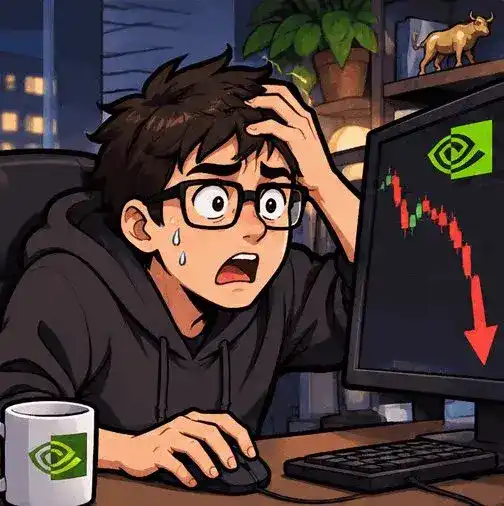
Bernstein downgraded Nvidia from "Outperform" to "Market Perform," cutting its price target from $400 to $200, not due to deteriorating fundamentals but because of an ongoing management scandal at the highest levels of the company. Reports of CEO Jensen Huang's inappropriate relationships—first with Alice Huang, which Huang publicly acknowledged, and subsequently with a direct subordinate, reportedly Kimberly Powell, VP of healthcare—have prompted the board to launch an independent investigation, and The Wall Street Journal reports the company is preparing to dismiss him. Bernstein analyst Stacy A. Rasgon argues the board will almost certainly not retain Huang given the new allegations, and even if he stays, the risk of continued negative exposure remains significant. Despite Nvidia's stock now trading at what Bernstein calls "almost absurdly undervalued" levels, the firm strongly advises investors to stay on the sidelines. Fundamentals remain intact—Bernstein projects data center revenue of about $378.3 billion in FY2026, rising to $657.8 billion in FY2027 and over $918.2 billion in FY2028, with total revenue growing nearly 70% annually and non-GAAP EPS averaging $19.04 for FY28/29, supporting the $200 target at roughly 11x forward P/E, down from 21x. However, the succession question—internal promotion or external hire, and who could replace Huang—remains unanswered, and any resolution will introduce new variables. Bernstein uses a "cockroaches in the kitchen" analogy: finding two implies there are likely more. The analyst suspects the current scandal is just the tip of the iceberg, with more internal allegations, potential government investigations, and uncertainty over strategic supply-chain investments and guarantees possibly to come, while some competitors' shares have already risen on the news. Though Rasgon admits to being torn and understands the buy-the-dip logic, his instinct says the well's depth hasn't been fully plumbed—so Bernstein chooses to step aside and watch from the sidelines.

marsbit1h ago

Bernstein: Why You Absolutely Should Not Buy the Dip on Nvidia Right Now

marsbit1h ago

QQQ Reclaims Its 200-Day Moving Average: Ahead of the December Rate Hike, Who Should You Watch in This AI Rally?

QQQ has reclaimed its 200-day moving average, but the real AI story is just entering a differentiation phase. The index has completed its repair; individual stocks now face their exam. Under the same AI theme, the market's answers have diverged sharply: some stocks are back above the annual line with cash flow, while others have rallied 25% yet remain 30% below it. The key question after the index-level repair is who can pass this exam—depending on whether earnings delivery can outrun valuation pressure. QQQ closed at $690.38 on Nov 11, 1.27% above its 200-day line, recovering most of its losses within days. Two hurdles remain: Nvidia, the largest weight, is still 15% below its annual line and reports earnings on Nov 17, with board governance concerns unresolved; and the 10-year Treasury yield closed at 4.998%, pressing the 5% threshold that anchors valuation for long-duration growth stocks. AI names now fall into three tiers relative to their 200-day lines: AMD is 31.6% above (high expectations priced in), Micron 6.5% above (fundamentals delivering, up 11.89% in a day), QQQ 1.27% above, while Nvidia is 15.0% below and CoreWeave 32.1% below despite a 24.71% single-day jump. The takeaway: the index returning to its annual line may not mean a broad AI rally—capital may be rotating from "buying AI" to "buying delivery." Nvidia's Nov 17 earnings must address both results and governance, with consensus Q3 revenue near $108.8 billion. Micron trades at roughly 10.8x earnings after 379% revenue growth; whether that's undervaluation or cycle-top pricing hinges on HBM pricing and HBM4 supply from Samsung and SK Hynix. CoreWeave's rally prices relief over near-term solvency fears, not financing risk. AMD's challenge is converting revenue into cash, with free cash flow falling to $554 million from $1.56 billion. A December rate hike is already priced in (about 87% odds per CME FedWatch), making the 10-year Treasury the real valuation switch. If yields fall and QQQ holds above its annual line, AI assets could re-rate; if the 10-year breaks 5%, pressure returns. Five signals will determine which AI names keep running. QQQ back at its annual line does not mean AI is back to a broad rally—the index has finished repairing, and the stocks have begun their exam.

marsbit1h ago

QQQ Reclaims Its 200-Day Moving Average: Ahead of the December Rate Hike, Who Should You Watch in This AI Rally?

marsbit1h ago

Trading

Spot

Hot Articles

How to Buy SUN

Welcome to HTX.com! We've made purchasing SUN (SUN) simple and convenient. Follow our step-by-step guide to embark on your crypto journey.Step 1: Create Your HTX AccountUse your email or phone number to sign up for a free account on HTX. Experience a hassle-free registration journey and unlock all features.Get My AccountStep 2: Go to Buy Crypto and Choose Your Payment MethodCredit/Debit Card: Use your Visa or Mastercard to buy SUN (SUN) instantly.Balance: Use funds from your HTX account balance to trade seamlessly.Third Parties: We've added popular payment methods such as Google Pay and Apple Pay to enhance convenience.P2P: Trade directly with other users on HTX.Over-the-Counter (OTC): We offer tailor-made services and competitive exchange rates for traders.Step 3: Store Your SUN (SUN)After purchasing your SUN (SUN), store it in your HTX account. Alternatively, you can send it elsewhere via blockchain transfer or use it to trade other cryptocurrencies.Step 4: Trade SUN (SUN)Easily trade SUN (SUN) on HTX's spot market. Simply access your account, select your trading pair, execute your trades, and monitor in real-time. We offer a user-friendly experience for both beginners and seasoned traders.

11.0k Total ViewsPublished 2024.03.29Updated 2026.06.02

How to Buy SUN

Discussions

Welcome to the HTX Community. Here, you can stay informed about the latest platform developments and gain access to professional market insights. Users' opinions on the price of SUN (SUN) are presented below.

活动图片