Grove Invests in the Centrifuge Ecosystem

cryptonews.ruPublished on 2026-08-27Last updated on 2026-08-27

Abstract

Grove, an institutional lending infrastructure protocol, has announced a partnership with Centrifuge, a platform for tokenizing and managing real-world assets (RWA) on-chain. As part of the deal, Grove purchased 37.8 million CFG tokens. Through Centrifuge's infrastructure, Grove has invested in products such as Apollo's ACRDX and Janus Henderson's JAAA and JTRSY. The companies aim to jointly foster the development of a more liquid and scalable on-chain lending market. This investment makes Grove a stakeholder in the Centrifuge ecosystem, with a vested interest in its growth and participation in protocol governance. The companies stated that the deal will strengthen long-term collaboration, combining Grove's capital distribution infrastructure with Centrifuge's asset tokenization and distribution technologies.

Grove, an institutional lending infrastructure protocol, has announced a partnership with Centrifuge — a platform for tokenizing and managing RWAs on-chain. As part of the deal, Grove has acquired 37.8 million $CFG tokens.

Utilizing Centrifuge's infrastructure, Grove has invested in products such as Apollo's ACRDX, as well as Janus Henderson's JAAA and JTRSY. The companies aim to jointly foster the development of a more liquid and scalable on-chain lending market.

The acquisition of $CFG makes Grove one of the participants in the Centrifuge ecosystem who are interested in its development and involved in protocol governance. As noted by the companies, the deal will strengthen long-term cooperation and allow the combination of Grove's capital distribution infrastructure with Centrifuge's technologies for asset tokenization and distribution.

Image: Magnific

end-content

Related Questions

QWhat is the main subject of the partnership announced between Grove and Centrifuge?

AGrove, an infrastructure protocol for institutional lending, announced a partnership with Centrifuge, a platform for tokenizing and managing RWA on the blockchain.

QHow many CFG tokens did Grove acquire as part of this deal?

AGrove acquired 37.8 million CFG tokens as part of this deal.

QWhat specific products from Apollo and Janus Henderson did Grove invest in, according to the article?

AGrove invested in ACRDX from Apollo, as well as JAAA and JTRSY from Janus Henderson.

QWhat is the stated goal of the Grove and Centrifuge collaboration?

AThe companies aim to jointly contribute to the development of a more liquid and scalable on-chain lending market.

QHow does the article state the acquisition of CFG tokens benefits Grove's relationship with Centrifuge?

AThe acquisition makes Grove a stakeholder in the Centrifuge ecosystem and strengthens long-term cooperation by combining Grove's capital distribution infrastructure with Centrifuge's asset tokenization and distribution technologies.

Related Reads

Anthropic: Many Internal Products Were Never Released

Anthropic recently filed its S-1 with the SEC, highlighting strong enterprise retention and monetization as customers embed Claude into critical business processes. Dianne Na Penn, product lead for Anthropic's Research and Labs team, discussed on The Skip podcast how the research-driven company plans products. Rather than spending three months on an annual plan that becomes obsolete in two weeks, Anthropic plans monthly, grounded in high-level assumptions about the next 6–12 months, avoiding reactive feature-chasing. Claude Code emerged not suddenly but through long experimentation by API customers and internal/external users; the command-line interaction paradigm plus a harness enabling more agent loops created the real chemistry. The team debated offering a fine-tuning API but concluded core models iterate too fast—enterprises risk being two or three generations behind by the time they finish post-training and deployment. Prioritization between research and user feedback relies on ongoing discussion with research leads; PMs articulate user impact rather than dictating training parameters. Many internal prototypes are never released, serving to spark ideas or validate technology. The company focuses on To B and enterprise markets for stability. Culture emphasizes diverse backgrounds, growth mindset, extreme transparency, and first-principles thinking; employees are encouraged to question assumptions, even to senior scientists, with curiosity and mutual trust. Onboarding is intentionally intense—new PMs complete user research, evals, and roadmaps within two to three weeks—to force execution. Small teams mean each person covers multiple areas, driving cross-functional communication and rapid learning. An annual bootcamp teaches building products that ride exponential model capability gains. Anthropic also employs forward-deployed engineers to help enterprises scale deployments, and some have transitioned into PM roles, bringing deep customer context back to research and engineering teams.

marsbit15m ago

Anthropic: Many Internal Products Were Never Released

marsbit15m ago

Democrats Plan to Investigate Apple, Meta and Musk, Trump's Silicon Valley Allies Face 'Reckoning'

Democrats, after winning majorities in both chambers of Congress, are rapidly setting investigative priorities targeting Trump's Silicon Valley allies. The House is preparing to examine Trump's use of Musk's AI chatbot Grok in planning a military operation to abduct Venezuelan President Maduro; Apple and Meta are under scrutiny over an ICE tracking app and local government data center agreements, respectively. The probe scope may extend well beyond these three companies, reviewing major corporations' most controversial business activities over the past two years and their ties to the Trump administration. Since Trump's second term, tech billionaires and executives have frequently attended White House events, donated to his ballroom project, and given gifts, while companies backed by Trump family members and Wall Street executives received billions in government funding. Groundwork Collaborative labeled Big Tech, private prison operators, and natural gas firms as "high-value" targets. Even before formal investigations begin, companies are preparing: Washington law firms are holding emergency meetings to advise founders and executives on congressional inquiries, and many are seeking to become Musk's personal counsel, anticipating subpoenas and high-profile legal work. Some VCs advise startups to close financing before year-end in case executives are called to testify or Pentagon spending shifts. Incoming House Oversight Committee Chairman Robert Garcia warned companies to "hire lawyers," and Senator Ed Markey said tech executives will need plenty of paper for subpoenas. Lawyers expect Democratic control of Congress to accelerate and intensify investigations, with detailed corporate inquiries potentially more effective than letters to Trump agencies since companies are more likely to respond and disclose dealings with officials. Apple, Meta, X, and Musk did not immediately respond to requests for comment. Covington & Burling lawyer Robert Kelner said the investigative wave is all but certain: "We've been telling clients, winter is coming. Now, winter is here."

marsbit1h ago

Democrats Plan to Investigate Apple, Meta and Musk, Trump's Silicon Valley Allies Face 'Reckoning'

marsbit1h ago

Anthropic's Strongest Model 4 Revealed for the First Time: RSI Soars at 2x Speed

Anthropic's unreleased "Model 4," reportedly trained between September and October, has surfaced via a third-party METR evaluation, scoring 178.6 on Anthropic's internal Aggregate Evaluation Capability Index (AECI)—outpacing public models Opus 5.5 (174.5) and Mythos 5.1 (172.5). Model 4 passed all 15 benchmarks at above 50% accuracy, a first compared with Opus 4.6 nine months earlier; removing three flawed benchmarks would push its score to 179.7. METR's 11-week investigation of internal data concludes Anthropic's model improvement has roughly doubled, with an inflection point in October 2025: AECI growth accelerated from about 15 points per year to 29 points per year (1.9x), meaning one year now covers what previously took two. Notably, METR estimates about 80% of this acceleration stems from AI assisting its own R&D rather than increased training compute, researcher headcount, or inference scaling—Claude is effectively helping build a stronger Claude. Internal employee surveys report self-assessed productivity gains rising from 1.3–1.4x in spring 2025 to about 5x by June and roughly 12x by October with Model 4, as researchers shift from using Claude as autocomplete to orchestrating many parallel agents, cutting idea-to-experiment time by up to 80%. METR researcher Ryan Greenblatt calls the report a signal pointing toward ASI within one to two years. Roughly 100 pages were submitted to Anthropic, but much of the most sensitive evidence—including a table forecasting future model capability scores—was redacted in the public version. METR sees no obvious bottleneck in algorithms, compute, or data over the next 12 months, and no brake in sight.

marsbit1h ago

Anthropic's Strongest Model 4 Revealed for the First Time: RSI Soars at 2x Speed

marsbit1h ago

US 401(k) proposal leaves door open to altcoins, but hurdles remain

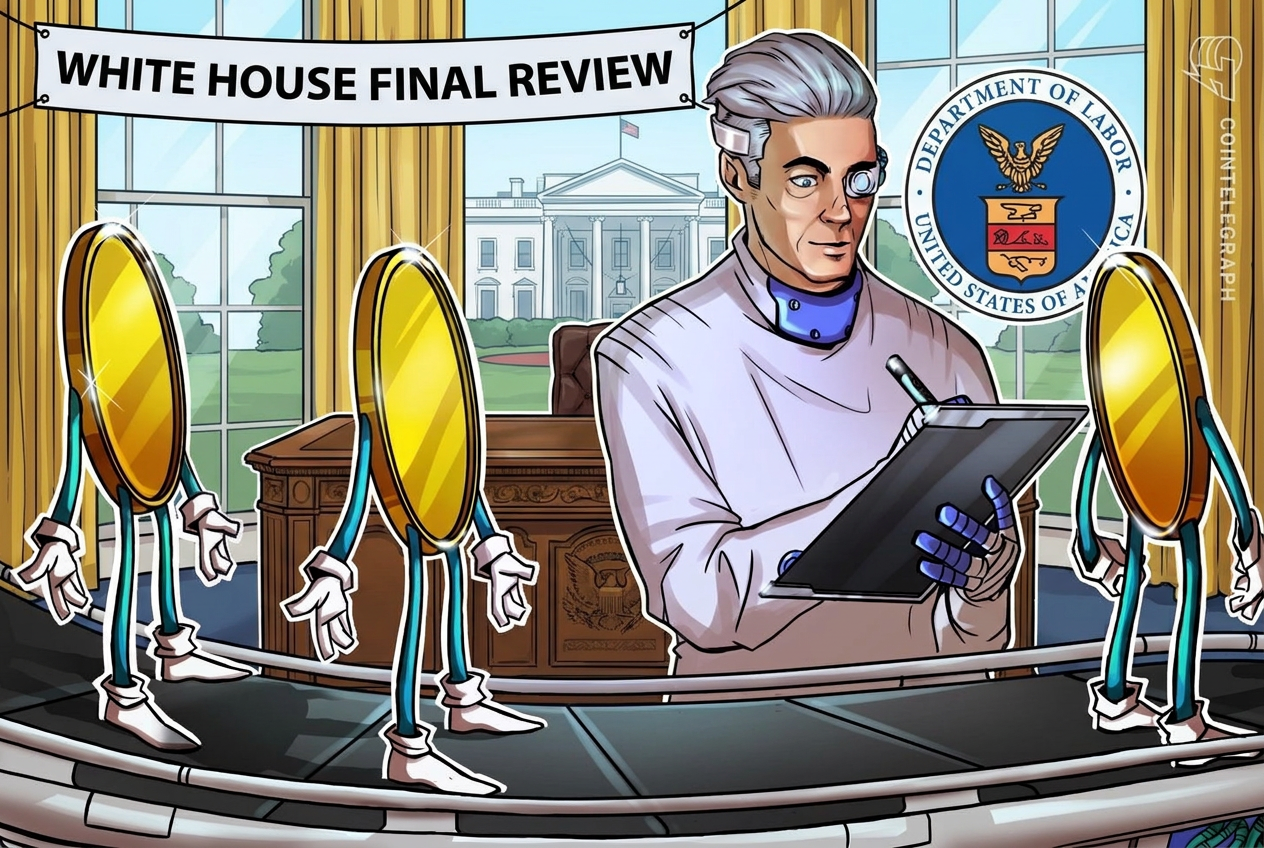
A proposed US Labor Department rule could allow smaller cryptocurrencies (altcoins) in 401(k) retirement plans, but experts say they face more hurdles than Bitcoin and Ether. The rule, now under White House final review, aims to ease offering alternative investments like crypto while giving employers and plan managers more legal protection. It doesn't specify which digital assets qualify or set a minimum market cap, but directs plan managers to weigh six factors: performance, fees, liquidity, valuation, benchmarks and complexity. Experts expect Bitcoin and Ether to be offered first given their established markets and investment products. Teresa Goody Guillén of Bellementis PLLC said altcoins aren't automatically excluded, but plan managers must show their choices are prudent, noting "big doesn't mean suitable, and small doesn't mean disqualified." Bernardo Brites of Trace Finance said most tokens fail on track record or benchmark, and the practical test is whether a plan committee can document a reliable daily price from a regulated wrapper. ETFs and managed funds will likely precede direct crypto holdings, fitting existing custody and recordkeeping systems. Brites expects some crypto options by 2027, ETFs at larger employers later that year, and wider availability by 2028, noting the rule changes legal risk, not infrastructure. Legal uncertainty remains: the proposal offers some lawsuit protection but doesn't prevent suits, and future administrations could reverse the rule, potentially making employers hesitant.

cointelegraph6h ago

US 401(k) proposal leaves door open to altcoins, but hurdles remain

cointelegraph6h ago

Russia finalizes crypto trading rules ahead of Nov. 17 rollout

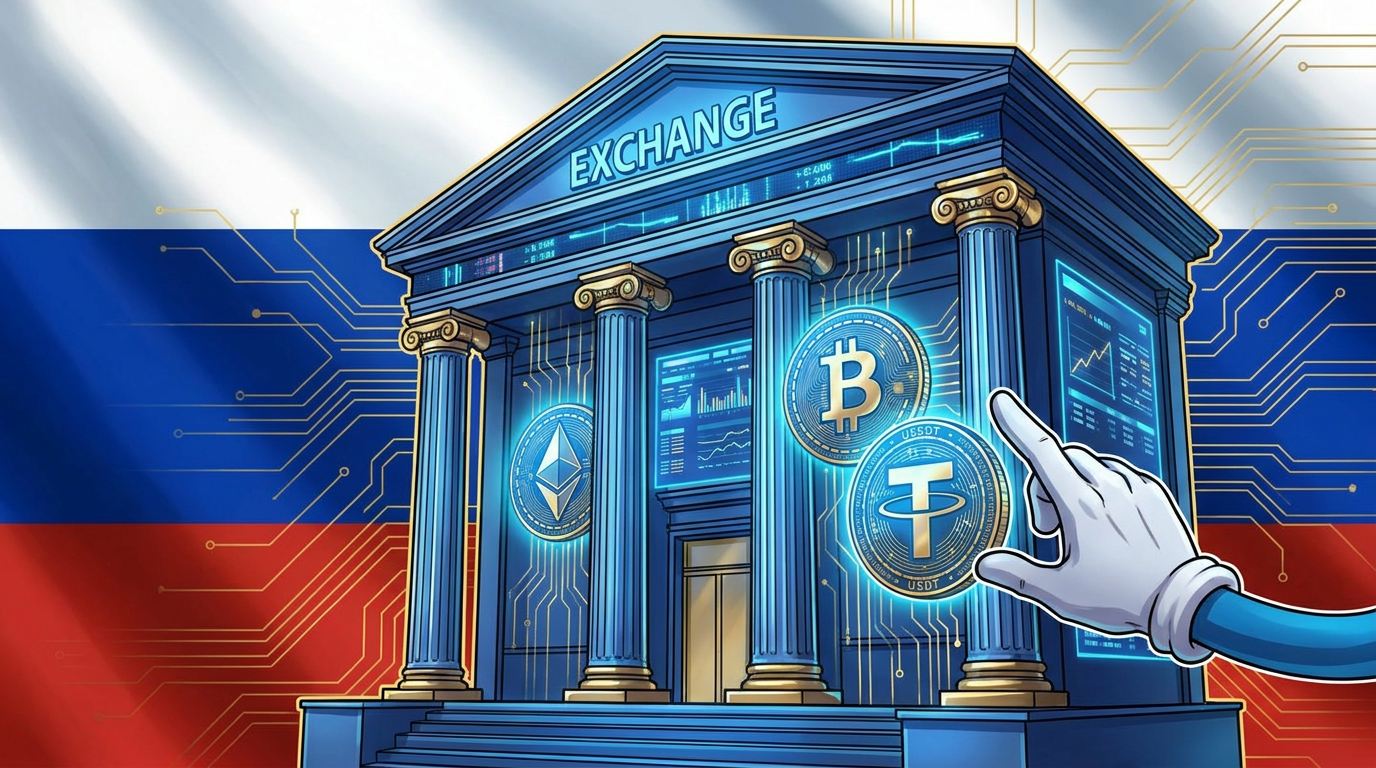
Russia’s central bank has finalized rules allowing exchanges to offer Bitcoin, Ether and Tether USDt to retail investors starting Nov. 17. Non-qualified investors can buy up to 300,000 rubles (about $3,700) in crypto annually through each intermediary, including brokers, asset managers and crypto exchange providers. Qualified investors face no purchase limits, but all investors must pass a mandatory test before trading. The directive builds on legislation signed by President Vladimir Putin on Aug. 4 establishing a regulated crypto market under central bank oversight. On Aug. 11, the Bank of Russia published draft regulations identifying BTC, ETH and USDT as eligible for public trading based on market capitalization, average daily trading volume and at least five years of price history on foreign exchanges. The law took effect Sept. 1, and the Bank of Russia later authorized Sberbank, the country’s largest bank, to offer crypto exchange services in October. Moscow Exchange, Russia’s largest securities exchange and a publicly traded company, is preparing to launch crypto trading on Dec. 1, initially offering the three cryptocurrencies through pilot transactions. While expanding regulated access, Russia is also tightening restrictions outside those channels. Direct peer-to-peer crypto trading will be prohibited starting July 1, 2027, transfers from regulated digital accounts to self-custody wallets are already banned, and cryptocurrency cannot be used to pay for goods and services.

cointelegraph7h ago

Russia finalizes crypto trading rules ahead of Nov. 17 rollout

cointelegraph7h ago

Trading

Spot
活动图片